
On this page
- In Brief
- Panca Yadnya at a Glance
- Yadnya Is an Offering Made With a Sincere Heart
- You Meet the Five in Processions, Temples and Family Rites
- Dewa Yadnya Is Offered to God and the Gods
- Pitra Yadnya Honours the Ancestors
- Rsi Yadnya Honours Priests and Teachers
- Manusa Yadnya Marks Each Stage of a Human Life
- Bhuta Yadnya Keeps the Lower Forces in Balance
- Bali's Own Religious Bodies Set the Rules for the Ceremonies
- FAQ
- Sources
In Brief
Panca yadnya means the "five sacrifices". They are the five kinds of sacred offering and ritual that organise Balinese Hindu religious life. Almost every ceremony you see in Bali belongs to one of them.
Each of the five is named for who receives it. Dewa Yadnya goes to the gods and Pitra Yadnya to the ancestors. Rsi Yadnya honours priests and sages. Manusa Yadnya covers the rites of passage of a human life. Bhuta Yadnya goes to the spirits, to keep balance.
Offered sincerely, yadnya is selfless giving, with nothing expected in return.
Panca Yadnya at a Glance
- Meaning: The five sacred sacrifices or offerings (panca is five, yadnya a sincere offering)
- Dewa Yadnya: To God and the gods (temple ceremonies, offerings)
- Pitra Yadnya: To the ancestors (cremation and post-death rites)
- Rsi Yadnya: To priests and sages (honouring and supporting holy people and teachers)
- Manusa Yadnya: The human rites of passage (birth to marriage)
- Bhuta Yadnya: To the spirits and lower forces (to restore balance)
- The spirit: Selfless, sincere giving, with no transaction in it
- Who sets the rules: Bali's own religious and customary bodies, Parisada Hindu Dharma Indonesia and the Majelis Desa Adat
Yadnya Is an Offering Made With a Sincere Heart
Yadnya is a sacrifice or offering made with a sincere, selfless heart, given without expectation of return.
This constant giving drives Balinese religious life. People offer flowers and food, effort and art, and the ritual itself. In Balinese understanding, the giving maintains the balance between people, the divine and the world.
The daily canang sari is yadnya at its smallest and most constant. A grand cremation is yadnya at its most elaborate.
Yadnya also reaches beyond the ceremony itself. The Hindu guidance office of Indonesia's Ministry of Religious Affairs, Bimas Hindu, sets ritual beside philosophy (tattwa) and ethics (susila).
Balinese Hinduism organises this giving into five categories, the Panca Yadnya. Together they cover the whole span of existence:
- the gods above
- the ancestors behind
- the holy among us
- human life itself
- the spirits below
You Meet the Five in Processions, Temples and Family Rites
To a visitor, Balinese ceremony can look like an endless, dazzling stream of ritual. Knowing the five sacrifices gives it shape.
- A cremation procession is Pitra Yadnya.
- A temple festival is Dewa Yadnya.
- Ground offerings and the ogoh-ogoh are Bhuta Yadnya.
- A family gathering for a tooth-filing is Manusa Yadnya.
The Gerokgak district office in Buleleng lists the five yadnya and the ceremonies that belong to each.
Dewa Yadnya Is Offered to God and the Gods
Dewa Yadnya covers the rituals and offerings directed to God, Sang Hyang Widhi, and to the gods.
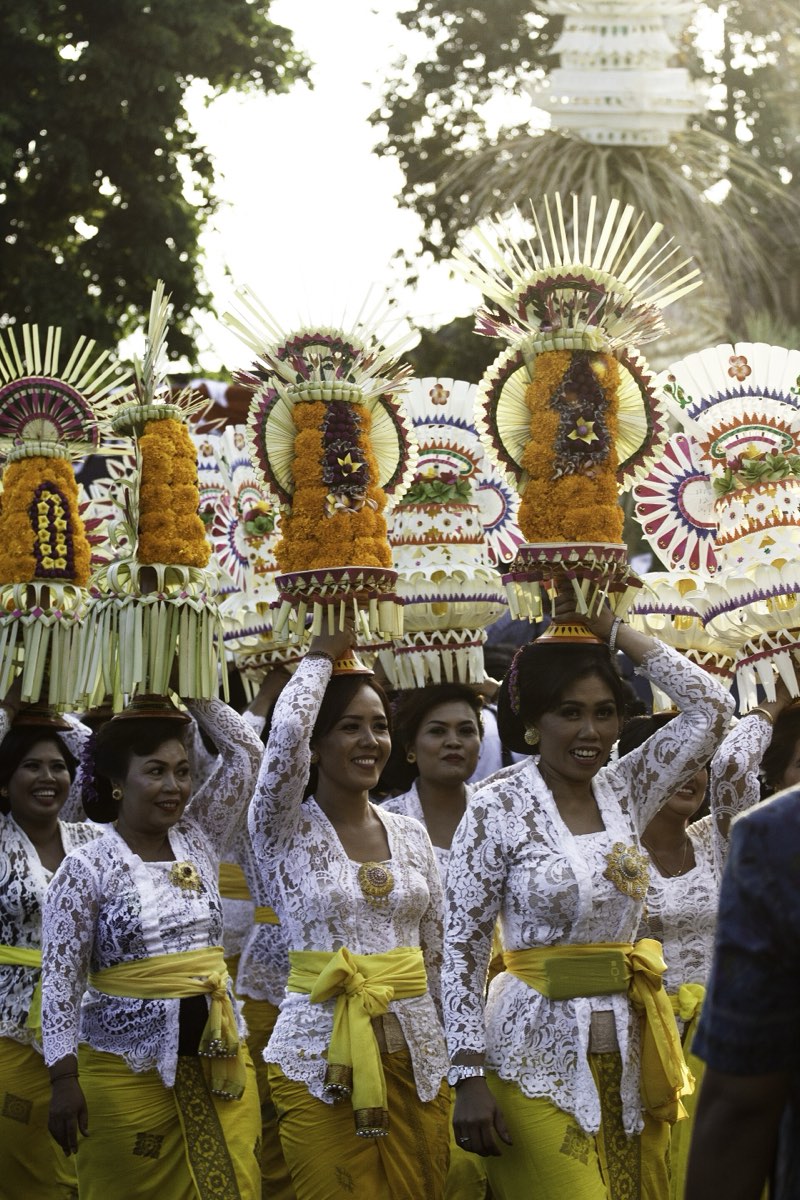
This is the temple worship of Bali. It includes the daily offerings on shrines, the great temple anniversaries called odalan, and island-wide holy days like Galungan.
When you see a temple filled with flowers, fruit towers and prayer, you are seeing Dewa Yadnya. It is the upward relationship, the one with the divine.
Pitra Yadnya Honours the Ancestors
Pitra Yadnya honours the ancestors and the dead through ritual.
Above all it is the cremation ceremony, Ngaben, and the rites that follow it to purify and release the soul.
Balinese Hindus hold a deep duty to their ancestors, and Pitra Yadnya is how that duty is paid. It frees the soul and keeps the bond between the living and those who came before.
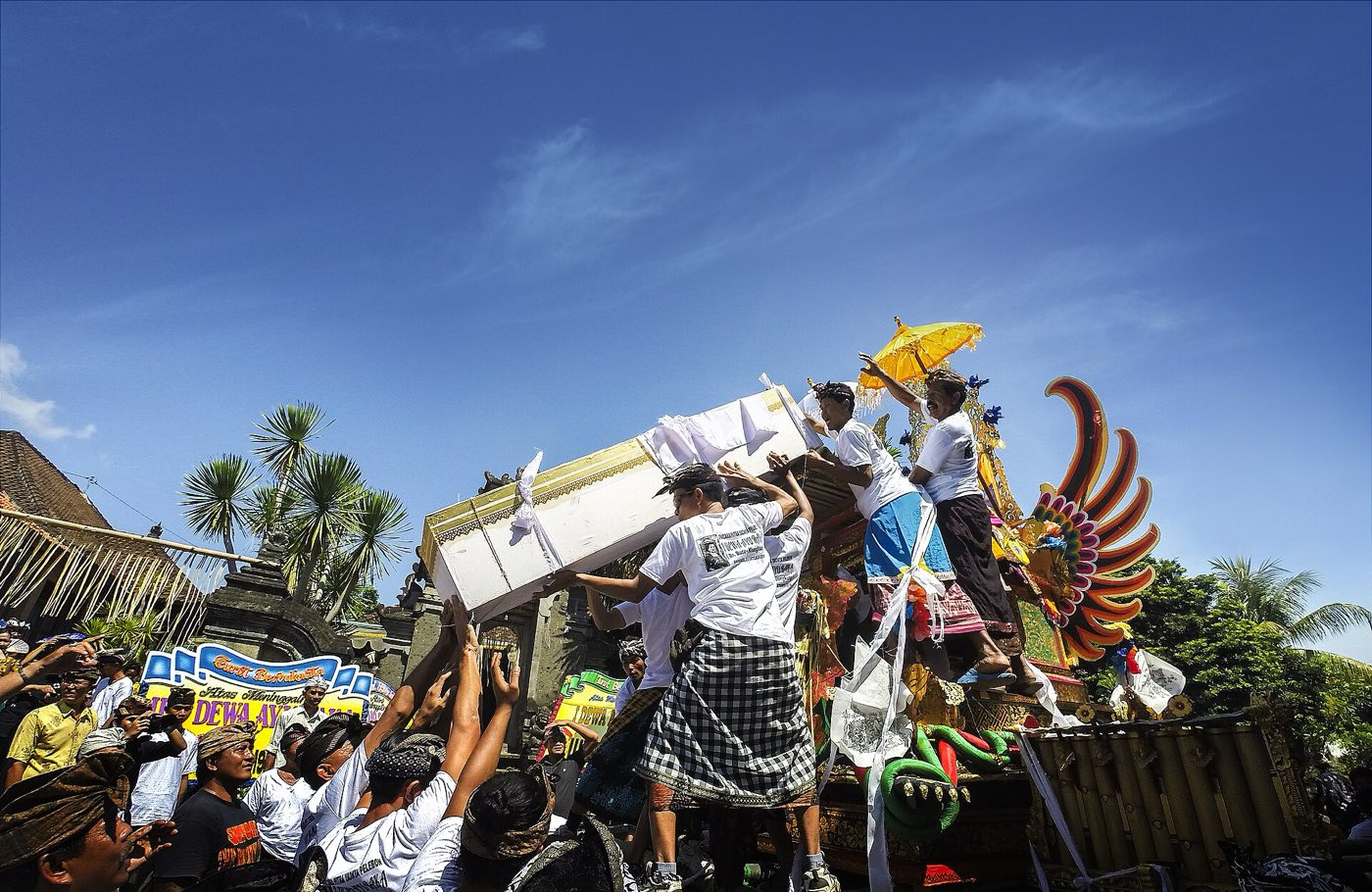 The coffin raised onto the cremation tower at a pelebon, Pitra Yadnya at its grandest. Photo: trezy humanoiz / Wikimedia Commons (CC BY 2.0)

Rsi Yadnya Honours Priests and Teachers
Rsi Yadnya is given to the holy: the priests, called pedanda, and the spiritual teachers who guide religious life.
It takes the form of rituals and gifts that honour and support them. The community depends on those who carry the sacred knowledge, and Rsi Yadnya honours them in turn.
Manusa Yadnya Marks Each Stage of a Human Life
Manusa Yadnya gathers the ceremonies that mark the passages of a human life, from birth through childhood to marriage. They include:
- rituals during pregnancy and infancy
- the famous otonan, the Balinese "birthday" every 210 days
- the tooth-filing ceremony that marks coming of age
- marriage
Each stage is marked and blessed, so the journey of being human is made sacred.
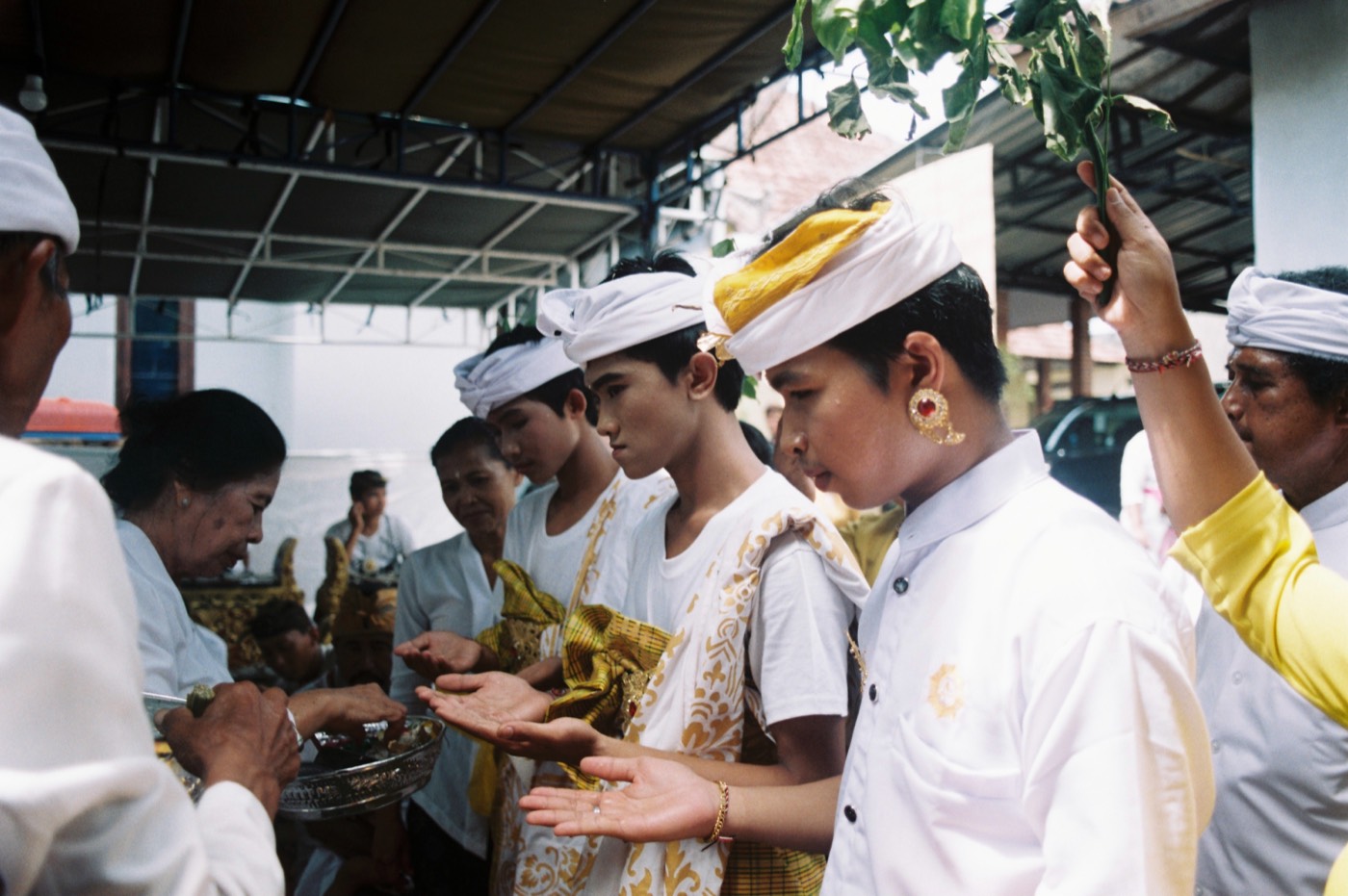 Initiates blessed at a mepandes tooth-filing, one of the great Manusa Yadnya rites. Photo: Ening Megumi Laksmiati / Wikimedia Commons (CC BY-SA 4.0)

Bhuta Yadnya Keeps the Lower Forces in Balance
Bhuta Yadnya is offered to the bhuta kala, the spirits and lower elemental forces, to appease them and restore balance.
This is why some offerings are placed on the ground and others raised on shrines. It is also why the dramatic Ngrupuk processions, with the giant ogoh-ogoh monster effigies, happen the night before Nyepi.
Bhuta Yadnya keeps the dark and chaotic forces in balance and does not deny them. The same principle of balance, Rwa Bhineda, runs through Balinese religious life.
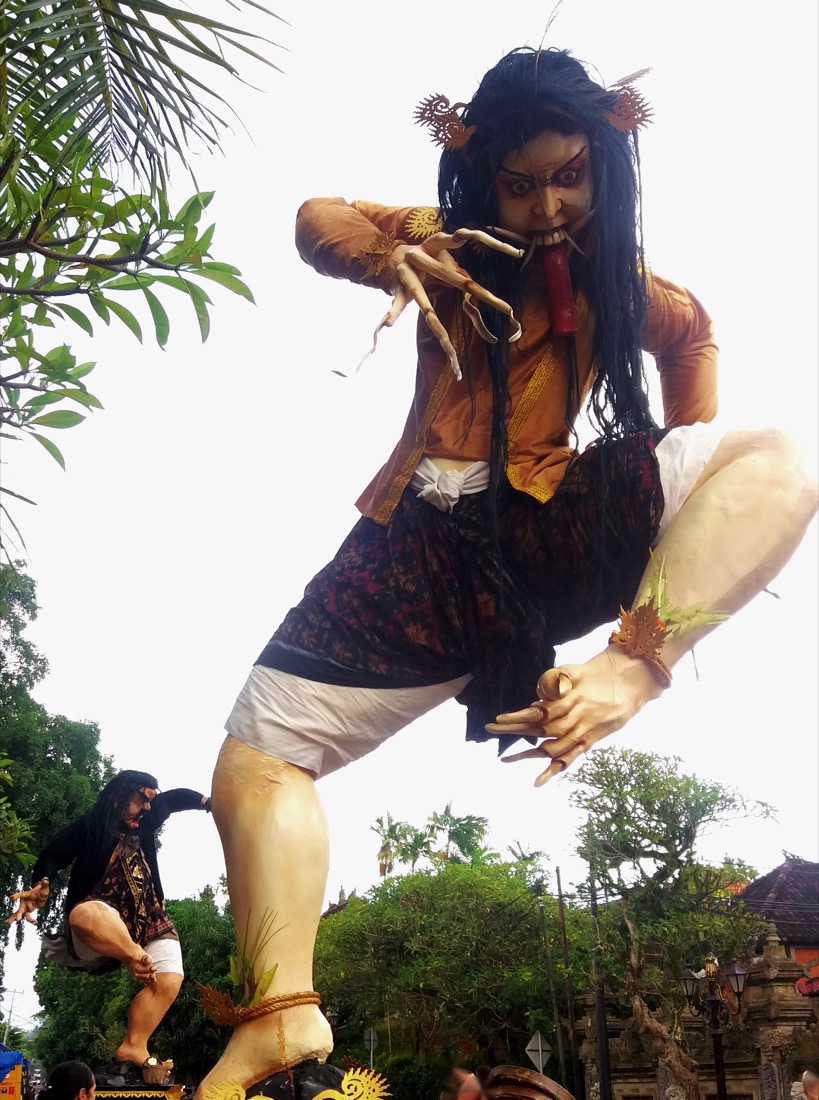 An ogoh-ogoh on the eve of Nyepi, Bhuta Yadnya at its most theatrical. Photo: MagdaLena7 / Wikimedia Commons (CC BY-SA 4.0)

Bali's Own Religious Bodies Set the Rules for the Ceremonies
The conduct of Panca Yadnya ceremonies is decided on the island itself.
Parisada Hindu Dharma Indonesia and the Majelis Desa Adat Bali, the religious and customary bodies, set the rules in a joint decree published by the Bali provincial government.
Beneath the rules is the spirit of yadnya, selfless giving repeated daily across the island. That spirit gives Bali its depth, more than a single ceremony does.
The wider religion is set out in Balinese Hinduism explained, and the philosophy of balance that yadnya serves in Tri Hita Karana.
FAQ
What is Panca Yadnya? Panca Yadnya means the "five sacrifices". They are the five categories of sacred offering and ritual that organise Balinese Hindu religious life: Dewa, Pitra, Rsi, Manusa and Bhuta Yadnya. Almost every Balinese ceremony belongs to one of them.
What are the five yadnya? Dewa Yadnya goes to the gods and Pitra Yadnya to the ancestors. Rsi Yadnya honours priests and sages. Manusa Yadnya covers the human rites of passage, and Bhuta Yadnya goes to the spirits, to keep balance.
What does yadnya mean? Yadnya is a sacrifice or offering made with a sincere, selfless heart, given without expectation of return. It is the spirit of giving behind Balinese religious life, from the daily offering to the grandest ceremony.
What is the difference between Dewa Yadnya and Bhuta Yadnya? Dewa Yadnya is offering to the gods. It is temple worship, with offerings raised on shrines. Bhuta Yadnya is offering to the lower spirits and elemental forces, often placed on the ground, to keep them in balance. Both are needed, which is the principle of balance.
Is the cremation ceremony a yadnya? Yes. The cremation, Ngaben, and the rites that follow are Pitra Yadnya. They are the offerings and duty owed to the ancestors, and they free and honour the soul.
How does Panca Yadnya relate to Tri Hita Karana? Panca Yadnya is how the harmony with the divine in Tri Hita Karana, and the balance with all forces, is actively maintained. It is the practical ritual framework that keeps the relationships in balance.
Sources
- Ministry of Religious Affairs, Directorate General of Hindu Community Guidance (Bimas Hindu), Yadnya, on what yadnya means, where ritual sits beside philosophy (tattwa) and ethics (susila), and yadnya beyond the ceremony itself, read September 2026 (in Indonesian)
- Gerokgak district office, Buleleng Regency, Pengertian Panca Yadnya, bagian-bagiannya, beserta contohnya, for the five yadnya and the ceremonies that belong to each, read September 2026 (in Indonesian)
- Parisada Hindu Dharma Indonesia and Majelis Desa Adat Bali, via the Bali provincial government, a joint decree on the conduct of Panca Yadnya ceremonies, showing how the island's own religious and customary bodies set the rules for them, read September 2026 (in Indonesian)
- Wikipedia, Yajna, for the Sanskrit root and the wider Hindu tradition, read September 2026 (in English)
Next: Balinese Hinduism explained, Balinese offerings explained, and Tri Hita Karana.