On this page
- In Brief
- Amed at a Glance
- Amed Is Seven Fishing Villages in the Rain Shadow of Mount Agung
- Snorkel Jemeluk Bay Straight from the Beach
- Two Wrecks Lie Within Reach of Amed
- Freediving: Schools Teach Beginners off Jemeluk
- Garam Amed: Protected Sea Salt, Still Made by Hand
- Out of the Water: a Viewpoint, a Sunrise and Two Day Trips
- When to Go: the Dry Season, in the Morning
- How to Reach Amed: over the Hills or along the Coast Road
- How to Fit It In: Two or Three Nights to Close a Northern Loop
- Practical Notes
- FAQ
- Sources
In Brief
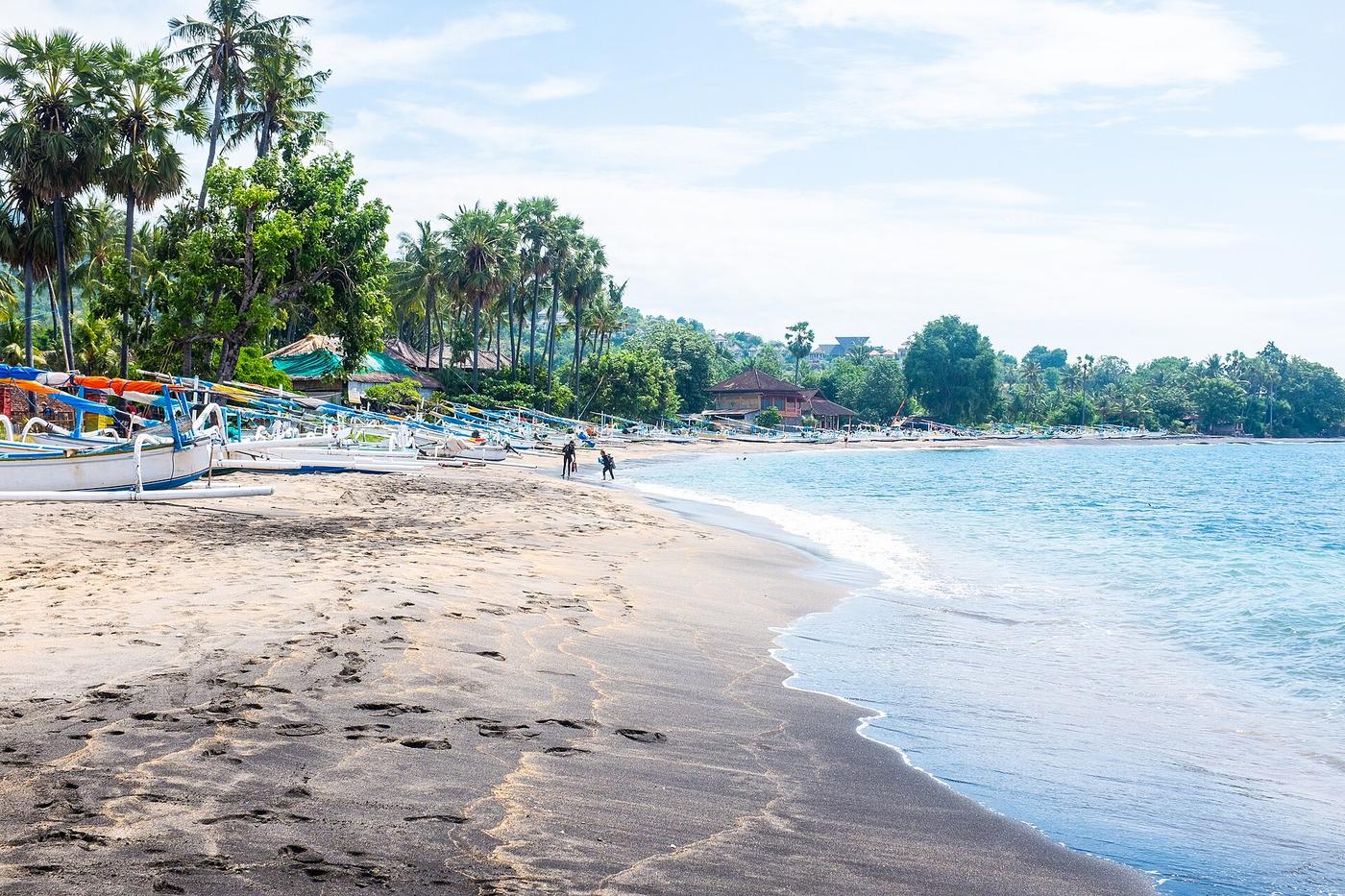
Amed, Bali, is a 14-kilometre stretch of quiet fishing villages on the island's far northeast coast, in Karangasem regency. The reef starts a few kicks from the black sand, so you can snorkel and dive straight from the beach. Two wrecks lie within reach, the Japanese shipwreck at Banyuning and the USAT Liberty at nearby Tulamben.
On land, expect black-sand bays lined with jukung outriggers, salt-making traditions, sunrise over Lombok and sunset behind Mount Agung. Amed is slower and drier than the island's green interior.
Give it two or three nights in the dry season, roughly April to October. It pairs naturally with the north coast road through Tejakula toward Lovina.
Amed at a Glance
- Where: Bali's northeast corner, in Karangasem regency, reached from the south over the hills or from Lovina along the north coast road
- The villages: seven of them, Amed, Jemeluk, Bunutan, Lipah, Lean, Selang and Aas, strung along one coastal road
- Known for: shore diving and snorkelling, freediving, the Jemeluk viewpoint, and Garam Amed, the protected sea salt made here
- The water: calm mornings, coral close to shore, visibility often excellent in the dry season
- The feel: quiet, local and unhurried, with guesthouses and warungs rather than resorts
- Best time: the dry season, roughly April to October, for the calmest, clearest water
- How long: two or three nights
- From Lovina: about two hours along the sea road
Amed Is Seven Fishing Villages in the Rain Shadow of Mount Agung
The name Amed covers seven villages strung along one coastal road.
They sit in the rain shadow of Mount Agung, so the land is drier and starker than the island's green interior. Cactus grows on the hillsides, peanuts and corn grow in terraced fields, and the sun sets behind Agung's enormous cone.
The villages lived from fishing and salt long before tourism arrived, and they still do. In the early morning hundreds of jukung sail out in silence. By mid-morning they are back on the beach in bright rows, and the day's snorkellers take over the bays.
Officially Amed belongs to Karangasem, the island's east. Travellers experience it as the eastern end of the north coast, with the same black sand, calm seas and slow villages as Lovina. One beautiful coastal road through Tejakula joins the two.
Snorkel Jemeluk Bay Straight from the Beach
Jemeluk Bay is the heart of easy snorkelling in Amed.
Coral gardens slope away from the beach, with dense fish life over them. There is an underwater "post office" to find, along with small statues. Mornings are calmest.
Two Wrecks Lie Within Reach of Amed
One wreck is a swim from the beach, and the other is a short drive up the road.
The Japanese Wreck at Banyuning
A small coastal freighter lies in shallow water at Banyuning, wrapped in soft coral and fish. Swimmers of modest confidence can reach it from the beach. It is one of the best shore snorkel sights in Bali.
The USAT Liberty at Tulamben
The Liberty, at Tulamben, is one of Bali's most famous dives.
She was a United States Army transport. On 11 January 1942 the Japanese submarine I-66 torpedoed her near the Lombok Strait, while she carried rubber and railway parts from Australia to the Philippines.
The ship was taken in tow for Singaraja, on the north coast, but took on too much water. She was beached at Tulamben instead, so that her cargo and fittings could be salvaged.
The tremors of Mount Agung's 1963 eruption pushed her off the beach and under the water. The 125-metre ship now lies with her shallow end about five metres down. That makes her a snorkel sight as well as a memorable first wreck dive, and dive shops in the Amed villages run trips.
Freediving: Schools Teach Beginners off Jemeluk
Amed has become one of Indonesia's freediving centres.
Several schools teach beginners over the same calm reefs, and the still, deep water off Jemeluk is made for it. Schools come and go, so ask at your guesthouse rather than booking from a list.
For the wider underwater picture across the north coast, see snorkelling in north Bali and diving at Menjangan and Pemuteran.
Garam Amed: Protected Sea Salt, Still Made by Hand
Amed's salt is a protected product, made by a traditional method.
Salt-makers pour seawater over the clay-rich sand and let it dry. They rinse the salted sand with more seawater through bamboo funnels. Then they leave the brine to crystallise in palungan, troughs hollowed from coconut trunks.
Garam Amed received an Indonesian geographical indication certificate in 2015. It is also registered in the European Union as a protected designation of origin. Only a couple of dozen families still make it by hand.
The producers' association sells from the Bali Amed Salt Center in Purwakerthi village. Some guesthouses keep traditional salt works to show visitors. Ask before you photograph anyone at work.
Out of the Water: a Viewpoint, a Sunrise and Two Day Trips
Four things on land are worth your time.
- Jemeluk viewpoint. The postcard of Amed: the bay's curve, the boats, and Agung behind, best at sunset.
- Sunrise over Lombok. The east-facing coast sees the sun rise from behind Lombok's Mount Rinjani across the strait.
- The coast road. The ride between Amed and the north through Tejakula is one of Bali's great quiet drives, sea on one side, palms and villages on the other.
- Lempuyang and Tirta Gangga. Pura Lempuyang, with the split gate that frames Agung, and the royal water palace at Tirta Gangga are both day-trip close on the Karangasem side.
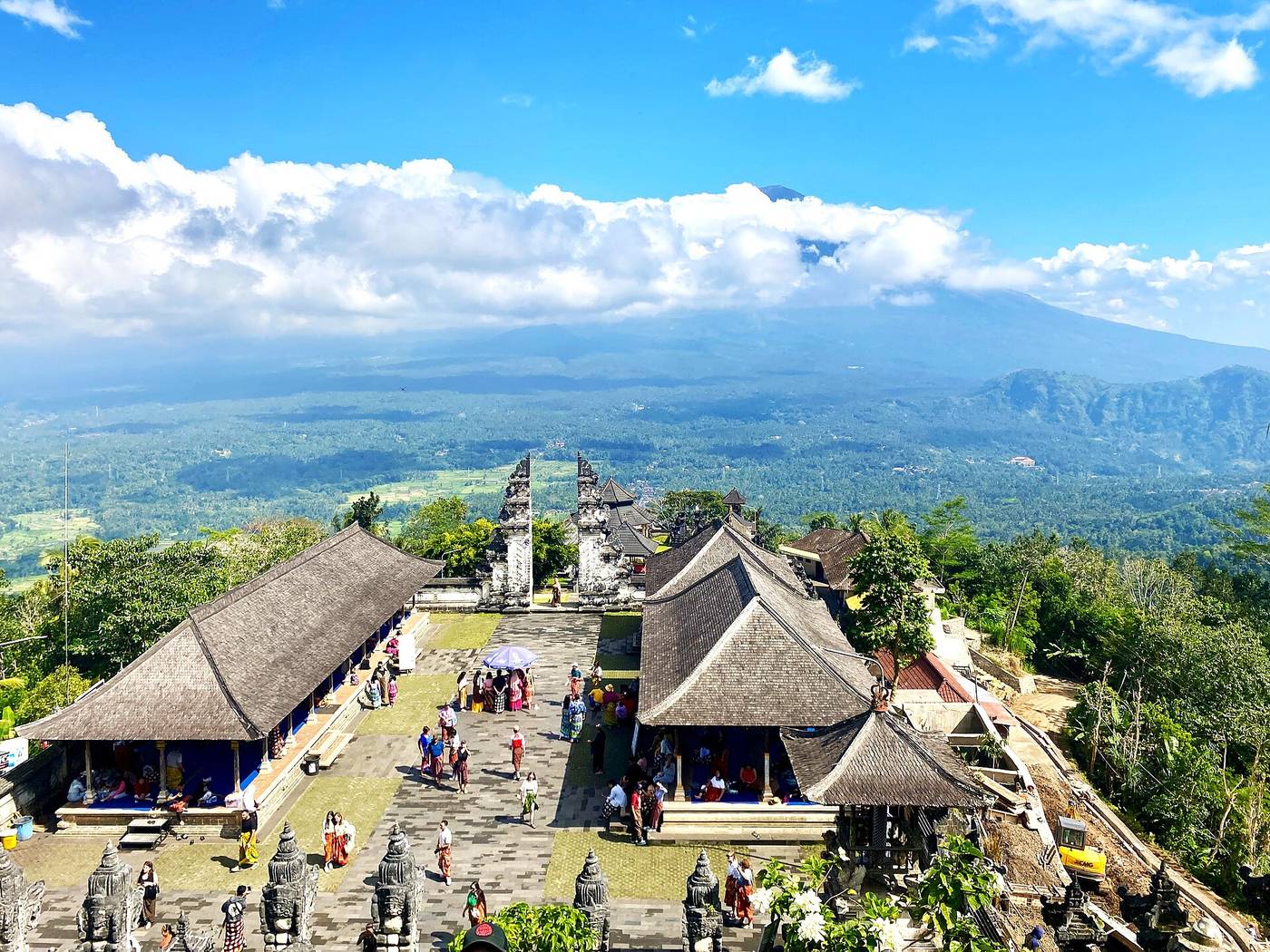 Lempuyang's lower courtyard and split gate, a short drive inland from Amed. Photo: Slleong / Wikimedia Commons (CC0)
When to Go: the Dry Season, in the Morning
The dry season, roughly April to October, brings the calmest and clearest water for snorkelling and diving.
Visibility is often excellent in those months. Mornings are best year-round, because the bays are calm before the wind picks up.
How to Reach Amed: over the Hills or along the Coast Road
Amed is in Bali's northeast corner, and two routes lead to it.
From the south, the road comes over the hills. From Lovina, the north coast road runs east through Tejakula and takes about two hours along the sea.
How to Fit It In: Two or Three Nights to Close a Northern Loop
Amed rewards two or three nights.
That covers the bays, the wrecks, the viewpoint and a slow day of village life. Freedivers and divers often stay longer.
A natural northern loop runs in four legs:
-
Start in Lovina, with its waterfalls.
-
Take the coast road east, with a stop in Tejakula.
-
Stay in Amed for the reefs and the Agung views.
-
Cut south from there.
Divers often reverse it. If your trip is built around the north, Amed is its natural final chapter.
Guesthouses and small hotels line the seven villages. For choosing your base area more broadly, see where to stay in north Bali. Palm Living's villas are around Lovina, two hours west, which makes a natural base for the first half of a trip along the whole coast.
Practical Notes
- Getting there: from the south over the hills, or from Lovina along the north coast road, about two hours.
- Best time: the dry season, roughly April to October. Go out in the morning, before the wind picks up.
- Snorkelling: from the beach at Jemeluk Bay and at the Japanese wreck at Banyuning.
- Diving: dive shops in the Amed villages run trips to the Liberty at Tulamben.
- Freediving: schools come and go, so ask at your guesthouse.
- Where to stay: guesthouses and small hotels in the seven villages.
- Salt works: ask before photographing anyone at work.
FAQ
Is Amed worth visiting?
Yes, especially if you want easy snorkelling, quiet black-sand villages and volcano views without crowds. Amed is a stretch of coastal Bali where fishing life still sets the rhythm. Its reefs and wrecks start right off the beach.
Is Amed in north Bali?
Administratively Amed is in Karangasem, east Bali. It sits at the eastern end of the north coast road and travels naturally with the north. It shares the same quiet coast as Lovina and Tejakula, two and a half to three hours along the sea road.
What is the famous wreck near Amed?
There are two. The small Japanese wreck at Banyuning is snorkellable from the beach. The USAT Liberty at Tulamben is a 125-metre ship and one of Bali's most famous dive sites, and it begins about five metres below the surface.
How many days do you need in Amed?
Two to three days covers the bays, the wrecks, the viewpoint and a slow day of village life. Freedivers and divers often stay longer.
When is the best time to visit Amed?
The dry season, roughly April to October, brings the calmest and clearest water for snorkelling and diving. Mornings are best year-round, before the wind picks up.
Sources
- Wikipedia, USAT Liberty, for the ship's history, the torpedoing and the beaching, read September 2026 (in English)
- Wikipedia, Tulamben and Mount Agung, for the 1963 eruption that moved the wreck, read September 2026 (in English)
- World Intellectual Property Organization, Geographical Indication story: Bali Amed Salt (PDF), read September 2026 (in English)
- ARISE+ Indonesia, Bali Amed Salt, on the production method and the European recognition, read September 2026 (in English)
- Wikipedia, Geographical indications in Indonesia, read September 2026 (in English)
- Palm Living, villas for rent around Lovina, read September 2026 (in English)
Amed is the far end of the coast these guides cover. Working back west: Tejakula, Lovina beach and snorkelling in north Bali.