On this page
- In Brief
- Tejakula at a Glance
- Tejakula Is a Working Village on a Quiet Stretch of Coast
- The Kayoan: a Dutch-Era Horse Bath Still in Daily Use
- Wayang Wong: a Sacred Masked Dance, Performed at Ceremonies
- On the Shore and in the Water: Jukung Boats and Quiet Reefs
- How to Fit It In: a Day East from Lovina, or a Quiet Stay
- When to Go: Dry-Season Mornings, April to October
- Getting There: Under an Hour East of Lovina
- Practical Notes
- FAQ
- Sources
In Brief
Tejakula, Bali, is a traditional fishing village on the island's northeast coast, about 45 minutes to an hour east of Lovina. Come for a slow morning in a village that goes about its own day. There is no resort strip, just the black-sand beaches, the old public bathing place and a string of dive sites offshore.
The Buleleng tourism office registers Tejakula as a tourism village on the strength of four things:
- the bathing place the Dutch built for the village's horses
- its Wayang Wong masked dance
- its salt making
- its melela sand carving
It suits travellers who want an unhurried day in the north more than an attraction. It pairs well with the quiet eastern coves and Yeh Mampeh waterfall nearby.
Tejakula at a Glance
- Where it is: Northeast coast of Bali, Buleleng, east of Lovina
- What it is: A working fishing and farming village, lightly visited
- Known for: Black-sand coast, traditional boats, the old public bathing place, the Wayang Wong masked dance, offshore dive and snorkel sites
- Pace: Slow, with no tourist strip
- Drive from Lovina: Under an hour east along the flat coast road
- Also here: Puyahan salt making and melela sand carving, both listed by the regency as village heritage
- Pair with: Yeh Mampeh waterfall, the eastern coves, north-coast snorkelling
- Best time: Dry season, with mornings on the water
Tejakula Is a Working Village on a Quiet Stretch of Coast
Tejakula's appeal is its ordinary day, on a beautiful, quiet stretch of the northeast coast.
Fishing boats line the dark sand, and the day starts early on the water. The catch and the rice set the rhythm here, more than visitors do.
Inland, the land climbs quickly toward the hills, with rice and plantation between the coast and the slopes. Offshore, the reefs draw a small, knowing dive crowd.
From a base in Lovina, Tejakula is the direction to go for even less polish and even fewer people.
The Kayoan: a Dutch-Era Horse Bath Still in Daily Use
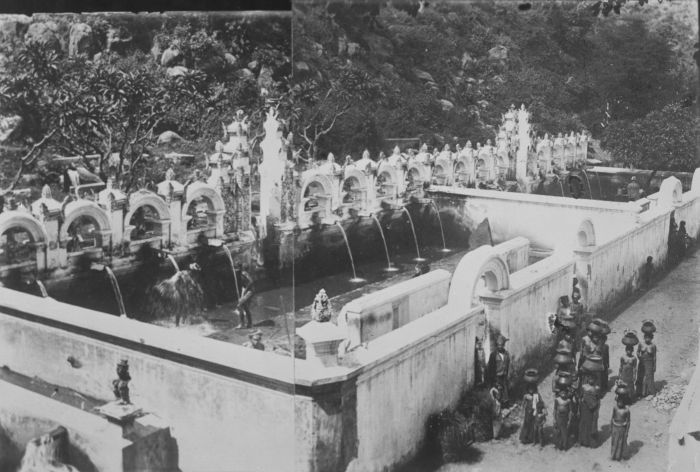
The area has a long history, and its best-known structure is the Kayoan, the public bathing place (pemandian umum).
It is a run of carved stone spouts and walled pools, fed by water that comes down from the Lake Batur uplands. It was built under Dutch administration as a horse bath.
Villagers still wash here daily, and it is busy from morning to late afternoon. A low wall divides the men's section from the women's. BaleBengong's report has the villagers' own account.
Before you arrive, understand that the Kayoan is somebody's bathroom. It is a working part of the village, and no photo stop.
Look from the path, ask before photographing anyone, and do not walk into the bathing compartments. The same manners as Bali temple etiquette serve you well here.
Wayang Wong: a Sacred Masked Dance, Performed at Ceremonies
Wayang Wong is Tejakula's own sacred dance form, performed in masks.
It is danced as part of Dewa Yadnya ceremonies, on no schedule for visitors, so it cannot be booked as a show. The honest advice is to ask locally whether a ceremony falls while you are there.
North Bali dance and music explains where it sits among the island's forms. Panca Yadnya explains the ceremony class it belongs to.
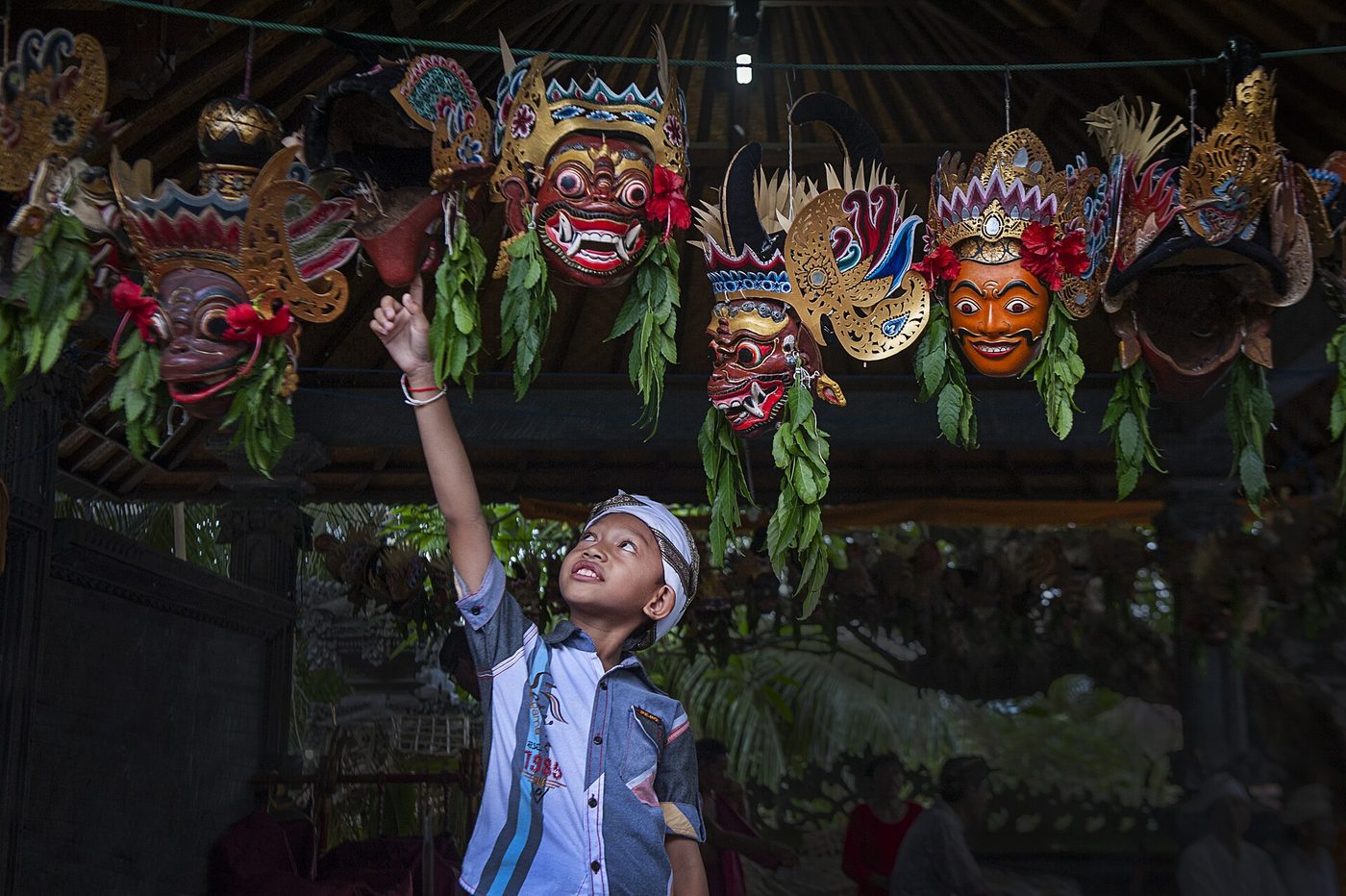 Wayang Wong masks hung ready for a performance in Tejakula. Photo: Imadedana / Wikimedia Commons (CC BY-SA 4.0)
On the Shore and in the Water: Jukung Boats and Quiet Reefs
The rest of a visit is spent on the black sand and the reefs.
Walk the Village and the Shore
The black-sand beaches and the lines of jukung boats are the everyday scene. The village itself, with its temples and old houses, rewards a slow wander. Photographs here are of the lived-in kind, with no staged viewpoint.
Snorkel and Dive the Reefs
The coast east of Lovina holds a string of quiet reefs, and the regency lists marine tourism among Tejakula's attractions.
Ask at your guesthouse who is currently taking guests out. That works better than booking ahead from the south. The wider picture of where to get in the water is in the north Bali snorkelling guide.
How to Fit It In: a Day East from Lovina, or a Quiet Stay
Tejakula is for the traveller who has already done the headline north, the dolphins, Sekumpul and Menjangan. It is the place to go one step quieter.
Base in Lovina and take a day east. Or stay out here, if you want mornings with nothing on the schedule but the boats and the sea.
The village also works as a base for the quiet east. It sits near Yeh Mampeh waterfall and the eastern coves, a launch point for a day in a lightly visited part of the north coast.
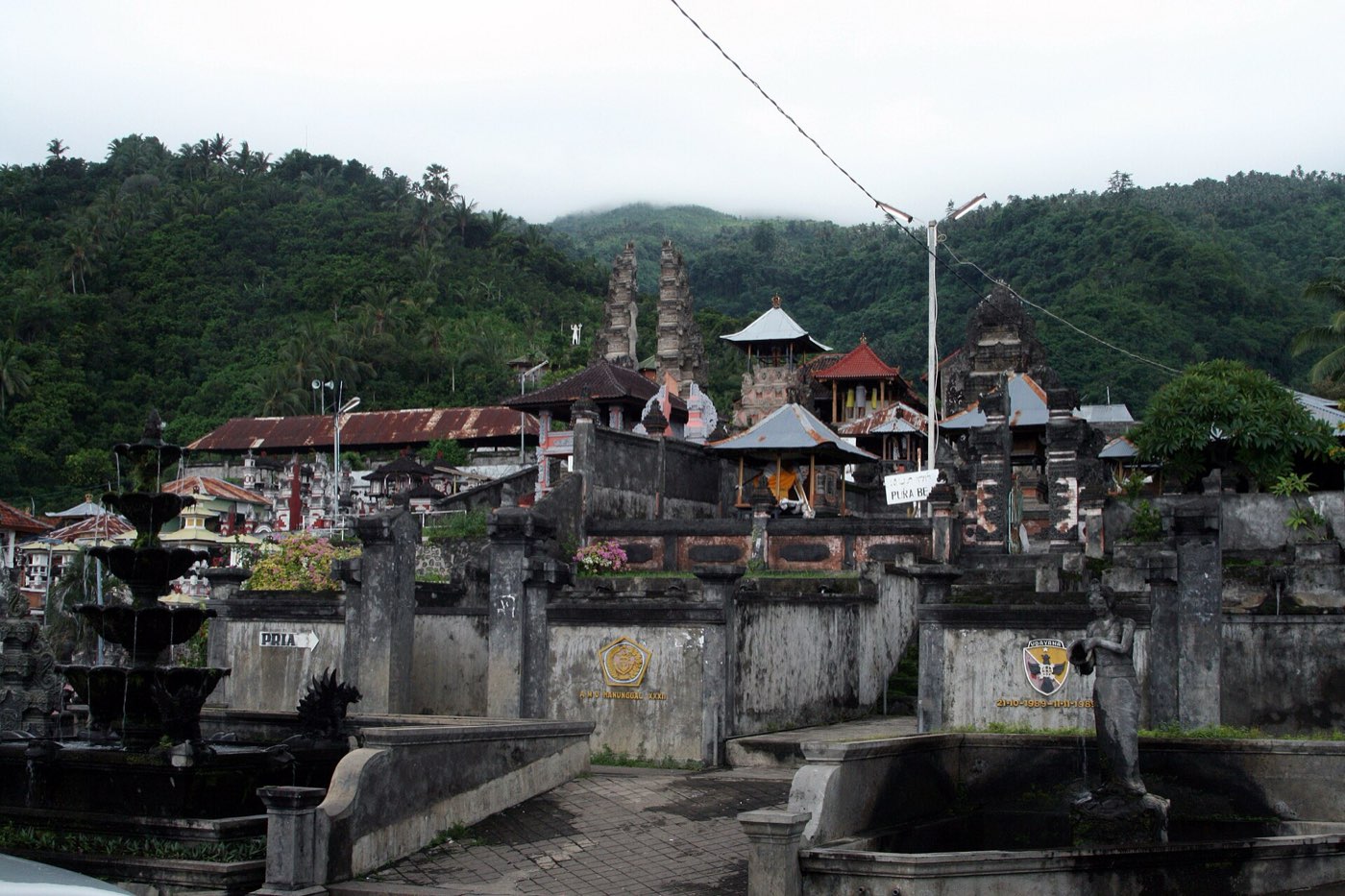 The village temple at Les, up the coast from Tejakula. Photo: ronnie.muhadi / Wikimedia Commons (CC BY-SA 3.0)
When to Go: Dry-Season Mornings, April to October
The dry season, April to October, gives the calmest water for snorkelling and the easiest coast driving.
Mornings are best, before the heat and while the village is at its most active on the water. The northeast is among the drier corners of Bali, so the shoulder months hold up well.
Getting There: Under an Hour East of Lovina
Tejakula is about 45 minutes to an hour east of Lovina along the flat coast road.
It is an easy scenic drive with no mountain climb, and a scooter or a driver both work. From the south the journey is long, three hours or more, so Tejakula makes sense as part of a north-coast trip.
The routes are in getting to north Bali. If you would rather be driven, private drivers in north Bali covers how that works.
Practical Notes
Details change. Confirm locally before you go.
- Drive from Lovina: About 45 to 60 minutes east
- Getting around: Scooter or driver. The coast road is flat
- The bathing place: In daily use by the village. Look, do not enter, and ask before photographing anyone
- Snorkel and dive: Several offshore sites. Arrange with a local operator once you are here
- Facilities: Limited. Bring cash, as there are few ATMs out here
- Pace: Very quiet. This is a working village, with no resort strip
FAQ
Where is Tejakula? On north Bali's northeast coast, in Buleleng, about 45 minutes to an hour east of Lovina along the coast road.
Is Tejakula worth visiting? Yes, if you want an unhurried day in the north more than an attraction. It is a working fishing village with black-sand beaches, an old public bathing place and quiet reefs offshore, with almost no tourist development.
What is there to do in Tejakula? Walk the village and its black-sand shore, see the old bathing place, and snorkel or dive the offshore reefs. You can also use it as a base for the eastern coves and Yeh Mampeh waterfall.
How do you get to Tejakula from Lovina? About 45 to 60 minutes east along the flat coast road by scooter or private driver. There is no convenient public transport for a day trip.
Can you snorkel or dive near Tejakula? Yes. The coast east of Lovina has a string of quiet reefs, and the regency lists marine tourism among the village's attractions. Ask at your guesthouse for whoever is currently taking guests out. See the north Bali snorkelling guide for where to get in.
What is the bathing place at Tejakula? A public bath of stone spouts and walled pools, built under Dutch administration as the village's horse bath. Villagers still use it daily, in separate men's and women's sections, and the regency lists it as village heritage. It is a working bathroom, so treat it as one.
What is Wayang Wong Tejakula? A masked dance form the village holds as its own identity. It is danced as part of Dewa Yadnya temple ceremonies, with no performances put on for visitors. To see it, you have to be here when a ceremony is on.
Is Tejakula good for a quiet stay? It is one of the quietest parts of the north coast, suited to travellers who want mornings with nothing scheduled. Facilities are limited, so come for the calm more than the comforts.
Sources
- Buleleng Regency tourism office, Tejakula Tourism Village, for the village's listed heritage: the old public bathing place, Wayang Wong, Puyahan salt making, melela sand carving and marine tourism, read September 2026 (in English)
- BaleBengong, Kayoan Tejakula: lokasi mandi bersama yang bertahan dan menjaga kekerabatan, for the bath's daily use, its water and its men's and women's sections, read September 2026 (in Indonesian)
- Wikipedia, Tejakula, Buleleng, for the district, read September 2026 (in English)
- Tropenmuseum photograph of the Tejakula bathing place, c. 1900, via Wikimedia Commons, read September 2026
Next along this coast: Yeh Mampeh waterfall at Les, the Bali Aga villages of the north, and snorkelling in north Bali.