
On this page
Last updated: September 2026
In Brief
Bija (also written wija) is washed, uncooked rice that Balinese Hindus receive at the end of prayer, right after the holy water. A few grains are pressed onto the forehead just above the point between the eyebrows, a few onto the outside of the throat, and a few are swallowed whole without chewing. The rice stands for Kumara, a son of Shiva, and for the seed of divine nature that each person is meant to grow. Whole, unbroken grains are preferred, because a broken seed cannot sprout. If you are at a ceremony and bija is offered to you, accept it quietly and copy the people beside you.
Bija at a Glance
- What it is: Washed, uncooked rice received after prayer
- Also called: Wija; the act of receiving it is mabija or mawija
- Comes after: Tirta, the holy water, which is sprinkled, sipped and wiped over the face
- Where it goes: Forehead, outer throat, and a few grains swallowed
- What it symbolises: Kumara, son of Shiva, the seed of divine nature in every person
- The grain: Whole and unbroken; sometimes soaked in sandalwood water or tinted yellow with turmeric
- For visitors: Accept it if offered, follow your host, and never chew the grains
What Bija Is
Bija is rice in its simplest ritual form. The grains are washed clean, and in some households soaked in sandalwood water or coloured yellow with turmeric, though many now use plain washed rice (detikBali). The Balinese dictionary project BASAbali defines it as uncooked, damp white rice put on the forehead, temples and throat after prayer (BASAbali Wiki).
The word itself means seed. It comes into Balinese through Old Javanese from the Sanskrit bīja, which in Hindu thought also names the seed syllables of mantra, Om the best known of them.
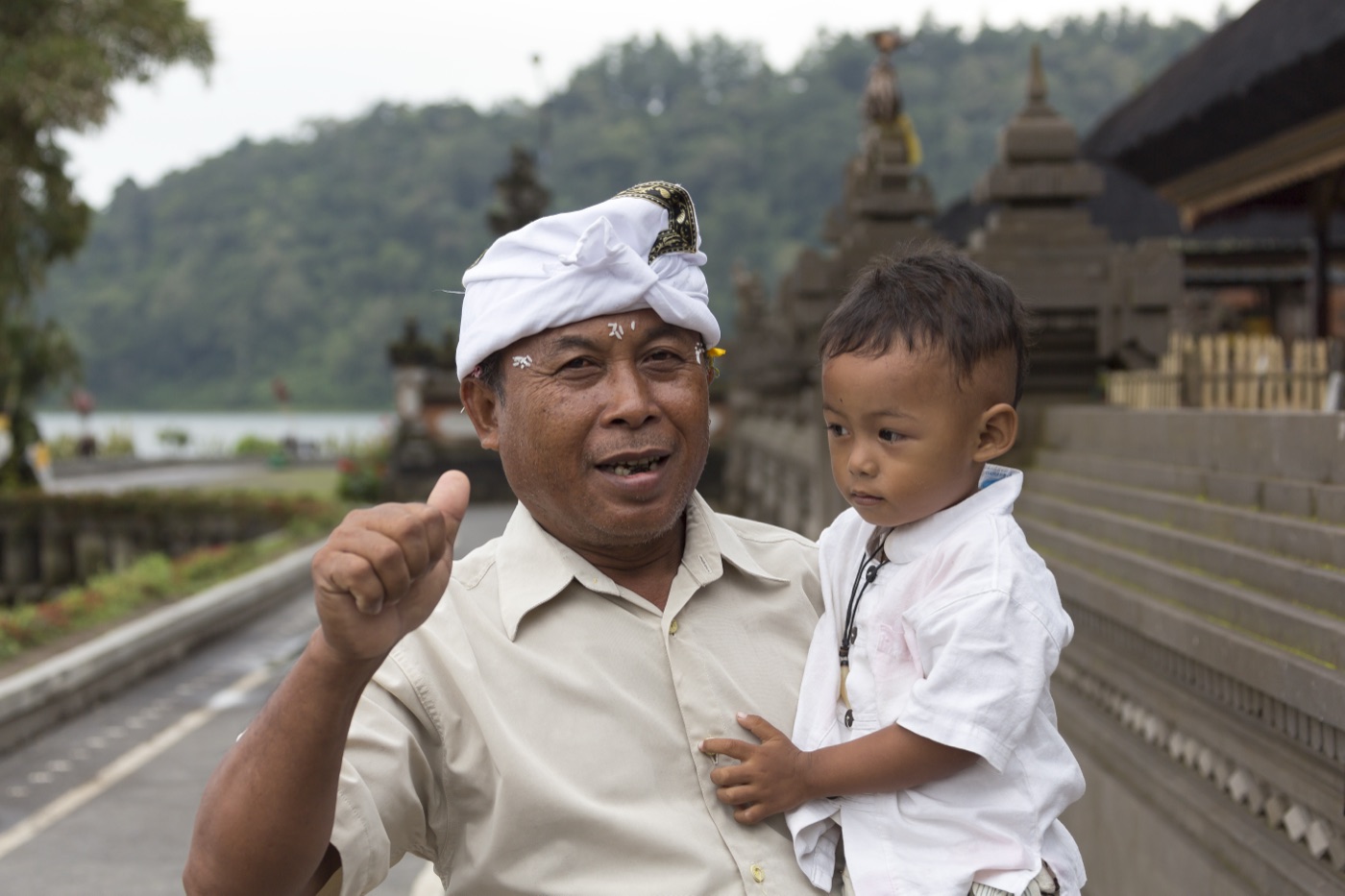 Bija on the forehead and temples after worship at Pura Ulun Danu Bratan. Photo: CEphoto, Uwe Aranas / Wikimedia Commons (CC BY-SA 3.0)
What It Means
The rice is a symbol of Kumara, one of the sons of Bhatara Siwa (Shiva). In the explanation given by Ida Bagus Egi Dananjaya, a Hindu religious instructor with the Ministry of Religious Affairs in Denpasar, Kumara stands for the seed of kedewataan, divine nature, and mabija means making that seed grow inside your body and mind (RRI Denpasar).
That is why the grain has to be whole. A cut or broken grain of rice will never sprout, so broken rice would make a poor symbol for a seed you hope will grow. The preferred rice is beras galih, whole grains, which are also called aksata, unbroken.
It is also why bija comes last. The prayer and the holy water clean the ground first, and the seed goes in once the ground is ready.
The Order of a Blessing: Tirta, Then Bija
Bija never arrives on its own. It closes a fixed sequence, followed at temple ceremonies and at the family shrine at home.
- Prayer. Worshippers sit in rows and pray with raised hands, often holding a flower between the fingertips.
- Tirta. A pemangku (temple priest) or a helper moves along the rows with a vessel of holy water. The water is sprinkled on the head three times, sipped three times, and wiped over the face three times (RRI Denpasar).
- Bija. The bowl of rice follows. Each person takes a few grains, presses them to the forehead and throat, and swallows a few.
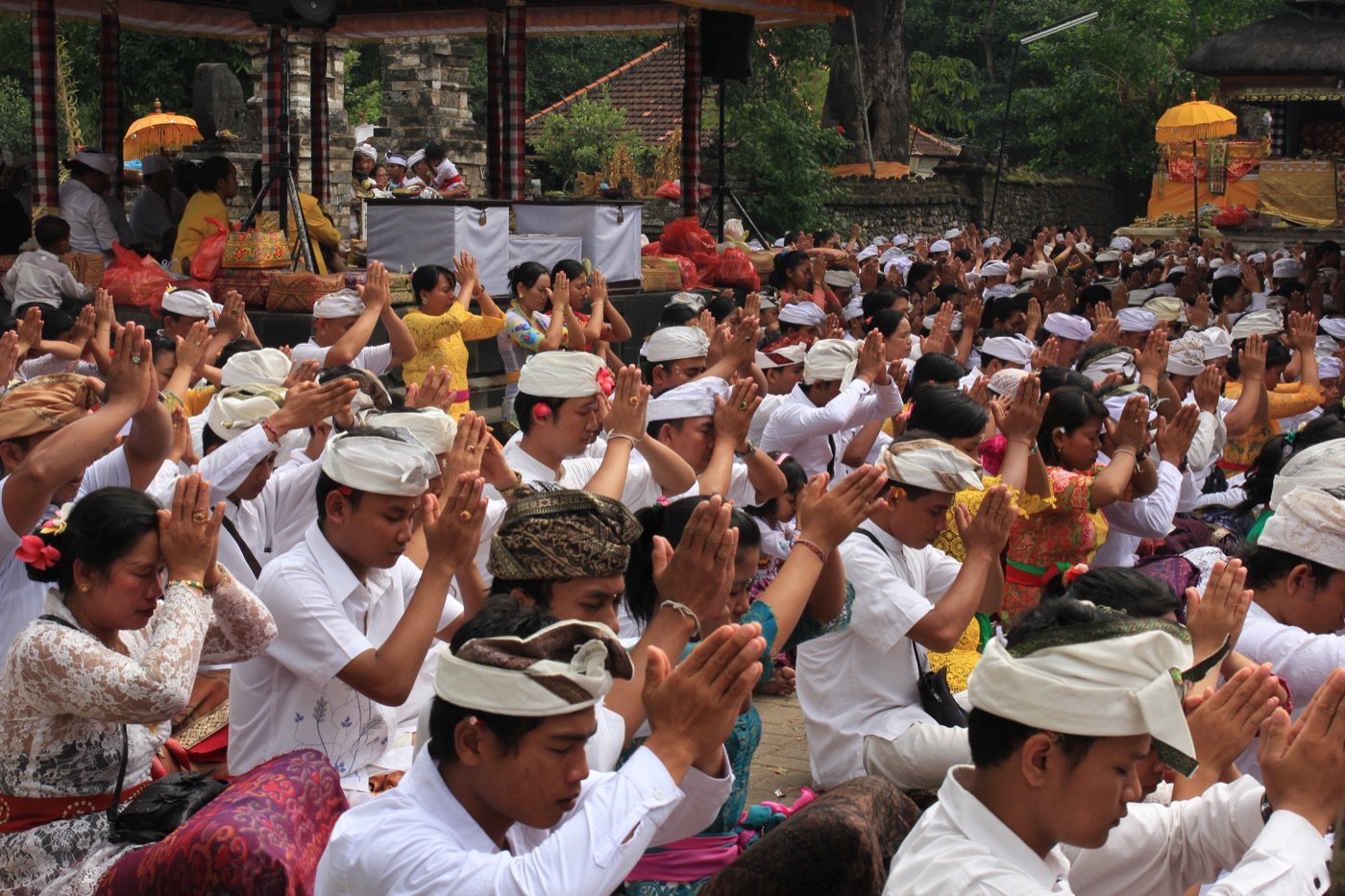 Prayer at a temple festival, the first step before tirta and bija. Photo: Rudywk / Wikimedia Commons (CC BY-SA 4.0)

The holy water received after prayer is called tirta wangsuh pada, literally the water that washed the feet of God. It is understood as grace received through water that was set out and offered during the prayer (RRI Denpasar). The same instructor describes the household version: a clean vessel of water and a small container of whole rice set at the main shrine before praying, then received in the same order afterward.
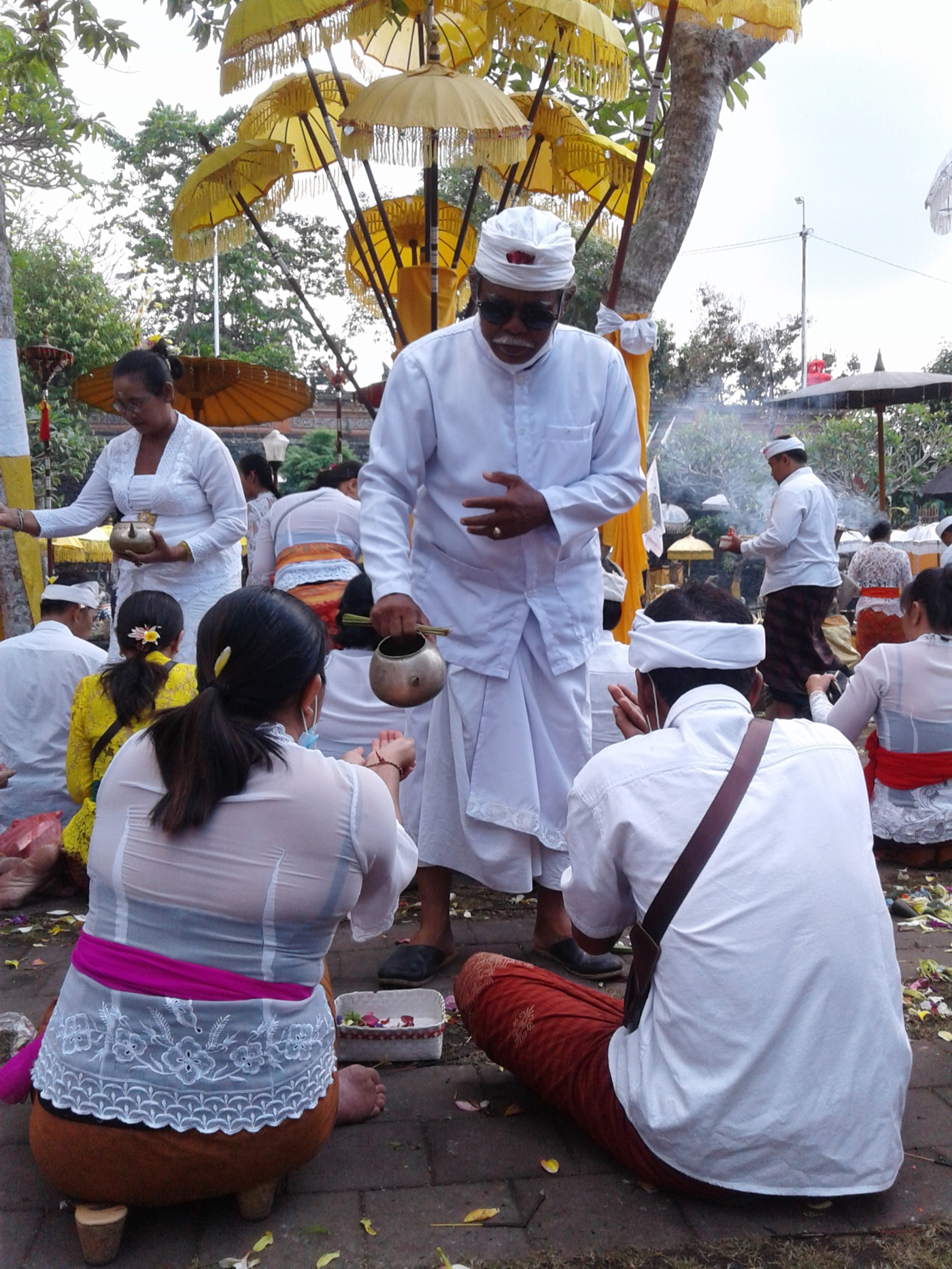 A pemangku brings tirta along the rows after prayer; the bija follows. Photo: MiracleLoveLife / Wikimedia Commons (CC BY-SA 4.0)

For how holy water works across the rest of Balinese ritual, see the elements of a Balinese ceremony and the spring-water rite of melukat.
Where It Goes, and Why
The forehead. Grains go slightly above the point between the eyebrows, the place linked to the ajna chakra, the third eye. The hope is for the light of wisdom to guide how you think, speak and act.
The throat. A few grains go on the outside of the throat, over the wisuddha chakra. This placement asks for purified speech. Dananjaya quotes a Hindu teaching that friendship, happiness, suffering and even death can all come through words, so the grains ask that what you say never wounds anyone (RRI Denpasar).
Swallowed. A few grains are swallowed whole. Chewing would break them, and a broken seed cannot grow, so swallowing is the gesture of taking divine nature in intact.
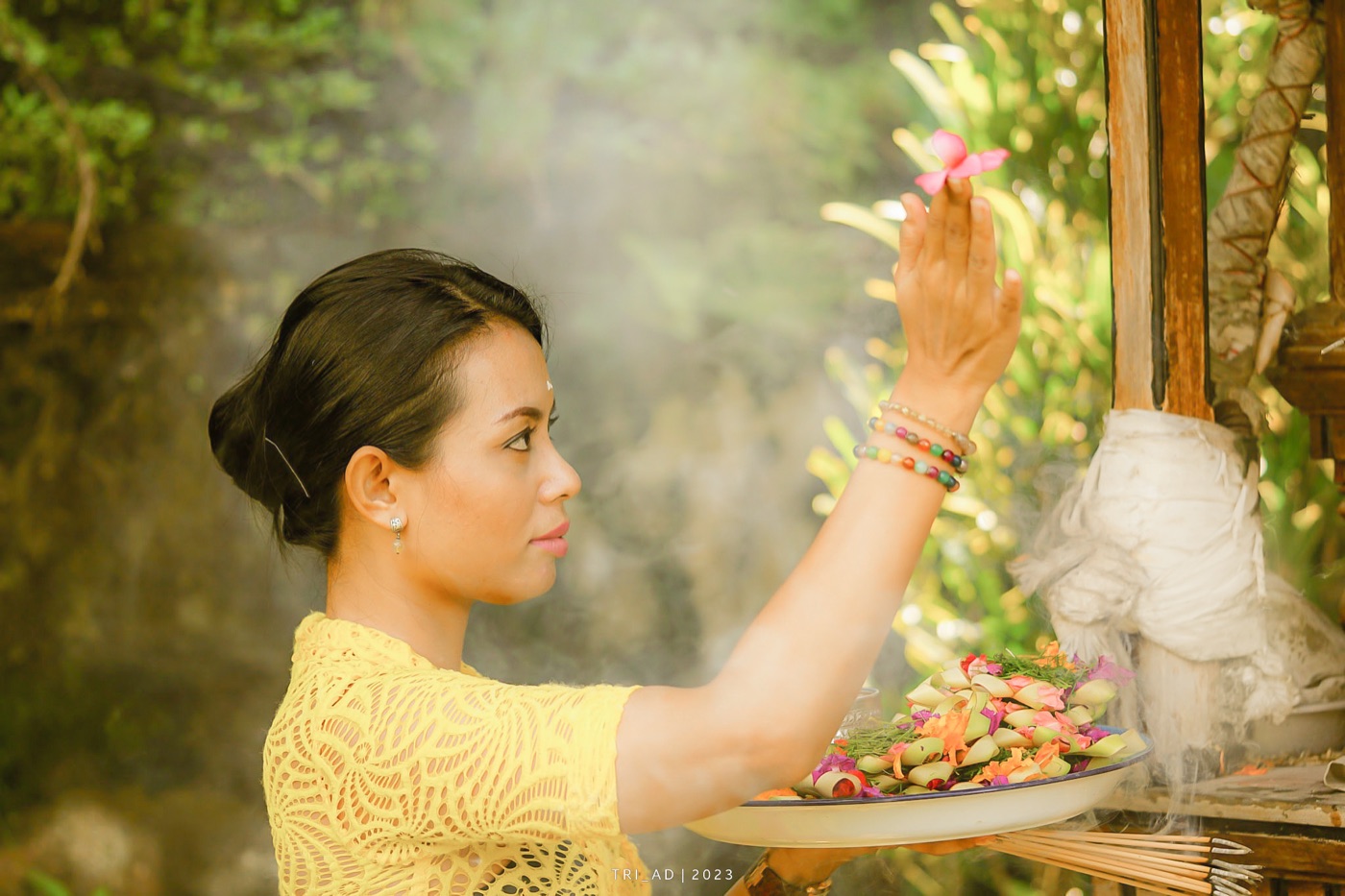 A worshipper at prayer, with bija at her temple. Photo: Tri Arya Dhyana K. / Wikimedia Commons (CC BY-SA 4.0)

The teaching behind these three spots names five, called panca adisesa: the forehead, the throat, inside the mouth, the navel and the upper chest over the heart. At a temple, in full ceremonial dress, the navel and chest are hard to reach, so practice settles on the first three (IDN Times Bali). You will still see variation. Some people also place grains at the temples, on the earlobes or on the crown of the head, and communities differ in the details. Palm Living's own post on bija adds that the number of grains should be a multiple of three, because three is a sacred number.
Bija and the Rice in Offerings
Rice runs through Balinese ritual, and not all of it is bija. Rice is one of the base layers inside a daily canang sari, and it is the heart of segehan, the small ground offerings of rice set at gateways and on the earth for the bhuta kala, the lower forces (BASAbali Wiki).
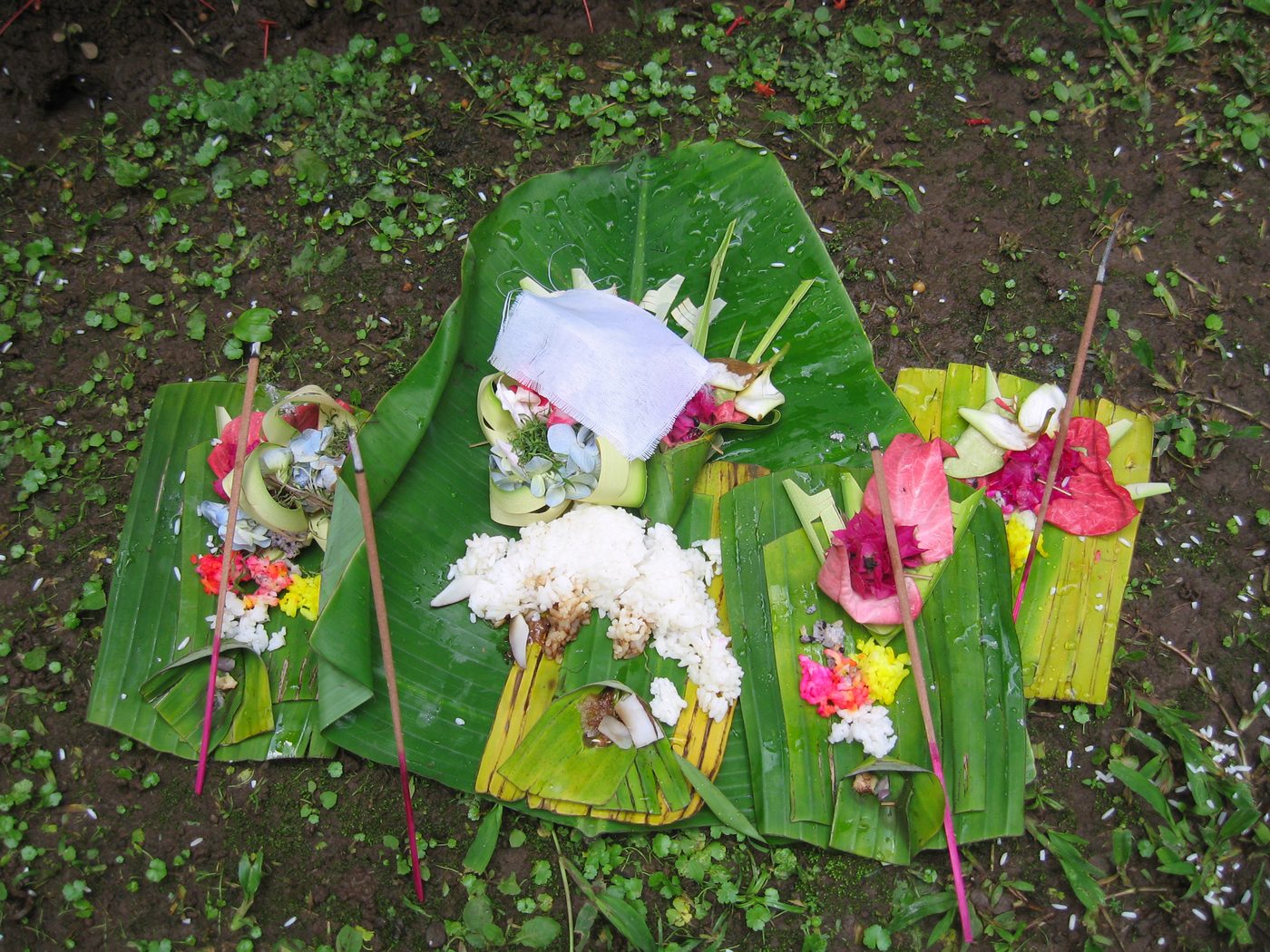 A segehan, rice given outward to the lower forces. Photo: Puri Lumbung Cottages / Wikimedia Commons (CC BY-SA 4.0)

The difference is direction. Offering rice goes out, as a gift to gods, ancestors or the forces below. Bija comes back in, received on and into the body once the prayer is complete. The same grain carries both meanings, which fits the Balinese habit of holding opposites in balance.
Can Visitors Receive Bija?
If you attend a ceremony as a guest, dressed properly and sitting with your host, the pemangku or helpers bringing tirta and bija along the rows may include you. Accepting is a courteous response to a courteous gesture.
How to do it well:
- Watch first. Copy the person beside you for the tirta, then the bija.
- Use your right hand to take the grains.
- Press lightly. A few grains on the forehead and throat are enough; they stick because they are damp.
- Swallow, never chew, if you take the grains into your mouth.
- Ask your host how long to leave the grains on if you are unsure; none of the sources consulted for this guide sets a rule.
- Decline gently if you would rather not take part. A small shake of the head and a smile is fine.
Dress, behaviour and the rules for entering temples are in the Bali temple etiquette guide, and the wider calendar of rites is in understanding Balinese ceremonies.
Practical Notes
Customs vary by village and family. When in doubt, follow your host or the people around you.
- You will see bija most on people leaving temple ceremonies and holy-day prayers.
- A sarong and sash are required inside any temple; bring your own or borrow one at the entrance where offered.
- Ask before photographing anyone during the tirta and bija moment, and keep your distance while the rows are still praying.
- If you would like to attend a ceremony, ask your villa host or a local guide rather than arriving uninvited.
For the rest of the north, start with the complete north Bali guide.
FAQ
What is bija in Balinese Hinduism?
Bija is washed, uncooked rice received at the end of prayer, right after the holy water. Grains are pressed onto the forehead and throat and a few are swallowed. It symbolises Kumara, a son of Shiva, and the seed of divine nature each person is meant to grow.
Why do Balinese people have rice on their forehead?
The rice is bija, placed after prayer just above the point between the eyebrows, the third-eye point linked to wisdom. It marks that the person has prayed and received the blessing, and expresses the hope that divine nature will grow in them.
Where do you put bija?
On the forehead slightly above the eyebrows, on the outside of the throat, and a few grains swallowed whole. The full teaching names five points, adding the navel and the upper chest, but those two are rarely used at temples because of ceremonial dress.
Why is bija swallowed and not chewed?
Bija is a seed, and a broken seed cannot grow. Swallowing the grains whole keeps the symbol intact, the same reason whole, unbroken rice is preferred for bija in the first place.
What is the difference between tirta and bija?
Tirta is the holy water, sprinkled on the head, sipped and wiped over the face three times each. Bija is the rice that follows it. Tirta purifies, and bija plants the seed once the purification is done.
Can tourists wear bija?
If you are a guest at a ceremony and bija is offered, you can accept it respectfully by following the people beside you. Press a few grains to your forehead and never chew them. Declining politely is also fine.