
On this page
In Brief
Melukat is a Balinese Hindu purification ritual in which holy spring water cleanses a person of negative energy, illness and spiritual heaviness. After a blessing, you pass beneath a row of sacred water spouts at a spring temple and pray at each. It is open to respectful visitors.
In the north, melukat is done at holy springs such as the shoreline shrine at the coastal temple of Ponjok Batu. Its priest says foreign visitors take part, there is no charge, and you bring an offering.
Melukat at a Glance
- What it is: Hindu purification ritual using holy spring water
- The purpose: Cleanse negative energy and spiritual and physical heaviness
- How: Blessing, then standing under sacred water spouts, praying at each
- What to wear: A sarong, usually over swimwear or clothing you can get wet. Ask at the site
- Open to visitors: Yes, if done respectfully and with sincerity
- In the north: Holy springs, including the melukat shrine on the shore at Ponjok Batu and the sour spring at Pancasari
- Cost: No charge at Ponjok Batu, according to its priest. Bring an offering
- Approach: As devotion, with a real intention
Melukat Cleanses Body and Spirit with Holy Water
Water is sacred in Bali. It flows from the holy mountains, feeds the rice through the subak temples, and purifies the body and spirit through melukat.
The word comes from lukat, to cleanse or remove. The ritual washes away:
- sebel, spiritual impurity
- bad energy
- grief and illness
- the residue of hard times
A person leaves it clear and renewed. The practice is rooted in the island's deep reverence for water as a living, divine force.
People come to melukat for many reasons:
- after a loss or an illness
- before an important undertaking
- to mark a new chapter
- simply to feel clean in spirit
There are two routes to the water, as the Ministry of Religious Affairs' Denpasar office sets out. One is to go to a water source held to be sacred in itself. The other is tirtha penglukatan, water consecrated by a sulinggih, a high priest with the authority to do it.
Both count. Melukat sits within manusa yadnya, the cycle of rites that mark a human life. The wider faith is in Balinese Hinduism explained.
The Ritual Runs from Blessing to the Spouts
The details vary by site and priest, but the order holds.
-
Preparation and offering. You dress in a sarong and bring, or are given, a small offering (canang sari). A priest or temple attendant guides you and may sprinkle holy water and lead an opening prayer.
-
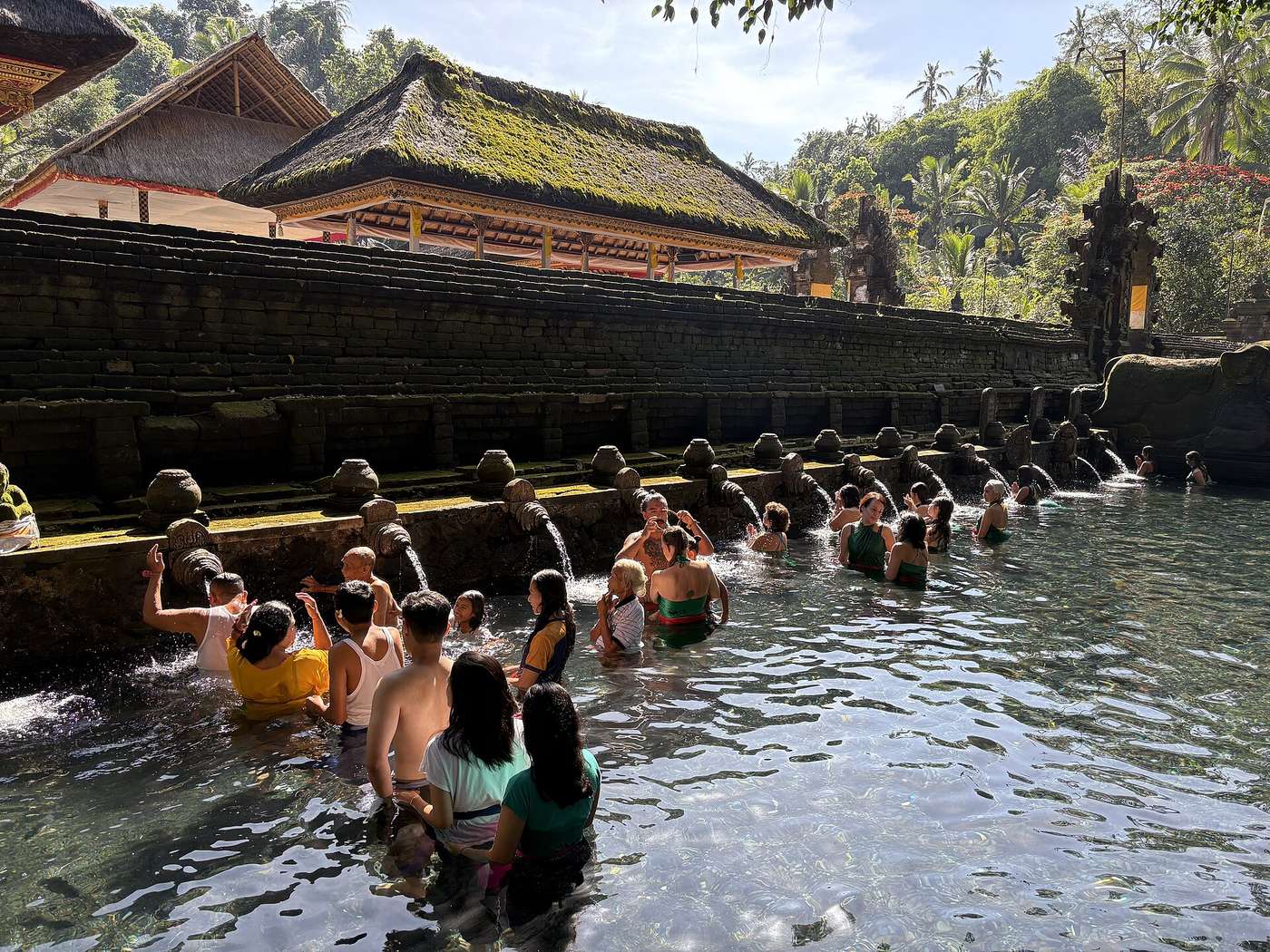
Entering the water. You move to the sacred spring or pool, where a row of carved spouts (pancuran) channels the holy water.
-
Under the spouts. You pass beneath each spout in turn and let the water run over your head. Many people cup it, drink a little, and pray or set an intention at each one. Each spout may carry its own meaning.
-
Closing. A final prayer and blessing complete the ritual. Many people describe feeling lighter afterward.
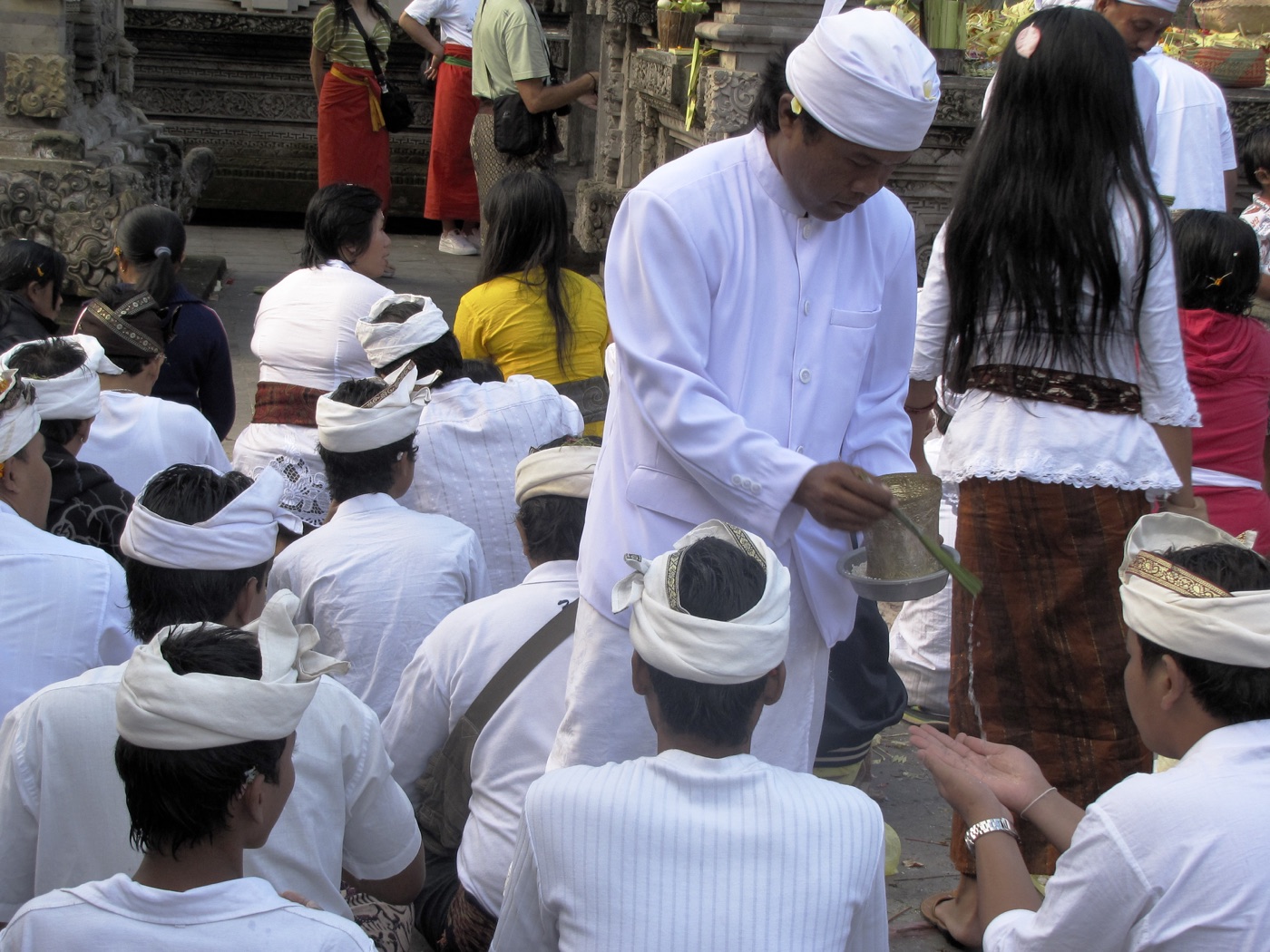 A priest brings holy water from the spring to worshippers at Pura Tirta Empul. Photo: Spencer Weart / Wikimedia Commons (CC BY-SA 3.0)

North Bali's Melukat Springs Rise on the Shore and in the Highlands
Buleleng regency has written up several of its melukat springs, from the beach to the lakes.
Pura Segara Taman Beji, at Pura Ponjok Batu
The shrine lies within the grounds of Pura Ponjok Batu, the coastal temple on the northeast shore. Five springs known as the Panca Tirta rise right on the beach. The Buleleng regency describes the shrine as a place for melukat, healing and self-purification.
Its priest told the regency that foreign visitors take part as well, and that there is no charge. You bring a pejati offering, an ivory coconut and an odd number of flowers. The temple itself is in the temples guide, and Tejakula is nearby.
Tirta Yeh Masem, at Pura Taman Beji in Pancasari
This spring is beside Lake Buyan in Pancasari, up in the highlands. The regency records it as a melukat site that people also come to for healing. The water tastes sour, which gives the spring its name.
Village spring temples
The north holds many more pura beji and tirta used for melukat. The same regency report names Pura Yeh Ketipat, Pura Tirta Sudhamala and Pura Sakti in Pejarakan, Gerokgak. These are working village temples, so access runs through the community.
Go with a guide or your host
The right site, the right timing and the right etiquette all matter. So the best way in is with someone who knows, a local guide or your host, rather than turning up cold.
Take Part on the Temple's Terms
Melukat is a living religious ritual, so the priest and the temple's customs lead.
- Come with sincerity. Treat it as the spiritual act it is, and bring a real intention.
- Dress correctly. Wear a sarong over swimwear or clothing you can get wet. Customs differ between sites, so ask at the temple rather than guessing. Women who are menstruating traditionally do not take part.
- Follow the priest or guide. Let them lead the sequence and the prayers.
- Ask before photos. Many sites allow respectful photos. Ask first, and keep the camera out of other people's devotion and your own. See Bali temple etiquette.
- Give an offering or donation. It supports the temple and honours the practice.
FAQ
What is melukat in Bali? Melukat is a Balinese Hindu purification ritual using holy spring water to cleanse a person of negative energy, spiritual heaviness, grief and illness. You receive a blessing, then pass beneath sacred water spouts, praying at each.
Can tourists do melukat? Yes, if you come with sincerity and follow the etiquette. Dress correctly, let a priest or local guide you, and treat it as a religious act rather than an attraction.
What do you wear for melukat? A sarong, usually over swimwear or clothing you can get wet, since you will. Customs differ from site to site, so ask when you arrive. Women who are menstruating traditionally do not take part.
Where can you do melukat in north Bali? At holy springs such as the shoreline shrine at the coastal Pura Ponjok Batu, and at highland and village spring temples. A local guide who knows the site and its customs is the best way in.
What does melukat do? Spiritually, it removes sebel (impurity) and negative energy, leaving a person renewed. Many people seek it after loss or illness, before an important step, or to mark a new chapter. People often describe feeling lighter afterward.
Is melukat the same as the famous Tirta Empul ritual? It is the same kind of ritual. Tirta Empul, in central Bali, is one of the best-known melukat sites and is often crowded. In the north, the same purification is done at spring temples such as Ponjok Batu and Pura Taman Beji in Pancasari.
Sources
- Kantor Kementerian Agama Kota Denpasar, Memaknai melukat dalam perspektif Hindu and the same article on Kemenag Bali (melukat as the cleansing of body and spirit, the two routes to the water, a sacred source or tirtha penglukatan consecrated by a sulinggih, and melukat's place within manusa yadnya), Indonesian, read September 2026
- Pemerintah Kabupaten Buleleng, Pura Segara Taman Beji Ponjok Batu, tempat melukat dan mensucikan diri (the melukat shrine at Ponjok Batu, its five shoreline springs, foreign visitors taking part, no charge, and the offering to bring), Indonesian, read September 2026
- Pemerintah Kabupaten Buleleng, Tirte Masam Pura Taman Beji, tempat melukat sekaligus penyembuhan (the sour-tasting spring beside Lake Buyan in Pancasari used for melukat and healing, and other melukat temples in Buleleng), Indonesian, read September 2026
- Sistem Informasi Wilayah dan Tata Ruang Bali, Pemerintah Provinsi Bali, Pura Beji Selati, tempat melukat (a pura beji in Bangli whose melukat water is drawn from a holy spring inside the temple), Indonesian, read September 2026
- Photographs: Chainwit. (CC BY 4.0) and Spencer Weart (CC BY-SA 3.0), Wikimedia Commons
_at_Pura_Tirta_Empul_(2025)_-_img_03.jpg)
Read next: Bali temple etiquette, Balinese Hinduism explained, and the best temples in north Bali.