
On this page
In Brief
Galungan is Bali's most important festival. It celebrates the victory of dharma (good, order) over adharma (evil, chaos). It returns every 210 days on the Balinese Pawukon calendar, so the dates shift each year.
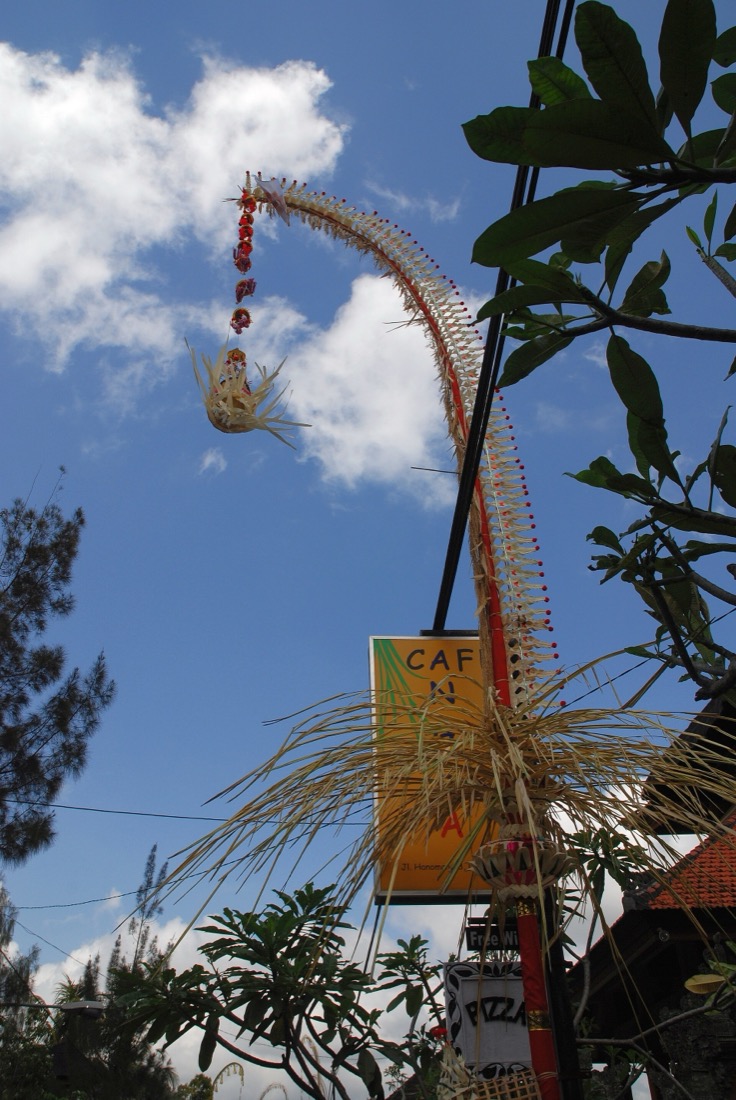
For the ten days from Galungan to Kuningan, the ancestral spirits return to visit the living. Families gather, the temples are full and offerings are set out in great number. Tall, gracefully curved bamboo poles, the penjor, arch over the road.
If your trip falls during Galungan, you can witness it as a quiet, respectful guest. Expect busy roads and temples, and some closed businesses.
Galungan & Kuningan at a Glance
- What it celebrates: The victory of good (dharma) over evil (adharma)
- The span: Galungan to Kuningan, ten days
- The spirits: Ancestors return to visit the living during the period
- The sign: Penjor, tall curved decorated bamboo poles, line the streets
- How often: Every 210 days on the Pawukon calendar, so the dates shift against the Western year
- Kuningan: The closing day, when the spirits return to the heavens
- For visitors: A beautiful, sacred time to witness respectfully
Galungan Returns Every 210 Days, on a Wednesday
Galungan follows the Balinese Pawukon calendar rather than the Western one.
It recurs every 210 days, so it can fall twice in a Western year and the dates shift each time. Galungan falls on a Wednesday, Buda Kliwon of the week Dungulan. Kuningan is the Saturday ten days later.
The religious affairs ministry's Hindu affairs directorate publishes the dates. Our own north Bali events calendar tracks them too.
This is part of why the Balinese calendar is worth understanding before a visit. The island's great days move, and catching one is a matter of timing.
The Ancestors Come Home for Ten Days
Galungan marks the triumph of dharma over adharma, order and goodness over chaos and evil. This is the central moral drama of Balinese Hinduism.
During the festival the spirits of the ancestors, the pitara, return to the family compounds and temples to visit their descendants. The families welcome them with prayer, offerings and celebration.
It is at once a deeply sacred holiday and a warm family homecoming. It is something like a spiritual New Year and a remembrance of the ancestors, held together.
The name means coming together
Indonesia's religious affairs ministry explains the name through its Hindu affairs directorate. Galungan carries the sense of coming together, or union. The spiritual forces in a person join for the victory of good.
The days between Galungan and Kuningan have their own rhythm of preparation, observance and visiting.
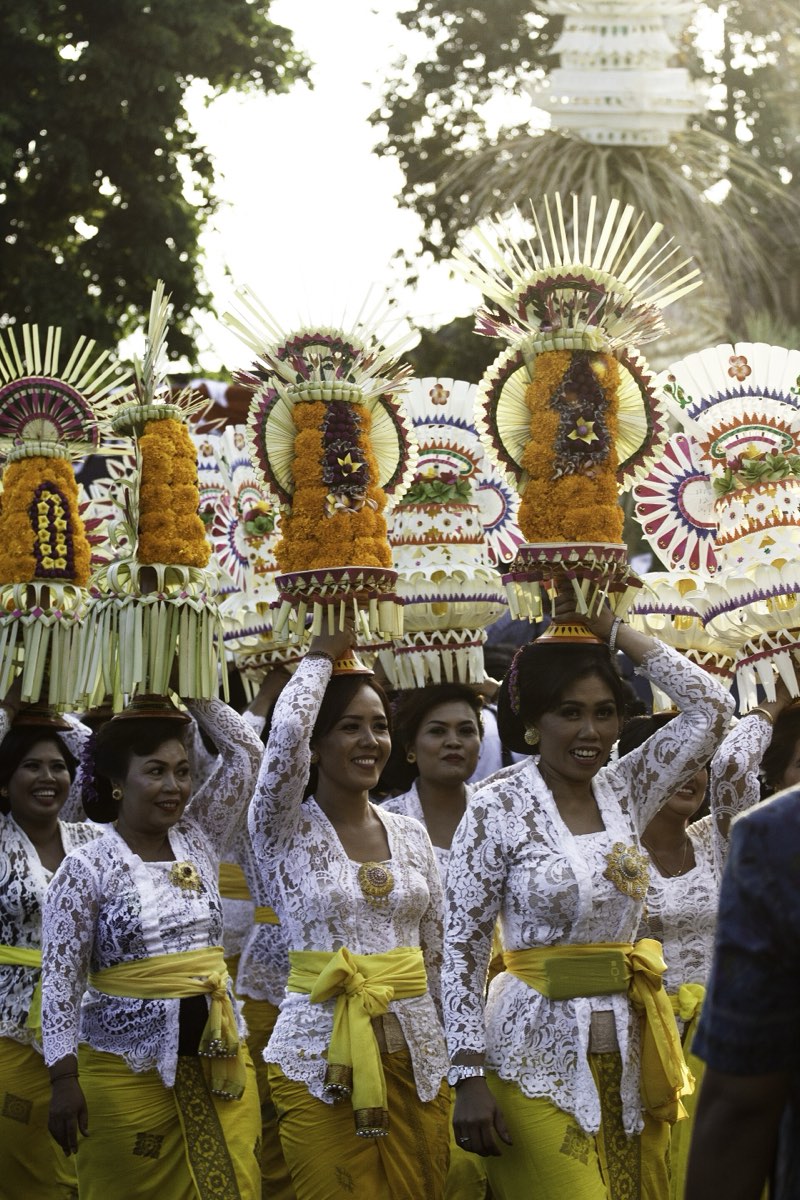 Women carrying gebogan, tall offering towers, at the Puputan Badung Festival in Denpasar. Photo: Tijden / Wikimedia Commons (CC BY-SA 4.0)

Kuningan Closes the Festival Before Midday
Kuningan is the closing day, when the visiting spirits return to the heavens.
Buleleng's culture and tourism office notes that Kuningan's offerings are made in the morning, because at midday the gods and ancestors go back to heaven.
The ministry links the name Kuningan to kuning, yellow, which stands for purity, prosperity and divine light. On Kuningan, it adds, homes are hung with tamyang and endongan, emblems of protection and prosperity.
The Penjor Is an Offering of Thanks
The unmistakable sign of Galungan is the penjor, a tall bamboo pole, often five metres or more, that arches gracefully over the road. It is decorated with:
- young coconut leaves
- fruit and grain
- flowers
- a small shrine at its base
In the days before Galungan, a penjor is raised outside almost every home and temple. Whole streets and villages end up lined with them, curving against the sky.
The penjor is far more than decoration. It is an offering of thanks for the earth's abundance.
In Balinese understanding its form evokes the sacred mountain and the dragon Anantaboga. Its materials represent the fruits of the land.
Drive a north Bali village road during Galungan, beneath an avenue of penjor in the morning light. It is one of the most beautiful sights in Bali.
Plan Around Galungan If Your Trip Coincides
Galungan is a family and temple time.
Some businesses close, and the roads and temples are busy with observance. All of it is part of the experience.
The wider ritual life is covered in Balinese ceremonies. The faith behind it is in Balinese Hinduism explained.
How to Witness Galungan Respectfully
Galungan is deeply sacred and intimate. It is a family and community observance, and nothing in it is staged for visitors.
- Be a quiet, respectful guest. Watch from the edges, stay out of family and temple worship and follow local cues.
- Dress and behave for temples. If you visit a temple during the festival, full temple attire and etiquette apply. Inner courts may be for worshippers only.
- Photograph with care and permission. The penjor-lined streets are yours to photograph. Ask first before you photograph people at private worship.
- Expect closures and busy roads, and embrace them. They are part of the festival.
FAQ
What is Galungan? Galungan is the most important festival in the Balinese calendar. It celebrates the victory of good (dharma) over evil (adharma). During the ten-day period the ancestral spirits return to visit the living, and Bali fills with offerings, prayer and the tall penjor poles.
What is Kuningan? Kuningan is the closing day of the Galungan period, ten days after Galungan. The visiting ancestral spirits return to the heavens that day. Offerings are made in the morning, before they leave at midday. The ministry's Hindu affairs directorate links the name to kuning, yellow, a symbol of purity and prosperity.
What are the penjor poles? Penjor are tall, gracefully curved, decorated bamboo poles raised outside homes and temples for Galungan. They are offerings of thanks for the earth's abundance. They line whole streets, one of Bali's most beautiful sights.
When is Galungan? Galungan recurs every 210 days on the Balinese Pawukon calendar, so it can fall twice in a Western year and the dates shift each time. The religious affairs ministry's Hindu affairs directorate publishes the dates. See the Balinese calendar explained for how the cycle works.
Can tourists experience Galungan? Yes, respectfully. It is a sacred family and temple time, so watch quietly from the edges. Dress and behave appropriately near temples. Photograph the penjor freely, but people only with permission. Expect some closures.
Is Galungan a good time to visit Bali? It is a beautiful and profound time to witness Balinese culture at its fullest. It is also busy with observance, and some businesses close. If you can time your trip for it and approach it respectfully, it is well worth it.
Sources
- Ministry of Religious Affairs, Directorate General of Hindu Community Guidance, Galungan and Kuningan Days (the 210-day cycle, Galungan as union and the victory of dharma, ancestors descending, Kuningan ten days later and the meaning of kuning), English, read September 2026
- Ministry of Religious Affairs, Directorate General of Hindu Community Guidance, Mengenal Lebih Dekat Hari Raya Galungan dan Kuningan and Makna Mendalam Hari Suci Kuningan (the meaning of both days, the published dates for both 2025 cycles, Kuningan on Saniscara Kliwon Kuningan, and the tamyang and endongan hung for it), Indonesian, read September 2026
- Buleleng culture and tourism office, Hari Raya Galungan dan Kuningan and Makna Hari Raya Galungan dan Kuningan (Galungan on Wednesday of Dungulan and Kuningan on Saturday of Kuningan, the penjor along the roads, twice in most Western years, and Kuningan offerings made before midday), Indonesian, read September 2026
- Buleleng district office, Hari Raya Galungan dan Kuningan (the same account on the district's site, with the penjor raised at the roadside), Indonesian, read September 2026
Read next: the Balinese calendar explained for the 210-day cycle these dates sit on, Balinese ceremonies for the wider ritual year, and Balinese offerings explained for what is in a gebogan.