
On this page
- In Brief
- The Balinese Calendar at a Glance
- The Pawukon Is a 210-Day Cycle With Ten Weeks Turning at Once
- The Saka Follows the Moon, and Its New Year Is Nyepi
- How to Read a Balinese Date, Using Nyepi in March 2026
- Galungan Falls on Buda Kliwon Dungulan, So Its Date Moves Every Year
- Balinese Families Choose the Day Before They Act
- Nyepi Is the One Date That Changes a Trip
- Practical Notes
- FAQ
- Sources
In Brief
Five numbers hold the Balinese calendar together:
- 2 calendars, the pawukon and the Saka
- 210 days in one round of the pawukon
- 10 weeks of different lengths, all turning at once inside it
- 30 named seven-day weeks, the wuku
- 12 lunar months, the sasih, in the Saka year
Read together, they give each day a name, and Balinese families read that name to know what the day is good for.
The pawukon sets Galungan, Kuningan and most temple anniversaries. The Saka follows the moon and sets Nyepi, the Day of Silence, along with the full and new moons. The Western calendar runs on top for work and travel.
For a trip, one date matters more than any other. On Nyepi the whole island stops for 24 hours, the north included, and the airport closes.
The rules and dates on this page come from Bali's provincial government, the Ministry of Religious Affairs, the Buleleng culture office and the 210-day count itself.
The Balinese Calendar at a Glance
| Pawukon | Saka | |
|---|---|---|
| What it is | A cycle of ten weeks of different lengths, all running at once | A lunar calendar kept in step with the sun |
| Length | 210 days, then it starts again | Twelve months, with a leap month added when needed |
| Named parts | Thirty seven-day weeks, the wuku, from Sinta to Watugunung | Twelve months, the sasih, from Kasa to Sadha |
| Year number | None, since the cycles are not numbered | The Saka year, 78 years behind the Western one |
| What it sets | Galungan, Kuningan, Tumpek, Kajeng Kliwon, most temple anniversaries, otonan birthdays | Nyepi, purnama and tilem, Siwaratri |
| Next big date | Galungan, Wednesday 13 January 2027 | Nyepi, usually in March |
- A day's name: its seven-day name, its five-day name and its wuku, such as Buda Kliwon Dungulan, which is Galungan
- The Western calendar: used for work, flights and bookings
- Where to read a date: the north Bali almanac, which shows the pawukon names for every day
The Pawukon Is a 210-Day Cycle With Ten Weeks Turning at Once
The pawukon runs for 210 days, then begins again.
Inside it, ten weeks run side by side, one of each length from one day to ten. All ten start together on the first day of the cycle. Since 210 cannot be divided by four, eight or nine, those three weeks repeat days to fit, as the pawukon tables on Wikipedia set out.
A cycle of 210 days is about seven Western months. So any pawukon holy day comes round twice in some Western years.
Three of the ten weeks name the days a visitor hears about:
- Saptawara, the seven-day week: Redite, Soma, Anggara, Buda, Wraspati, Sukra and Saniscara, which run from Sunday to Saturday
- Pancawara, the five-day week: Umanis, Paing, Pon, Wage and Kliwon
- Triwara, the three-day week: Pasah, Beteng and Kajeng
Each of the thirty seven-day weeks has its own name, the wuku. A day is called by its seven-day name, its five-day name and its wuku, and that name returns every 210 days.
Many holy days fall where two weeks meet. Saniscara and Kliwon meet every 35 days, on a Tumpek, and Kajeng and Kliwon every 15 days, on Kajeng Kliwon. A person's pawukon birthday, the otonan, also returns every 210 days.
The Saka Follows the Moon, and Its New Year Is Nyepi
The Saka counts the moon, and its year turns on Nyepi.
Each month, or sasih, begins the day after a new moon. Its first fifteen days, the penanggal, wax to the full moon. The next fifteen, the pangelong, wane to the new moon, according to Wikipedia's account of the Balinese Saka calendar.
Twelve lunar months fall short of a solar year. A leap month is added after the eleventh or twelfth month when needed, which keeps the new year in its season. That is why Nyepi moves against the Western calendar and usually falls in March.
Nyepi is the first day of Kadasa, the tenth month, and it follows the new moon of Kesanga. On Thursday 19 March 2026 it opened Saka year 1948, as the province's joint appeal records.
The reckoning decides the month. Bali's Hindu council adopted an Indian system, nirayana, in 1991. Under it, Tilem Kesanga and Nyepi in the years from 1993 to 1998 were found to shift from their usual March into April. High priests met in council in September 2001 to settle the count, NusaBali reports.
The first month, Kasa, begins after the Pleiades rise. Marayana told NusaBali the star can be seen from the beach at Ponjok Batu in Tejakula, on Buleleng's east coast.
Purnama and Tilem Fall on the Saka's Moon Days
The full moon, purnama, and the new moon, tilem, each fall once in every sasih. Both are holy days of prayer and offerings, and a few carry the great rites of the year, such as Siwaratri on the eve of Tilem Kapitu.
Their day is set by a traditional reckoning, the pengalantaka, so the Balinese full moon can differ from the astronomical one, as Dinamika Bali explains.
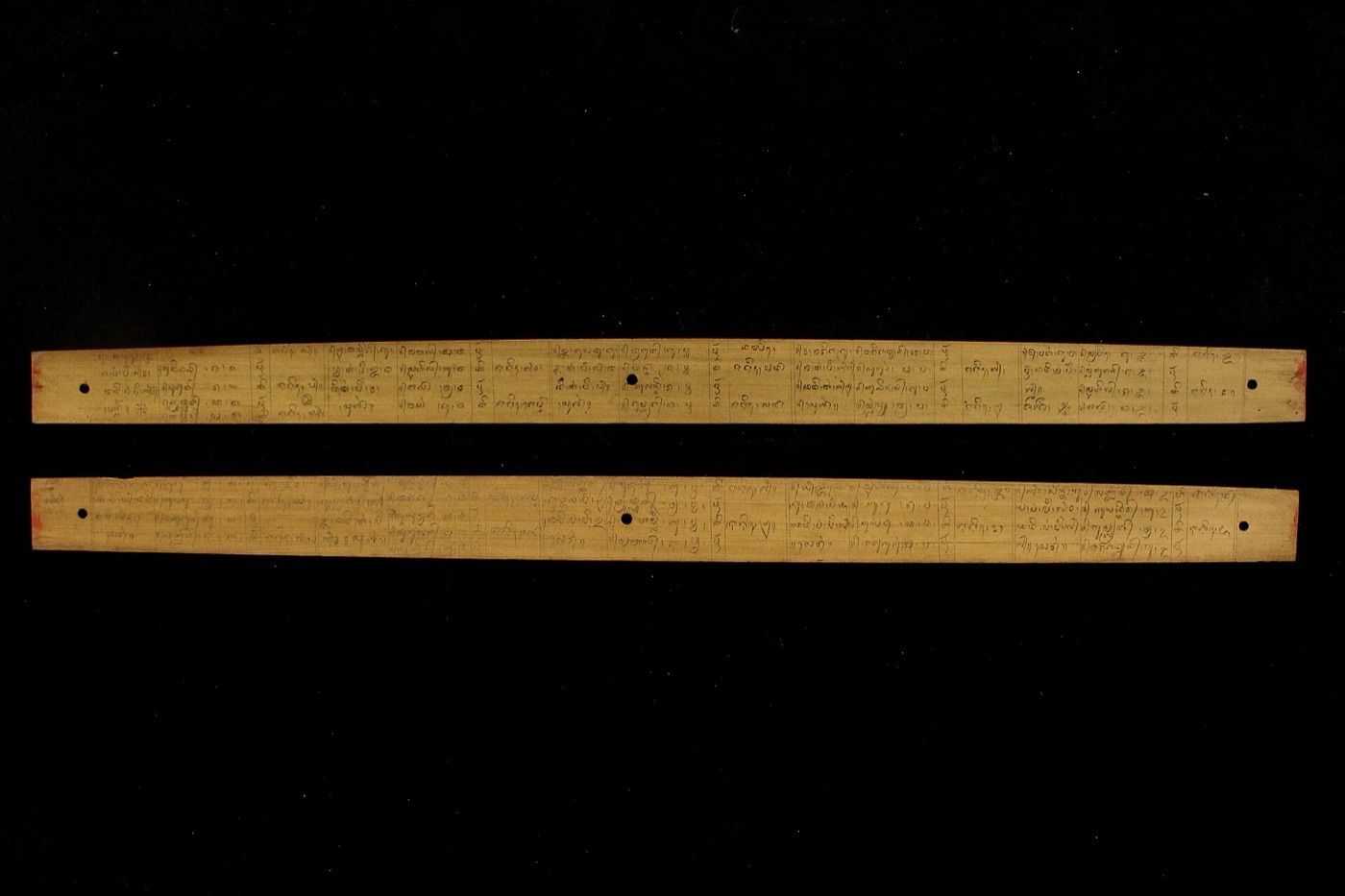 A lontar of pangalihan purnama tilem, the reckoning of full and new moons, in the village of Kemenuh. Photo: Eka343 / Wikimedia Commons (CC BY-SA 4.0)

The twelve months, and what each full moon brings, are in purnama and tilem.
How to Read a Balinese Date, Using Nyepi in March 2026
A Balinese date is read in two halves, one from each calendar.
Take Thursday 19 March 2026, the last Nyepi. Here is the full name of that day:
| Part of the name | On 19 March 2026 | From |
|---|---|---|
| Seven-day name (saptawara) | Wraspati, the Thursday | Pawukon |
| Five-day name (pancawara) | Kliwon | Pawukon |
| Week (wuku) | Kelawu, also spelt Kulawu, the 28th of the 30 weeks | Pawukon |
| Moon day | Penanggal 1, the first day of the waxing moon | Saka |
| Month (sasih) | Kadasa, the tenth month | Saka |
| Year | Saka 1948 | Saka |
Written the Balinese way, the day is Wraspati Kliwon Kelawu, penanggal 1 sasih Kadasa, Saka 1948.
Nyepi comes from the Saka half, because the first day of Kadasa is new year's day. The pawukon half, Wraspati Kliwon Kelawu, returns 210 days later, on Thursday 15 October 2026.
To read any day yourself, start with the three pawukon names. The almanac shows the seven-day name, the five-day name and the wuku for every day it covers. It flags Kajeng Kliwon and marks purnama and tilem with their month.
For the moon day of an ordinary date, use a printed Balinese calendar or Kalender Bali Digital. It gives the penanggal or pangelong count and the sasih for any day.
Galungan Falls on Buda Kliwon Dungulan, So Its Date Moves Every Year
Galungan is a pawukon day, and its rule is short.
It falls on Buda Kliwon of the week Dungulan, a Wednesday, and returns every 210 days, as Buleleng's culture and tourism office explains. Kuningan follows ten days later, on Saniscara Kliwon of the week Kuningan.
The 210 days run shorter than a Western year. So Galungan lands about seven months after the last one, and some years hold two, as January and August 2027 do.
- Wednesday 17 June 2026, with Kuningan on Saturday 27 June
- Wednesday 13 January 2027, with Kuningan on Saturday 23 January
- Wednesday 11 August 2027, with Kuningan on Saturday 21 August
- Wednesday 8 March 2028, with Kuningan on Saturday 18 March
- Wednesday 4 October 2028, with Kuningan on Saturday 14 October
The June 2026 dates come from a circular of the Ministry of Religious Affairs' Hindu guidance office, as detikBali reported. The later dates follow by adding 210 days, and Kalender Bali Digital gives the same days for January and August 2027.
Galungan marks the victory of dharma over adharma. In Balinese understanding the ancestors come home to visit their families, and at Kuningan they are sent off again. Before it, villages raise tall, arching bamboo penjor along the roads.
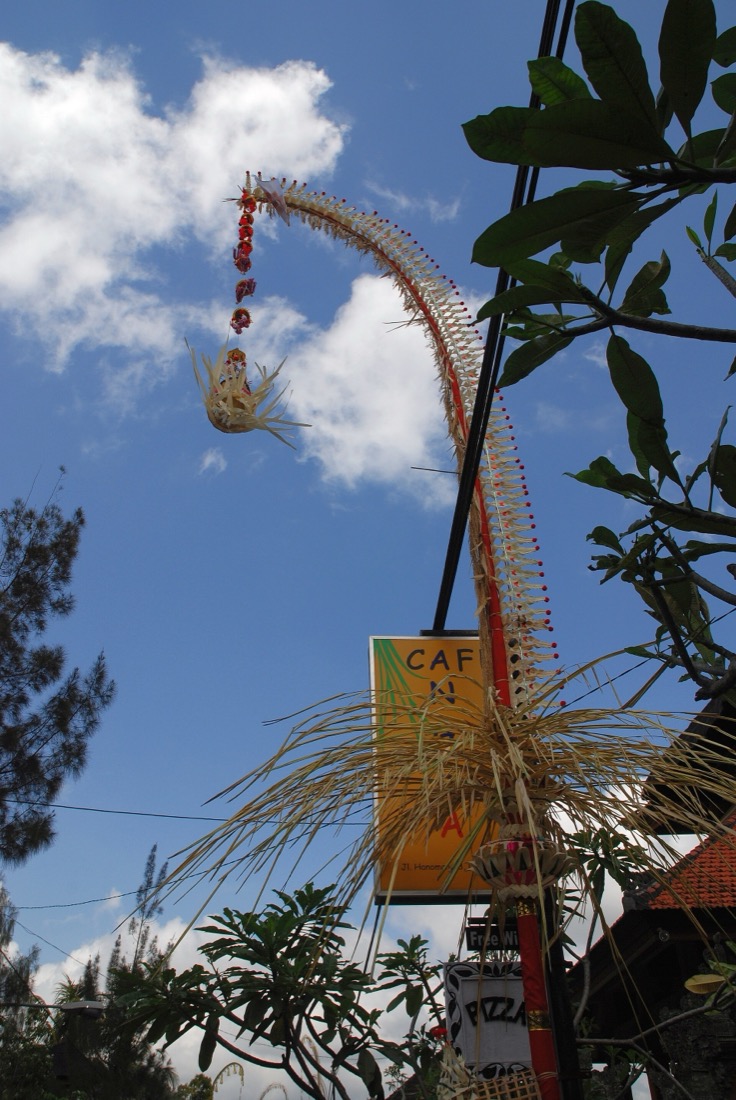 Penjor arching over the road in the days before Galungan. Photo: Tigerente / Wikimedia Commons (CC BY-SA 4.0)

The days around it, from Penampahan to the last offerings, are in Galungan and Kuningan.
Balinese Families Choose the Day Before They Act
In Bali, choosing the right day is part of the work itself.
The knowledge of good and bad days is wariga, and its verdict on a given day is the ala ayuning dewasa. The Bali edition of Detik publishes the day's list through the year. On Galungan in June 2026 the list ran past a dozen entries, among them a good day for tuning a gamelan and for a hair-cutting ceremony.
The habit runs through ordinary work. Marayana told NusaBali his interest grew because his father, I Nyoman Pasek, a farmer, used the ala ayuning dewasa for his work in the rice fields.
It shows in public life too. Six times in each cycle, on Saniscara Kliwon, a Tumpek honours one part of life. Tumpek Landep blesses sharp tools, and in recent years motorbikes and cars as well.
Tumpek Uye is the day for animals. In September 2026 the provincial government chose it for free rabies vaccination of pets, held in villages across Bali.
The north keeps its own emphasis. Buleleng celebrates Pagerwesi, on Buda Kliwon Sinta, on the scale of Galungan, and the way it is kept there is in Pagerwesi.
Each Temple Keeps Its Odalan by One of the Two Calendars
A temple's anniversary, its odalan, is a festival of three days or more for the village. Bali has thousands of temples, at least three in each village, so an odalan is held somewhere almost every day, Wikipedia notes.
Many follow the pawukon. Pura Ulun Danu Beratan holds its piodalan on Anggara Kliwon Julungwangi, a Tuesday, as NusaBali reported from the ceremony of December 2022.
Others follow the moon. Singaraja's winged-lion monument, Singa Ambara Raja, keeps its piodalan on Purnama Katiga, the full moon of the third month, Dewata News reported.
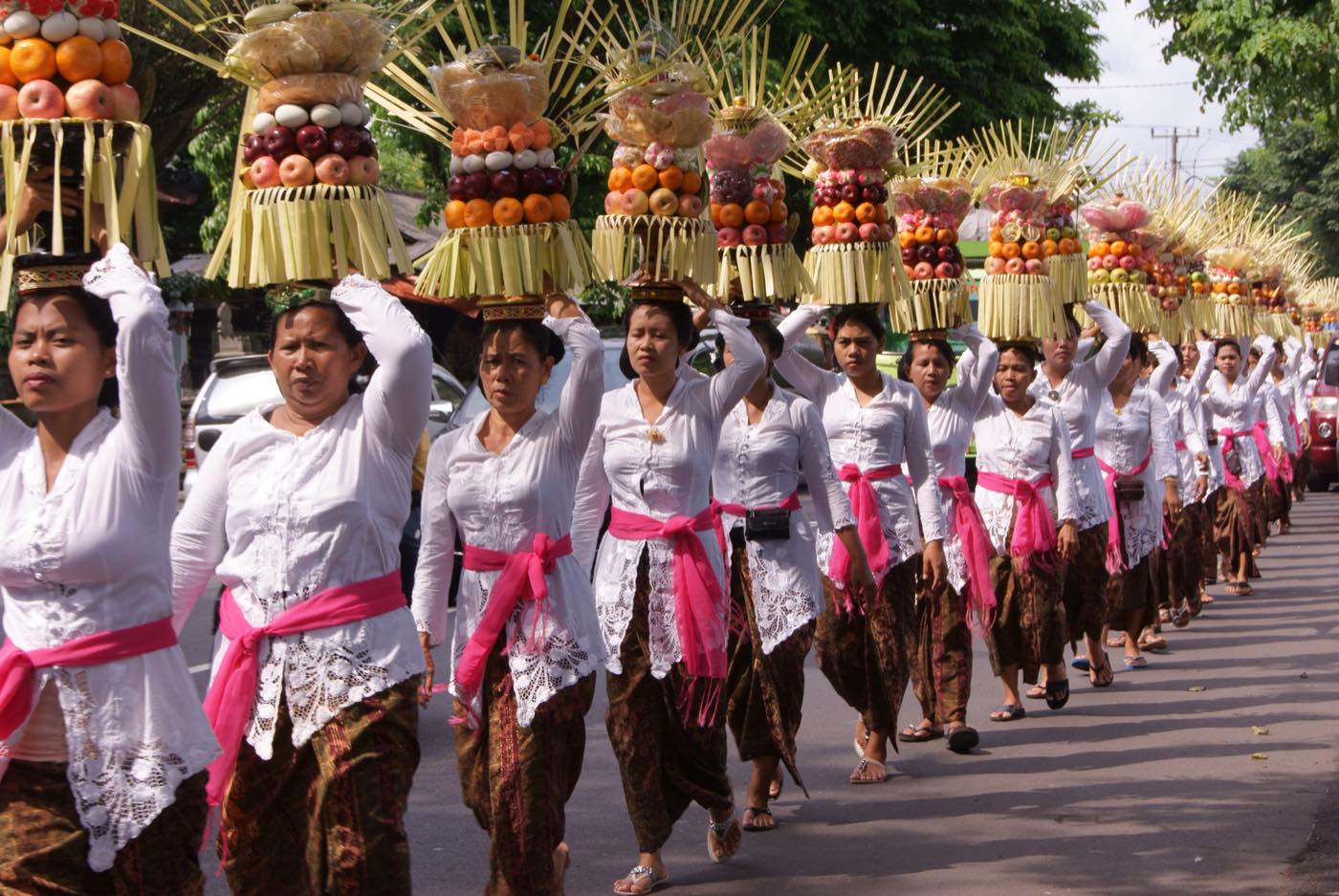 An odalan procession, the women carrying offerings to the temple for its anniversary. Photo: Midori / Wikimedia Commons (CC BY 3.0)

How to behave if a procession or ceremony crosses your path is in understanding Balinese ceremonies.
Nyepi Is the One Date That Changes a Trip
Most of the calendar adds to a visit, and one day stops it.
Ahead of Nyepi, Bali's religious leaders issue a joint appeal with the provincial office of the Ministry of Religious Affairs, with the governor's knowledge. The provincial Kesbangpol agency publishes it. The appeal for the last Nyepi went up on 6 March 2026, thirteen days before the silence.
That appeal stopped land, sea and air transport from six in the morning on Nyepi until six the next morning. It took radio and television off air and asked mobile providers to switch off data. Residents and visitors stayed indoors, with no fireworks, loudspeakers or bright lights.
 A Balinese street left empty on Nyepi in 2012. Photo: Davidelit / Wikimedia Commons (CC BY-SA 3.0)

If your dates touch March, find that year's Nyepi date before you book a flight, and read the joint appeal once it is out. Plan the day where you are staying, with food and water bought the day before.
The evening before brings the ogoh-ogoh parades. The day after, Ngembak Geni, is for visiting family and neighbours. If you have yet to choose where to stay, Palm Living's villas are on the coast around Lovina. The day itself is in Nyepi, the Day of Silence.
Practical Notes
- Book by the Western calendar, then check the Balinese one for the days around your trip.
- For Nyepi, go by the date in that year's joint appeal. It usually falls in March.
- Around Galungan and Kuningan, expect penjor along the roads and temples busy with families.
- On purnama, visit a village temple in the late afternoon or evening, when families come to pray.
- Carry a sarong and sash in case a ceremony invites you in.
- Pull over for processions and wait for them to pass.
To start, open the almanac at the month of your trip. Read one day as this page reads 19 March 2026: seven-day name, five-day name, wuku, then the moon.
FAQ
How does the Balinese calendar work? Bali uses two traditional calendars at once. The pawukon is a 210-day cycle of ten weeks running together, and it sets Galungan, Kuningan and most temple anniversaries. The Saka is a lunar calendar of twelve months, and it sets Nyepi, the new year, and the full and new moons. The Western calendar is used for work and travel.
What is the pawukon calendar? The pawukon is a 210-day cycle of ten weeks, one of each length from one to ten days. Its thirty seven-day weeks each have a name, the wuku. A day is named by its seven-day name, five-day name and wuku, such as Buda Kliwon Dungulan, and the name returns every 210 days.
What is the Saka calendar? The Saka is Bali's lunar calendar. Each of its twelve months, the sasih, begins after a new moon and has fifteen waxing and fifteen waning days. A leap month is added when needed to keep it with the seasons. Its new year is Nyepi, and its year number runs 78 years behind the Western one.
Why does the date of Galungan change every year? Galungan follows the 210-day pawukon, not the Western year. It falls on Buda Kliwon Dungulan, a Wednesday, every 210 days, so it lands about seven months after the last one. Some years hold two: Galungan falls on 13 January and again on 11 August 2027.
What day is everything shut in Bali? It is Nyepi, the Day of Silence and the Saka new year, on the day after the new moon of the ninth month, usually in March. At the last Nyepi, in March 2026, all transport stopped, flights included, from six in the morning until six the next morning, and everyone stayed indoors. The date for each year is in the provincial joint appeal.
What is Kajeng Kliwon? Kajeng Kliwon is a holy day that comes every 15 days, when Kajeng of the three-day week meets Kliwon of the five-day week. The almanac flags it on each day it falls.
How do I find my wuku or Balinese birthday? Look up your date of birth in a Balinese calendar or Kalender Bali Digital, which gives the seven-day name, five-day name and wuku. That day name is your otonan, and it returns every 210 days.
Sources
- Wikipedia, Pawukon calendar (the ten weeks and their days, the extra days in the four, eight and nine-day weeks, the thirty named weeks, the day-by-day table and the cycle that began on 5 July 2020, from which the dates on this page are counted), read October 2026 (in English)
- Wikipedia, Balinese saka calendar (the twelve sasih, the waxing and waning halves, the leap month, Nyepi on the first of Kadasa, the year count 78 years behind, Siwaratri), read October 2026 (in English)
- Wikipedia, Nyepi (Tilem Kesanga the day before, Nyepi on the first of Kadasa, Ngembak Geni the day after), read October 2026 (in Indonesian)
- Wikipedia, Galungan (the ancestors' visit and their return at Kuningan) and Odalan (the temple festival, its length and frequency), read October 2026 (in English)
- Bali Provincial Government, Kesbangpol agency, Seruan Bersama tentang Pelaksanaan Hari Suci Nyepi Tahun Caka 1948, published 6 March 2026 (the issuers, Thursday 19 March 2026, Saka 1948, the hours, transport, broadcasting, mobile data and staying indoors), read October 2026 (in Indonesian)
- Buleleng culture and tourism office, Makna Hari Raya Galungan dan Kuningan (Galungan on Buda Kliwon Dungulan every 210 days, dharma over adharma, Kuningan), read October 2026 (in Indonesian)
- Indonesia Ministry of Tourism, 7 Upacara Keagamaan Bali (Galungan every 210 days with its penjor, Kuningan ten days later), read October 2026 (in Indonesian)
- detikBali, Kapan Hari Raya Galungan dan Kuningan 2026?, 5 June 2026 (the 2026 dates from the Bimas Hindu circular B-253/DJ.VI/Dt.VI.I.3/BA.03/09/2025), read October 2026 (in Indonesian)
- detikBali, Hari Raya Galungan 2026, simak ala ayuning dewasa, 17 June 2026 (the day's good and bad uses), read October 2026 (in Indonesian)
- detikBali, Jadwal rerainan Hindu Bali Oktober 2026 (Kajeng Kliwon every 15 days), 6 jenis Tumpek (Tumpek on Saniscara Kliwon, six in a cycle, Tumpek Landep) and Vaksinasi rabies gratis saat Tumpek Uye, 4 September 2026, read October 2026 (in Indonesian)
- NusaBali, Pencipta pengalantaka dalam sistem penanggalan Bali, March 2021 (I Gede Marayana, 1975, his father, the 2019 heritage listing, nirayana and the March-to-April slide, the 2001 council, Kasa and Ponjok Batu), read October 2026 (in Indonesian)
- Dinamika Bali, Pengalantaka: dasar penetapan purnama tilem dalam kalender Bali, August 2022 (the Balinese calendar as a conventional reckoning), read October 2026 (in Indonesian)
- NusaBali, Pura Ulun Danu Beratan gelar piodalan, December 2022 (the piodalan on Anggara Kliwon Julungwangi), read October 2026 (in Indonesian)
- Dewata News, Purnama Sasih Ketiga, piodalan Tugu Singa Ambara Raja, September 2017, read October 2026 (in Indonesian)
- Bali Post, Pagerwesi di Buleleng meriah, setara Galungan dan Kuningan, September 2025, read October 2026 (in Indonesian)
- Kalender Bali Digital, kalenderbali.org, a cross-check for 19 March 2026, 15 October 2026 and the 2027 Galungan dates, read October 2026 (in Indonesian)
Read next: Galungan and Kuningan for the 210-day festival, Nyepi, the Day of Silence for the day the island stops, and Balinese culture for the wider picture.