
On this page
- In Brief
- Subak at a Glance
- Subak Carries the Water From the Mountains to Every Field
- The Farmers Govern It Themselves
- Water Temples Set the Schedule
- Tri Hita Karana Is the Philosophy Beneath the Terraces
- UNESCO Listed the Living System in 2012
- Subak Shapes the North's Highlands Too
- Four Places to See Subak in North Bali
- How to Walk the Terraces Respectfully
- FAQ
- Sources
In Brief
Subak is Bali's traditional system for sharing irrigation water among rice farmers. It is a network of cooperative associations that has managed the terraces for more than a thousand years. The farmers decide together, water temples and ritual guide the work, and the system shaped the landscape you see.
UNESCO inscribed the subak landscape as World Heritage in 2012. It did so because subak embodies Tri Hita Karana, the Balinese philosophy of harmony between people, nature and the divine.
In north Bali you can walk working subak country at Kekeran in Busungbiu, around Munduk and Banyuatis, in the Sambangan valley and at Sudaji. Go early, stay on the paths between the fields, and treat the field shrines as you would a temple.
Subak at a Glance
- What it is: Bali's cooperative rice-irrigation system, more than 1,000 years old
- How it works: Farmers share the water by agreement, guided by water temples
- The philosophy: Tri Hita Karana, harmony of people, nature and the divine
- The status: UNESCO World Heritage, inscribed in 2012 as the Cultural Landscape of Bali Province
- Where to see it: Rice terraces across Bali, including the north's highlands and Buleleng
- Why it matters: The landscape is a working spiritual and social system, and a beautiful one
- Best time: The green season for lush terraces, and dawn for soft light and calm
Subak Carries the Water From the Mountains to Every Field
Water in Bali begins in the volcanic highlands, in the crater lakes and springs that feed the rivers.
Subak carries that water down to the paddies through canals, tunnels, weirs and dams. On the way it passes the temples, then spreads across the terraces to each farmer's field.
The Farmers Govern It Themselves
No central authority commands subak. The farmers run it in regular meetings and decide by consensus, weighing each person's needs against the whole.
Each subak association manages the water for one stretch of terraces. Its members agree the planting schedule and the water turns together. The aim is a fair share for everyone, upstream and downstream.
This makes subak a grassroots democracy of water, with each field's share settled among neighbours.
Water Temples Set the Schedule
The system is coordinated by a ladder of temples, from small field shrines up to the great lake temples.
These temples are where decisions are made. Water allocation and planting dates are set there in ritual, and the ritual is also the practical coordination. In subak the engineering and the religion are one system, and so are the governance and the ecology.
Shared timing protects the land as well. Planting and fallow periods, synchronised through the temple network, keep pests and disease down and the soil and water healthy.
Tri Hita Karana Is the Philosophy Beneath the Terraces
Subak is one of the clearest expressions of Tri Hita Karana, a Balinese philosophy at the heart of the culture.
It names three causes of well-being:
- harmony with the divine (parahyangan)
- harmony among people (pawongan)
- harmony with nature (palemahan)
The terraces hold all three at once. The temples serve the divine, the cooperative associations bind the people, and the water-and-land system is nature itself. The wider faith is in Balinese Hinduism explained.
UNESCO Listed the Living System in 2012
UNESCO inscribed the Balinese subak landscape as World Heritage in 2012. The full title is the Cultural Landscape of Bali Province: the Subak System as a Manifestation of the Tri Hita Karana Philosophy.
The listing, as summarised, takes in five sites of subak landscapes and water temples across some 19,500 hectares. Among them is the royal water temple of Pura Taman Ayun. The system itself is dated to the ninth century.
The inscription honours the living cultural philosophy, with the view as its visible face.
Subak Shapes the North's Highlands Too
The north and its highlands are deeply agricultural, and subak shapes the country here as it does across the island.
The terraces around Munduk and the highland valleys are working subak landscapes, fed by the crater lakes near Bedugul. The north's many subak temples belong to the same system. One is the great rice-goddess temple Pura Beji Sangsit, dedicated to Dewi Sri.
Walking these fields lets you feel the working rhythm of subak, beyond the photograph.
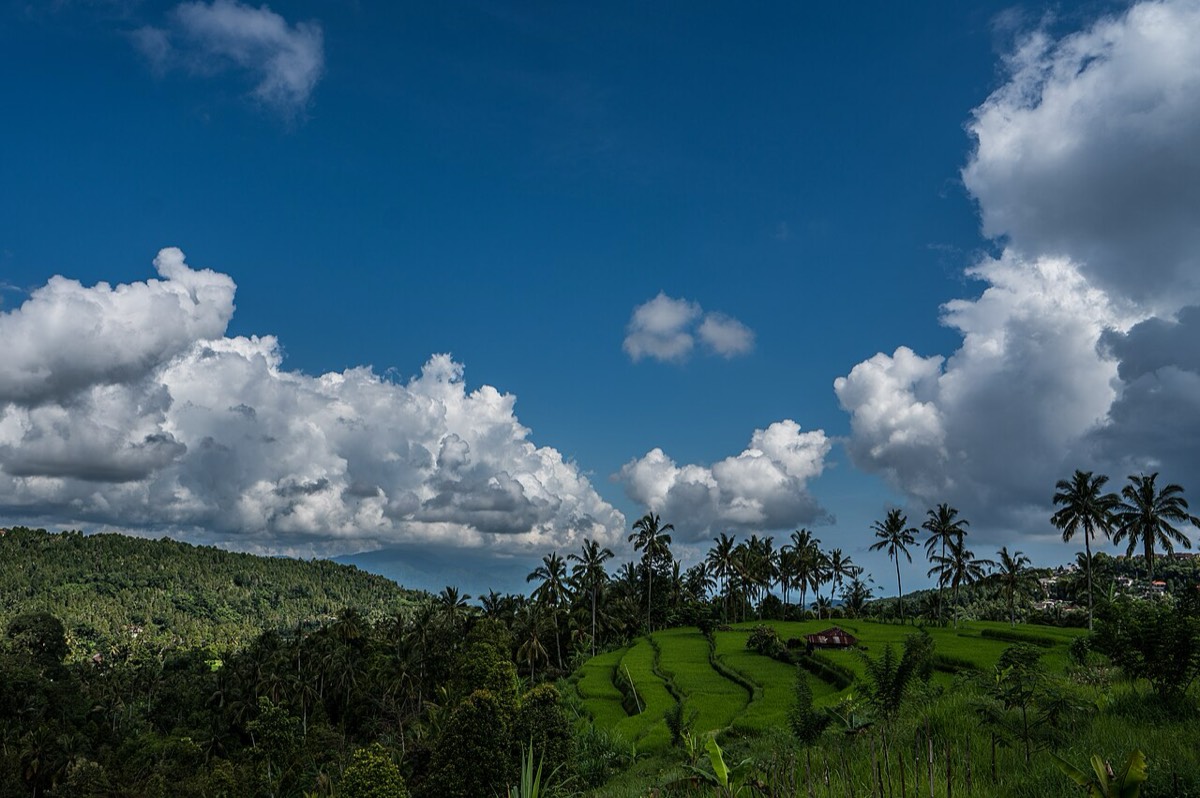 Working terraces on the Munduk hillsides. Photo: Aaron Rentfrew / Wikimedia Commons (CC BY-SA 4.0)

Four Places to See Subak in North Bali
North Bali's terraces are working farmland, spread in several directions from the coast. Each one pairs well with something else nearby.
Kekeran, Busungbiu
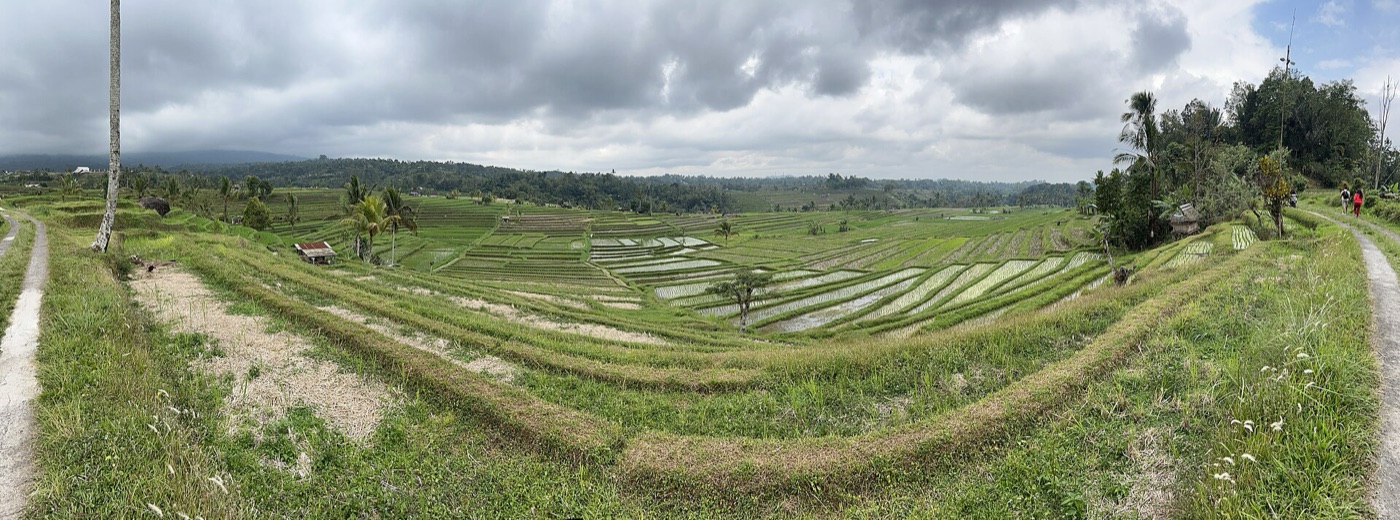
The terraces Buleleng's tourism office promotes most are in Kekeran village, Busungbiu district, on the mountain road between Pupuan and Seririt.
The tourism office describes broad fields and fresh air. There are walking routes along the paddies and the river, and gazebos where families stop to sit and eat.
The village's own account adds a detail you notice on arrival. Boulders of every size sit in the paddies and on the bunds between them, where the fields meet neighbouring Titab.
Part of the view is visible from the road. Walk the fields and the river to see the channels up close. Kekeran is the natural stop on a day out west of Lovina. It also suits a crossing of the mountains by the western Pupuan road, covered in getting to north Bali.
Munduk and Banyuatis
The terraces around Munduk step down the hillsides between clove and coffee gardens, fed by the crater lakes above. West of the village, the fields around Gesing and Banyuatis are quieter still.
The simplest way in is on foot, on a plantation walk or one of the Munduk waterfall trails through the farmland.
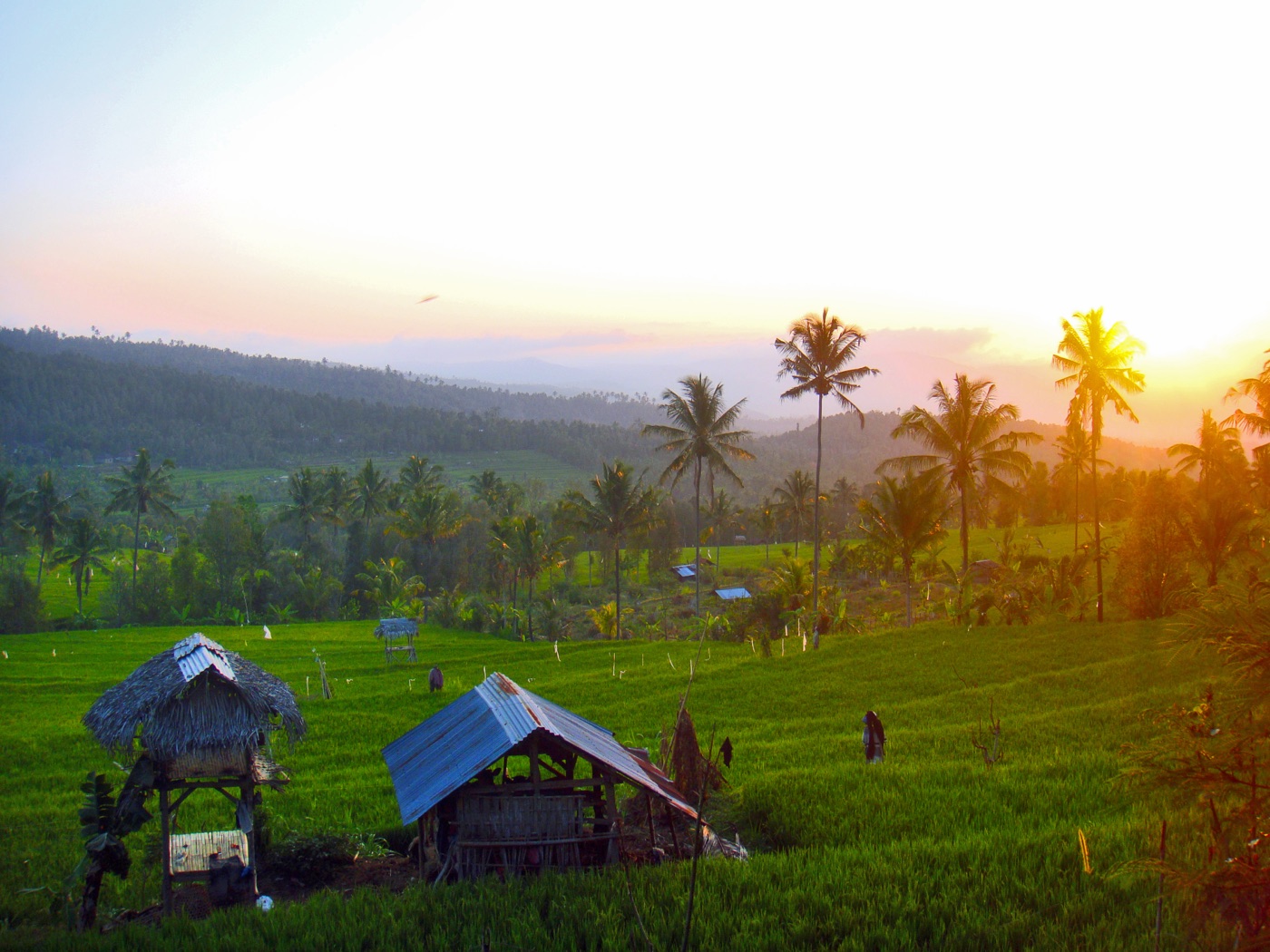 Evening over the rice fields near Banyuatis, west of Munduk. Photo: musnahterinjak / Wikimedia Commons (CC BY-SA 3.0)

Sambangan
The valley inland from Singaraja is best known for its waterfalls. The road up to Aling-Aling climbs through its villages and rice fields.
The walking trail through Sambangan's smaller falls, described in the north Bali waterfalls guide, gives you paddies and river in the same morning.
Sudaji
Sudaji is a tourism village built on its farmland, east of Singaraja in Sawan district. The national tourism ministry's village profile counts 453 of its 1,834 hectares as rice field, still run under subak.
In 2022 it was one of the fifty villages shortlisted in Indonesia's national village tourism awards (ADWI). Its treks follow the rivers and terraced fields toward the Sekumpul and Lemukih waterfalls. The regency has since held up Sudaji's Subak Getih as a pioneer of its move toward healthy, organic rice.
The village's own tourism group arranges the treks directly. Ask your villa or driver to set one up a day ahead, and let the village quote its own terms.
How to Walk the Terraces Respectfully
The same guidance holds at all four places: stay on the bunds, go early, and remember you are walking through someone's livelihood.
- Walk in a little way. A short walk into the terraces, on the paths and off the crop, shows you the channels and shrines a roadside viewpoint hides.
- Go early. Dawn brings soft light, cool air and farmers at work, with few crowds. The terraces are most alive in the morning.
- Treat it as working land and sacred space. These fields are people's livelihoods and part of a religious system. Keep off the crop, never fly a drone over a ceremony, and treat the field shrines as you would any temple. See Bali temple etiquette.
- Ask, and tip. Many terraces are kept by farmers who appreciate a small contribution. A guided plantation-and-terrace walk (see coffee plantations in Munduk) supports them directly and teaches you far more.
FAQ
What is subak in Bali? Subak is Bali's traditional cooperative system for sharing irrigation water among rice farmers, more than a thousand years old. Farmers govern it together, guided by a network of water temples. It shaped the island's terraced landscape.
Why is subak a UNESCO World Heritage Site? UNESCO inscribed the Balinese subak landscape in 2012 as the embodiment of Tri Hita Karana, the philosophy of harmony between people, nature and the divine. It recognised a living cultural system, which the scenery makes visible. The listed area takes in five sites of subak landscapes and water temples, including the royal water temple of Pura Taman Ayun.
What is Tri Hita Karana? Tri Hita Karana is the Balinese philosophy that well-being comes from three harmonies: with the divine, among people and with nature. Subak expresses all three at once, which is why it sits so close to the heart of Balinese culture.
How do the rice terraces in Bali work? Water flows from the highland lakes and springs through a network of canals and temples down to the paddies. Subak associations share it as a cooperative, setting planting and water schedules together through the water-temple system.
Where can you see rice terraces in north Bali? You can see them at Kekeran in Busungbiu, on the road between Pupuan and Seririt, and around Munduk and Banyuatis in the highlands. The Sambangan valley near Aling-Aling has them too, and so does Sudaji east of Singaraja, a tourism village that runs treks through its subak fields. All of them are working farmland.
Is it okay to walk in the rice terraces? Yes, on the paths and with respect. They are working farmland and sacred space, so stay off the crop and leave shrines and ceremonies undisturbed. A guided walk or a tip supports the farmers.
Sources
- Wikipedia, Subak (irrigation), for the 2012 UNESCO inscription, its full title, its five sites and area, and the ninth-century origin, read September 2026 (in English)
- Buleleng culture and tourism office, Rice Field Terrace Kekeran, for the Busungbiu terraces, their walking routes and gazebos, read September 2026 (in Indonesian)
- Kekeran village, Sekilas tentang Desa Kekeran, for the fields beside the Busungbiu to Pupuan road and the boulders on the Titab border, read September 2026 (in Indonesian)
- Indonesia Ministry of Tourism, Jadesta tourism-village register, Desa Wisata Sudaji profile, for the village's land areas and its working subak, read September 2026 (in Indonesian)
- Buleleng Regency, Kemenparekraf visit to Desa Wisata Sudaji, for the ADWI shortlisting, read September 2026 (in Indonesian)
- Buleleng Regency, Subak Getih Desa Sudaji jadi pionir pertanian padi sehat menuju organik, read September 2026 (in Indonesian)
Related reading: Tri Hita Karana, the idea subak expresses; Balinese Hinduism explained; and the best temples in north Bali, several of which are subak temples.