On this page
In Brief
Sekala is the seen world: everything the senses can reach, the earth and what lives on it, people included. Niskala is the unseen world: the gods, the ancestors, spirits and forces that cannot be seen but are believed to act on human life for better or worse. Balinese Hinduism treats the two as inseparable, and offerings, ceremony and right behaviour are how people keep them in balance. Scholars in Bali find the idea at work in daily offerings, in how illness is understood (a sickness can have a sekala cause, for a doctor, or a niskala cause, for a traditional healer), and in ceremonies that restore order after disturbance. The Balinese writer Sugi Lanus adds that the order of the words matters: sekala first, then niskala, meaning the visible work of life is put right before the unseen.
Sekala and Niskala at a Glance
- Sekala: The seen, tangible world, perceived through the senses
- Niskala: The unseen world of gods, ancestors, spirits and forces, believed to influence the seen
- The aim: Balance between the two, never the victory of one
- In daily life: Offerings on shrines and on the ground, every day
- In healing: Illness can have a sekala cause or a niskala cause, and the healer differs
- In ceremony: Rituals (yadnya) restore balance when it is disturbed
- Related ideas: Tri Hita Karana, the three harmonies, and Rwa Bhineda, the balance of opposites
- On screen: The Seen and Unseen (Sekala Niskala), Kamila Andini's 2017 film
What the Words Mean
I Made Saryana of the Indonesian Institute of the Arts in Denpasar gives the working definitions in a paper on the concept. Sekala is the world visible to the eye: the earth we stand on and everything in it, which Balinese call the buana agung, the great world, together with the human being, the buana alit, the small world. Niskala is the world that cannot be seen but is believed to exist, with great power to move people toward good or ill. Saryana's examples of niskala are the five tenets of Balinese Hindu belief, the Panca Srada: God, the soul (atman), the law of cause and effect (karmaphala), rebirth and final liberation.
The words go deeper than "visible" and "invisible". Writing in the Balinese magazine tatkala.co, Sugi Lanus notes that sekala-niskala is many-layered, running from the plain matter of what can and cannot be seen up to the nature of God, the Brahman who is sakala (with qualities, saguna) and niskala (without them, nirguna).
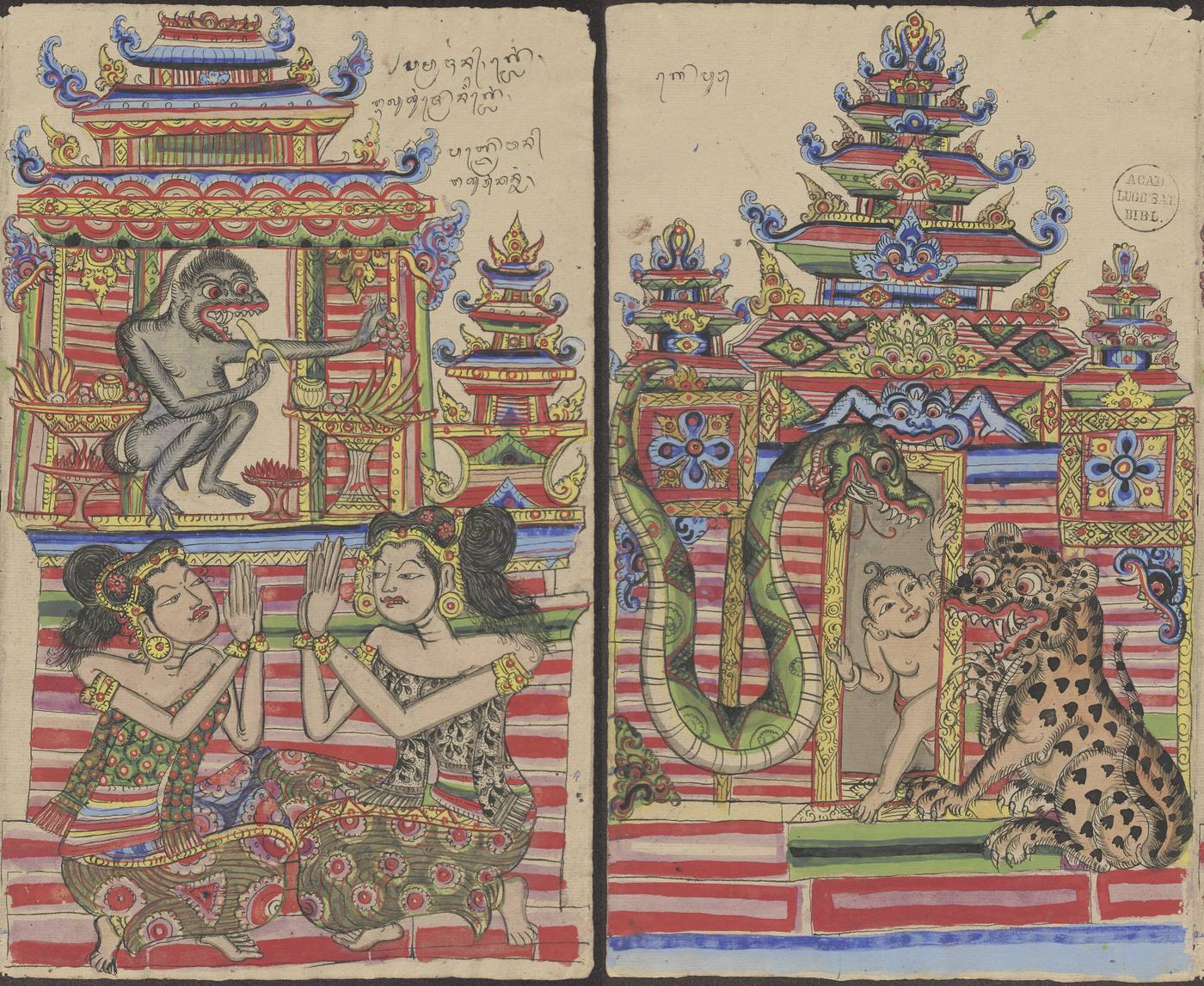
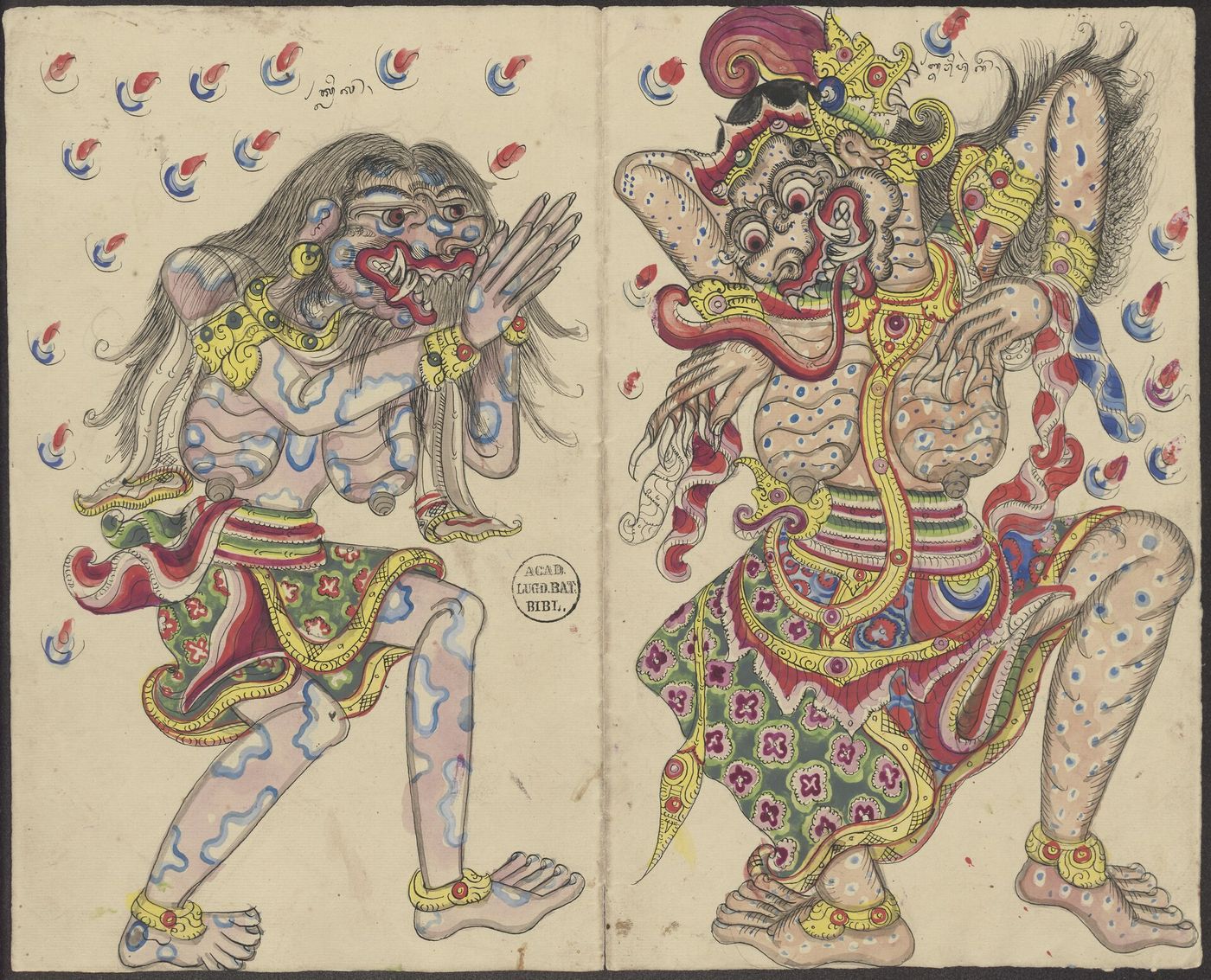 Klika honours the goddess Durga with a sembah, drawn by I Ketut Gedé of Singaraja for the scholar H.N. van der Tuuk in the late nineteenth century. Photo: I Ketut Gedé / Wikimedia Commons (public domain)
Not everything in niskala is kind. The overview of Balinese Hinduism on Wikipedia puts it plainly: spirits, deities and forces of chaos live alongside people and must be acknowledged through offerings, ritual and ethical behaviour, and the rituals aim at equilibrium between constructive and destructive energies, never at wiping one side out. That is the same logic as Rwa Bhineda, the balance of opposites behind the Barong and Rangda dance.
Sekala First: Why the Order Matters
Sugi Lanus adds a point about order. The teaching is "sekala and niskala", never "niskala and sekala". The visible comes first: deal fully with what is in front of your eyes, and only then turn to the unseen.
He illustrates it with a Balinese household rule: do not talk about your dreams first thing in the morning. Sweep, cook and see the house and the children fed; talk over dreams in the evening, after bathing. The same order runs up to the temple. It makes no sense, he argues, to hold a holy ceremony in a temple heaped with rubbish; the gardens, the roads, the clean toilets and the flower-hung gates come first, and prayer after. His conclusion is that keeping the Balinese sane starts from sekala.
Offerings: Where the Two Worlds Meet Every Day
The daily offering is the easiest place to see the idea. VIVA Bali describes the canang sari, the little palm-leaf tray of flowers, rice and incense placed each morning at house shrines and temples, as sekala and niskala together: to the eye it is fragrant and beautiful, and its inner meaning is thanks to the gods. Palm Living's sister site, Bali Information, describes the same offerings as a way of honouring the unseen realm and keeping balance between people and the invisible energies around them.
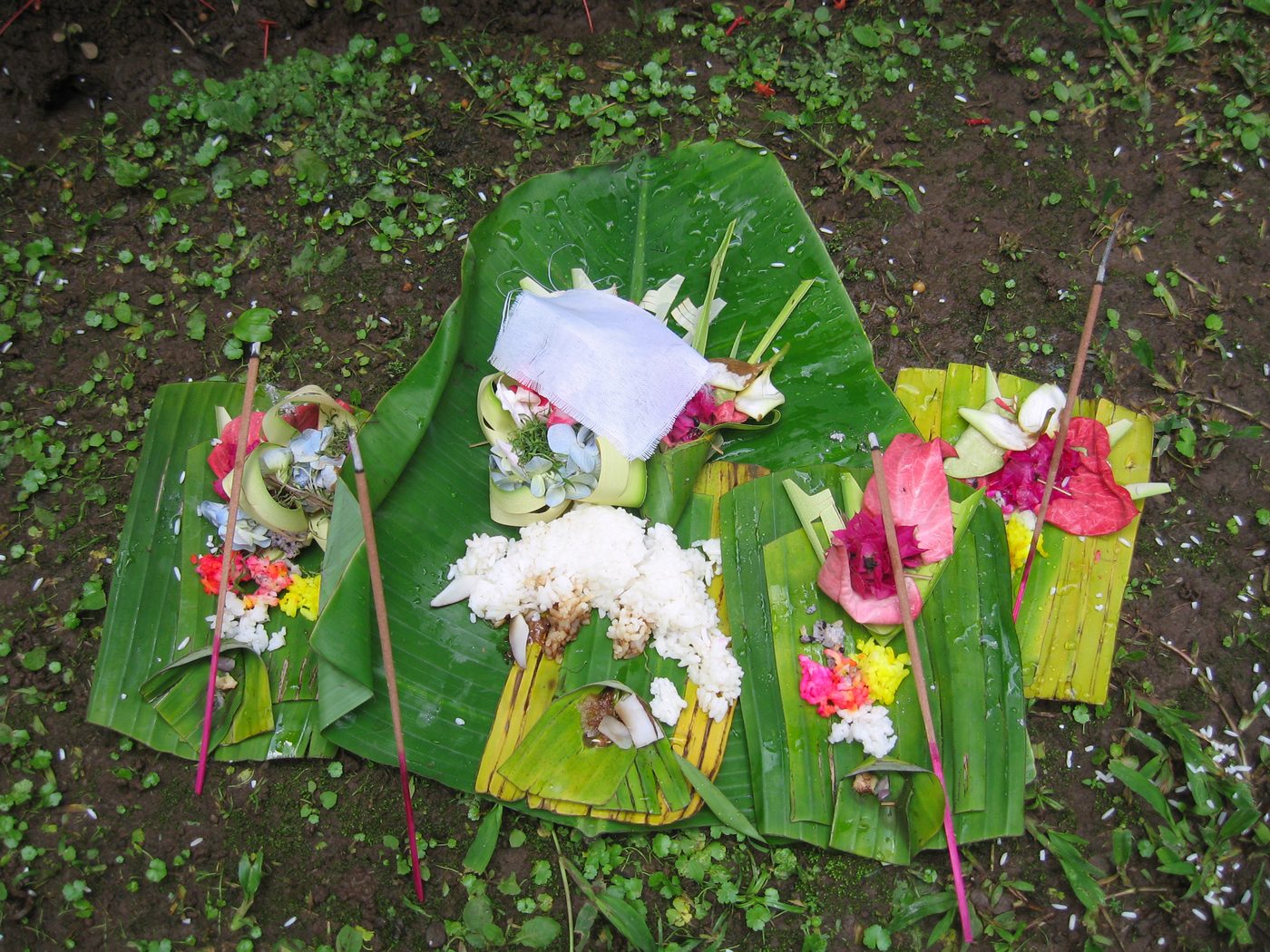 A segehan, one of the many ground offerings, laid out on banana leaf. Photo: Puri Lumbung Cottages / Wikimedia Commons (CC BY-SA 4.0)

Offerings go both up and down. Some are set on raised shrines for the gods and ancestors, others on the ground at gates and on the earth for the lower forces, which the guide to Balinese offerings explains piece by piece. Heirlooms get the same care: VIVA Bali describes the pasopati ceremony, in which a family kris is cleansed of harmful influence with prayers and offerings to God and the ancestors, honouring the blade in the seen world and the ancestral presence in it.
Healing: A Sekala Cause or a Niskala Cause
The idea shapes how illness is understood. A 2025 study of healing traditions by Nyoman Sukma Arida and colleagues, mostly from Udayana University, in the Journal of Applied Sciences in Travel and Hospitality, describes health in Balinese thought as a balance between a causa sekala, a natural cause, and a causa niskala, a supernatural one. This is the ground of usada Bali, the island's own medicine.
A case report on mental illness by P.A. Grantika and colleagues, in the Open Access Indonesia Journal of Social Sciences, shows it in practice. Many Balinese, the authors write, see two possible causes for such an illness: a sekala cause, which sends people to a doctor, and a niskala cause, which sends them to a balian, the traditional healer. In the case they describe, a Balinese teenager with a mental disorder was treated with malukat, the purifying water ritual, in the hope that contamination and disease would leave and the body return to balance.
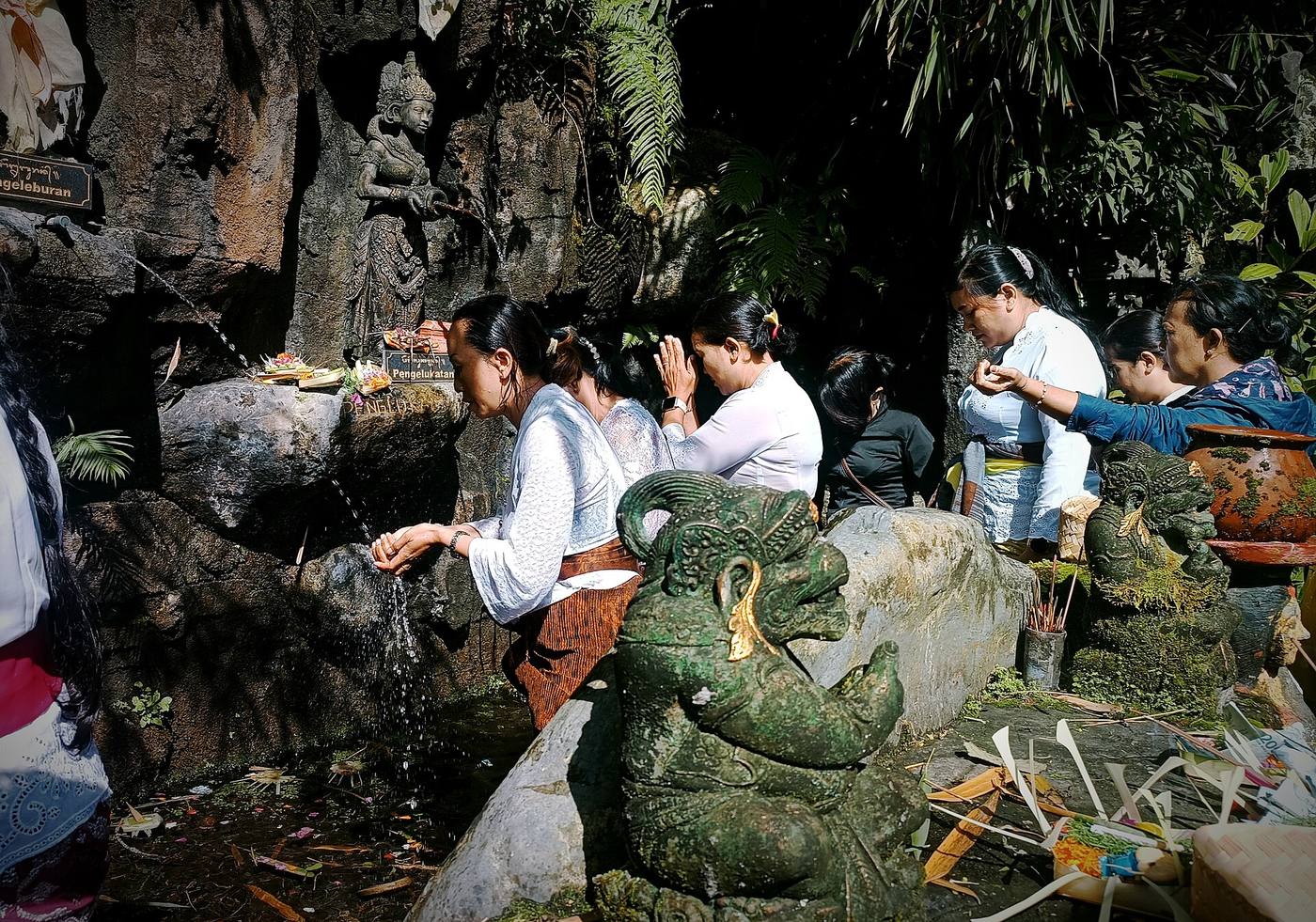 Women of a banjar take holy water at a spring during a melukat. Photo: Made Sari / Wikimedia Commons (CC BY-SA 4.0)

The kinds of balian, and how to visit one respectfully, are covered in traditional healers in north Bali; the water ritual itself in melukat. The herbal side of usada, the loloh drinks written up in palm-leaf manuscripts, is in jamu, loloh and usada.
Ceremony, Trance and Balance
Saryana ties sekala-niskala to the wider Balinese picture of harmony: between the great world and the small, and between God, people and nature, the Tri Hita Karana. Drawing on I Gusti Raka Panji Tisna, he describes a world made of paired, complementary opposites, hot and cold, good and bad, black and white, in which balance can be created, or disorder repaired, through work and through ceremony, yadnya. The five great classes of ceremony are set out in Panca Yadnya.
Some ceremonies make the unseen present in the seen. After melasti, the purification with water, VIVA Bali describes the nyejer, in which sacred images and offering stands are set upright in the temple so that God is present, niskala, within the physical order. During ceremonies, Bali Information notes, people may fall into kerauhan, a trance in which a spirit, often an ancestor, is believed to speak through them, a bridge between the two worlds.
The performing arts carry it too. Wikipedia's overview notes that shadow puppetry and the Barong dance enact the meeting of order and chaos, and of the visible and invisible. North Bali's own traditions are in the dance and music of north Bali.
Seeing It as a Visitor
- Step around offerings, on pavements, at gates and on dashboards; never step on one.
- At a ceremony, wear a sarong and sash, keep to the side and follow the temple etiquette guide.
- If someone goes into trance, keep your distance and your camera down unless the family invites you closer.
- Watch the film. The Seen and Unseen (Sekala Niskala), written and directed by Kamila Andini, premiered at the Toronto International Film Festival in 2017 and draws on Balinese arts to tell a story of childhood grief.
- Stay near the villages. Offerings and small ceremonies are part of every day in north Bali's villages; Palm Living's villas are mostly around Lovina.
FAQ
What does sekala niskala mean? Sekala means the seen world, everything that can be perceived through the senses, including people. Niskala means the unseen world of gods, ancestors, spirits and forces, believed to influence the seen. Balinese Hinduism treats the two as inseparable and keeps them in balance through offerings, ceremony and right behaviour.
What is niskala in Balinese Hinduism? The invisible realm. Scholars in Bali include in it God, the soul, karma, rebirth and liberation, as well as the ancestors, deities and the forces of chaos that must also be acknowledged. Not everything in niskala is benevolent, so ritual aims at balance, not elimination.
Why is it sekala niskala and not niskala sekala? Because the order is a teaching, as the Balinese scholar Sugi Lanus explains: put the visible in order first, the house, the food, the clean temple, and turn to the unseen after. A Balinese saying warns against talking about dreams first thing in the morning for the same reason.
How do offerings relate to sekala and niskala? An offering joins the two. A canang sari is a visible, fragrant object, sekala, whose meaning is thanks to the gods, niskala. Offerings on shrines address the gods and ancestors; those on the ground address the lower forces.
How does sekala niskala affect healing in Bali? Illness can be read as having a sekala cause, treated by a doctor, or a niskala cause, taken to a balian, the traditional healer. Balinese medicine, usada, is built on keeping both in balance, and purification rituals such as melukat are among its remedies.
What is the film Sekala Niskala about? Sekala Niskala, released in English as The Seen and Unseen, is a 2017 Indonesian drama written and directed by Kamila Andini. It premiered at the Toronto International Film Festival and has been praised as a portrait of childhood grief rooted in Balinese arts and culture.
Is sekala niskala the same as Tri Hita Karana? No, but they work together. Tri Hita Karana is harmony with God, people and nature; sekala-niskala is the balance between the seen and unseen worlds in which those relationships play out. The Balinese scholar I Made Saryana treats both as parts of the same idea of well-being.
Sources
- I Made Saryana, Institut Seni Indonesia Denpasar, "Sekala Niskala": the concept of life balance in Balinese Hindu society, conference paper (definitions, Panca Srada, balance through yadnya, citing I Gusti Raka Panji Tisna), read September 2026 (in Indonesian)
- Sugi Lanus, Bali sekala-niskala, not Bali niskala-sekala, tatkala.co, January 2026, read September 2026 (in Indonesian)
- Arida N.S., Nugroho S., Rusadi N.W.P., Saputra I.G.G., Typology of wellness tourism based on traditional healing in Bali, Journal of Applied Sciences in Travel and Hospitality 8(2), 2025 (causa sekala and causa niskala, usada Bali), read September 2026 (in English)
- Grantika P.A., Ardani I.G.A.I., Ardjana I.G.A.E., Healing methods of mental disorders with Malukat: the perspective of Balinese culture, Open Access Indonesia Journal of Social Sciences 3(2), 2020, abstract read September 2026 (in English)
- Wikipedia, Balinese Hinduism (the visible and invisible worlds, balance of constructive and destructive forces, the performing arts), read September 2026 (in English)
- VIVA Bali, Sekala niskala, two worlds in Balinese life (canang sari, nyejer, pasopati), read September 2026 (in Indonesian)
- Bali Information (Palm Living), Sekala and Niskala: the seen and the unseen, read September 2026 (in English)
- Wikipedia, The Seen and Unseen and I Ketut Gedé, read September 2026 (in English)
- Leiden University Libraries, drawings by I Ketut Gedé from the Van der Tuuk collection, Or. 3390, via Wikimedia Commons, read September 2026
Read next: Tri Hita Karana, Rwa Bhineda and Balinese Hinduism explained.