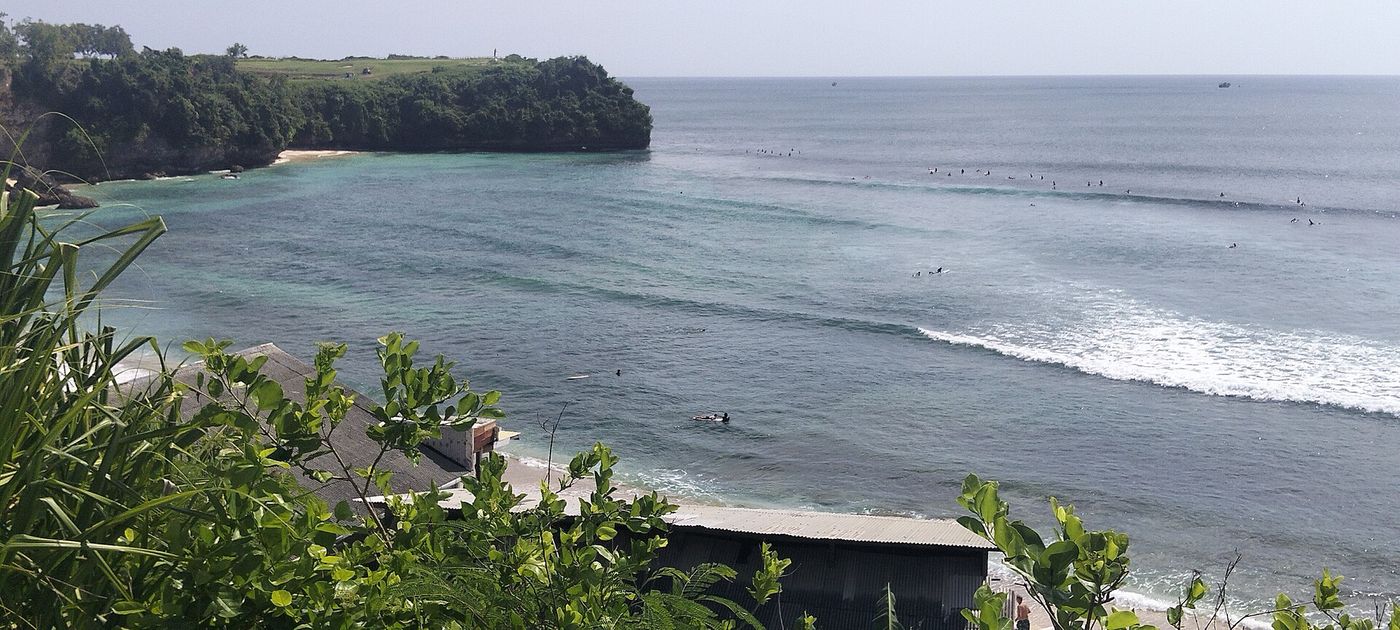
On this page
- In Brief
- Bali Beaches at a Glance
- How to Choose: Pick the Coast, Then the Beach
- South Bali and the Bukit Peninsula: Surf, Cliffs and Beach Clubs
- East Bali: Black Sand, Calm Seas and Shore Snorkelling
- The Nusa Islands: Tall Cliffs and Clear Water
- North Bali: Black Sand and Flat, Calm Water
- Practical Notes
- FAQ
- Sources
In Brief
The best beaches in Bali depend on the day you want. For surf below white cliffs, go to the Bukit Peninsula in the south, home of Padang Padang, Bingin and Melasti. For clear water and snorkelling with thinner crowds, go to the east coast or the Nusa islands.
For flat water and quiet sand, go north. Lovina has volcanic black sand on a calm bay, and Pemuteran has a reef close to shore with excellent snorkelling. On both you can have stretches of coast almost to yourself.
Bali Beaches at a Glance
- For surf: Padang Padang, Bingin, Balangan, Uluwatu (Bukit Peninsula)
- For swimming: Melasti, Nusa Dua, Pemuteran
- For snorkelling: Amed, Menjangan (off Pemuteran), Blue Lagoon near Padangbai
- For quiet: Pemuteran and the Lovina coast in the north, Virgin Beach in the east
- White sand: Melasti, Nusa Dua, Kelingking (Nusa Penida)
- Black sand: Lovina, Amed, the wider north coast
- The dramatic view: Kelingking on Nusa Penida
- Calm water for families: Nusa Dua, Pemuteran
- Sunsets: Seminyak and Melasti in the south, the Lovina bay in the north
How to Choose: Pick the Coast, Then the Beach
The island has a different sea on each side, so the region you choose decides your beach.
- For surf and the scene, the south. Padang Padang, Bingin and Balangan are the breaks. Seminyak and Melasti are the sunsets and the beach clubs. Expect company.
- For clear water and snorkelling, the east. Head for Amed, where the reefs sit close to shore.
- For cliffs and clear sea, the Nusa islands. The water there is among the clearest near Bali, below some of its tallest cliffs.
- For calm, quiet and reef, the north. Lovina has the dolphin coast and easy swimming. Pemuteran has the reef at Menjangan and a bay you can have nearly to yourself.
The twelve beaches below are grouped by those four regions. Each comes with the same short notes on who it suits, what to know and where it is.
South Bali and the Bukit Peninsula: Surf, Cliffs and Beach Clubs
The south draws the crowds, and for good reason.
The Bukit Peninsula, the limestone headland below the airport, is a wall of cliffs with coves at the bottom. It holds most of the famous names, and its surf breaks are some of the most photographed in Asia. It is busy and beautiful, and in high season the better-known spots fill by mid-morning.
Seminyak Beach: Sunsets and Beach Clubs
Seminyak is a long, straight stretch of grey-gold sand backed by beach clubs, bars and sunset crowds. People come for the scene behind the sand, with some of the most established sunset venues in Bali a few steps from the water.
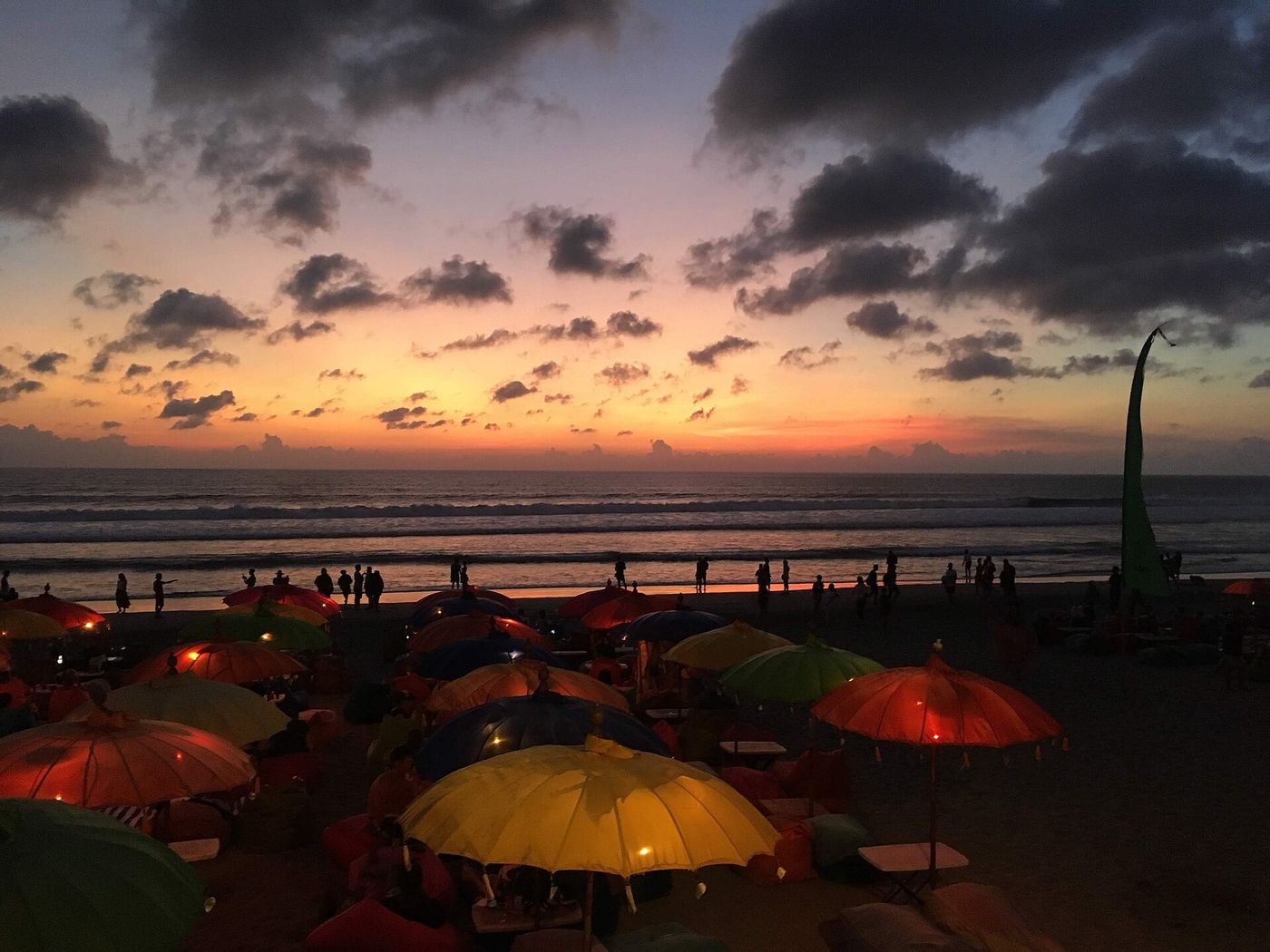 The sunset crowd at the Seminyak waterline. Photo: Christophe95 / Wikimedia Commons (CC BY-SA 4.0)
Best for: sunsets and the beach-club scene.
What to know: Swimming is fine on calm days, but the surf can be strong and the rip currents are real. Watch the flags.
Where: Seminyak, on the south-west coast, about 20 minutes from the airport.
Padang Padang: A Small Cove with a Famous Wave
Padang Padang is a small, sheltered cove reached through a gap in the rocks. The surf break offshore made it famous, along with a cameo in Eat Pray Love. Turquoise water and cliffs make it one of the prettiest coves on the Bukit.
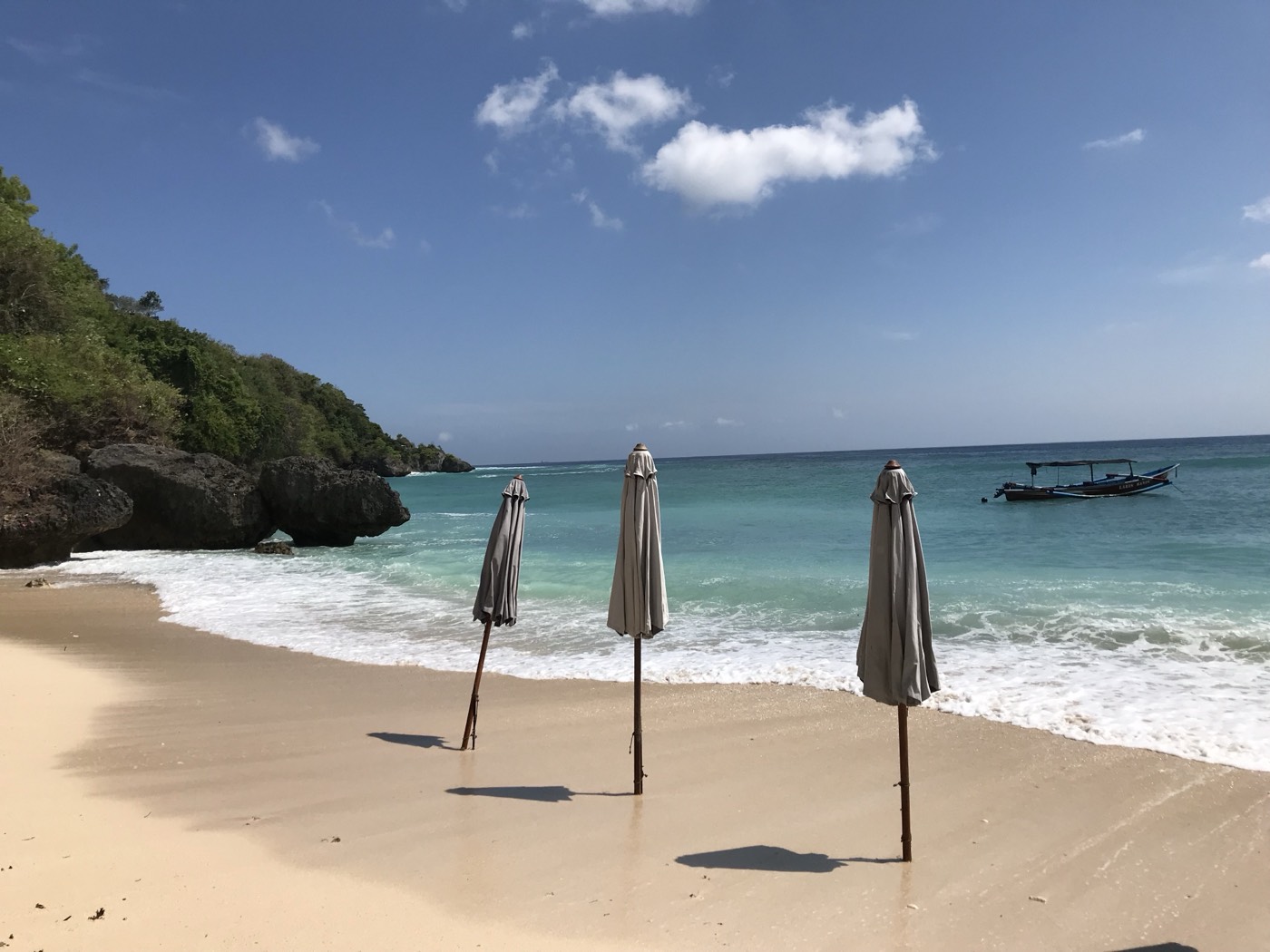 The Padang Padang cove. Photo: TMFalkner / Wikimedia Commons (CC BY-SA 4.0)
Best for: experienced surfers on the wave out front, and swimmers in the shallows near the sand, which are calm enough for a dip.
What to know: The patch of sand is compact and gets packed in peak season.
Where: the Bukit Peninsula, near Uluwatu, at the southern tip of Bali.
Bingin: A Surfer's Beach Below a Cliff of Warungs
At Bingin, a cluster of warungs and surf shacks tumbles down a cliff to a thin strip of sand. The strip is exposed at low tide, when a reef shelf shows.
Bingin is a surfer's beach first, with a fast left-hander breaking over shallow reef. The cliffside cafes and the sunset view earn it a wider crowd.
Best for: surfers, and a sunset from a cliffside cafe.
What to know: The walk down is steep, and the climb back up is a workout.
Where: Pecatu, on the Bukit Peninsula, near Uluwatu.
Balangan: Room to Spread Out on the Bukit
Balangan is longer and more open than its Bukit neighbours. It has golden sand, a fringing reef and a relaxed line of warungs along the cliff base.
Best for: intermediate and advanced surfers, who come for the break, and anyone after an unhurried afternoon.
What to know: The beach is wide enough to find space even on a busy day, and sunsets here are quieter than at Padang Padang.
Where: the Jimbaran area, on the northern edge of the Bukit Peninsula.
Nusa Dua: Calm Water for Families
Nusa Dua is the calm, manicured face of south Bali, a gated enclave of resorts with raked sand and gentle water. A reef keeps the swell down. The lagoons are shallow, and a long beachfront walkway connects the hotels.
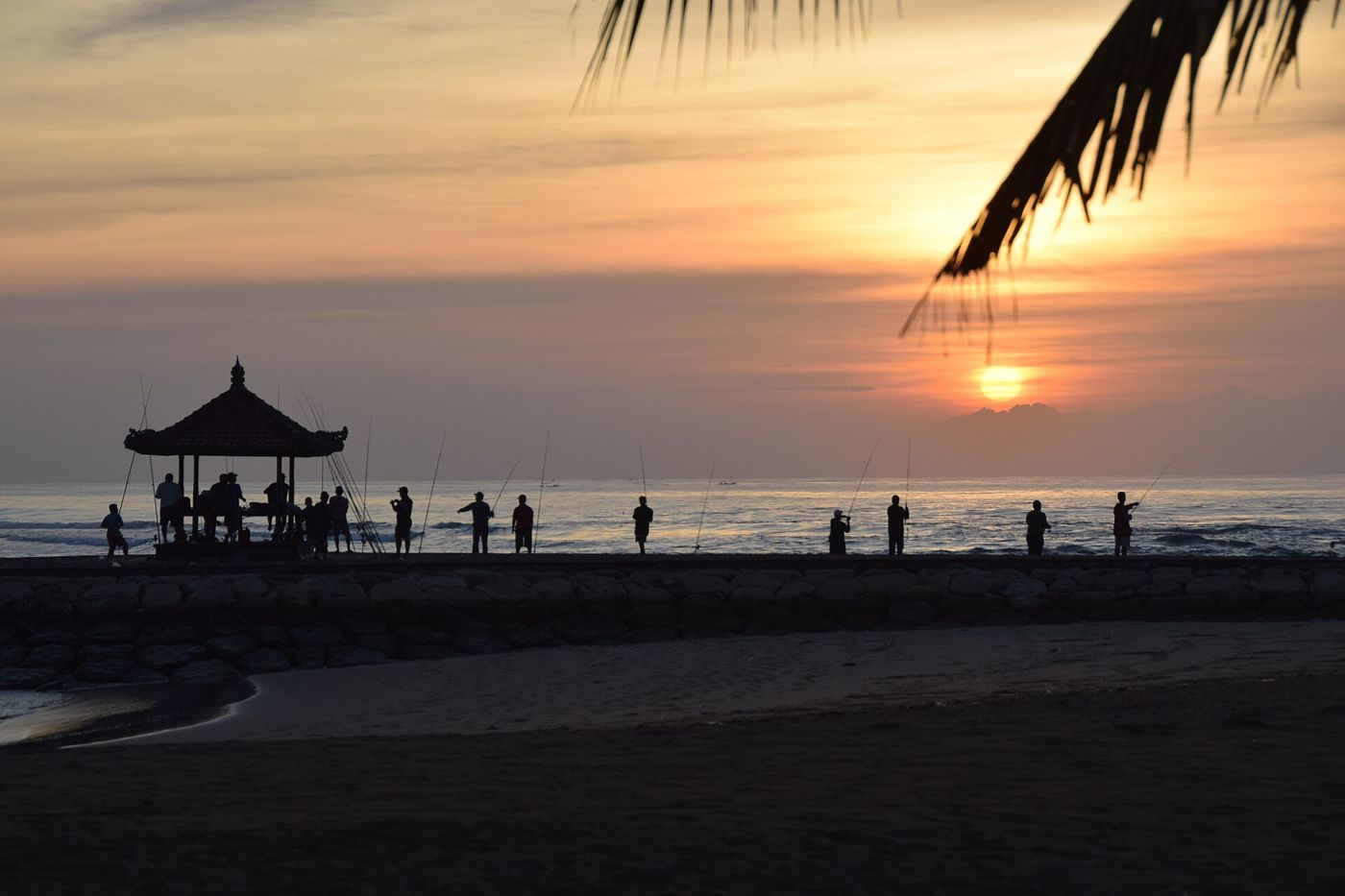 Fishermen on the Nusa Dua breakwater at sunrise. Photo: GdML / Wikimedia Commons (CC BY-SA 4.0)
Best for: easy swimming and families.
What to know: It feels more managed than wild, which is the point for some travellers.
Where: the south-east Bukit Peninsula, inside the gated resort area.
Melasti: White Sand Under Carved Cliffs
Melasti is a wide arc of white sand below carved limestone cliffs. A paved road switchbacks down to the water, and the cliff approach is a sight in itself.
The water here is some of the clearest and most swimmable on the Bukit, turquoise and calm in the protected sections.
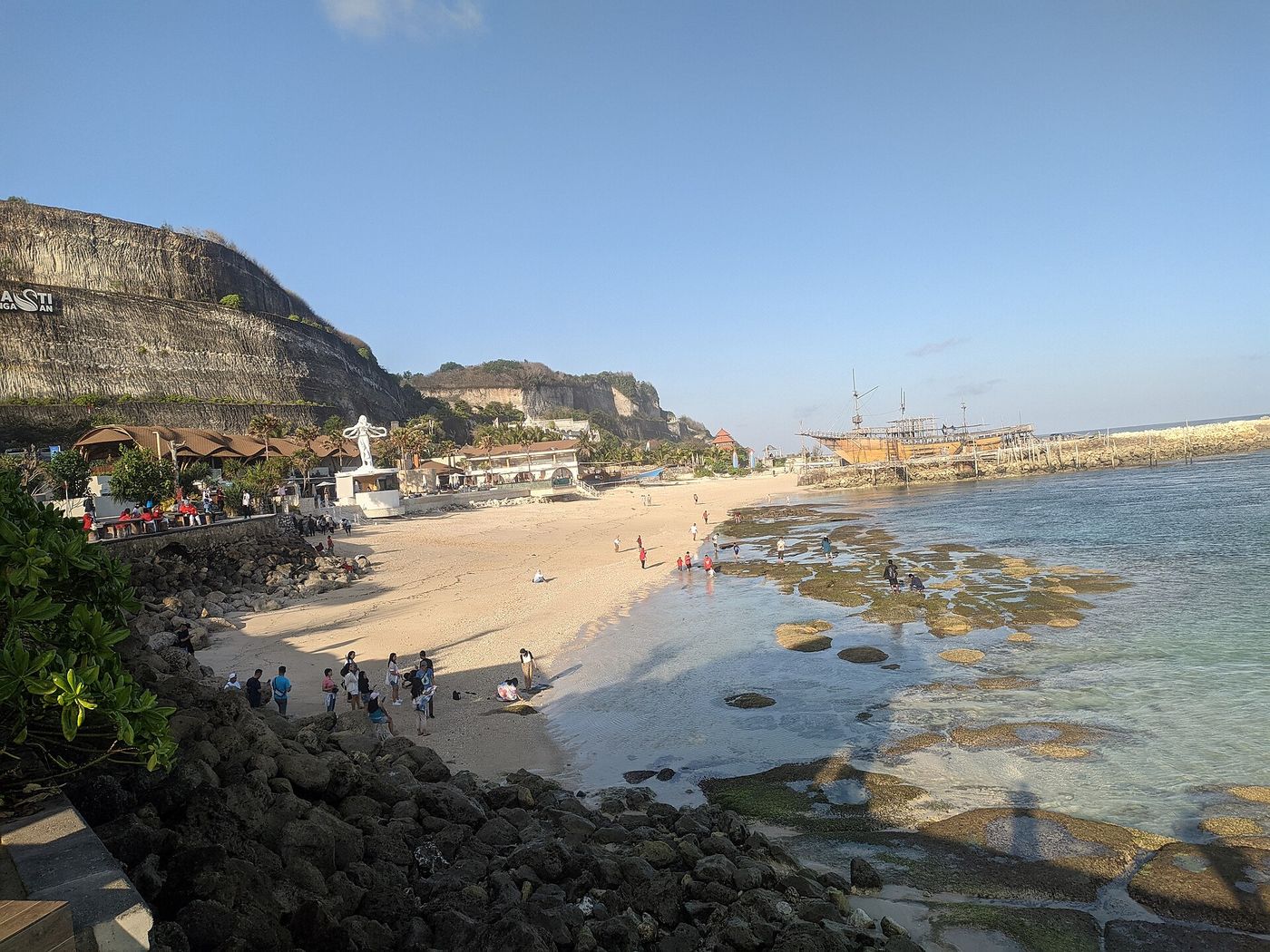 Melasti beach under its limestone cliffs. Photo: Dare2Leap / Wikimedia Commons (CC BY-SA 4.0)
Best for: swimming, white sand and sunsets.
What to know: Melasti has grown popular with beach clubs in recent years, so come early for the quiet version.
Where: Ungasan, on the southern Bukit Peninsula.
East Bali: Black Sand, Calm Seas and Shore Snorkelling
The east coast is where Bali slows down.
It has black volcanic sand, calmer seas and traditional fishing villages, with Mount Agung above them. The water clears and the shore snorkelling is some of the best on the main island. The crowds are a fraction of the south's.
Amed: Reefs and Wrecks Close to Shore
Amed is a string of black-sand bays along the far east coast, and one of mainland Bali's main bases for snorkelling and diving. The water is calm and clear, and coral reefs sit close to shore.
A sunken Japanese shipwreck lies here, and the USAT Liberty wreck is at nearby Tulamben. Together they pull divers from across the island.
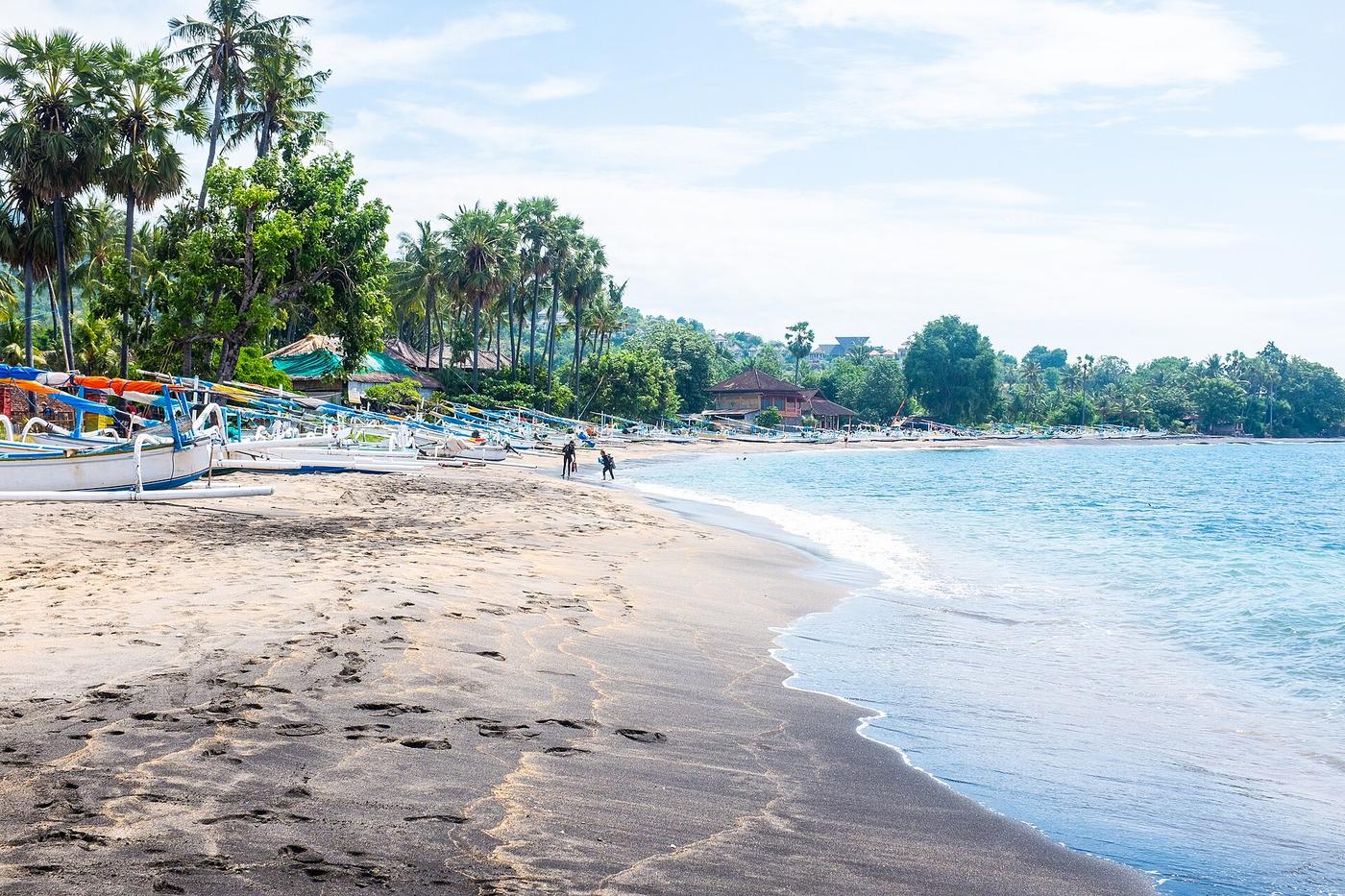 Jukung outriggers on Amed's dark sand. Photo: Marklchaves / Wikimedia Commons (CC BY-SA 4.0)
Best for: snorkelling and diving from the shore, on black sand.
What to know: Mornings here are still, with traditional jukung outriggers lined along the sand.
Where: the far east coast, about 2.5 to 3 hours from the south.
Virgin Beach (Pasir Putih): White Sand on a Volcanic Coast
Virgin Beach, also called Pasir Putih, is a crescent of white sand below green headlands. White sand is a rare sight on the volcanic east coast.
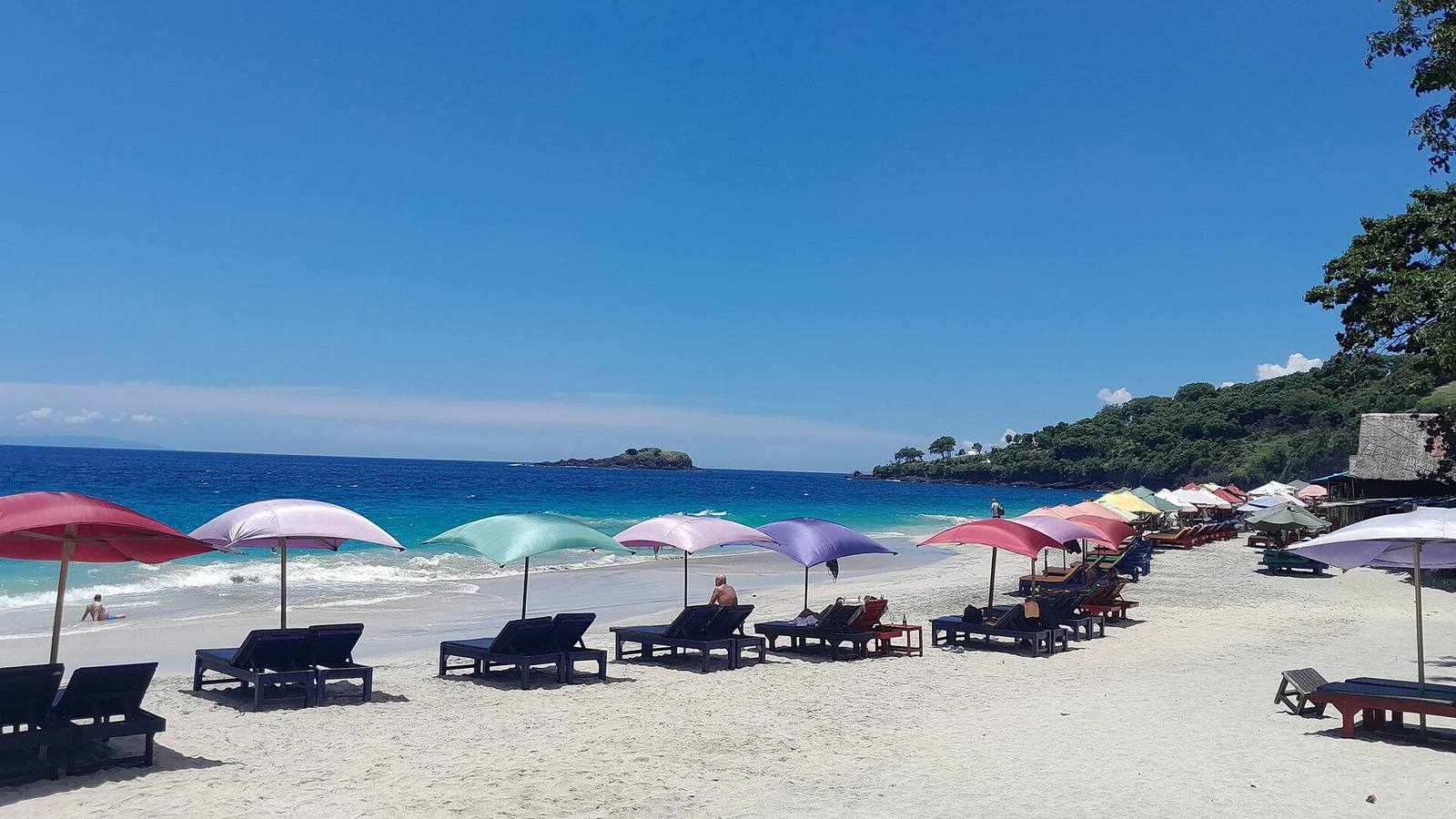 The white sand and loungers at Virgin Beach in east Bali. Photo: Tisa0603 / Wikimedia Commons (CC0)
The water is calm and clear, good for swimming. A row of simple warungs serves grilled fish under the palms.
Best for: a quiet swim off white sand.
What to know: It once felt like a secret and now sees tour groups, but it stays far quieter than the southern beaches.
Where: Karangasem, near Candidasa, in east Bali.
The Nusa Islands: Tall Cliffs and Clear Water
Three islands lie off the south-east coast: Penida, Lembongan and Ceningan.
Their coastal scenery is some of the most dramatic in Bali. The water is among the clearest near Bali and the cliffs are among the tallest. The cliff lookouts have become some of the most recognisable images of Indonesia. You reach the islands by fast boat from Sanur.
Kelingking Beach: The Dinosaur-Neck Headland
Kelingking is one of the most photographed coastlines in Indonesia. A towering limestone headland, shaped like a dinosaur's neck, stands over a sliver of white sand and bright blue water far below.
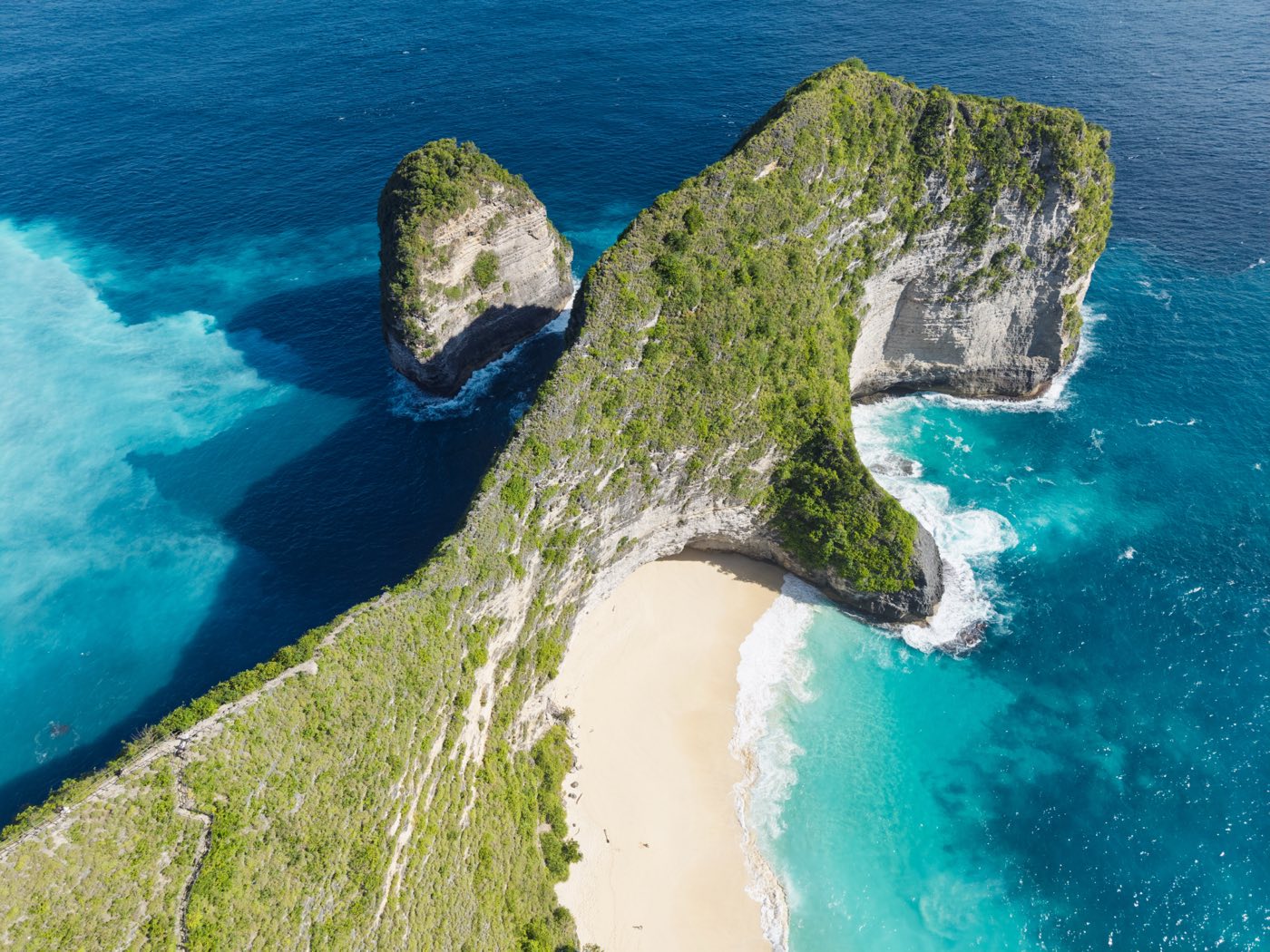 The Kelingking headland from the air. Photo: FBilula / Wikimedia Commons (CC BY 4.0)
Best for: the view. The lookout from the top is the shot most visitors come for.
What to know: The descent to the sand is steep, exposed and demanding, so many visitors enjoy the view and skip the climb down. The current at the bottom is strong, which makes this a beach to admire more than to swim.
Where: the west coast of Nusa Penida.
Atuh Beach: A Swimmable Bay Among Sea Stacks
Atuh is a sweeping bay on the quieter east side of Nusa Penida, framed by sea stacks and arched rock formations. Its water is calmer and more swimmable than Kelingking's.
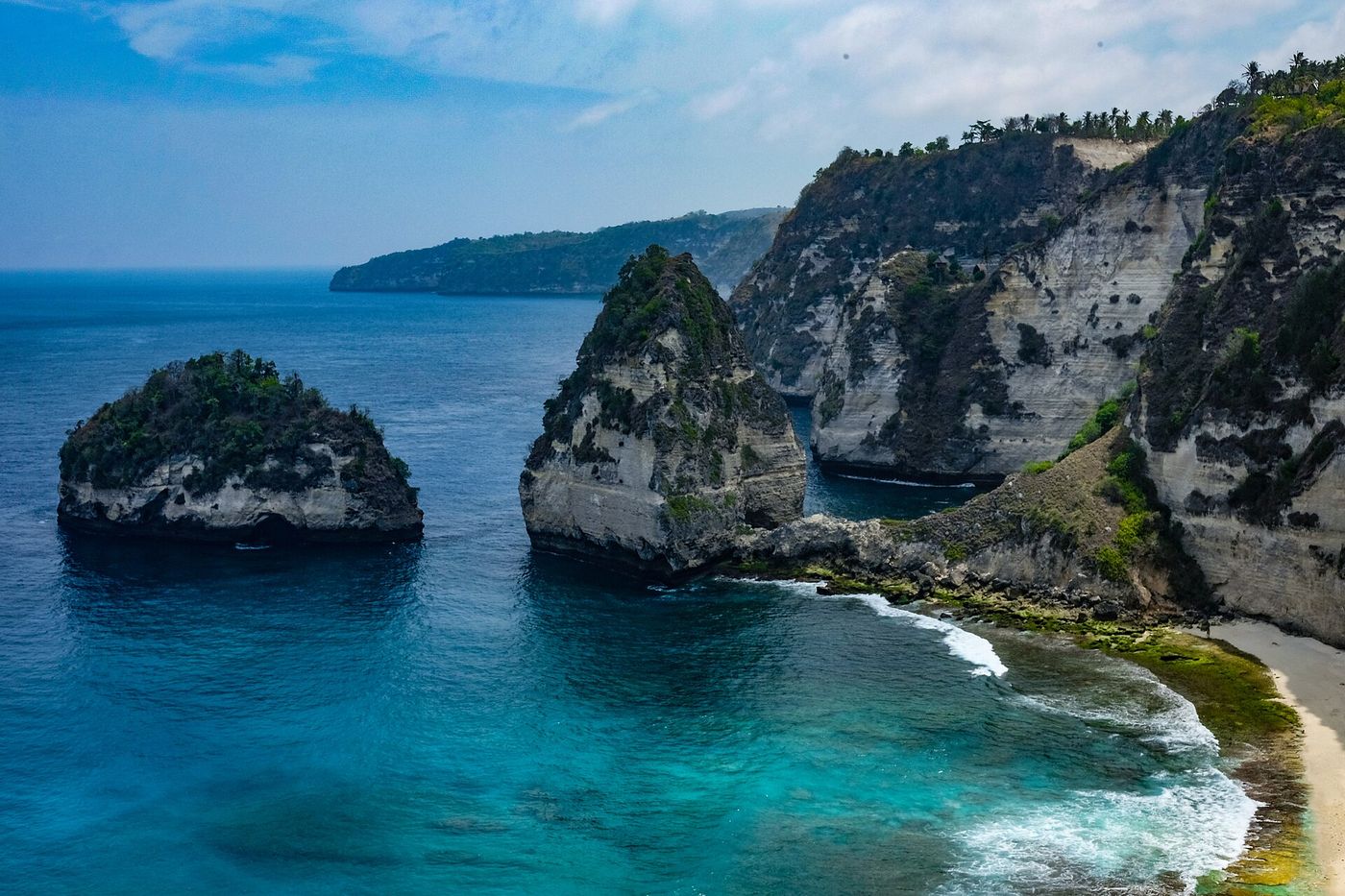 Atuh's sea stacks on east Nusa Penida. Photo: Syselpunk / Wikimedia Commons (CC BY-SA 4.0)
Best for: a swim under the cliffs of Nusa Penida.
What to know: A path leads down to the sand, where a few warungs sell coconuts and shade. Nearby Diamond Beach shares the same cliffline and gets the social-media attention, while Atuh stays a touch more relaxed.
Where: the east coast of Nusa Penida.
North Bali: Black Sand and Flat, Calm Water
The north is the coast Northbound knows best, and many visitors to Bali do not reach it.
The sand is volcanic black and the sea is flat and calm, with excellent snorkelling. The crowds thin to almost nothing, and on some stretches you might be the only people on the beach.
The reef at Menjangan, reached from Pemuteran, is widely rated among the finest snorkelling and diving in Bali. For the full picture, see the best beaches in north Bali.
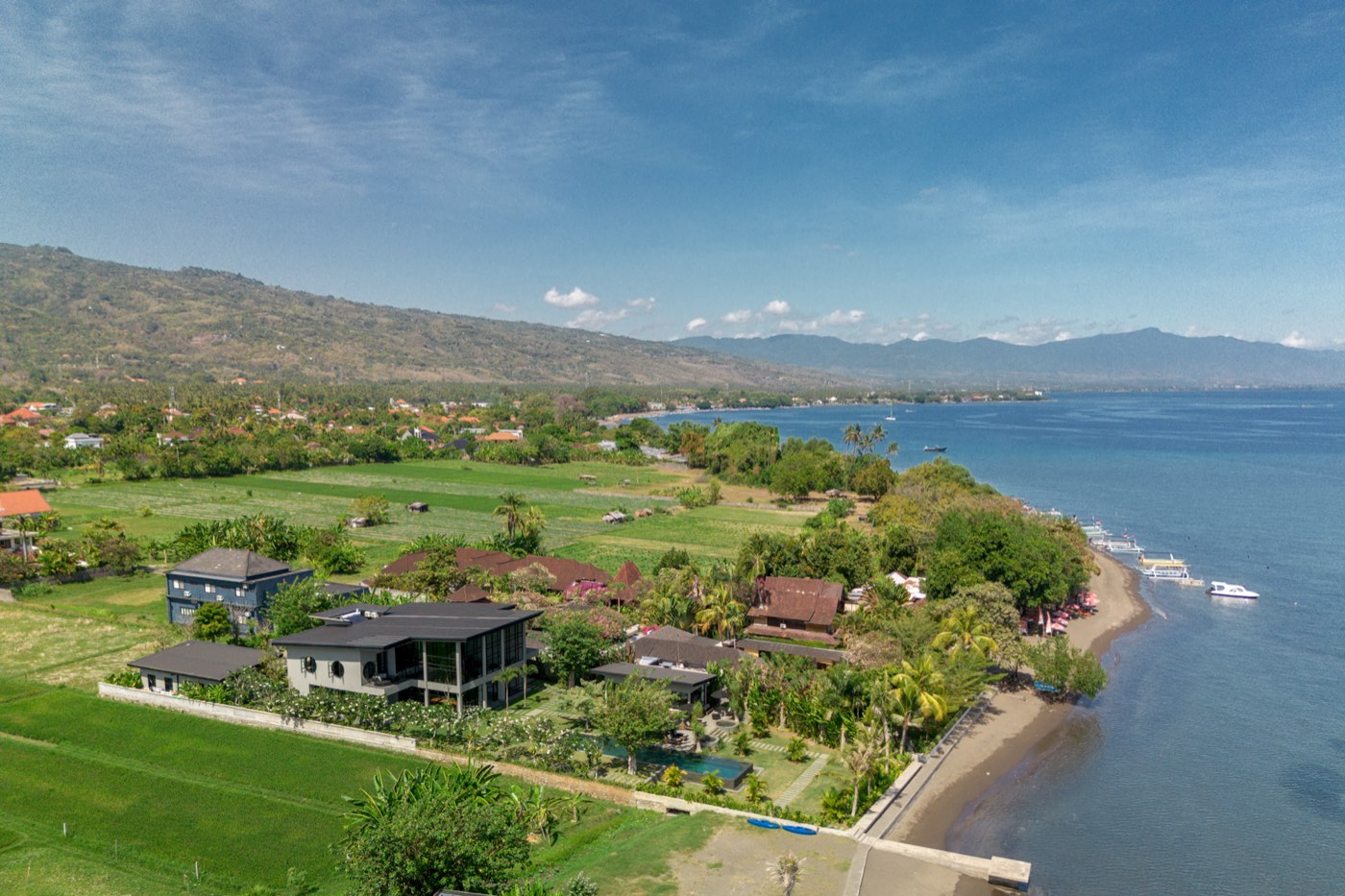 Photo: Palm Living archive.
Lovina: Black Sand, Easy Swimming and Dawn Dolphins
Lovina is north Bali's main beach town, a long run of black volcanic sand along a calm, sheltered bay. It is the base for the region's famous dawn dolphin trips.
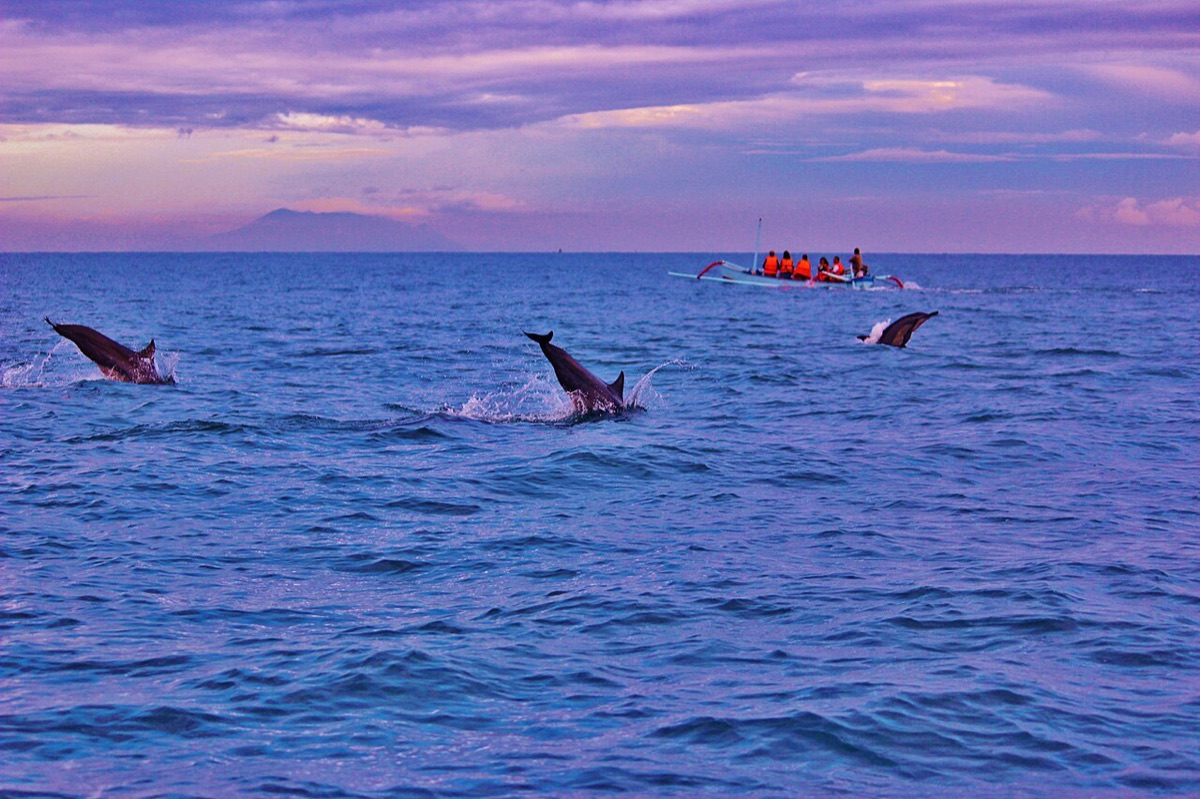 Calm dry-season dawn on the Lovina dolphin water. Photo: Michelle Maria / Wikimedia Commons (CC BY 3.0)
The sea is usually flat and easy to swim in, without the rips that make the south's surf beaches tricky. The dark sand stands out against the green hills behind, and the sunsets face west across a still bay.
Best for: easy swimming, dolphins at dawn and sunsets over the bay.
What to know: The pace is gentle, prices are lower than in the south, and the coast keeps going far beyond the main strip. The full Lovina guide covers where to stay, eat and swim.
Where: the north coast, in Buleleng Regency, about three hours over the mountains from the airport. The getting to north Bali guide covers the drive.
Pemuteran: A Restored Reef on a Quiet Bay
Pemuteran is a quiet bay in the far north-west, with calm, clear water and a serene black-sand beach. The village is low-key and eco-minded.
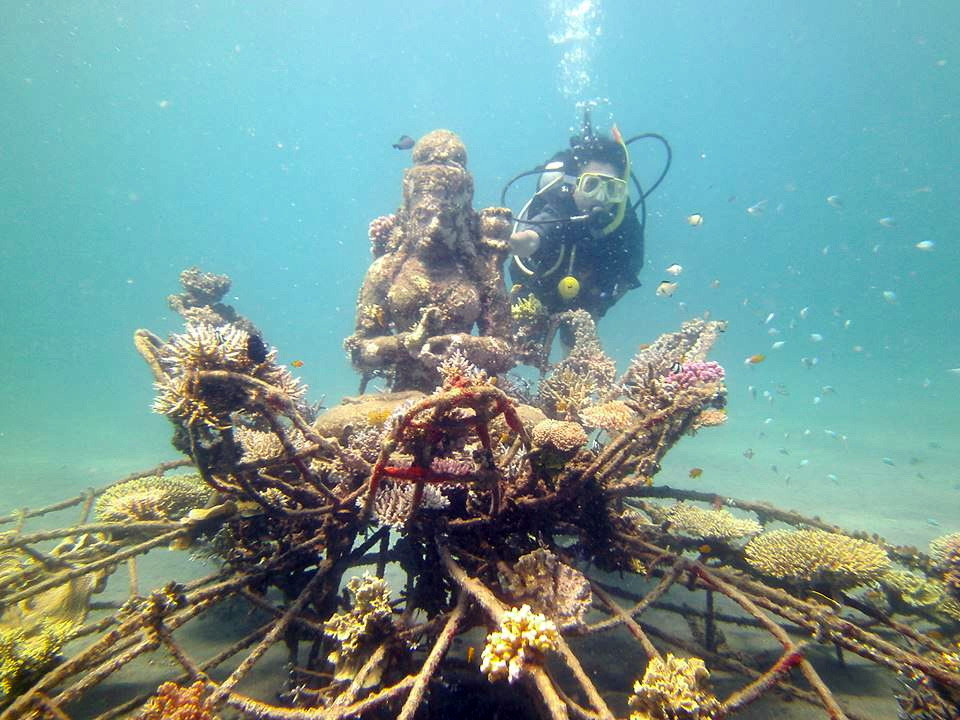 A Biorock structure in Pemuteran bay, coral grown over one of the bay's steel frames. Photo: Ennio morricone / Wikimedia Commons (CC BY-SA 3.0)
It restored its coral reef through the Biorock project, one of the most successful community conservation projects in Bali.
Best for: travellers who want reef, quiet and a slower rhythm, and families who want calm water.
What to know: Pemuteran is the gateway to Menjangan Island, part of West Bali National Park. The island is known for its snorkelling and wall diving.
Where: the far north-west coast, near West Bali National Park, about three and a half to four hours from the south.
The north Bali travel guide lays out how to get to this coast and what to do once you arrive.
Practical Notes
- Rip currents: the south-west coast has strong rips. At Seminyak, watch the flags.
- Crowds: in high season the better-known Bukit beaches fill by mid-morning, so go early.
- Steep paths: Bingin and Kelingking both mean a steep walk down and a climb back up.
- Nusa islands: fast boats leave from Sanur.
- Drive times: Seminyak is about 20 minutes from the airport. Amed is 2.5 to 3 hours from the south, Lovina about three hours and Pemuteran three and a half to four.
- Learning to surf: beginners usually start on the gentler beach breaks around Kuta and Canggu.
FAQ
What is the most beautiful beach in Bali? It depends on what you mean by beautiful. For dramatic scenery, Kelingking on Nusa Penida is one of the most striking coastlines in Indonesia. For swimmable turquoise water, Melasti on the Bukit Peninsula is hard to beat. For quiet black sand and serenity, the bays around Pemuteran and Lovina in the north stand on their own.
Which part of Bali has the best beaches? The Bukit Peninsula in the south has the most famous beaches and surf breaks, and it is also the busiest. The Nusa islands have very clear water and dramatic cliffs. North Bali has calm water, reef snorkelling and thin crowds. The right region depends on whether you want surf, snorkelling or solitude.
Where are the best beaches for swimming in Bali? Melasti and Nusa Dua in the south have calm, clear, swimmable water. In the north, Lovina and Pemuteran have flat, sheltered bays that are among the easier places to swim on the island. They do not have the strong rip currents found along the south-west coast.
Where is the best snorkeling in Bali? Amed on the east coast has excellent shore snorkelling over coral reefs and shipwrecks. Menjangan Island is widely rated the finest snorkelling and diving on the island. It lies inside West Bali National Park and is reached from Pemuteran in the far north-west.
Why does north Bali have black sand? North Bali sits below the island's volcanic mountains, and the dark sand comes from eroded volcanic rock washed down to the coast. The black sand at Lovina and along the north coast is a feature of the region's geology. It gives the beaches a distinctive look against the green hills behind.
Are Bali beaches good for families? Yes, if you pick the calm ones. Nusa Dua in the south has gentle, shallow water built for easy swimming. In the north, Lovina and Pemuteran have flat, sheltered bays that suit families well, with calm water and a relaxed pace. The exposed surf beaches of the Bukit are better admired than swum with small children.
Which Bali beaches are quietest? The north. Pemuteran sits on a sheltered bay with black sand and a restored reef, far from the crowds, and the Lovina coast runs on well beyond its main strip. Virgin Beach in the east is the quietest of the white-sand beaches, though it now sees tour groups.
Which Bali beaches are best for surfing? The Bukit Peninsula holds the island's famous surf: Padang Padang, Bingin and Balangan, plus the break at Uluwatu. These are reef breaks that suit intermediate to advanced surfers. Beginners usually start on the gentler beach breaks around Kuta and Canggu before moving to the Bukit reefs.
How far is north Bali from the airport? Lovina is roughly three hours over the central mountains from Ngurah Rai airport, more in rain or heavy traffic. Pemuteran in the far north-west is about three and a half to four hours. The drive crosses the highlands past lakes and rice terraces, and many travellers make it part of the trip.
Is north Bali worth visiting just for the beaches? The north's beaches are calm and quiet, with black sand and, at Menjangan, snorkelling widely rated the finest in Bali. They pair with the region's waterfalls, hot springs and dawn dolphin trips, which makes the north worth a few nights rather than a day trip. The north Bali travel guide shows how the beaches fit alongside the rest.
Sources
- Global Coral Reef Alliance, Biorock coral reef restoration, read September 2026
- Global Coral Reef Alliance, Pemuteran Coral Reef Restoration Project, read September 2026
- Balai Taman Nasional Bali Barat, Umum (Menjangan's dive and snorkel sites inside the park, and Pemuteran as a departure point), read September 2026 (in Indonesian)
Read next: the best beaches in north Bali, the Lovina guide and the north Bali travel guide.