On this page
In Brief
Daluman is the Balinese name for green cincau, a jelly made from the leaves of Cyclea barbata, a climbing vine of Southeast Asia. The fresh leaves are kneaded by hand in boiled, cooled water until the water turns dark green and foamy, then strained and left to stand; the liquid sets on its own into a soft, trembling jelly. Cut into pieces and served over ice with coconut milk and palm sugar syrup, it becomes es daluman, the everyday cold drink of Balinese warungs and markets. In the north you can find it at warungs in Singaraja, at Pasar Anyar, the city's market, and at the Pasar Intaran market on the beach at Lovina.
Daluman at a Glance
- What it is: A green leaf jelly, called daluman in Bali and cincau hijau elsewhere in Indonesia
- The plant: Cyclea barbata, a climbing vine of the moonseed family (Menispermaceae)
- The drink: Es daluman, the jelly with coconut milk, palm sugar syrup and ice
- How it sets: The leaves' own gelling fibre, mainly pectin; no gelatine, no agar, no cooking
- Texture: Soft, wobbling jelly in cold, sweet coconut milk
- Where in the north: Warungs in Singaraja, Pasar Anyar market, Pasar Intaran in Lovina
- Best time: Midday, when it is hottest
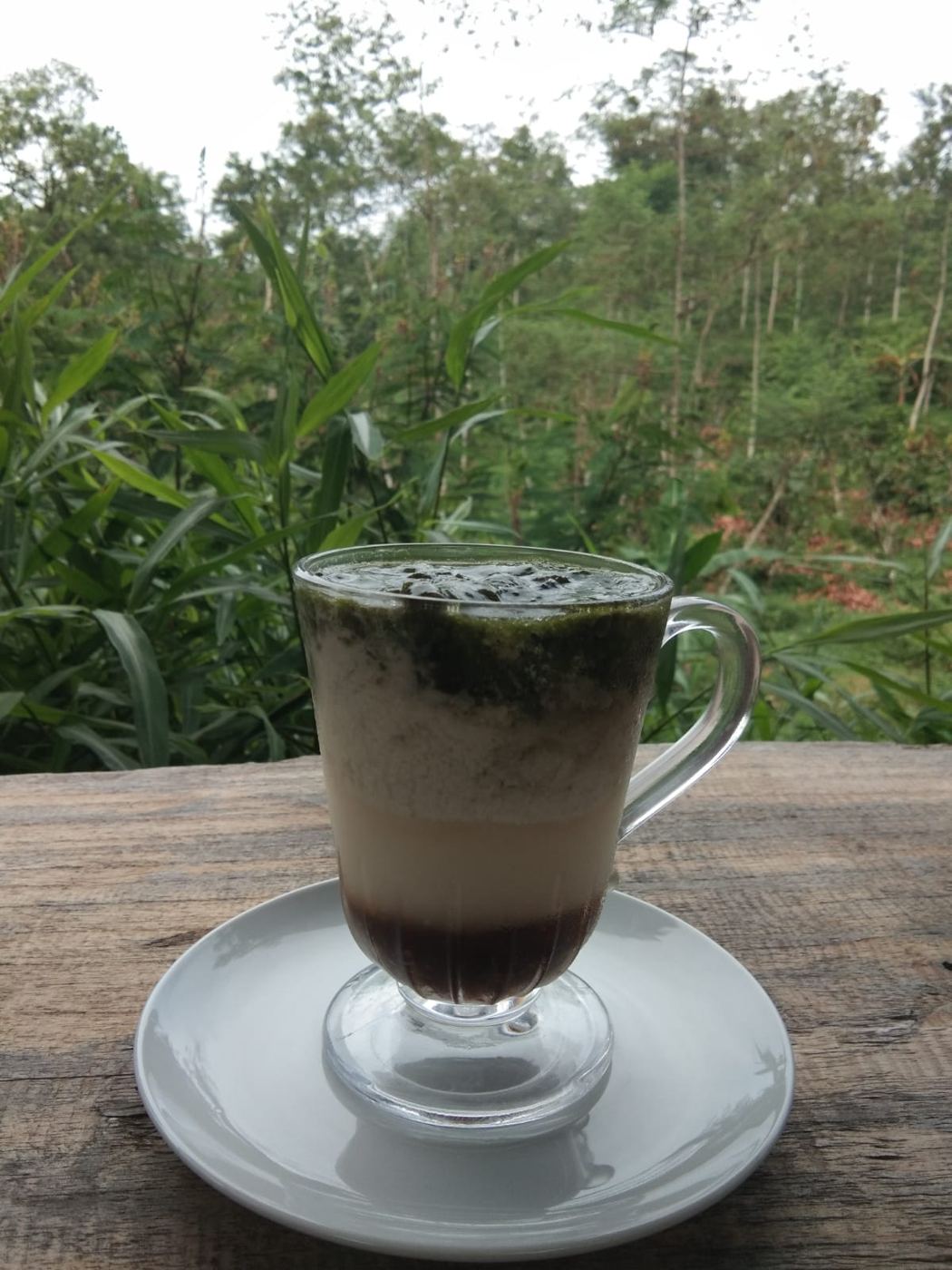 Green cincau layered over coconut milk and palm sugar syrup, the same build as Bali's es daluman. Photo: Endahimawati / Wikimedia Commons (CC BY-SA 4.0)
The Plant: Cyclea barbata
The jelly comes from the leaves of Cyclea barbata, known across Indonesia as cincau hijau, green cincau. It is a climbing plant of the moonseed family, native to Southeast Asia, and it often grows wild. Indonesian Wikipedia's entry on the plant describes it as happiest in shade, in damp ground, at around 800 metres, and grown from seed or from stem cuttings. It has a string of regional names: camcao in Javanese and camcauh in Sundanese, among others. In Bali it is daluman.
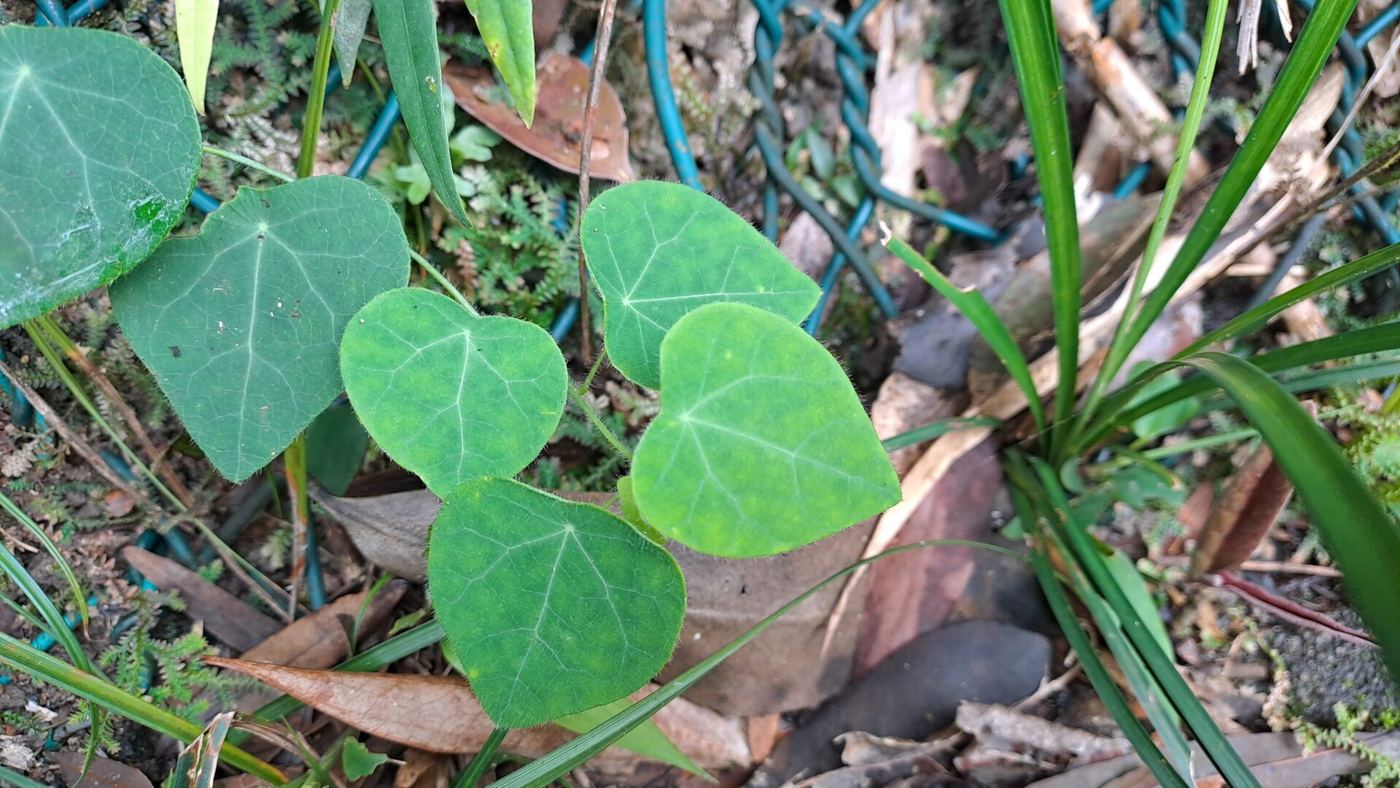 Leaves of Cyclea barbata, the vine that daluman is made from, photographed in Hong Kong. Photo: CYL / Wikimedia Commons (CC BY 4.0)
The vine has a long life as a medicine too. A 2022 review in the Sasambo Journal of Pharmacy records traditional uses in Indonesia and neighbouring countries, among them treating malaria and care after childbirth, and notes that its stems, roots and leaves contain alkaloids and flavonoids. The authors are careful to add that more research is needed to confirm how effective and how safe those uses are.
Why the Leaves Turn to Jelly
Nothing is added to make daluman set. The leaves carry their own gelling fibre. Food scientists who have studied the plant identify the polysaccharide behind the gel as mainly pectin, the same family of fibre that sets fruit jam; a 2023 study at Universitas Semarang compared jelly made from fresh leaves with jelly made from dried leaf powder and found real differences in firmness, colour, taste and how quickly each set. Fresh leaves are what the markets use.
How Es Daluman Is Made
The method is simple and physical. State radio's Singaraja station, RRI Singaraja, sets it out in three parts.
The jelly. Fresh daluman leaves are washed, then squeezed and kneaded in boiled water that has been left to cool, until the water foams and turns dark green. The juice is strained and left at room temperature to firm up. Kneading takes real strength. At a daluman workshop at Pasar Intaran in Lovina, reported by the Singaraja writer Dian Suryantini for tatkala.co, the students taking part found the leaves would not give up their juice until they squeezed hard. The Balinese word for this kneading is ngulet.
The coconut milk. Coconut milk is heated gently with a pinch of salt and pandan leaf for fragrance. RRI suggests using milk from a grilled coconut for extra depth. The seller who led the Lovina workshop told her students that good coconut milk starts with a fully mature coconut, grated, squeezed and strained by hand.
The syrup. Palm sugar, gula aren or gula Bali, is boiled with water until it thickens. Some warungs colour a plain sugar syrup red instead, as one Singaraja seller described to Kompas.
The glass. The jelly is cut into pieces and spooned into a glass with ice and syrup, then the coconut milk goes over the top.
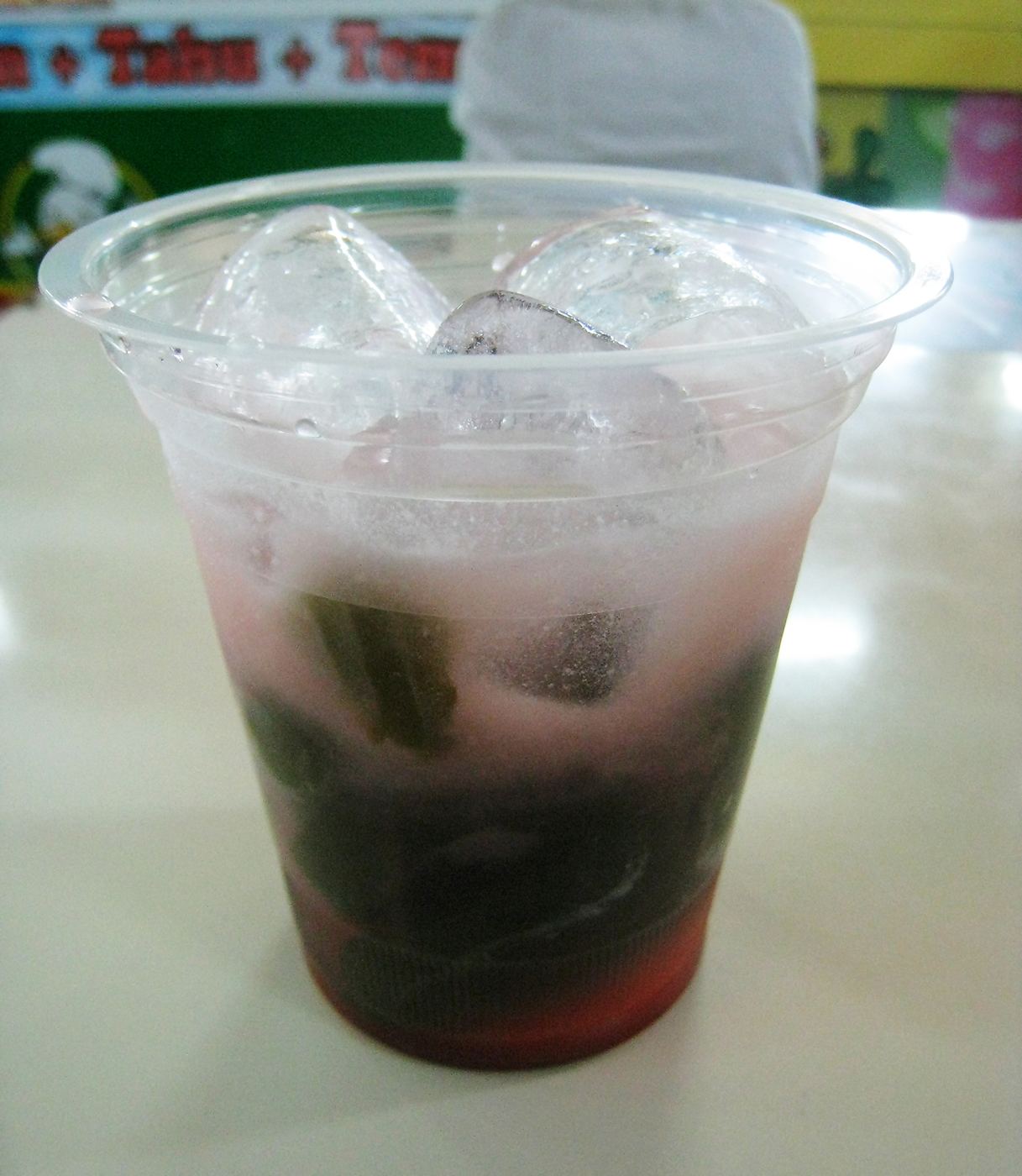 Green cincau jelly with ice, coconut milk and red syrup, the market-stall version of the drink, here in Jakarta. Photo: Gunawan Kartapranata / Wikimedia Commons (CC BY-SA 3.0)
Where to Drink Es Daluman in North Bali
Es daluman is a warung and market drink, sold where locals eat lunch.
Warungs in Singaraja. Kompas visited a small roadside warung in Banyuning, a neighbourhood of Singaraja, where office workers come in at lunchtime for es daluman alongside plates of pork rawon, tipat cantok and chicken soto. The owner told the reporter it is the drink customers ask for more than any other, and that most glasses go at midday. The best warungs in north Bali lists places to eat in the same spirit.
Pasar Anyar, Singaraja. Singaraja's central market is one of the places detikBali names for es daluman made the local way, with coconut milk and Balinese palm sugar. Combine it with a walk through Singaraja's old town (Map).
Pasar Intaran, Lovina. A small market normally set up on the beachfront in Lovina's tourist area, where tatkala.co met Ibu Wayan Mariastini, who has sold es daluman there for a long time and taught a workshop in making it one Sunday morning (Map). Ask locally which days the market runs.
Daluman, Cincau and Grass Jelly
Travellers who know grass jelly from Chinese or Taiwanese desserts sometimes expect the black, firmer jelly cut into cubes. That is black cincau, which comes from a different plant, Mesona. Indonesia uses a third plant as well, a shrub called cincau perdu (Premna). Daluman is the green one: soft, raw-made, and the colour of the leaves it comes from.
How to Fit It In
Es daluman is best as a break in a hot day on the coast or in town. Pair a morning in Singaraja with lunch at a warung and a glass of daluman, or stop for one at Pasar Intaran after an early swim. For the other drinks of the north, from arak and tuak to the coconut-water rujak yeh kuwud and the herbal loloh, see the drinks of north Bali. For the food to eat alongside it, what to eat in Bali and Bali street food cover the dishes and snacks.
Practical Notes
- Go at lunchtime. That is when warungs sell most of it.
- Bring small notes. Warungs and market stalls deal in cash.
- Ask for less sugar (gula sedikit) if you prefer it less sweet.
- Drink it on the spot, while it is cold.
- Ice: if you are careful about ice, ask for it without (tanpa es); Bali belly has the wider advice.
FAQ
What is daluman? Daluman is the Balinese name for green cincau, a soft jelly made by kneading the leaves of the Cyclea barbata vine in water and letting the green juice set. It is usually served as es daluman, with coconut milk, palm sugar syrup and ice.
What is daluman made of? Only leaves and water for the jelly itself. The leaves contain a natural gelling fibre, mainly pectin, so no gelatine or agar is added. The drink adds coconut milk, palm sugar syrup and ice.
What is daluman in English? Green grass jelly, or green cincau. The plant is Cyclea barbata.
Is daluman the same as grass jelly? It is a green cousin. The black grass jelly of Chinese and Indonesian desserts comes from a different plant, Mesona. Daluman is made from fresh Cyclea barbata leaves kneaded in water, and it is soft and green.
Where can I drink es daluman in north Bali? At warungs in Singaraja, such as around Banyuning, at Pasar Anyar market in Singaraja, and at the Pasar Intaran beach market in Lovina.
Is daluman healthy? It is mostly water and plant fibre, and the jelly has been studied for its antioxidant compounds. A review of the plant's traditional medicinal uses concludes that more research is needed on their effectiveness and safety. The coconut milk and palm sugar make the drink rich and sweet.
Sources
- RRI Singaraja, Recipe and method for making es daluman at home, 19 July 2026, read September 2026 (in Indonesian)
- tatkala.co, Dian Suryantini, Learning to knead daluman at Pasar Intaran, 24 March 2026, read September 2026 (in Indonesian)
- Kompas, Es daluman, Bali's refreshment at a small Buleleng warung, 19 November 2024, read September 2026 (in Indonesian)
- detikBali, Five tasty, cheap foods in Singaraja, 30 November 2024, read September 2026 (in Indonesian)
- Wikipedia, Cincau (tumbuhan), for the plant's family, habitat and names, read September 2026 (in Indonesian)
- Febrianto and others, Cyclea barbata L. Miers: traditional use, phytochemistry and pharmacological activity, Sasambo Journal of Pharmacy, September 2022, read September 2026 (in Indonesian)
- Saputri, Rohadi and Fitriana, Comparing gel from fresh green cincau leaves with gel from leaf powder, Jurnal Teknologi Pangan dan Hasil Pertanian, 2023, read September 2026 (in Indonesian)
Read next: the drinks of north Bali, the best warungs in north Bali and Singaraja's old town.