On this page
Munduk is a mountain village of coffee, cloves and waterfalls on the ridge above Lakes Tamblingan and Buyan, and most places to stay here sell the same thing: cool air, a view and a walk from the door. A few go further, with their own organic farms, waste banks, village schools and rice barns saved from ruin. This page lists the lodges in Munduk and around the lakes that describe their own environmental and community work, in their own words, with their sites, Instagram feeds and map pins, so you can judge for yourself.
In Brief
For the original Munduk eco-lodge, Puri Lumbung Cottages, where old rice barns became guest cottages and the village takes part in running the place. For a larger resort built on an organic coffee plantation, Munduk Moding Plantation at Gobleg. For a small, plastic-free retreat among rice fields with a village waste bank, Sanak Retreat. For a hilltop stay with a farm tour and tree planting, Munduk Tentrem. For six cabins on a Munduk hillside, Munduk Cabins by Desa Hay. Closer to the lakes, Girihill Farmhouse at Wanagiri sits on its own organic farm, and Alamu Eco Lodge offers glamping at Lake Buyan. We did not find an outside environmental certification on any of their sites, so each entry reports what the lodge itself says and links you to it.
Munduk Eco-Lodges at a Glance
- Where: Munduk village and neighbouring Gobleg, Kayuputih nearby, Wanagiri and Pancasari by the lakes
- Climate: cool; Puri Lumbung gives Munduk's height as 500 to 1,200 metres and daytime temperatures of 20 to 25°C
- What "eco" means here: organic kitchen gardens, waste sorting and recycling, local staff, village programmes, and rooms that need no air conditioning
- From Lovina: roughly an hour to an hour and a half by road
- Stay: two nights at least, so you get a morning on the trails and a morning at the lakes
- Rates: on each lodge's own site; they change, so we do not print them
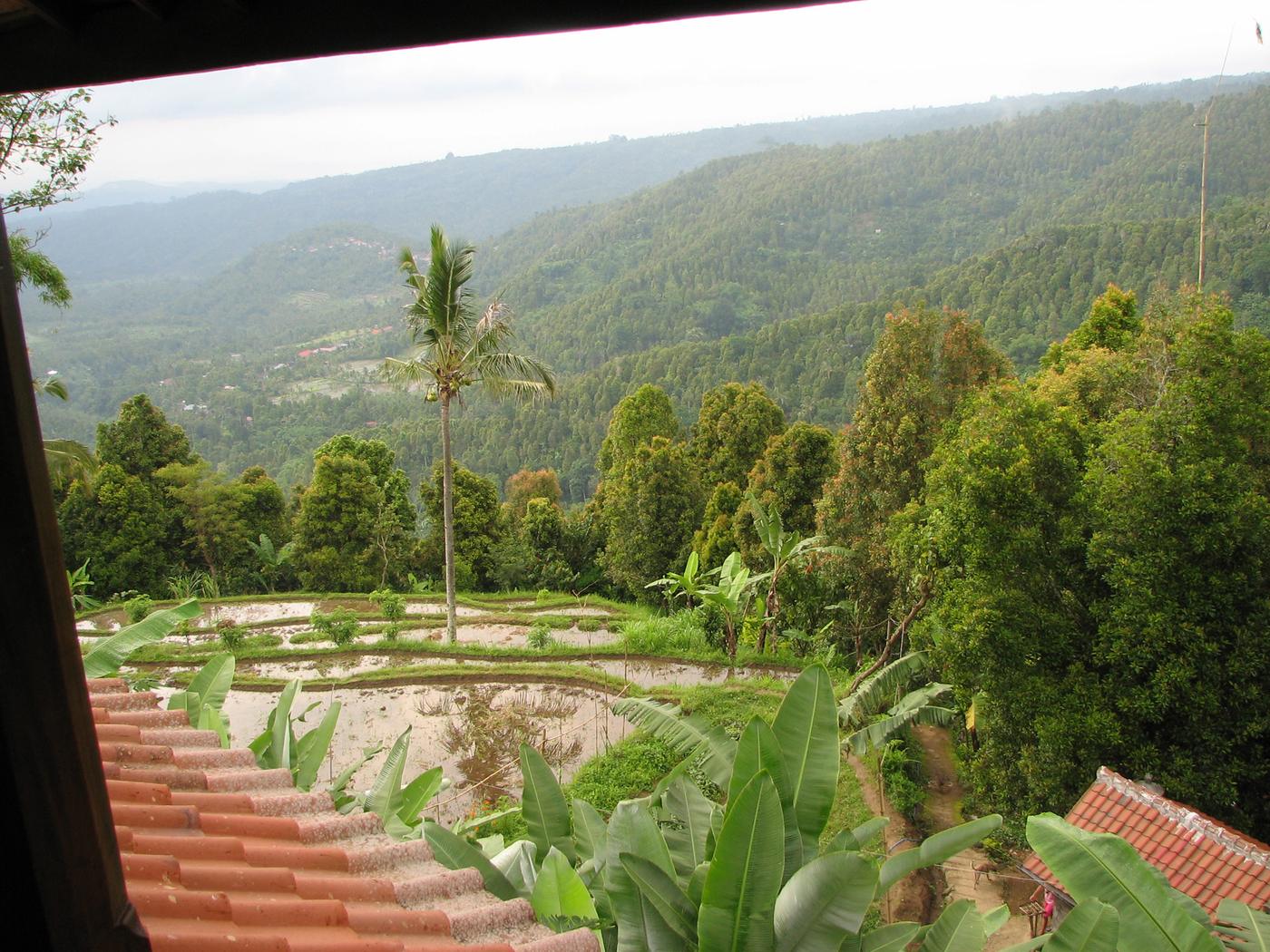 The view from Puri Lumbung Cottages over rice terraces and the valley below Munduk. Photo: Eric Bajart / Wikimedia Commons (CC BY-SA 3.0)
Why Munduk for a Nature Stay
The village sits among clove, coffee and cocoa gardens, with rainforest, rice terraces and a string of waterfalls within walking distance. Puri Lumbung's history of the village records that the Dutch used Munduk as a mountain retreat from their capital at Singaraja, opened the first guest house for officers here in 1908, and brought coffee, cocoa, cloves and vanilla as export crops. The cool air is the reason people still come up.
The lakes are the other half. Tamblingan and Buyan lie just below the ridge, and our twin lakes guide covers the temples, canoes and forest trails there. For the village itself, see the Munduk guide.
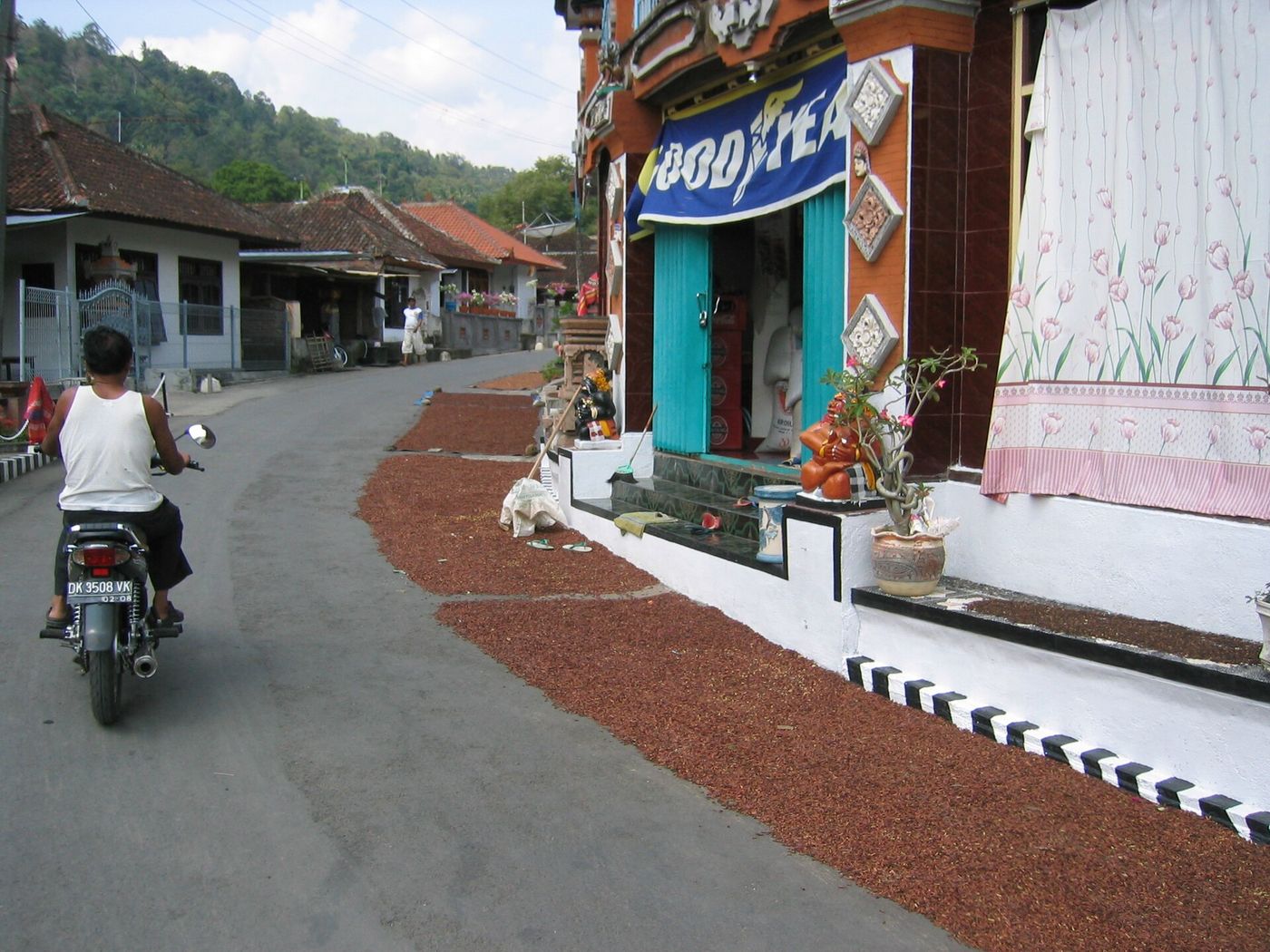 Cloves drying on the roadside in Munduk. Photo: tinofrey / Wikimedia Commons (public domain)
The Lodges in and Around Munduk
Puri Lumbung Cottages
Setting: In Munduk village, with views over rice fields, clove gardens and valleys to the coast. The name means "rice barn palace". The compound follows the traditional Balinese plan modelled on the human body, with shrines at the head, guest rooms at the heart and other facilities at the foot.
In their words: Puri Lumbung calls itself the first of its kind in Bali, "an eco-tourism project" dedicated to the discovery, conservation and enhancement of the area around Munduk. It found several disused lumbung, rice granaries about 80 years old, and adapted them into simple cottages, holding a ritual first to return the rice goddess Dewi Sri to the fields. There are also villas along the mountainside. The lodge says the air is cool enough that fans and air conditioning are unnecessary. Villagers work at the lodge and take part in activities that maintain the rainforest and protect water, and young villagers are encouraged to keep up traditional dance, music and crafts. Village children come for a dance class several times a week, which guests may watch or join.
What you can do: Treks with English-speaking guides, mountain bikes, daily yoga, the Arathi spa, and classes in Balinese cooking, offerings, weaving, bamboo instruments and loloh, the village's herbal drinks. The lodge also offers the chance to take part in harvesting rice, honey and cloves, and tours to the lakes, the waterfalls and the old village of Pedawa.
Contact: purilumbung.com · Map · Puri Lumbung Cottages on Instagram
Best for: Travellers who want village life and classes, in a simple cottage.
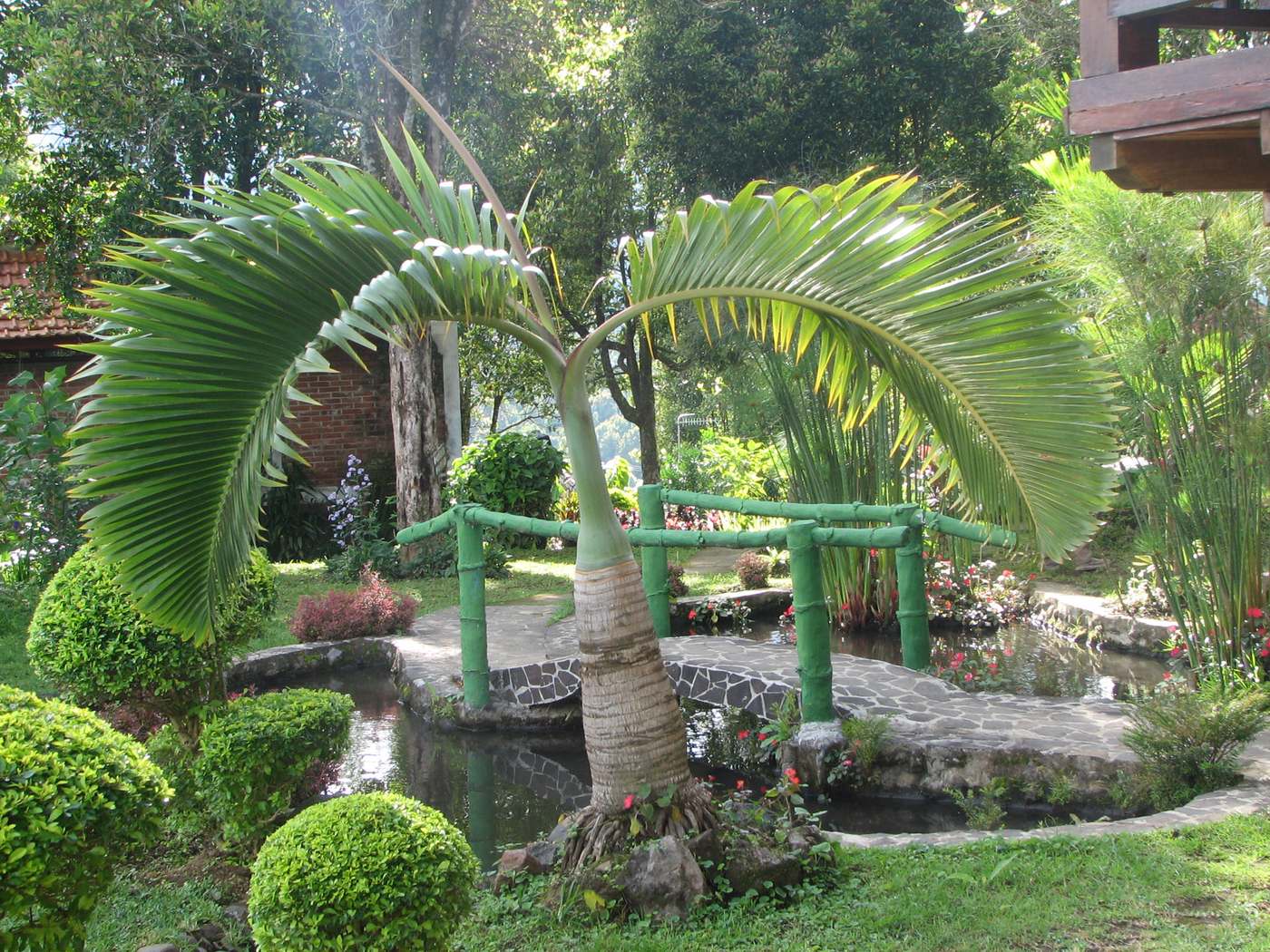 The garden at Puri Lumbung Cottages, Munduk. Photo: Eric Bajart / Wikimedia Commons (CC BY-SA 3.0)
Munduk Moding Plantation
Setting: A nature resort in a working coffee plantation at about 1,200 metres in the village of Gobleg, near Munduk, looking across Bali's central mountains to the distant sea.
In their words: The story began in 2007, when the owners turned a five-hectare abandoned coffee plantation into the resort. It was designed by the Balinese architects Popo Danes and Era Anastasia, and the resort and plantation are run by an entirely Balinese team. The owners name Tri Hita Karana, the Balinese idea of harmony between people, nature and the divine, as their guide. The plantation grows coffee, fruit, herbs and vegetables without chemicals. The resort runs a plastic recycling centre and a waste bank, and says its buildings use natural materials and open-air design to disturb the land as little as possible. Its coffee arm, Munduk Coffee, roasts the plantation's own Arabica and works with neighbouring farmers to grow organic coffee, and a share of coffee sales goes back to Gobleg and Munduk through the resort's Munduk Foundation.
What you can do: Trekking, cycling tours, horse riding, yoga, a spa, and several restaurants including Warung Bongkot.
Contact: mundukmodingplantation.com · Sustainability page · Map · Munduk Moding Plantation on Instagram
Best for: A comfortable resort stay with private pool villas and a plantation to walk through. Our Munduk coffee plantations guide covers the wider coffee story.
Sanak Retreat Bali
Setting: Eleven wooden bungalows and a three-bedroom pool villa among rice fields at Banjar Dinas Menagung, in the village of Kayuputih, which Sanak places near Munduk. The bungalows, it says, were designed for simple living.
In their words: Sanak was founded by French philanthropists who met a Balinese rice-farming family on their first trip in 2011, and it was set up so that the Indonesian owner, Pak Gusti, and his family could run it in the years ahead. Sanak says it is plastic free, with glass bottles and water refill stations, and that it has built a recycling and sorting station for the community and a "bank sampah", a waste bank where villagers are paid market price for sorted recyclables. Staff, guests and school children make ecobricks from plastic that cannot be recycled. Most of its staff come from the villages around it, most of its food comes from the immediate neighbourhood, and it supports the local primary school and a girls' rejang dance group.
What you can do: Village walks to rice fields, coffee and cacao gardens, a waterfall and a holy spring where a Balinese healer offers water blessings; yoga and a spa using the family's own small-batch scrubs; classes in cooking, dance, drawing, offerings and ecobrick building.
Contact: sanakbali.com · We Care page · Map · Sanak Retreat Bali on Instagram
Best for: Travellers who want to see how the money they spend reaches a village.
Munduk Tentrem Resort
Setting: A hillside resort at about 1,300 metres on Jl. Raya Asah Gobleg, overlooking mountains and rainforest. Tentrem, the resort says, means a feeling of peace and tranquillity.
In their words: The resort's organic farm supplies ingredients to its kitchen, and a local horticulturist leads tours where you can harvest ingredients for your next meal. Guests can plant a tree on the farm with the resort's gardener, which the resort presents as a contribution to reforestation in Bali.
What you can do: Jungle treks and waterfall walks with guides, a jamu-making session, a cooking class, yoga, and an infinity pool and fire pit for the cold evenings.
Contact: munduktentrem.com · Map · Munduk Tentrem Resort on Instagram
Best for: Families and couples who want farm activities within the resort.
Munduk Cabins by Desa Hay
Setting: Six cabins on a hillside on Jl. Pura Puseh, Munduk, each facing north-west over jungle, the sea and the volcanoes. The cabins share a pool, a hot tub and a fire pit, and the restaurant, Ulekan, serves Indonesian family recipes with a view running out to Lovina.
In their words: The cabins pair traditional Indonesian architecture with modern comforts. On the environment, the site keeps it short: the owners manage water use responsibly, work to reduce waste of every kind, and support local initiatives on the island.
Contact: mundukcabins.com · Map · Munduk Cabins on Instagram
Best for: Couples and small groups who want a smaller, more private place than a resort.
Around the Lakes
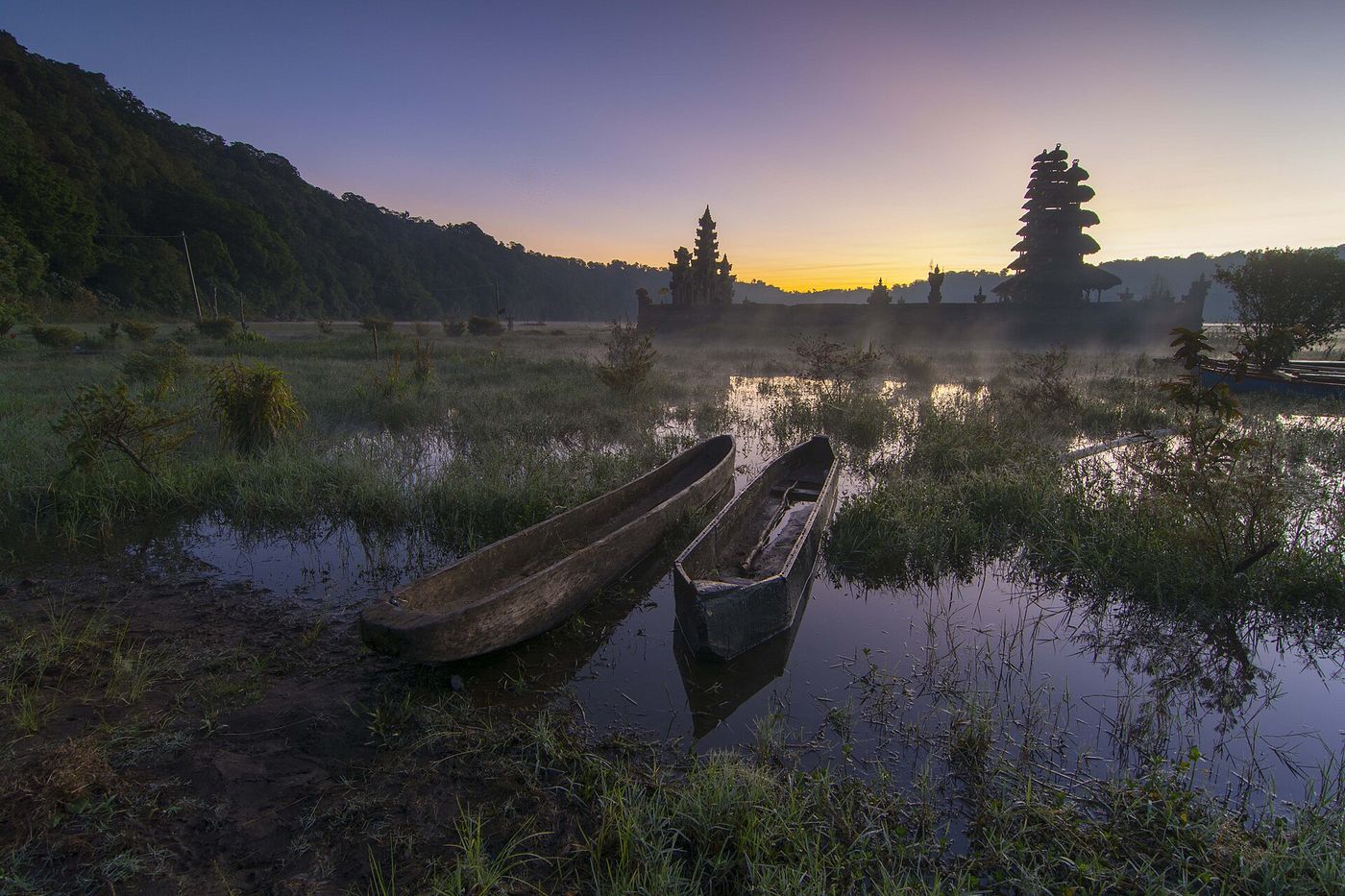 Dawn on Lake Tamblingan, dugout canoes in the shallows. Photo: Made agus devayana / Wikimedia Commons (CC BY-SA 4.0)
The road from Munduk runs along the ridge above Tamblingan and Buyan to Wanagiri, then drops to Pancasari and Lake Beratan. Stays here are closer to the water and to the Bedugul side; see Wanagiri Hidden Hills and Bedugul.
Girihill Farmhouse
Setting: Villas on Jl. Wanagiri, in the Sukasada district, with views over Lakes Buyan and Tamblingan.
In their words: Girihill describes its villas as blending sustainability with modern comfort, set on a 15,000-square-metre organic farm. Dishes are cooked with ingredients from the farm, and the farmhouse runs cultural workshops and cooking experiences for guests.
Contact: girihillfarmhouse.com · Map · Girihill Farmhouse on Instagram
Best for: A farm stay with a lake view, handy for the Wanagiri viewpoints.
Alamu Eco Lodge
Setting: Glamping tents beside Lake Buyan, near Pancasari.
What to know: Alamu describes itself on Instagram as glamping and a restaurant at Lake Buyan. Its own website was not reachable when we checked in September 2026, so its Instagram and map listing are the places to see it and confirm it is open.
Best for: A night under canvas by the lake.
Questions Worth Asking Any "Eco" Lodge
The word is used freely, and we did not find an outside environmental certification on the sites of the lodges above. A few questions show quickly how much is behind it:
- Where does the water come from, and where does the waste go?
- How much of the food comes from the lodge's own garden or the village?
- Are the staff from the surrounding villages?
- Does the lodge support anything in the village you can see or visit?
The lodges that answer these on their own sites, like Puri Lumbung, Munduk Moding and Sanak, are linked above so you can read the detail yourself.
How to Fit It In
Two nights is the working minimum: one morning for the Munduk waterfall trails, one for the lakes or a coffee plantation walk. Munduk pairs well with the coast. Come up from Lovina for the hills, then go back down for the dolphins and the Banjar hot springs. Several of these lodges also offer yoga; see yoga retreats in north Bali.
For the rest of the trip, Palm Living's villas are around Lovina on the coast, roughly an hour to an hour and a half below Munduk. Our where to stay in north Bali guide compares the areas.
Practical Notes
- Getting there: from Lovina, the road climbs through the hills to Munduk; from the south, most people come over Bedugul past the lakes. See getting to north Bali.
- Pack layers. Evenings and early mornings are cool, and the rooms in the older lodges have no heating.
- Rain: the wet season brings cloud and slippery trails. Walk early.
- Book direct. Every lodge above has its own site or account, and booking direct lets you ask the questions above.
- Refill your bottle. Sanak has refill stations and is plastic free; bring your own bottle.
FAQ
What is the best eco-lodge in Munduk? It depends on what you want. Puri Lumbung Cottages is the long-established village eco-lodge with rice-barn cottages and classes. Munduk Moding Plantation is a larger resort on an organic coffee plantation. Sanak Retreat is small and plastic free, with a village waste bank.
Are there eco-lodges near Lake Tamblingan and Lake Buyan? Girihill Farmhouse at Wanagiri has villas on an organic farm with views over both lakes, and Alamu Eco Lodge offers glamping beside Lake Buyan.
How cold does Munduk get? Puri Lumbung gives daytime temperatures of 20 to 25°C for the village. Evenings and early mornings feel cooler, so bring a light jacket.
How many nights should I stay in Munduk? Two nights at least: one day for the waterfalls and one for the lakes or a plantation walk.
How far is Munduk from Lovina? Roughly an hour to an hour and a half by road. Many people stay on the coast and spend two nights in Munduk as part of the same trip.
Do Munduk lodges have air conditioning? Many do not need it. Puri Lumbung says the mountain air makes fans and air conditioning unnecessary. Check each lodge's room details before booking.
Sources
- Puri Lumbung Cottages, home page, about (rice barns, eco-tourism project, village history, altitude and temperature) and activities, read September 2026
- Munduk Moding Plantation, our story and sustainability, September 2026
- Sanak Retreat Bali, home page, the Sanak story and We Care, September 2026
- Munduk Tentrem Resort, home page, organic farm and tree planting, September 2026
- Munduk Cabins by Desa Hay, home page and cabins, September 2026
- Girihill Farmhouse, home page, September 2026
- Alamu Eco Lodge, Instagram, September 2026
Read next: the twin lakes of Buyan and Tamblingan, Munduk waterfalls and hiking, where to stay in north Bali.

_-_panoramio.jpg)

_-_panoramio.jpg)
