On this page
- In Brief
- The Main Areas of Bali at a Glance
- South Bali Has the Airport, the Surf and Most of the Nightlife
- Ubud and the Central Highlands Are the Cultural Heart, with No Beach
- East Bali Is Slower, with Diving at Amed and Mount Agung Above
- West Bali Is the National Park and the Reef at Menjangan
- North Bali Is the Quiet Coast of Dolphins and Waterfalls
- On Paper, Bali Is One Province of Eight Regencies and One City
- How to Fit the Areas into One Trip
- Practical Notes
- FAQ
- Sources
In Brief
The main areas of Bali are five broad regions, and each suits a different trip. The south, from Kuta to Uluwatu, holds the airport, the beaches, the nightlife and most of the crowds. Ubud and the central highlands are the cultural heart, with rice terraces, temples and yoga.
The east is slower, with diving at Amed and old-Bali calm. The west is wild and largely undeveloped, anchored by the national park. The north, around Lovina, is the quiet coast of dolphins, waterfalls and reef diving, at lower prices than the southern hubs.
First-timers often start in the south. Travellers who have seen the south once tend to head north.
The Main Areas of Bali at a Glance
- South (Kuta, Seminyak, Canggu, Uluwatu): the hub, with surf, beach clubs, restaurants, nightlife and the airport. Busy and polished, and where most itineraries start.
- Ubud and the central highlands: the cultural core, with rice terraces, temples, art markets, yoga and jungle. Green and walkable, inland with no coast.
- East (Amed, Candidasa, Sidemen): slow and traditional. Black-sand diving at Amed, rice-valley quiet at Sidemen, Mount Agung overhead.
- West (Pemuteran, Menjangan, the national park): wild, remote and largely undeveloped, with a reef many divers rate as the best preserved in Bali.
- North (Lovina, Munduk, Pemuteran): the calm coast, with morning dolphins, waterfalls, mountain lakes and fewer visitors than the south.
- From the airport: about 90 minutes to Ubud, roughly three hours to the north coast around Lovina.
- How long: a week for the south and one other area, ten days to two weeks for the south, Ubud and the north.
South Bali Has the Airport, the Surf and Most of the Nightlife
The south is where most visitors meet Bali first.
The airport sits here and the surf is reliable. The island's restaurants, bars and beach clubs are concentrated in this corner, so you can walk out of your villa to dinner every night.
Each pocket has its own character:
- Kuta: the old backpacker strip, cheaper and rowdier, with a long beach and traffic that takes some learning.
- Seminyak: the polished version next door, with design hotels, boutiques and the beach clubs that built Bali's Instagram reputation.
- Canggu: the town that drew the digital-nomad wave. It now runs on cafes, co-working, surf breaks and a great many scooters.
- Uluwatu: down on the Bukit Peninsula, with clifftops, well-known surf and sunset venues on the cliff edge.
The trade-off is the crowd. Canggu traffic can turn a five-kilometre trip into 45 minutes. Beaches fill early in high season, and prices have climbed with the demand.
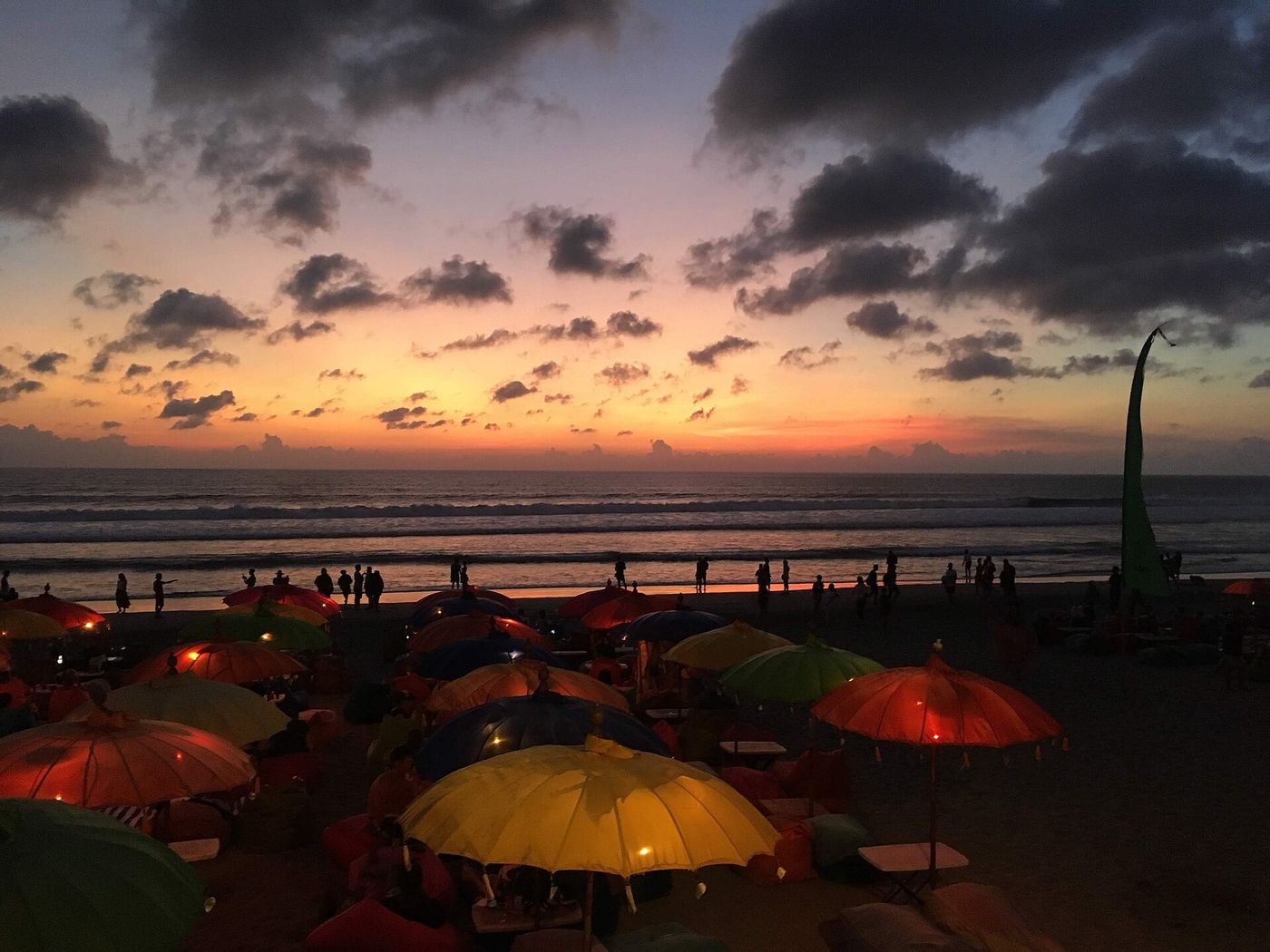 The Seminyak waterline at sunset. Photo: Christophe95 / Wikimedia Commons (CC BY-SA 4.0)
The south suits a first visit, a surf trip or a holiday built around nightlife. Everything is within reach, and the transfer from the airport is short.
If you want more space after a few days, the north vs south Bali comparison sets out what changes when you cross the island.
Ubud and the Central Highlands Are the Cultural Heart, with No Beach
Ubud is the cultural centre of Bali.
It sits inland among rice terraces, river valleys and temple complexes, about an hour and a half north of the airport. There is no beach here, so the town runs on art and craft, food and yoga, and the days are slow.
The centre has grown busy, most of all around the Monkey Forest and the central market, where tour buses arrive by mid-morning. A few kilometres out you reach terraced villages, working temples and villas on the jungle edge. You can walk the Campuhan Ridge or the rice fields at Tegallalang.
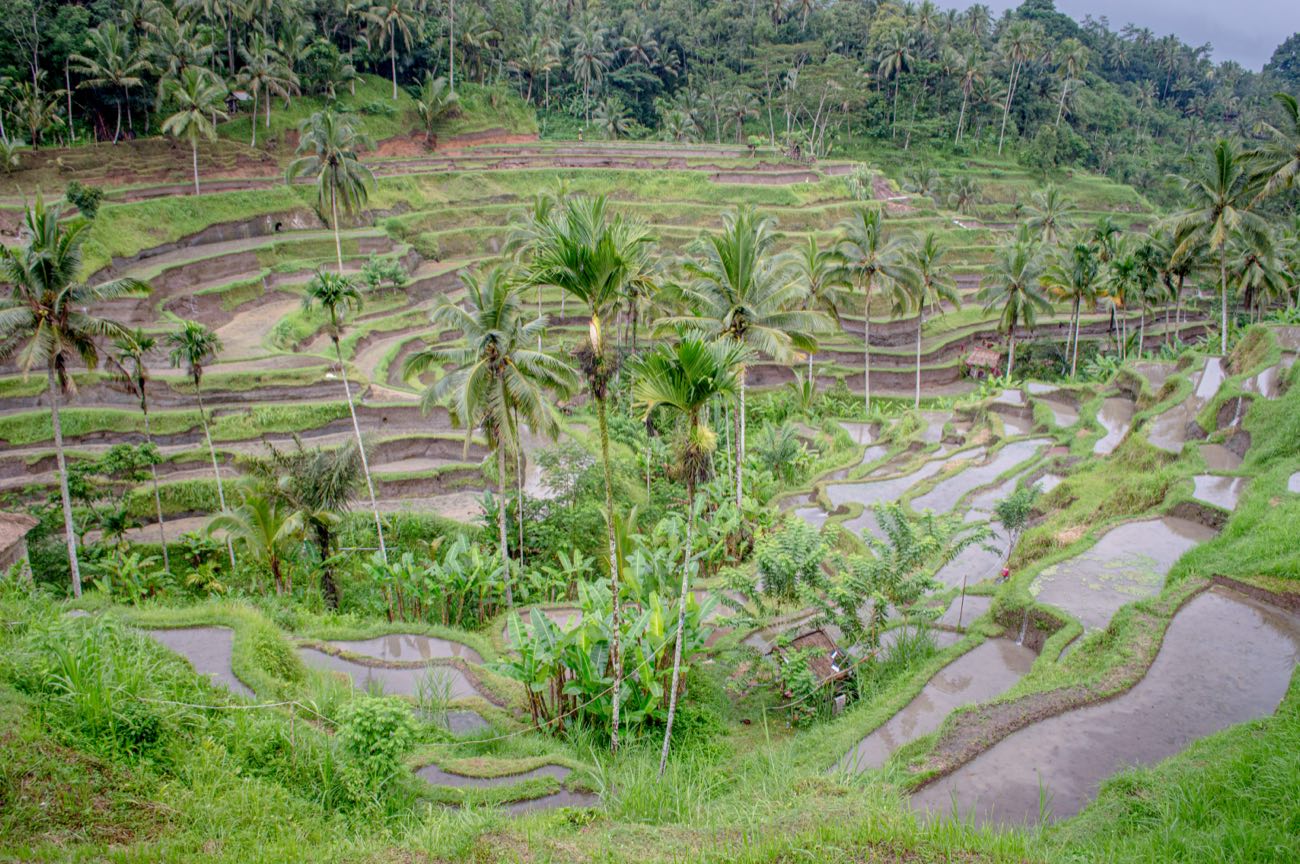 The Tegallalang terraces outside Ubud. Photo: Philip Nalangan / Wikimedia Commons (CC BY 4.0)
The central highlands carry on north from Ubud toward Bedugul and the mountain lakes. The temple of Ulun Danu Beratan stands there, out over the water.
Ubud suits travellers who want culture over coastline, a wellness focus or a green base for day trips. It is also the natural stop between south and north.
The road from Ubud climbs through the highlands and past the lakes, then drops to the north coast. That makes Ubud a good place to break a journey to Munduk or Lovina. Many of the island's best-known waterfalls sit along the route, where highland rivers carve the canyons further north.
East Bali Is Slower, with Diving at Amed and Mount Agung Above
The east is Bali at a slower pace.
Tourism arrived here later and lighter, so the region kept more of its older rhythm. Mount Agung, one of the island's most sacred mountains, stands over the whole area.
Amed is a string of fishing villages on a black-sand coast, with calm water and snorkelling straight off the beach. Divers come for the USAT Liberty wreck, just up the road at Tulamben. The pace is unhurried, sunrise over the water is the draw, and prices stay gentle.
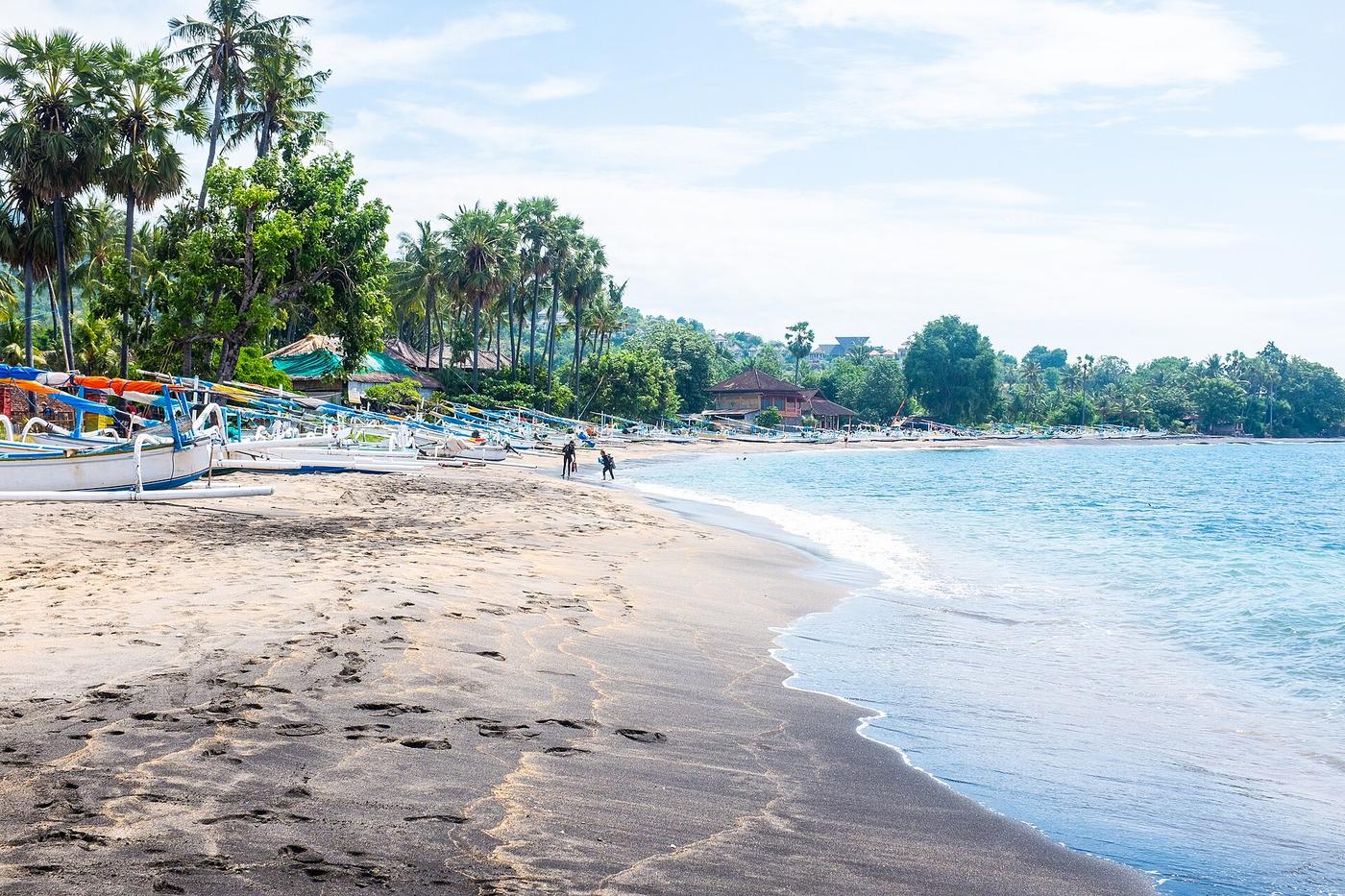 Jukungs on the dark sand at Amed. Photo: Marklchaves / Wikimedia Commons (CC BY-SA 4.0)
Candidasa is the quiet beach town of the east. It is low-key and well placed for the traditional village of Tenganan and the water palaces at Tirta Gangga.
Sidemen sits inland, in a rice-terrace valley that looks the way Ubud did decades ago. It is green, working and almost free of crowds.
The east suits divers, snorkellers and anyone who wants traditional Bali without going to the far coasts. It rewards a slower trip and a willingness to drive a little. If its calm appeals to you, the north coast has a similar temperament, with the Menjangan reefs and the dolphins as well.
West Bali Is the National Park and the Reef at Menjangan
The west is the part of the island few visitors see.
Development thins out fast once you are beyond easy reach of the airport. The far northwest is anchored by West Bali National Park, a protected stretch of dry forest, mangrove and coastline. It holds some of the last wild habitat on the island.
The roads are long and the towns are small, and that emptiness is the appeal.
Offshore lies Menjangan Island, ringed by what many divers rate as the best-preserved reef in Bali, with wall dives and clear water. The coastal village of Pemuteran has grown into the base for it. It is a calm bay with a coral-restoration project and a handful of stays built around diving.
Pemuteran sits where west meets north, so it appears in both stories. You reach it by the north coast road, and it pairs with Lovina and the rest of that coast.
The west suits divers bound for Menjangan and travellers who want real remoteness. It also suits anyone building a north-and-west loop away from the crowds.
North Bali Is the Quiet Coast of Dolphins and Waterfalls
The north is the quiet coast on the far side of the mountains.
Most itineraries skip it. The mountains cut the island in two, and crossing them leaves most of the traffic and the crowds behind. The coast beyond is still working and still quiet.
Lovina: Dolphins at Dawn and the Base for the Region
Lovina is the main town on the north coast. Pods of dolphins run close to shore at dawn, and a small boat out at first light is the regional ritual.
The town itself is an easy, unhurried place on black volcanic sand, with calm water and gentle prices. There is no high-season scramble for a sun lounger. It works as the base for the whole region, and there are villas for rent around Lovina.
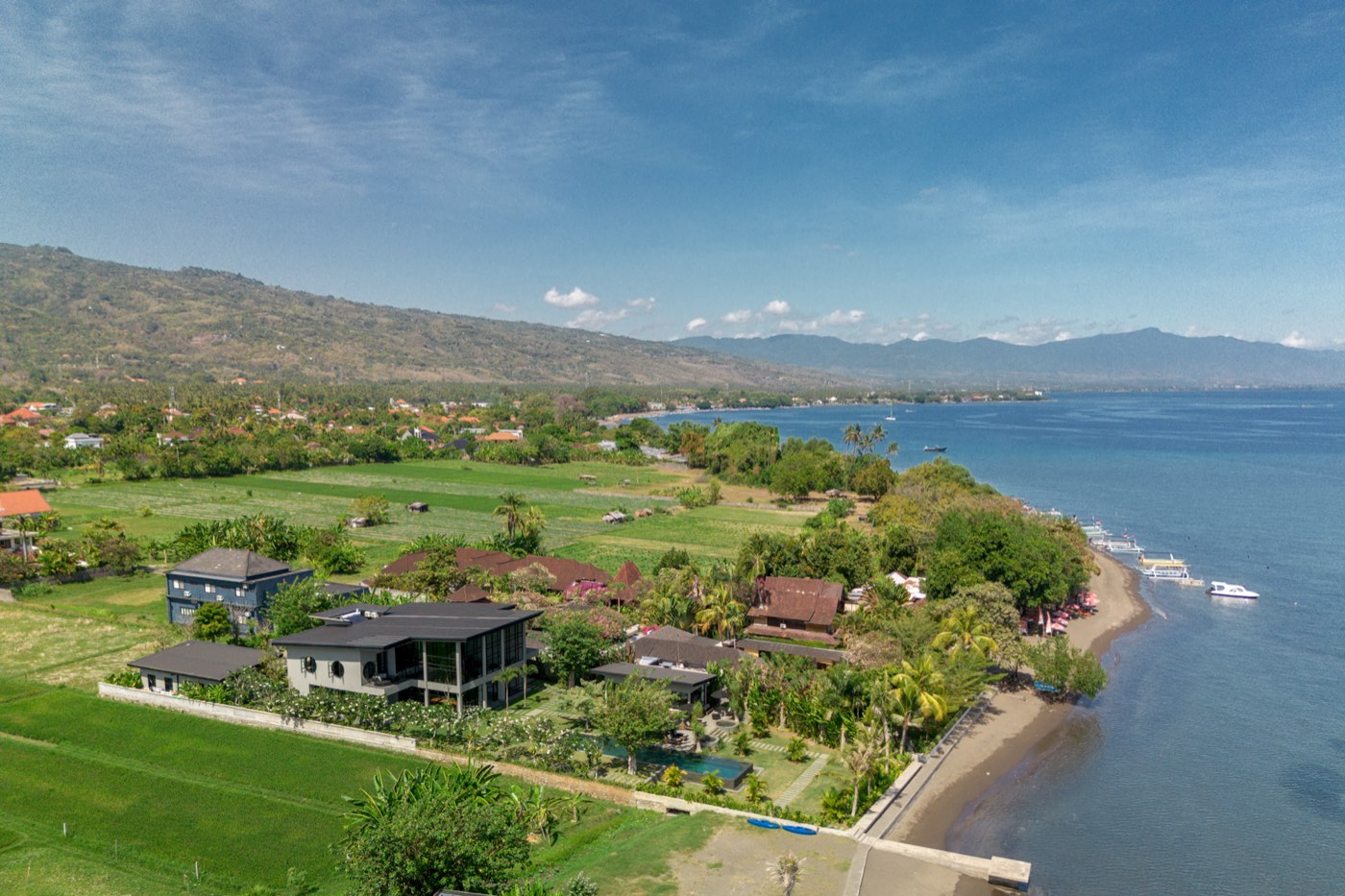 Photo: Palm Living archive.
Munduk: Cool Highlands among Coffee and Clove
Inland and uphill, Munduk sits in the cloud-forest highlands among coffee and clove plantations. The air is cool, the views take in the mountain lakes, and a cluster of waterfalls is within easy reach.
It is the gateway to the twin lakes and a rest from the heat of the coast.
Pemuteran: the Way to Menjangan
West along the coast, Pemuteran is the starting point for Menjangan. These are the same wall reefs the west is known for, and the north coast road is the usual way to reach them.
The Waterfalls: Sekumpul, Gitgit, Aling-Aling and Munduk
The north holds some of the island's biggest waterfalls. Sekumpul, often called the most beautiful in Bali, is a canyon cluster of up to seven falls. You reach it on a guided trek, inland from Lovina.
Gitgit, Aling-Aling and the Munduk falls are in the same region.
What It Costs, and the Drive
Villas and food, like drivers and tours, generally cost less in the north than in Seminyak or Canggu. The same money buys more space and more quiet. No comparison figure is printed here, because prices on both sides move, and north Bali on a budget sets out where the money goes.
The catch is the drive. The north coast is over the central mountains from the airport, roughly three hours by car. That distance keeps the coast quiet, and it is the reason to stay a few nights and not treat the north as a day trip.
The north suits travellers who have already seen the south, or who want to go straight to the calm side. Divers, waterfall walkers and slow travellers do well here, as does anyone tired of fighting for a table.
The complete Lovina guide maps the main base end to end. The north versus south Bali comparison spells out the trade you make by crossing the mountains.
On Paper, Bali Is One Province of Eight Regencies and One City
The five areas are how visitors talk about the island. The government divides it another way.
Bali is one province, made up of eight regencies and the city of Denpasar. For anything official, such as a land title, a spatial plan or a regency tourism office, the regency names are the ones to use:
- Badung and Denpasar: the south
- Gianyar: around Ubud
- Karangasem: the east
- Jembrana: the west
- Tabanan: the southwest
- Bangli: inland
- Klungkung: the southeast
- Buleleng: most of the north coast
Buleleng's tourism office keeps the north coast's own destination listing at Visit North Bali.
How to Fit the Areas into One Trip
A week lets you pair the south with one other region.
Ten days to two weeks covers the south, Ubud and a few nights in the north, without rushing the crossings. Ubud is the natural stop on the way up, because the road north climbs through the highlands from there.
On a first trip, a split works well: a few days in the south, then the crossing to the north. How many days you need in north Bali shows how to fold the north into a wider Bali trip, and getting to north Bali covers the routes.
Practical Notes
- The airport: Ngurah Rai, in the south, a short transfer from Kuta, Seminyak, Canggu and Uluwatu.
- To Ubud: about 90 minutes by road.
- To the north coast: roughly three hours by car, over the central mountains. Stay a few nights.
- Quietest areas: the north and the far west.
- Lower costs: the north and the east are generally cheaper than the southern hubs for villas, food and tours.
- Busy times: southern beaches fill early in high season, and tour buses reach central Ubud by mid-morning.
FAQ
What are the main areas of Bali? Bali splits into five broad regions. The south has the beaches and the nightlife, and Ubud and the central highlands are the cultural core. The east is for diving and traditional calm, and the west is wild and remote around the national park. The north, around Lovina, Munduk and Pemuteran, is for dolphins, waterfalls, diving and quiet.
Where should a first-timer stay in Bali? Most first-timers base themselves in the south for convenience. Seminyak and Canggu are the choices for beach and dining, and Uluwatu for clifftop surf. A strong alternative is to split the trip, with a few days in the south and then the calmer, cheaper, less crowded north. The north vs south Bali guide helps you decide.
Which part of Bali is the least crowded? The north and the far west are the quietest parts of the island. Lovina and Pemuteran on the north coast, and the area around West Bali National Park, see far fewer visitors than the south. The mountains and the longer drive from the airport keep them quiet.
How far is north Bali from the airport? The north coast around Lovina is roughly three hours by car from Ngurah Rai airport, across the central mountains. The drive is part of why the region stays quiet, and it is why a few nights in the north works better than a day trip. See getting to north Bali for the routes.
What is Ubud known for? Ubud is the cultural centre of Bali, known for rice terraces, temples, art and craft markets, yoga and villas on the jungle edge. It sits inland with no beach, about 90 minutes north of the airport. It is also a natural stop on the way to the highlands and the north coast.
Where is the best diving in Bali? Much of it sits in the north and west. Menjangan Island, reached from Pemuteran, has wall reefs inside West Bali National Park. The Liberty wreck at Tulamben in the east is a famous shore dive. The north coast offers calm water and easy access to both.
Which area of Bali is best for waterfalls? The north is the usual answer. Sekumpul, often called the most beautiful waterfall in Bali, sits inland from Lovina. Gitgit, Aling-Aling and the Munduk falls are in the same region.
Is north Bali worth visiting? For many travellers it is the best part of the trip. The north offers morning dolphins off Lovina, big waterfalls such as Sekumpul, reef diving around Menjangan and the mountain-lake highlands at Munduk. The trade is the three-hour drive from the airport, which also keeps it quiet.
Which area of Bali is cheapest? The north and east are generally cheaper than the southern hubs for villas, food and tours. Lovina in the north and Amed in the east give you more space at lower cost than Seminyak or Canggu, for comparable quality.
How many days do you need to see the main areas of Bali? A week lets you pair the south with one other region. Ten days to two weeks lets you do the south, Ubud and a proper few nights in the north without rushing the crossings. How many days you need in north Bali shows how to fold the north into a wider Bali trip.
Should I split my time between south and north Bali? For most first trips, yes. A few days in the south covers the beaches, the dining and the nightlife. The north then adds the dolphins, the waterfalls, the diving and the calm. The north vs south Bali comparison breaks down how to divide your days.
Sources
- Wikipedia, List of regencies and cities in Bali and Bali, for the province's eight regencies and one city, read September 2026 (in English)
- Wikipedia, Buleleng Regency, for the regency's borders on the north coast, read September 2026 (in English)
- Buleleng Regency tourism office, Visit North Bali, the north coast's own destination listing, read September 2026 (in English and Indonesian)
- Indonesia Ministry of Tourism, Lovina Beach, read September 2026 (in English)
- Palm Living, villas for rent around Lovina, read September 2026 (in English)
Next: north Bali compared with the south, where to stay in north Bali, and how many days you need in the north.