On this page
- In Brief
- North Bali vs South Bali at a Glance
- Where Each One Is: the South by the Airport, the North Over the Mountains
- The Sea: Ocean Surf in the South, Calm Swimming in the North
- Food and Nightlife: the South Has the Choice
- Nature: the North Keeps It Close to the Coast
- Crowds and Pace: Busy in the South, Slow in the North
- Getting There and Around: You Land in the South
- Who Should Choose Which
- You Can Do Both in One Week
- Practical Notes
- FAQ
- Sources
In Brief
North Bali vs south Bali comes down to what you want your days to hold. South Bali suits a first trip, a short trip, or one built around surf, dining and nightlife. North Bali suits a slower trip, a return trip, or one built around nature, calm water and room away from the crowds.
Neither is the "real" Bali, and they do different jobs. The two sit two and a half to three hours apart by road, over the Bedugul highlands, so a week is enough to do both.
For the cultural and geographic story, see why north Bali feels different. Once you have chosen the north, the complete north Bali guide plans the rest.
North Bali vs South Bali at a Glance
| South Bali | North Bali | |
|---|---|---|
| Main areas | Canggu, Seminyak, Kuta, Uluwatu, Sanur | Lovina, Munduk, Pemuteran, the Buleleng coast |
| Sea | Indian Ocean swell, surf beaches | The calm Bali Sea, black sand, easy swimming |
| Surf | The island's famous breaks | None to speak of |
| Strengths | Surf, restaurants, beach clubs, nightlife, choice of stays | Dolphins, waterfalls, reefs, hot springs, highland lakes |
| Crowds and traffic | Heavy at peak hours | Light |
| From the airport | Minutes to an hour | About three hours over the mountains |
| Getting around | Scooters, taxis, ride apps | A hired driver for day trips |
| Best for | First trips, short trips, surfers, nightlife | Slow trips, return trips, nature, families who want calm water |
Where Each One Is: the South by the Airport, the North Over the Mountains
South Bali is the developed half of the island. It takes in Canggu, Seminyak, Uluwatu and Sanur, and the airport sits among them at Tuban in Badung regency, about 13 kilometres south of Denpasar.
North Bali is the quiet half: Lovina, Munduk, Pemuteran and the rest of the Buleleng coast. The road there climbs over the Bedugul mountains. Palm Living, based in Lovina, puts the drive from Denpasar to Singaraja at about two and a half hours.
If you want energy, choose the south, and if you want quiet, choose the north. A lot of the friction in Bali trips comes from expecting one to behave like the other.
The Sea: Ocean Surf in the South, Calm Swimming in the North
The surf is in the south. Uluwatu sits on the south-western tip of the island, and Indonesia's official tourism site describes its waves arriving from the Indian Ocean at full force. They are consistent for most of the year, with Padang Padang and Bingin close by.
Canggu and the beaches north of Kuta hold the rest of the famous breaks. If you came to surf, you came to the south.
The north coast faces the Bali Sea, which lies between Bali and the Kangean islands, and not the open Indian Ocean. The sand is volcanic black. With no surf to fight, the swimming is some of the easiest in Bali.
The Buleleng tourism office lists Lovina for its black sand, calm atmosphere and dawn boat trips to see the dolphins. The dolphins are wild animals in open water. See the Lovina area guide for the main base on the coast, and the Lovina dolphins guide for how the boats work.
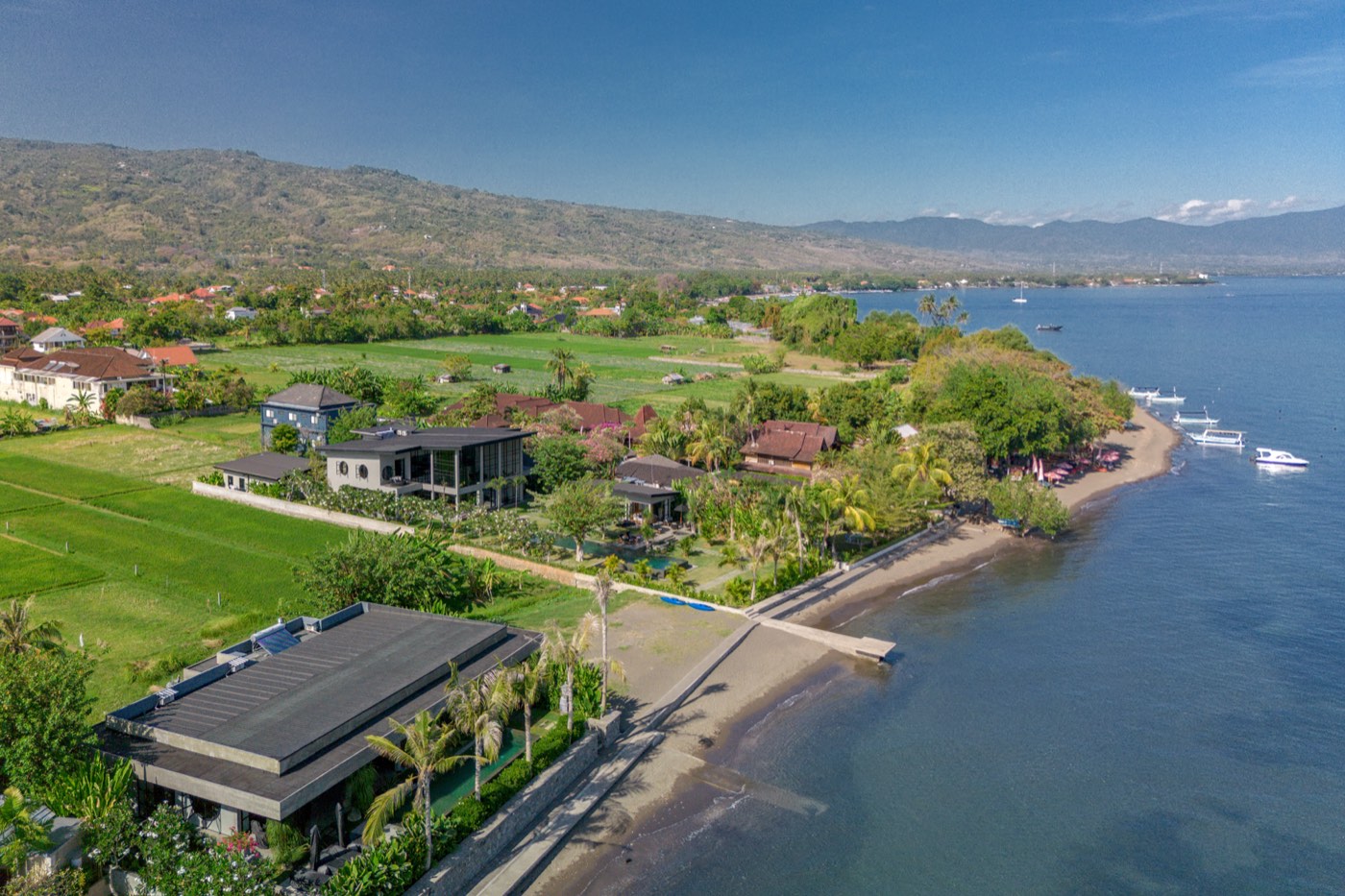 The Lovina bay from the air, jukung boats moored off the point. Photo: Palm Living.
Food and Nightlife: the South Has the Choice
Seminyak and Canggu are dense with restaurants, cafes and beach clubs, from cheap warungs to chef-driven rooms. A sunset at a beach club, a long dinner and a late night out all fit into one evening there. The beach clubs guide covers that side of it.
In the north, the dining scene is small and local, and nightlife is minimal.
Nature: the North Keeps It Close to the Coast
In the north, the waterfalls, highlands, hot springs and reefs all sit close to the coast:
- Waterfalls: the Sekumpul waterfalls are about 20 kilometres from Singaraja by the tourism office's count.
- Highlands: the Munduk highlands and their lakes are up the hill behind Lovina.
- Hot springs: the Banjar hot springs are a short drive west.
- Reefs: Pemuteran and Menjangan Island, inside West Bali National Park, are at the western end of the coast.
These places see a fraction of the visitors the south's beaches do. On a weekday morning you can have a major waterfall nearly to yourself.
Crowds and Pace: Busy in the South, Slow in the North
Canggu and Seminyak can gridlock at peak hours, and the popular beaches fill up. The parts that boomed fastest have lost some of the calm that drew people there in the first place.
The north moves slower. Its villages are working villages, and fishing boats still launch from the beaches at Lovina. Development is lighter and more spread out.
The distance is what keeps the north quiet, because it filters out anyone looking for a quick weekend.
Getting There and Around: You Land in the South
You land in the south, so your trip starts the moment you clear the airport. Stays run from hostels to clifftop resorts, with a wide choice at every price.
The north asks more of you. The drive from the airport is long and winds over the mountains. Infrastructure is lighter too, so a private driver matters more here than in the south.
Who Should Choose Which
- A first trip to Bali: the south is the easier landing. You get the variety, the access and the surf, and you can sample the island without a long drive on day one.
- Surfers: the south wins outright. The breaks are there, and the north coast gets little swell.
- Nightlife, dining and beach clubs: the south is built for it.
- A quiet, nature-led trip: the north is the better fit, with waterfalls, highlands, calm swimming and dolphins, and the crowds left behind.
- A return visit: the north often appeals to people who have done the south and want something slower and less developed. Is north Bali worth it? answers that question on its own.
- Families: the north's calm, surf-free water is a real advantage for small swimmers over the south's stronger beach breaks. See north Bali with kids.
- Digital nomads and longer stays: the south has the cafe and coworking infrastructure. The north has the quiet and generally lower day-to-day costs, and suits people who value space over scene.
You Can Do Both in One Week
Many travellers do both as a loop. They start in the south where they land, cross the mountains for a few nights in the north, then come back down.
The main road north runs from Denpasar up through Bedugul, past the mountain lakes, and down to Singaraja. Treat it as part of the trip and stop at a temple, a lake or a waterfall on the way. The Bedugul guide covers the stops, and getting to north Bali covers the routes.
The provincial government has been building bypass sections on this road since 2018, to take out some of the steepest bends. Work started between Wanagiri and Gitgit, as Palm Living reported from the groundbreaking.
A single rushed night in the north does not work, because the drive eats most of a short stop. Give the north at least two or three nights to make the distance worth it.
A week is enough to do both halves of the island without rushing either. The 7-day north Bali itinerary lays out the northern leg day by day.
If the north wins, Palm Living's villas for rent are along the Lovina coast, and where to stay in north Bali compares the areas.
Practical Notes
- South to north drive: about two and a half hours from Denpasar to Singaraja, longer from the airport and in rain or heavy traffic. Lovina is just west of Singaraja.
- Getting around the south: walkable in parts, plus scooters, taxis and ride apps in most areas.
- Getting around the north: a hired driver for day trips and a scooter for short hops. The coast road spreads the villages out.
- Best months for both: the dry season, which the Bali provincial government puts at April to October, with the rains from October to April. The best time to visit Bali goes month by month.
- Surf: south coast only. The north has calm, surf-free water.
- Budget: the north generally runs cheaper for food and stays than Canggu or Seminyak. See north Bali on a budget.
FAQ
Is north or south Bali better? Neither is better in general, because they suit different trips. South Bali is better for surf, dining, nightlife and easy access, and it is the simpler choice for a first or short visit. North Bali is better for calm water, waterfalls, highlands and quiet, and it suits slower or return trips. Pick by what you want from your days.
What is the difference between north and south Bali? South Bali is the developed hub around Canggu, Seminyak, Uluwatu and the airport, with surf beaches, nightlife, dining and crowds. North Bali is the quiet coast around Lovina, Munduk and Pemuteran, with black sand, calm water, waterfalls and far fewer people. It sits over the mountains, about three hours from the south by road (Wikivoyage), with lighter infrastructure.
How far is north Bali from south Bali? The main road runs from Denpasar over the Bedugul highlands to Singaraja, and takes about two and a half hours. From the airport or Canggu to Lovina, allow closer to three, and more in rain or traffic. Most people hire a driver for the crossing.
Is north Bali worth visiting? Yes, if you want the quieter, less-developed side of the island. North Bali has the dawn dolphins, the big waterfalls, calm black-sand swimming, hot springs and highland scenery, with a fraction of the crowds. It rewards a few unhurried days over a single rushed stop.
Can you visit both north and south Bali? Yes, and many travellers do it as a loop: start in the south, cross the mountains for a few nights in the north, then return. Give the north at least two or three nights so the drive is worth it. A week is enough to cover both without rushing.
Is north Bali less crowded? Yes. North Bali sees a fraction of the visitors the south does, partly because of the distance from the airport. The beaches, waterfalls and dive sites are far quieter, and on a weekday you can have major sites nearly to yourself.
Sources
- Indonesia's official tourism site, Surfing Uluwatu (Uluwatu on the south-western tip, Indian Ocean waves consistent most of the year, Padang Padang and Bingin nearby), read September 2026
- Buleleng Regency tourism office, Visit North Bali: Lovina Beach (black sand, calm atmosphere, morning dolphin boats) and Sekumpul Waterfall (Sawan district, about 20 km from Singaraja), read September 2026
- Bali Provincial Government, Tarubali, Iklim tropis laut di Bali (dry season April to October, rainy season October to April), in Indonesian, read September 2026
- Palm Living, The shortcut way between southern and northern Bali (Denpasar to Singaraja about two and a half hours over Bedugul · bypass groundbreaking between Wanagiri and Gitgit on 14 November 2018), read September 2026
- Palm Living, Menjangan Island (the island as part of West Bali National Park, its reefs for diving and snorkelling), read September 2026
- Wikipedia, Bali Sea (the sea north of Bali, south of Kangean) and I Gusti Ngurah Rai International Airport (at Tuban, Badung, about 13 km south of Denpasar), read September 2026
- Wikivoyage, North Bali (about three hours from the main tourist areas of south Bali), read October 2026
Read next: north Bali vs Ubud for the other comparison people make, the main areas of Bali for the whole island, and where to stay in north Bali once you have chosen.