
On this page
- In Brief
- North Bali Crafts at a Glance
- Craft in Bali Is Made for Temple and Ceremony First
- Where to See Balinese Crafts in North Bali
- Stone Carving Is the North's Signature Craft
- Songket and Endek Are Woven in Six Villages
- Woodcarving Serves Temples and Homes
- Smiths Work Gold and Silver in Beratan and Forge Gongs in Sawan
- How to Visit and Buy Respectfully
- FAQ
- Sources
In Brief
Balinese crafts in north Bali are made in working villages, for temple and ceremony first and for sale second. The region is known for temple stone carving in a dense northern style and for songket and endek weaving. Woodcarving and gold, silver and gong-smithing belong to it too.
You see the stone carving on the temples of Beji and Meduwe Karang. The weaving and smithing happen in villages around Singaraja, among them Beratan, Jinengdalem and Sawan.
Visit the villages where the work is still made and buy from the maker. Ask before you photograph, since much of the craft is ceremonial.
North Bali Crafts at a Glance
- Stone carving: The dense northern temple-relief style (see Beji, Meduwe Karang)
- Weaving: Songket (gold- and silver-threaded cloth) and endek, Bali's ikat
- Woodcarving: Architectural and ceremonial carving
- Metalwork: Gold and silver in Beratan, gamelan gongs in Sawan
- Where: Working craft villages around Singaraja, among them Beratan, Jinengdalem, Sinabun, Sawan, Kalianget and Tejakula
- The spirit: Much craft is made for temple and ceremony first, sale second
- Best for: Travellers who value handmade work
Craft in Bali Is Made for Temple and Ceremony First
In Bali, craft and religion are inseparable.
Temple carvings and ceremonial cloth are made with skill passed down the generations, and so are offerings and ritual objects. Making them is an act of devotion as much as commerce.
Much of the north's making stays in this older register. Things are made because the temple and the ceremony need them, and made beautiful because beauty is owed to the gods.
Where to See Balinese Crafts in North Bali
The work happens in villages around Singaraja and on the walls of the northern temples.
- Stone carving: Pura Beji in Sangsit and Pura Meduwe Karang in Kubutambahan
- Songket and endek: Beratan, Tejakula, Sinabun, Sawan, Jinengdalem and Kalianget, the villages the regency's craft council names as still weaving endek and songket
- Gold and silver: Beratan, in Singaraja
- Gamelan gongs: Sawan, east of Singaraja
Stone Carving Is the North's Signature Craft
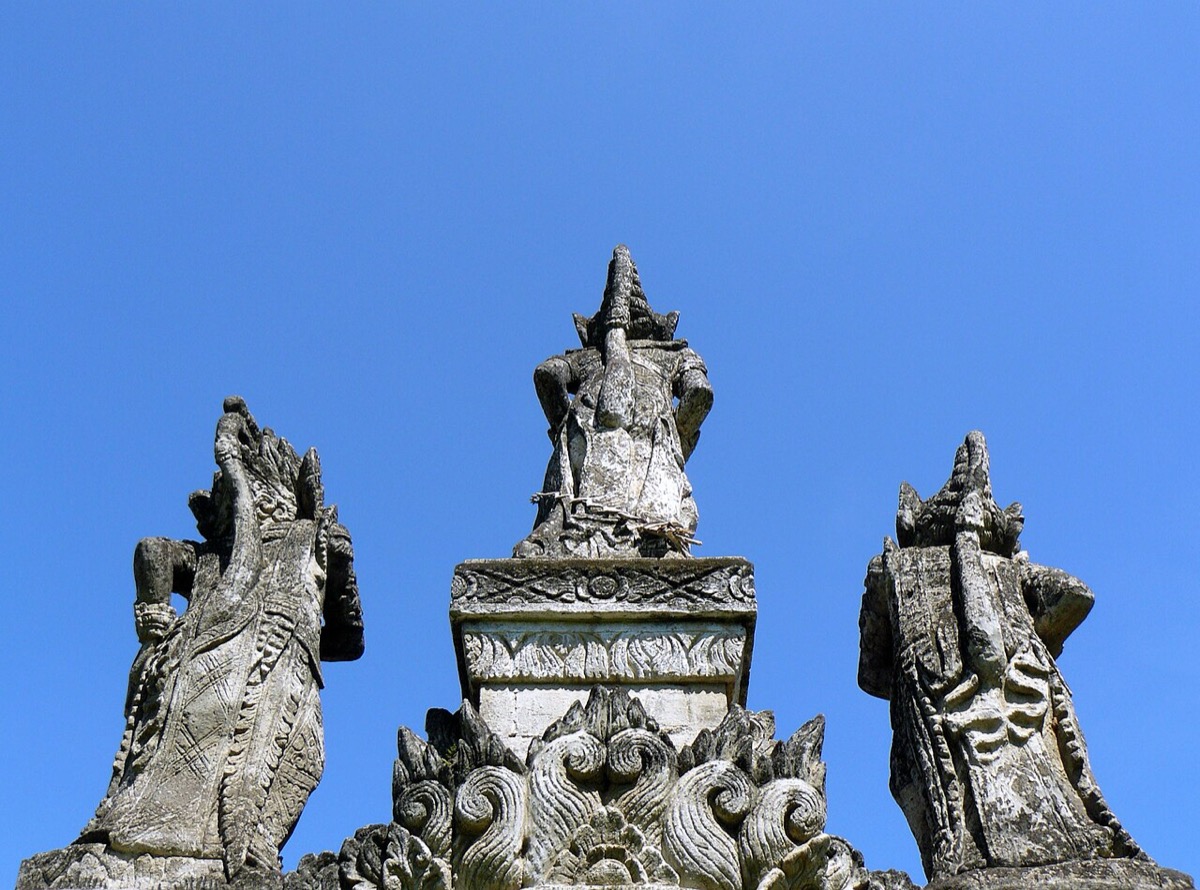
Buleleng's carvers worked the soft local paras, a volcanic sandstone, into dense, deep, almost baroque reliefs. The walls of northern temples fill with flowers, vines and demons.
Pura Meduwe Karang adds colonial-era figures. A relief on its main shrine is held to show the Dutch artist W. O. J. Nieuwenkamp on the bicycle he rode around Bali in 1904.
The tradition is alive, since temple restoration and new shrines keep carvers working. A visit to the carved temples is a good introduction to it.
Songket and Endek Are Woven in Six Villages
Cloth is central to Balinese life. It is worn to ceremonies and used in ritual.
The north and its surrounds produce two kinds. Songket is the luxurious cloth woven with gold or silver thread for ceremonial dress. In ikat weaving the thread is dyed before weaving to create the pattern, and endek is Bali's ikat.
Each of the six weaving villages has its own motifs, according to the craft council.
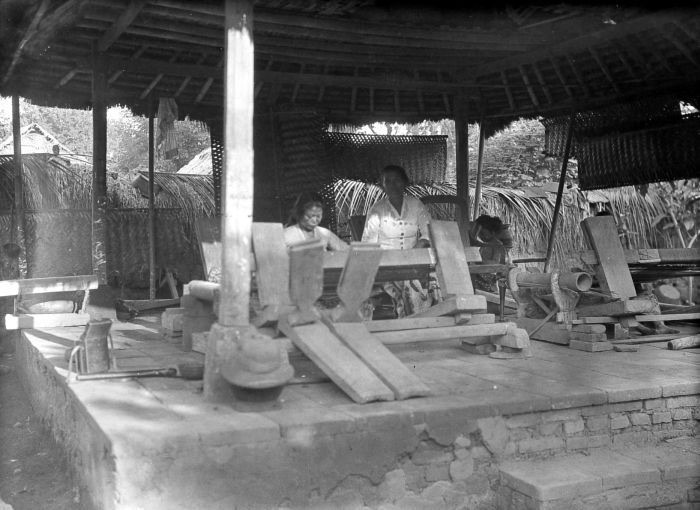 A loom in a Buleleng weaving pavilion, photographed between 1900 and 1940. Photo: Tropenmuseum / Wikimedia Commons (CC BY-SA 3.0)

Beratan, in Singaraja, is the oldest of the weaving villages. The culture office calls its songket the first made in Buleleng, cloth that dressed the kings.
The same office describes a family division of craft, agaluh agandring. The women wove songket and the men worked gold and silver.
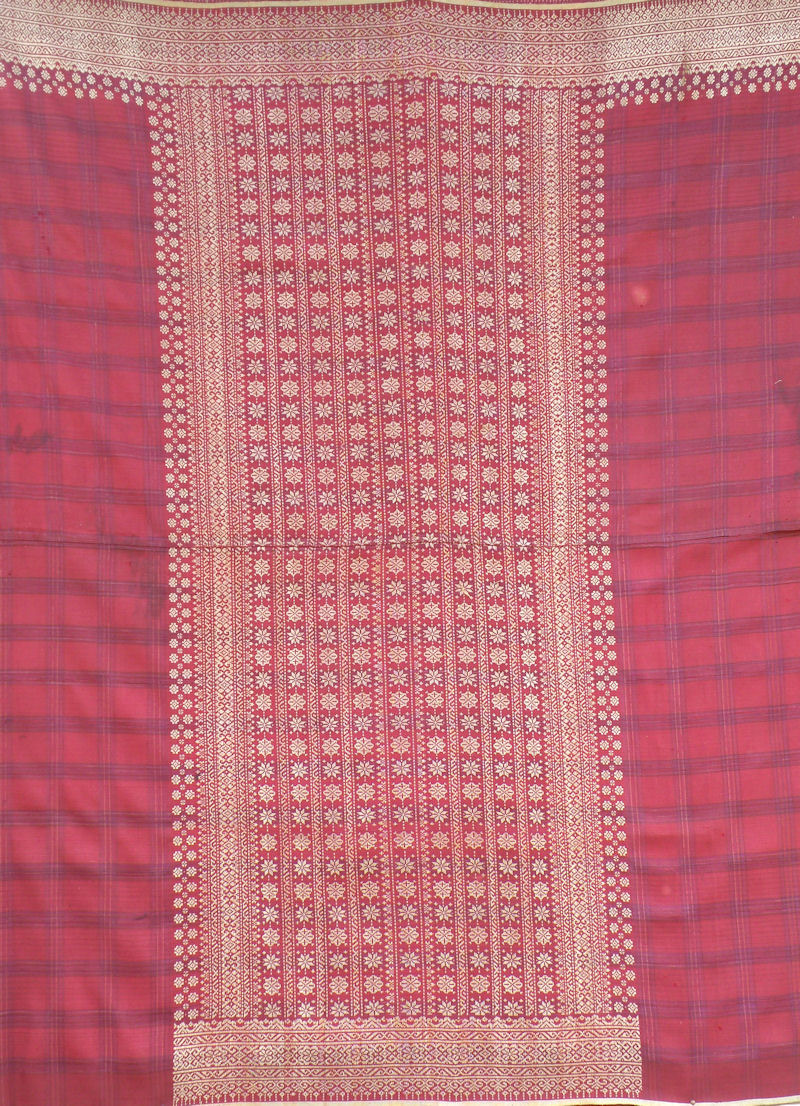 A silk songket sarong from Singaraja, thought to date from the 1920s. Photo: Chris Hazzard, Balique Arts of Indonesia / Wikimedia Commons (CC BY-SA 3.0)

Jinengdalem's songket is known for natural dyes.
A length of handwoven cloth is a meaningful thing to take home, and buying it directly supports the weaver.
Woodcarving Serves Temples and Homes
Carvers across the north make architectural pieces such as doors, panels and shrines, along with ceremonial pieces. Like the stonework, much of it serves temples and homes rather than the gallery.
The craft overlaps with the traditional Balinese architecture that shapes compounds and temples.
Smiths Work Gold and Silver in Beratan and Forge Gongs in Sawan
Bali's silver tradition is best known from Celuk, in the south, and the north has its own smiths.
Beratan's goldsmiths and silversmiths are the other half of its weaving story, told above.
In Sawan, east of Singaraja, the pande gong and blacksmiths still forge gongs for gamelan. Their work is tied to the gamelan heritage born in the north.
The village's own Tridatu gong is made as a cheaper alternative to bronze. The village head has invited buyers to come and order direct.
How to Visit and Buy Respectfully
- Go to the source. A working village or workshop beats a tourist shop. Ask locally, or arrange a visit through your stay.
- Buy direct. Buying from the maker supports the craft and gets you the real thing in place of an import. Pay fairly, and haggle gently if at all.
- Respect ceremonial craft. Some objects and cloths are sacred and not for sale or photography. Ask before photographing people at work or ritual pieces.
- Pair it with the temples. The carved temples (Beji Sangsit, Meduwe Karang) are an open-air museum of northern stone carving, to see and study up close.
The wider cultural context is in Balinese Hinduism explained.
FAQ
What crafts is north Bali known for? North Bali is known for temple stone carving in the dense northern relief style and for weaving, including songket and endek. It also has woodcarving and gold, silver and gong-smithing. Much of it is still made in working villages for temple and ceremony.
Where can you see traditional crafts in north Bali? Go to the working craft villages around Singaraja: Beratan and Jinengdalem for songket, Sawan for gamelan gongs. For carving, look at the carved temples such as Pura Beji Sangsit and Pura Meduwe Karang. A local guide can arrange village and workshop visits.
What is songket? Songket is a luxurious Balinese cloth handwoven with gold or silver thread, worn for ceremonies and special occasions. It is among the most prized traditional textiles and makes a meaningful thing to buy directly from a weaver.
Why is north Bali carving different from the south? Buleleng's carvers developed a denser, deeper, more elaborate relief style in the local sandstone. The north's temples even include colonial-era figures, like the famous Dutchman on a bicycle at Meduwe Karang.
Is it okay to buy and photograph Balinese craft? Buying directly from makers is welcomed and supports the craft. Some ceremonial objects and cloths are sacred and not for sale or photography, so ask first, especially around people at work or ritual pieces.
What craft makes the best thing to take home? A length of handwoven cloth, songket or ikat, bought directly from the weaver. It is beautiful, meaningful and portable, and it supports the tradition.
Sources
- Buleleng Culture and Tourism Office, The songket weaving tradition of Kelurahan Beratan and Songket of Jinengdalem village, read September 2026 (in Indonesian)
- Buleleng Regency Protocol and Communications Office, Buleleng's endek and songket crafts revived, read September 2026 (in Indonesian)
- Buleleng Regency Government, Gong Tridatu, an innovation from Sawan's gong-smiths, read September 2026 (in Indonesian)
- Wikipedia, Pura Meduwe Karang, read September 2026
Next: where to shop in north Bali for where the craft is actually sold, north Bali's dance and music for the gamelan the smiths cast, and the Bali Aga villages for some of the oldest making traditions on the coast.