On this page
In Brief
The best seafood in Bali is eaten at simple beach grills, close to the boats that caught it. Jimbaran, in the south, is the famous place, next to the fish market and auction at Kedonganan.
The north coast around Lovina serves the same fresh catch from its own fishing villages, with fewer people and often a smaller bill. Pemuteran, Sanur, Amed and Candidasa grill the day's fish too.
The meal itself changes little across the island. A whole fish comes off the coals with rice, greens and sambal matah, the island's raw relish of shallot, chilli, lemongrass and lime.
Seafood is sold by weight almost everywhere, so agree the rate and the total before anything goes on the grill.
Bali Seafood at a Glance
- The dish: whole fish grilled over coconut husk, with sambal matah
- Its Balinese name: be pasih mesambel matah, sea fish with raw sambal
- The classic setting: the beachfront grills at Jimbaran in the south, at sunset
- The quiet version: Lovina and the north coast, the same catch with far fewer people
- Where the fish comes from: landed and auctioned at coastal fishing ports, Kedonganan for the south
- How it is sold: by weight, with the species setting the rate
- The market route: at Kedonganan you can buy at the market and pay a warung by the kilo to cook it
- The one rule: confirm the price per weight and the total before it is cooked
- Standard sides: rice, water spinach (kangkung), sambal matah
- Bring: cash
The Dish Is a Whole Fish Over Coconut Husk, With Raw Sambal
The meal is simple, and it changes little from one end of the island to the other.
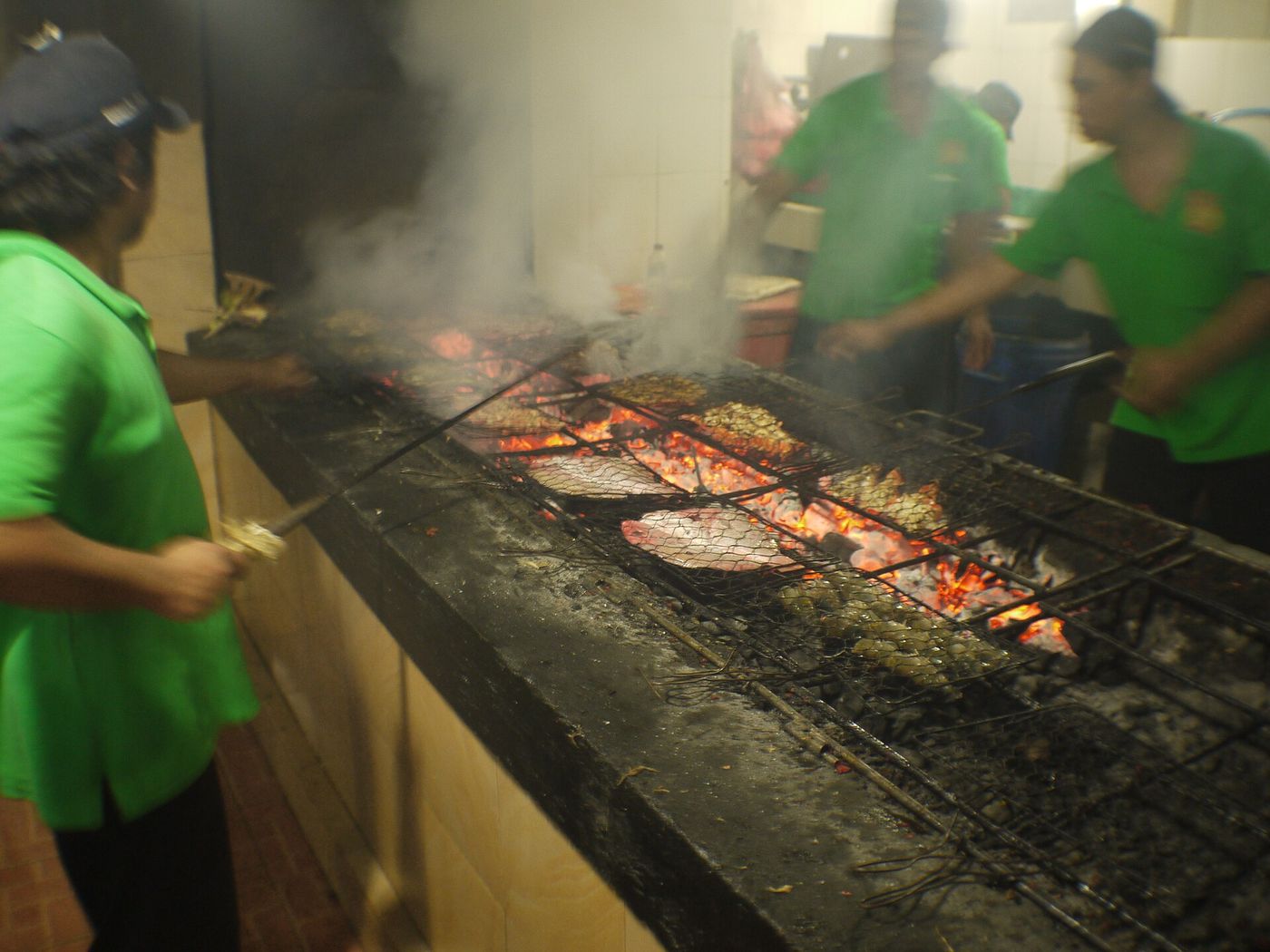
You choose your fish from the ice. It is split, brushed with oil and spice, and grilled whole over burning coconut husk. It arrives with rice, a plate of greens and sambal matah alongside.
Sambal matah is the part that makes it Balinese. Indonesia's national tourism board describes it as neither pounded nor fried, which sets it apart from the rest of the country's sambals. Shallot, chilli, lemongrass and lime leaf are sliced, and hot coconut oil is poured over them.
So the sambal stays raw, sharp and aromatic, and that suits a fish straight off the coals.
The tourism board records the pairing as a Balinese dish in its own right, be pasih mesambel matah. That is grilled fish with fresh sambal matah, best with warm rice. Use the name to order it the way a Balinese kitchen thinks of it.
The Fish Is Landed at Bali's Own Fishing Ports
Bali's seafood economy runs through its fishing ports, so it helps to know where they are before you choose a table.
The provincial spatial planning service lists Bali's fishing ports in four classes, from ocean ports down to local landing stations. Each class has its own role in the catch.
- Kedonganan, for the south. It lies on Jimbaran Bay, in Kuta district, Badung regency. The province records it as a class C landing station with a jetty and a fish auction hall. The Jimbaran grills and many home cooks buy at the fish market beside it.
- Sangsit, for the north. The north has its own class C landing station, with a jetty and an auction hall. It is in Sawan district, east of Singaraja.
- The Lovina coast. The scale here is smaller. The Buleleng tourism office's listing for Lovina Beach describes a shore lined with traditional fishing villages. Their traditional boats take visitors out in the morning to see the dolphins.
- Amed, in the east. Amed has a fish landing station of its own.
Where to Eat It, Coast by Coast
Four stretches of coast grill the day's catch. Each is set out the same way below, with the setting first and the meal second.
Jimbaran and Kedonganan, in the South
The setting: the famous one, a long bay south of the airport lined with beachfront grills. It is busiest at sunset and popular with tour groups. You eat at tables on the sand, with the smell of husk smoke down the beach.
The meal: there are two ways to do it.
-
Sit down at a beachfront grill and order from its counter.
-
Take the market route, which the tourism board suggests in its guide to eating seafood in Bali cheaply. Buy your fish by the kilo at the Kedonganan fish market. Then carry it to one of the nearby warungs, which grill, fry or boil it for a per-kilo charge, rice and sambal included.
The market route is cheaper and less polished.
Lovina and the North Coast
The setting: the quiet version of the same sunset meal. Lovina's warungs cook on the beach and just off it, with fewer people than Jimbaran and often a smaller bill.
The meal: the local catch, grilled. To see who is cooking what, read the best warungs in north Bali and the best restaurants in Lovina. For a drink to go with it, see drinks of north Bali.
Pemuteran and the Northwest
The setting: Pemuteran is a diving village. Its restaurants feed a small, knowing crowd, who have usually spent the day in the water at Menjangan.
The meal: fresh fish at quiet tables.
Sanur and the East
The setting: Sanur is on the sunrise side of the island, with a calmer beachfront than Jimbaran.
The meal: further east, Amed and Candidasa grill the day's catch for a smaller crowd. See the Amed guide.
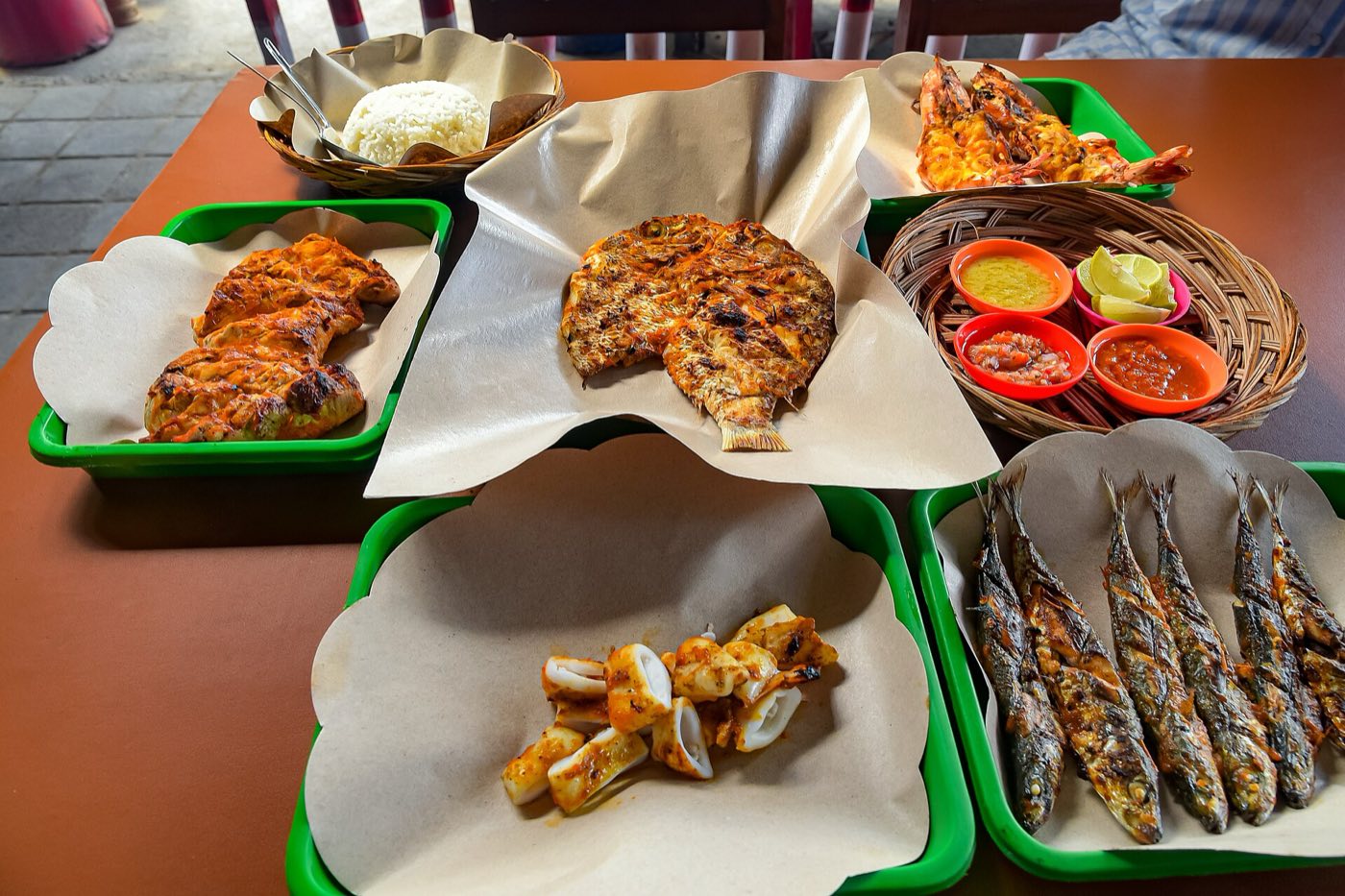 The full spread at Kedonganan, Jimbaran Bay. Photo: Jorge Franganillo / Wikimedia Commons (CC BY 2.0)
Seafood Is Priced by Weight, So Agree the Total First
Almost no seafood in Bali has a fixed menu price. Learn how the price is worked out, since any figure quoted today will move.
Fish is sold by weight. The rate is per 100 grams or per kilo, and it changes by species. A snapper and a lobster are on different scales. You pay the rate times the weight of the fish you point at.
The market route has two charges. You pay the market price per kilo for the fish itself. The warung then adds its cooking charge per kilo, which the tourism board notes includes rice and sambal.
Follow the same four steps wherever you eat:
-
Pick your fish from the ice display.
-
Ask for the rate per weight for that species.
-
Ask for the fish to be weighed in front of you.
-
Ask for the total, with any cooking charge and sides, before it goes on the grill.
Vendors expect these questions, as they would in any market that prices by weight.
Order one fish for two people. A whole fish feeds two with rice and greens, so one fish and more sides beats two fish.
Carry cash. Beach warungs and market stalls are cash businesses. See Bali currency.
What to Order From the Ice
- Snapper is a common choice for grilling whole.
- Grouper holds up well whole over coals.
- Prawns and squid are usually sold by weight alongside the fish, and they cook faster.
- Clams come as a side plate, not as a main.
- Lobster is usually the most expensive thing on the ice, so the per-weight question matters most there.
- Ask what came in today before you read the list. At a fishing village, that question has a real answer.
Pair it with rice, kangkung and more sambal matah than you think you want. For the rest of the island's food, see what to eat in Bali and Bali street food.
FAQ
Where is the best seafood in Bali?
Jimbaran in the south is the famous beachfront-grill strip, fed by the fish market and auction at Kedonganan next door. The north coast around Lovina serves the same fresh catch from its own fishing villages, with fewer people and often a smaller bill. Both grill whole fish over coconut husk on the sand.
How is seafood served in Bali?
Grilled whole over coconut husk, with sambal matah, rice and water spinach. Indonesia's tourism board records the dish as be pasih mesambel matah.
How is seafood priced in Bali?
By weight, per 100 grams or per kilo, with the species setting the rate. If you buy at the Kedonganan market, the warung that cooks it charges per kilo on top of the fish price. Agree the rate, the weight and the total before it is cooked.
How do you avoid being overcharged for seafood in Bali?
Ask the rate per weight and have the fish weighed in front of you. Then get the full total, with cooking and sides, before it goes on the grill. Buying at the Kedonganan market and paying a warung to cook it is the tourism board's own tip for eating seafood cheaply.
Is Jimbaran or Lovina better for seafood?
Choose Jimbaran for the atmosphere, the scale and the sunset crowd. Choose Lovina for the same fresh catch with fewer people and often lower prices. Go to Jimbaran once for the ritual, and to the north for a quiet meal.
What seafood should you order in Bali?
Snapper or grouper for grilling whole, prawns and squid alongside, and clams as a side. Ask what came in that morning before you order off a list, especially in a fishing village.
What is sambal matah?
A raw Balinese sambal of sliced shallot, chilli, lemongrass and lime leaf, with hot coconut oil poured over. It is neither pounded nor fried, so it tastes sharp and fresh. It is served with grilled fish, ayam betutu and nasi campur.
Sources
- Indonesia Ministry of Tourism, Sambal Matah on the official Indonesia Travel platform (its ingredients, the hot coconut oil, neither pounded nor fried, and the dishes it accompanies), Indonesian, read September 2026
- Indonesia Ministry of Tourism, Be Pasih Mesambel Matah (grilled fish with sambal matah as a Balinese dish, eaten with warm rice), Indonesian, read September 2026
- Indonesia Ministry of Tourism, 5 Tips Kulineran Seafood di Bali Murah Meriah (buying by the kilo at Kedonganan fish market, and the nearby warungs that cook it for a per-kilo charge with rice and sambal), Indonesian, read September 2026
- Bali Provincial Government, Sistem Informasi Wilayah dan Tata Ruang Bali, Pelabuhan Perikanan di Provinsi Bali (the four classes of fishing port; Kedonganan in Kuta and Sangsit in Sawan as class C landing stations with a jetty and auction hall; the landing station at Amed), Indonesian, read September 2026
- Buleleng tourism office, Lovina Beach on the Visit North Bali directory (the traditional fishing villages along the Lovina shore and the morning boat trips to see dolphins), read September 2026
Read next: the best restaurants in Lovina for where to eat it up here, what to eat in Bali for everything beyond the grill, and the best warungs in north Bali for the village kitchens. Palm Living's villas along the Lovina coast put you a short walk from the beach warungs: villas for rent.