On this page
- In Brief
- Bali's Temples at a Glance
- How the Ten Were Chosen: the Temples Visitors Come For
- Sea Temples for Sunset: Tanah Lot and Uluwatu
- Mountain and Lake Temples: Besakih, Lempuyang and Ulun Danu Beratan
- Water, Cave and Garden Temples Near Ubud and Mengwi
- North Bali Temples: Quiet, Slow and Worth the Drive
- Practical Notes
- FAQ
- Sources
In Brief
The best temples in Bali depend on what you came for. For drama and sunset, go to Tanah Lot and Uluwatu on the southern coast. For sanctity, go to Besakih, the mother temple of the island, on the slopes of Mount Agung. Or go to Tirta Empul, the holy spring where Balinese still come to bathe.
Lempuyang draws crowds for its view of Mount Agung framed between two gates. In the north, Ulun Danu Beratan stands on a mountain lake, and the Buddhist monastery at Banjar is quiet and contemplative. Wear a sarong and sash at each temple, and arrive before mid-morning to beat both the heat and the tour buses.
Bali's Temples at a Glance
- How many: Thousands across the island, from family shrines to the nine directional temples that protect Bali
- Dress code: Sarong and sash required. Many temples sell or rent them at the entrance for a small fee
- Entry fees: Small, set by each temple and paid at the gate. Carry rupiah rather than expecting cards
- Best time of day: Early morning for quiet and cool light, late afternoon for sunset at the sea temples
- Best season: Dry season, April to October, for clear views of the mountains and lakes
- Southern highlights: Tanah Lot, Uluwatu, Besakih, Tirta Empul, Lempuyang, Goa Gajah, Taman Ayun
- Northern highlights: Ulun Danu Beratan, Brahma Vihara Arama, Pura Pulaki
- What to know first: Bali temple etiquette covers dress, conduct, and the rules around menstruation and photography
How the Ten Were Chosen: the Temples Visitors Come For
A temple in Bali is called a pura, an open-air walled compound set to frame a mountain, the sea or a spring.
The first eight below are the temples most visitors come to Bali to see, and two quieter temples in the north close the list. Each entry says what you get and when to go. Many of the famous ones are now crowded, which is worth knowing before you build a day around them.
For why these places are built where they are, and what the ceremonies mean, read Balinese Hinduism explained.
Sea Temples for Sunset: Tanah Lot and Uluwatu
Tanah Lot
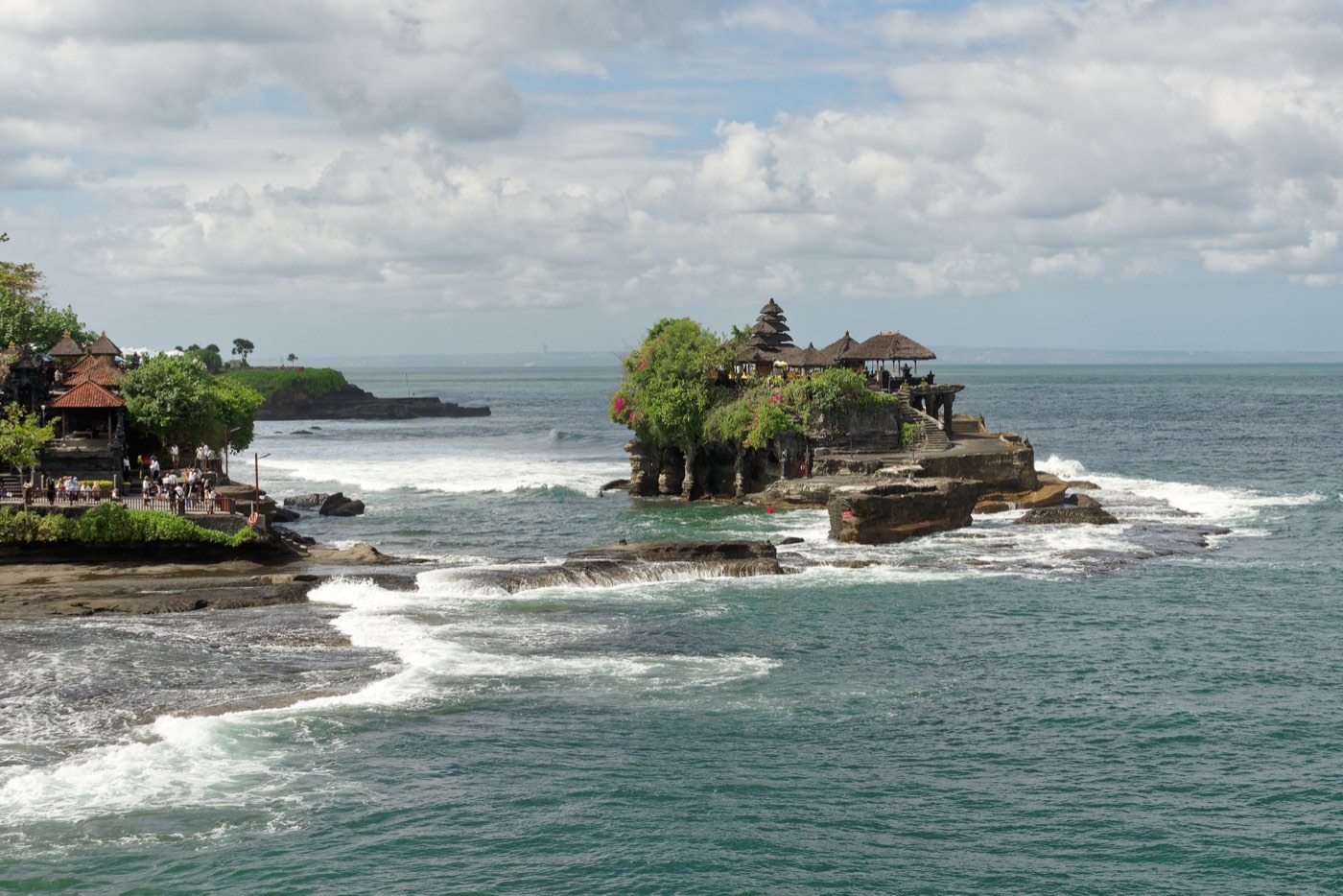
Tanah Lot is a sea temple on a rock that the tide cuts off from the shore twice a day. Its silhouette against the setting sun is the postcard image of Bali.
At low tide you can walk across to the base of the rock, though the temple itself is closed to non-worshippers. Come for sunset and expect several hundred other people to have the same idea.
Arrive ninety minutes before sundown and walk the cliff paths to the south, where the crowd thins, to watch the light change. The market lane on the way in is dense and touristy, so move through it with purpose.
Where: Beraban village, Tabanan Regency, about 45 minutes northwest of Seminyak. Entry fee payable in cash at the gate.
Uluwatu
Uluwatu stands on a sheer cliff a hundred metres above the Indian Ocean, at the southern tip of the Bukit Peninsula. It has one of the most dramatic settings of any temple on the island, and the clifftop walk gives you ocean in every direction.
The temple is one of the nine directional temples that guard the island. At sunset, the Kecak fire dance is performed in its open amphitheatre.
The resident macaques are practised thieves with a taste for sunglasses and phones, so watch your belongings. In high season, book the Kecak ahead and arrive early enough to walk the cliff before the dance fills the seats.
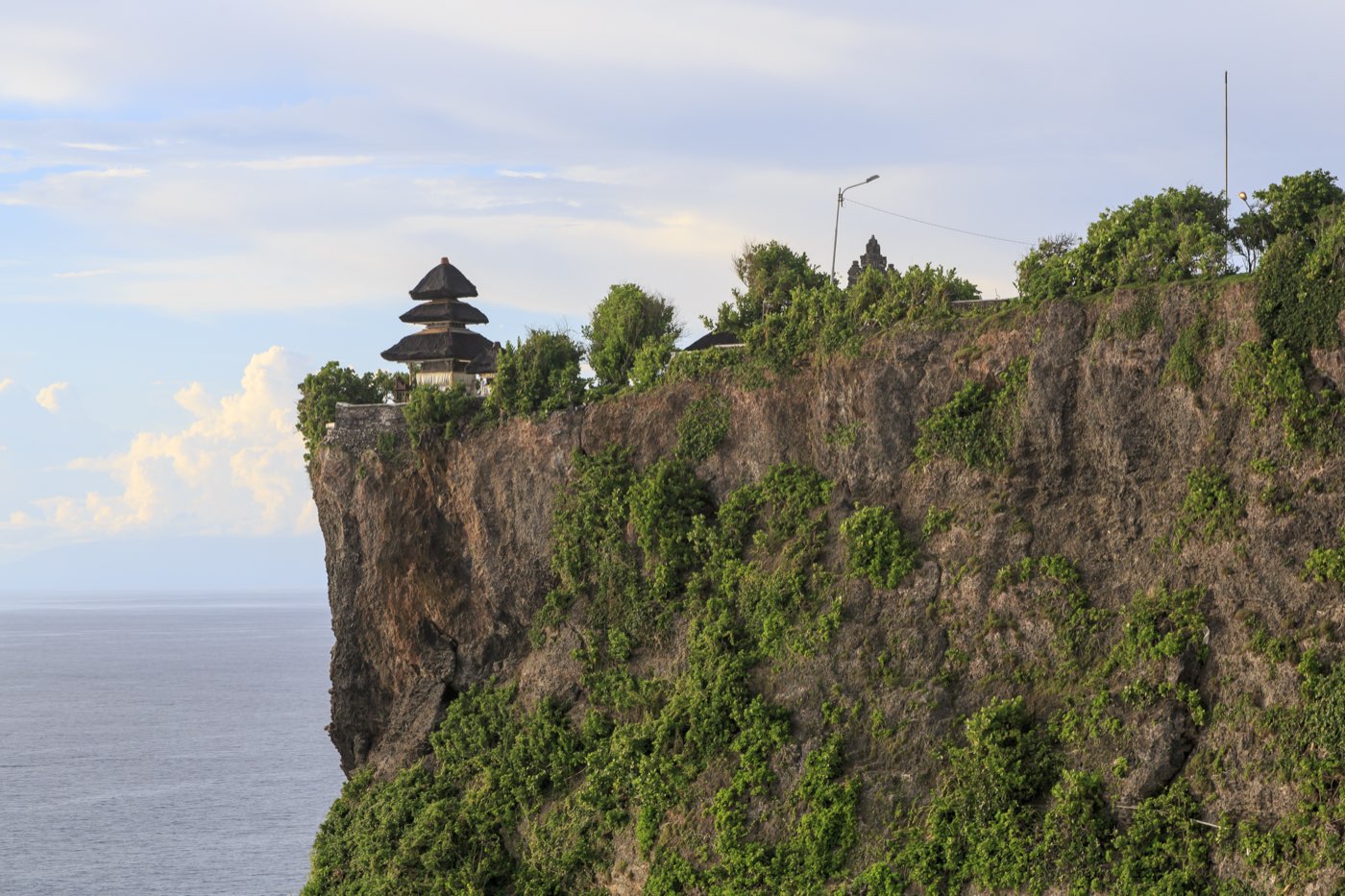 Pura Luhur Uluwatu on the cliff edge. Photo: CEphoto, Uwe Aranas / Wikimedia Commons (CC BY-SA 3.0)
Where: Pecatu, Bukit Peninsula, about an hour south of the airport. Entry fee plus a separate Kecak ticket, both paid in cash at the gate.
Mountain and Lake Temples: Besakih, Lempuyang and Ulun Danu Beratan
Besakih
Besakih is the mother temple, the largest and holiest complex on the island. It stands on the southwestern slopes of Mount Agung, in Balinese understanding the island's most sacred volcano.
Besakih is a complex of more than twenty temples, climbing the mountainside in terraces around the great Pura Penataran Agung at the centre. For Balinese Hindus it is the spiritual heart of the island, and during the major festivals the whole complex fills with offerings.
A visitor centre and a managed walkway system were introduced in recent years, which changed the experience and the fees. Go in the morning, when Agung is most likely to be clear of cloud. If a guide attaches himself to you, be politely firm about what you are willing to pay.
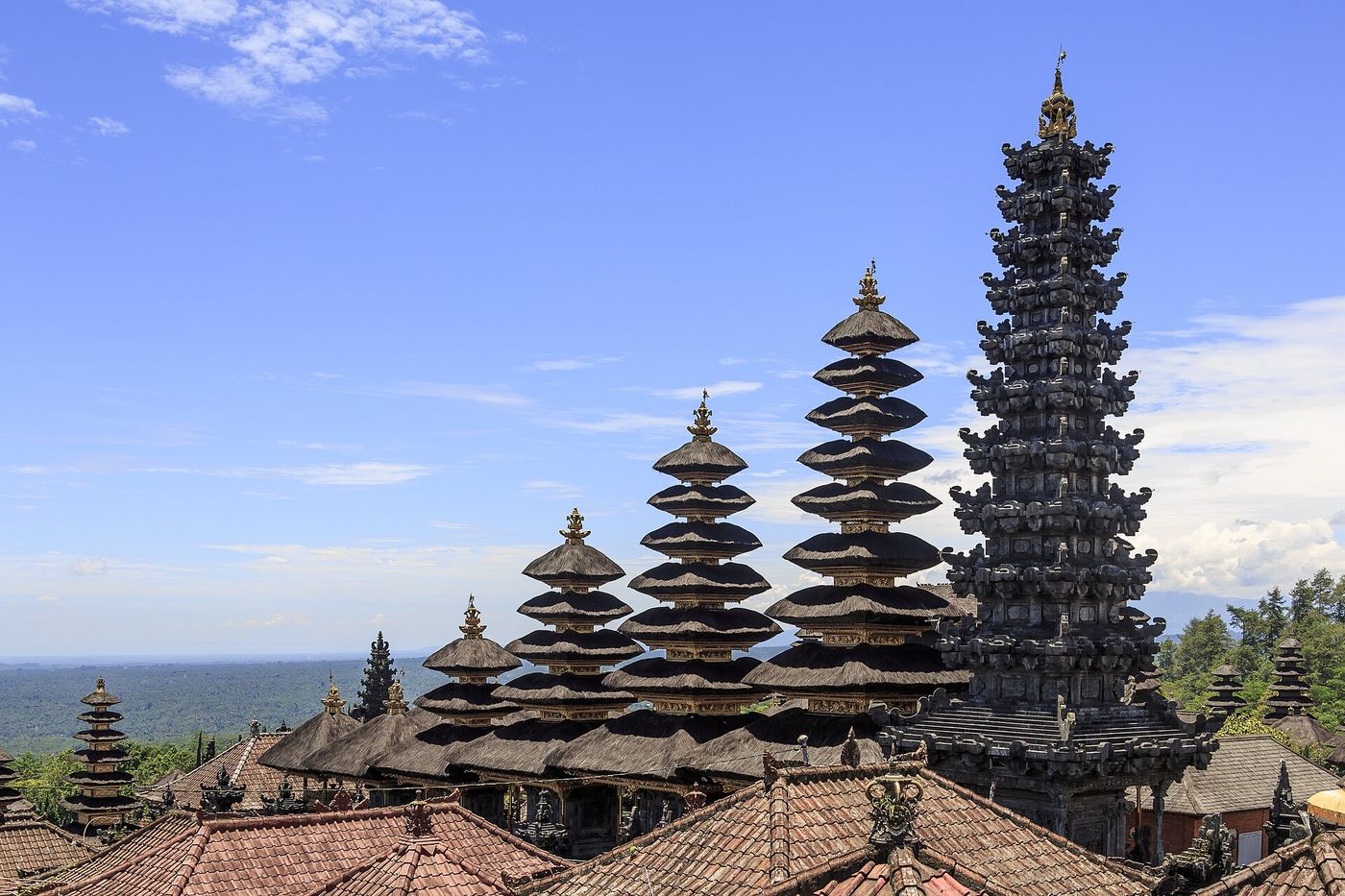 Besakih's meru towers in ranks. Photo: CEphoto, Uwe Aranas / Wikimedia Commons (CC BY-SA 3.0)
Where: Besakih village, Karangasem Regency, about two hours northeast of Ubud. Entry and managed-access fees apply, paid at the gate.
Lempuyang
Pura Lempuyang Luhur is one of the oldest and most revered temples in Bali, a series of shrines climbing the slopes of Mount Lempuyang in the far east.
Its world fame comes from the split gate at the lower temple, the candi bentang, which frames Mount Agung in its gap. The "Gates of Heaven" photo, with the mountain mirrored in the foreground, drew enormous crowds.
The mirror is a piece of glass an attendant holds under your phone, and in high season the wait for the shot can run to hours. The temple itself is sacred, and the higher shrines, reached by a long stairway climb, are worth far more than the photo queue. Come at opening, or skip the gate and climb.
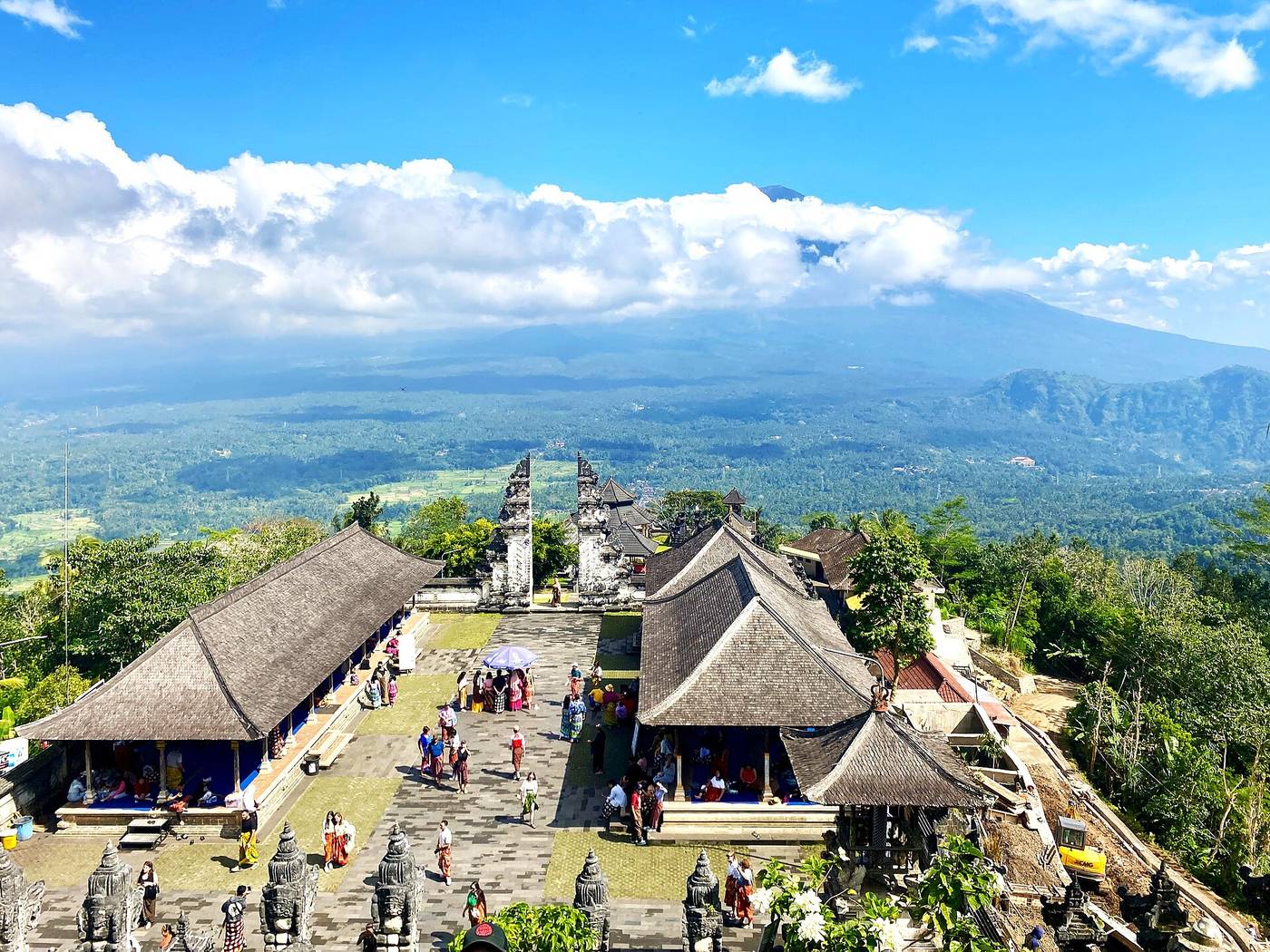 Lempuyang's lower courtyard and split gate. Photo: Slleong / Wikimedia Commons (CC0)
Where: Purwakerthi, Karangasem Regency, about two hours from Ubud in the far east. Entry fee plus a shuttle to the gate, both paid in cash.
Ulun Danu Beratan
Ulun Danu Beratan stands on the shore of Lake Beratan at Bedugul, in the central highlands on the road north. When the lake is high, its tiered meru shrines seem to float on the water.
At about 1,200 metres the setting is misty and green. The temple honours the lake goddess whose water feeds the irrigation of the region.
This is the gateway to north Bali, and on a clear morning the shrines are reflected in the still lake. Go early, both for the calm water and because the highland mist often closes in by afternoon.
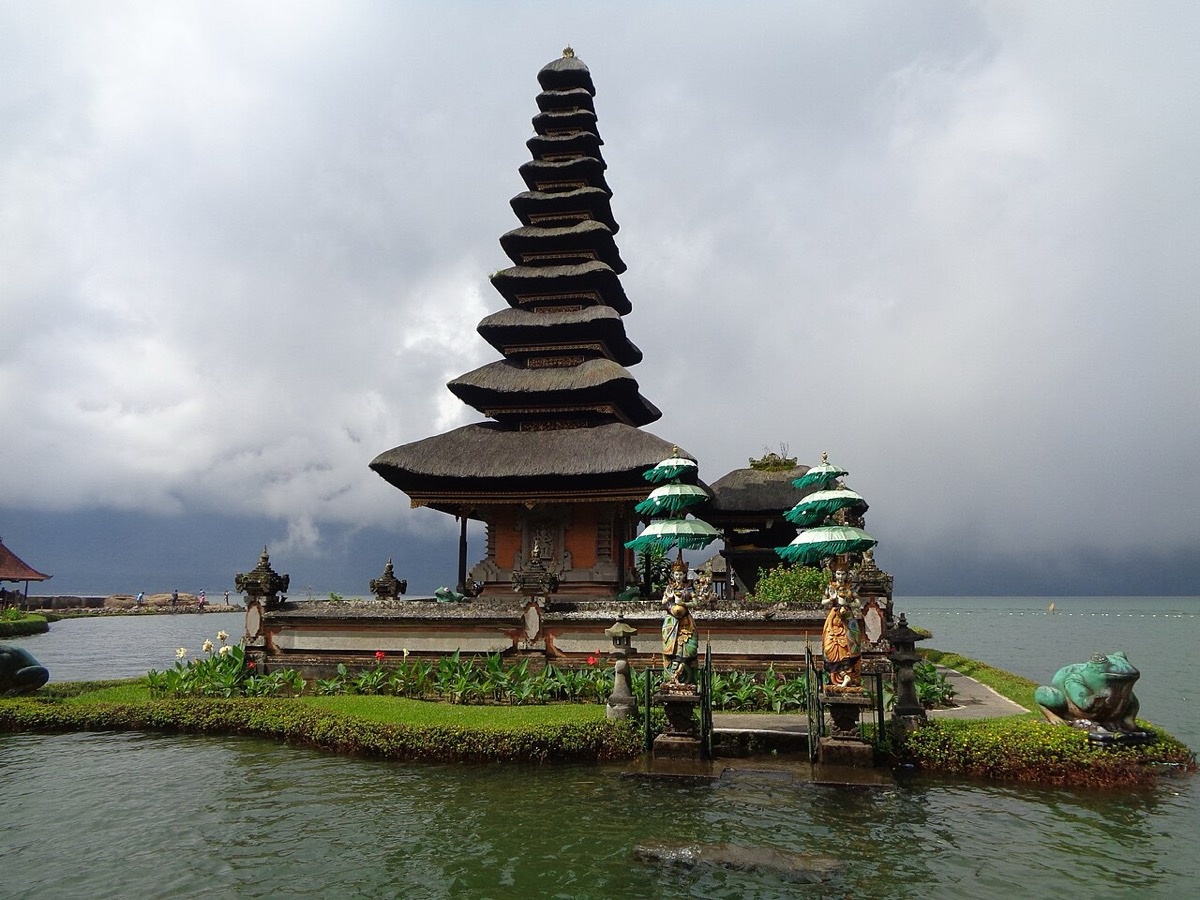 The meru towers of Pura Ulun Danu Beratan. Photo: Susan.wibowo / Wikimedia Commons (CC BY-SA 4.0)
Where: Candikuning, Bedugul, about 90 minutes north of Ubud on the road to Lovina. Entry fee payable in cash at the gate.
Water, Cave and Garden Temples Near Ubud and Mengwi
Tirta Empul
Tirta Empul is a water temple built around a sacred spring that has fed its purification pools for more than a thousand years.
Balinese come to bathe in the cold, clear water, moving along a row of carved spouts in a cleansing rite called melukat. Visitors can join the bathing in a sarong meant for the water. Watching local families perform the rite is the real reason to come.
It is a short drive from Ubud and pairs naturally with the rice terraces nearby. Arrive at opening to have the pools quiet, because by mid-morning the queues for the spouts grow long.
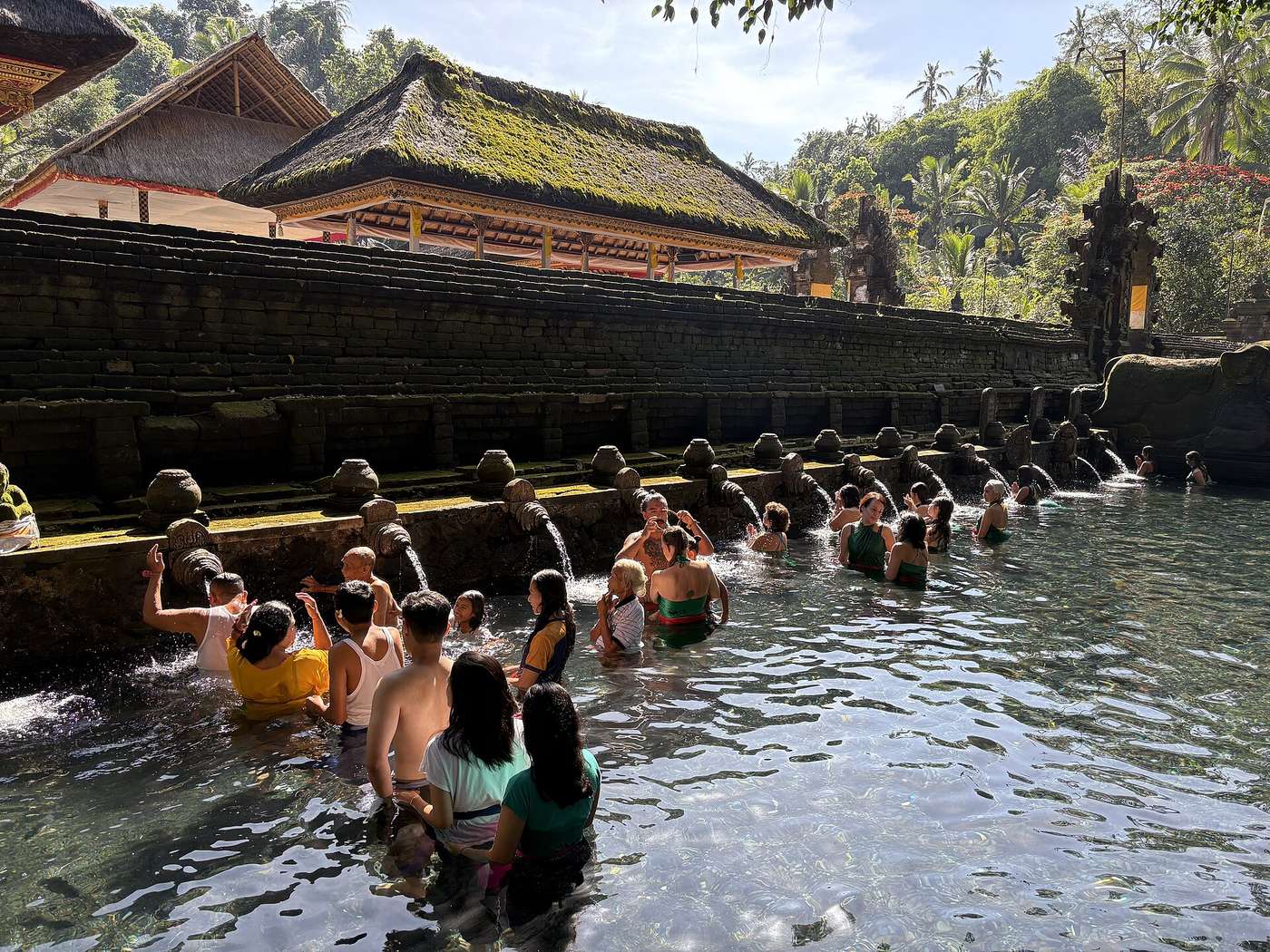 Melukat bathing at Tirta Empul's spouts. Photo: Chainwit. / Wikimedia Commons (CC BY 4.0)
Where: Manukaya, near Tampaksiring, about 30 minutes northeast of Ubud. Entry fee payable in cash at the gate. A sarong for the pools is often included or rented separately.
Goa Gajah
Goa Gajah, the "Elephant Cave", is a small ancient sanctuary near Ubud. Its carved cave mouth, a fierce demonic face, dates back perhaps a thousand years.
Inside the shallow cave are stone shrines. Below the courtyard is a bathing pool with carved figures, unearthed in the twentieth century. The grounds run down into a green ravine with jungle paths worth wandering.
The site is compact and fits easily into an Ubud morning alongside Tirta Empul or the rice terraces. It feels crowded quickly, so arrive early to have the cave nearly to yourself.
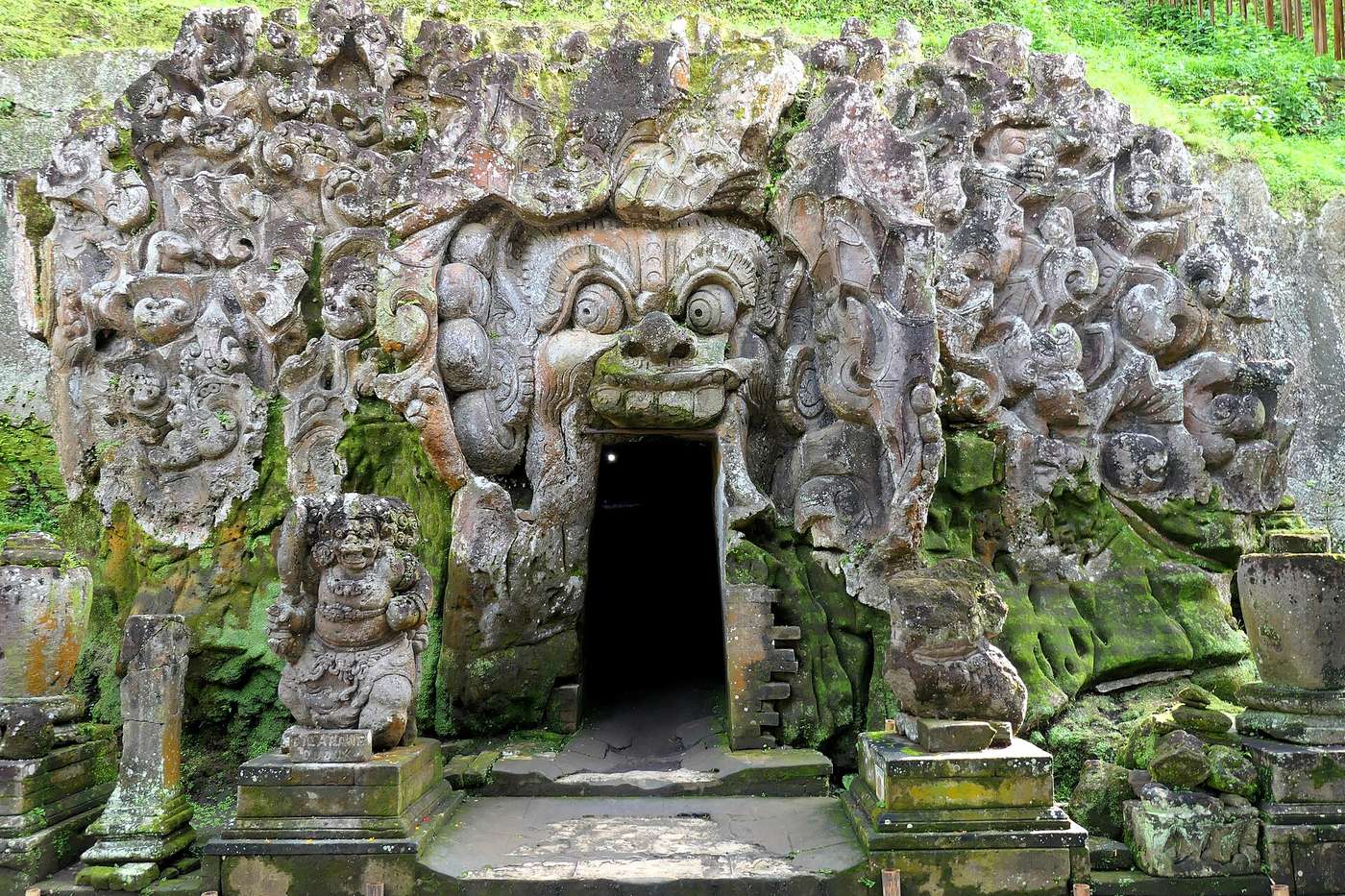 The carved cave mouth of Goa Gajah. Photo: Anandajoti Bhikkhu / Wikimedia Commons (CC BY-SA 4.0)
Where: Bedulu, about 15 minutes east of Ubud centre. Entry fee payable in cash at the gate.
Taman Ayun
Taman Ayun is the royal temple of the old Mengwi kingdom, set within wide moats and formal gardens.
Its tiered meru shrines rise in neat rows behind the water, and the whole compound is part of the UNESCO-listed subak cultural landscape of Bali. You cannot enter the inner courtyard, so the gardens and the views across the moat are the visit.
It draws fewer crowds than its fame would suggest, which makes it one of the more peaceful temple visits in the south. It pairs well with a trip toward Bedugul and the highlands.
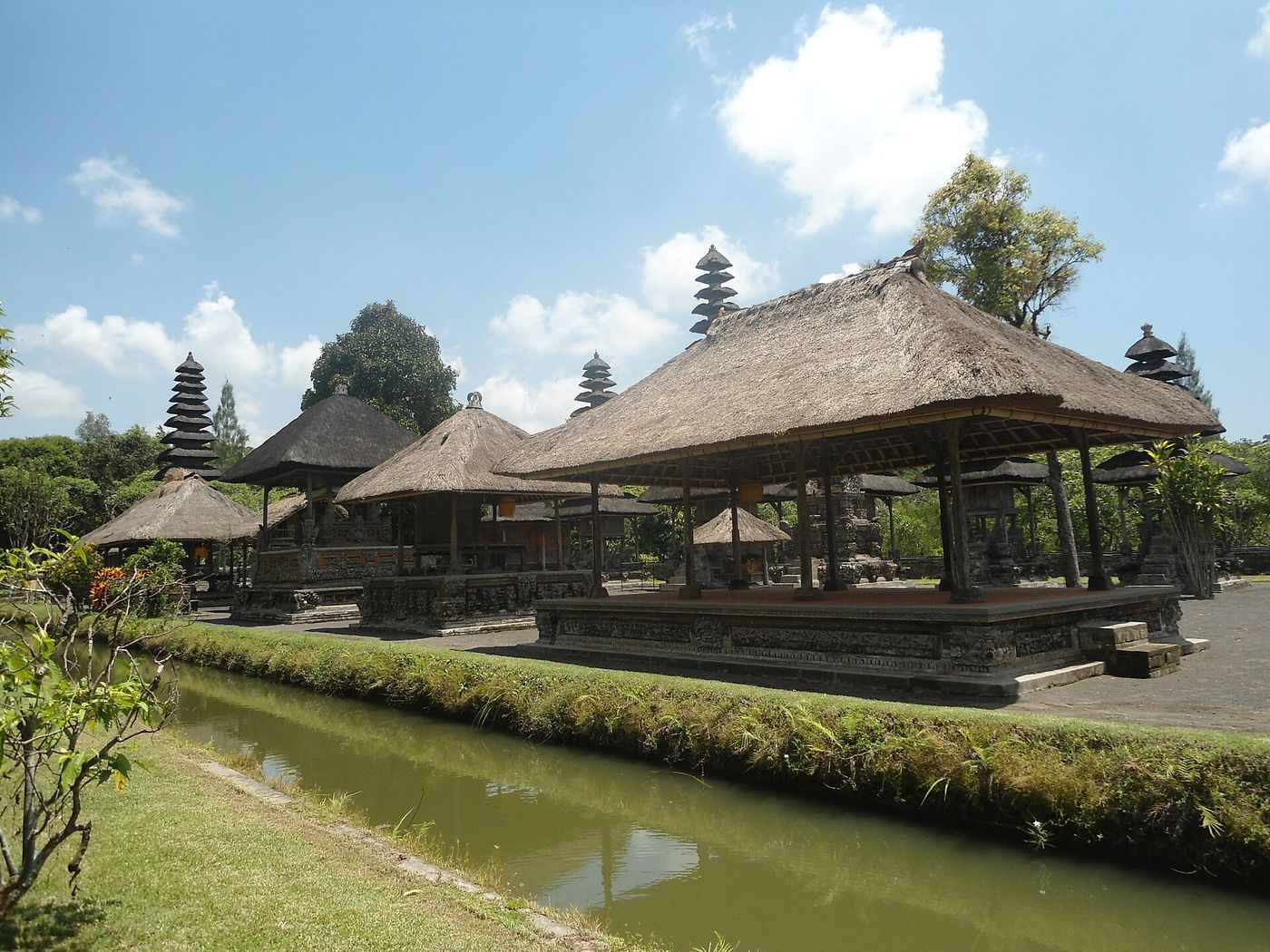 Taman Ayun's meru towers along the moat. Photo: DayakSibiriak / Wikimedia Commons (CC BY-SA 4.0)
Where: Mengwi, Badung Regency, about 40 minutes north of Seminyak. Entry fee payable in cash at the gate.
North Bali Temples: Quiet, Slow and Worth the Drive
North Bali's temples are quiet, and the pace around them is slow.
Two of them stand out for a first visit. The full survey is in the guide to the best temples in north bali.
Brahma Vihara Arama
Brahma Vihara Arama is often described as the largest Buddhist monastery in Bali, a rarity on a Hindu island. It sits in the hills above Banjar, near Lovina.
The grounds step up the hillside through ornate gates to a golden stupa. A miniature replica of Borobudur stands among gardens that look out over the rice fields toward the sea.
It is a working monastery, quiet and contemplative. Dress modestly as at any temple, and keep voices low, as monks are often in meditation. Pair it with the hot springs at Banjar, a few minutes away, for a complete morning. The full monastery guide covers the grounds and how to visit.
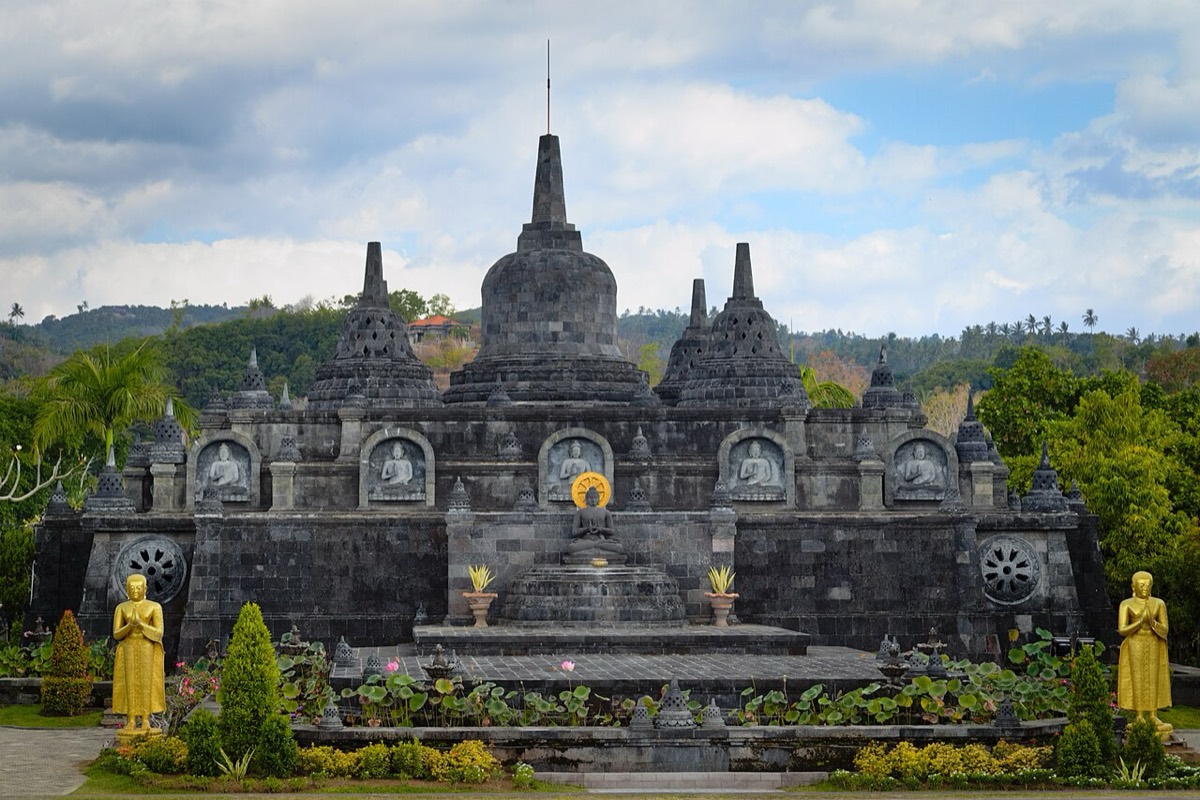 The Borobudur replica at Brahma Vihara Arama. Photo: Enrico Strocchi / Wikimedia Commons (CC BY-SA 2.0)
Where: Banjar Tegeha, above Lovina, Buleleng Regency, about 19 km west of Singaraja (regency heritage record) and 20 to 30 minutes from Lovina. Entry by donation.
Pura Pulaki
Pura Pulaki is a coastal temple on the far northwest road toward Pemuteran and Menjangan, built against a dark cliff right above the sea.
A troop of grey macaques makes the temple its home. The black rock meeting the blue water gives it a stark, beautiful setting, and the temple carries the story of a village that vanished into the spirit world.
It makes a natural stop on the way to the diving and snorkelling around Pemuteran and Menjangan Island. Guard your belongings, because the monkeys here are bold. The Pura Pulaki guide tells the story and covers the practicalities.
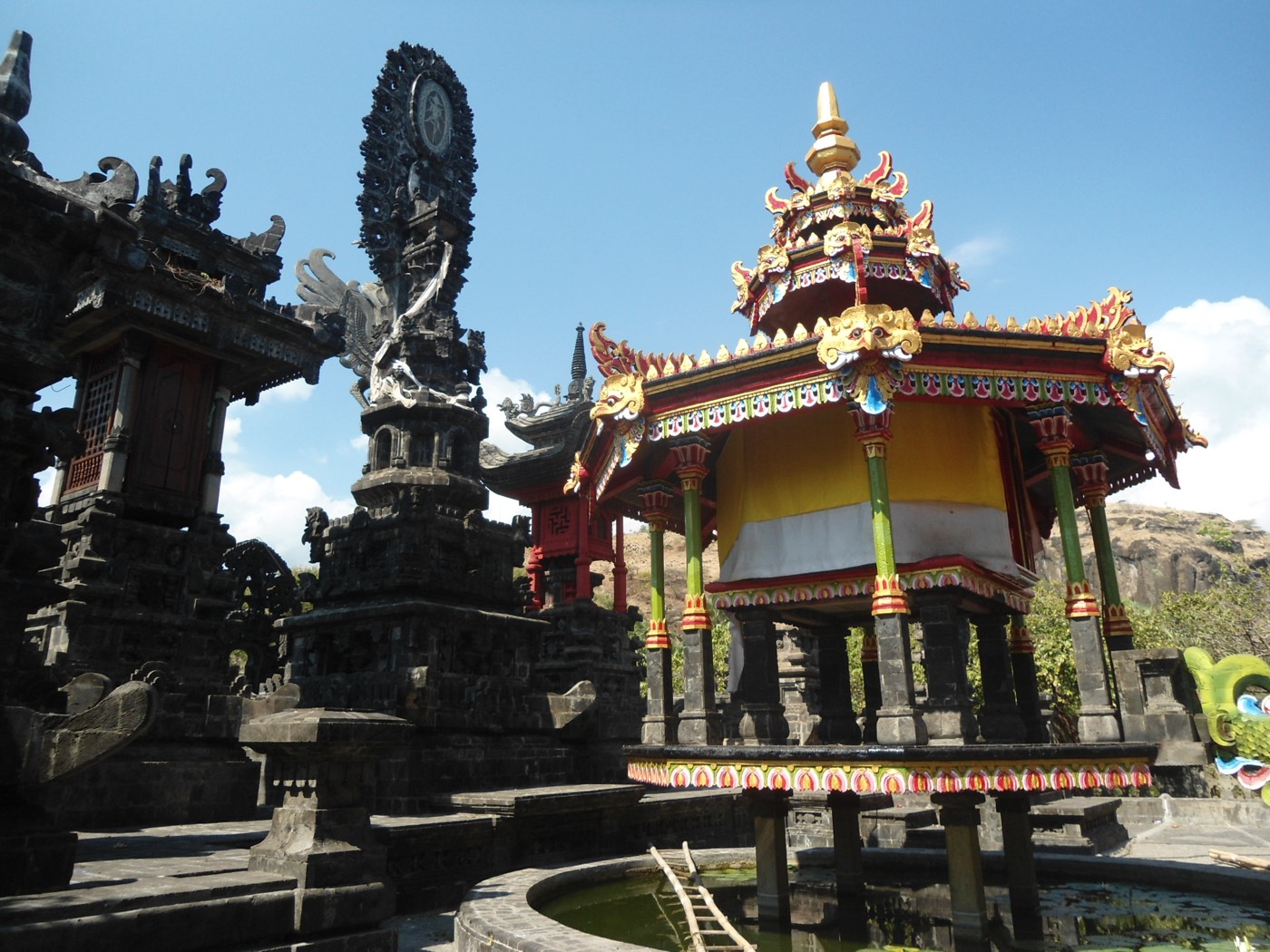 The Pura Pulaki courtyards against the cliff. Photo: DayakSibiriak / Wikimedia Commons (CC BY-SA 4.0)
Where: Banyupoh, on the northwest coast road west of Lovina, Buleleng Regency. Entry fee payable in cash at the gate.
Practical Notes
- Dress: a sarong tied at the waist and a sash, with shoulders covered. Many temples rent or sell them at the entrance.
- Cash: each temple sets its own fee, paid at the gate. Uluwatu sells the Kecak ticket separately, Lempuyang adds a shuttle, Besakih adds managed-access fees, and Brahma Vihara Arama takes a donation.
- Timing: be at inland and mountain temples before mid-morning. The sea temples, Tanah Lot and Uluwatu, are at their best at sunset.
- Monkeys: at Uluwatu and Pura Pulaki, keep sunglasses, phones and bags close.
- Getting around: a private driver makes the mountain roads to Besakih, Lempuyang and the north far easier than driving yourself.
FAQ
What is the most famous temple in Bali? Tanah Lot is among the most photographed, thanks to its silhouette on a tidal rock at sunset, while Besakih is the most sacred as the mother temple of the island. Uluwatu is one of the most dramatically sited, on a cliff high above the ocean. Which one is "best" depends on whether you came for the photograph, the sanctity or the setting.
Do you need to dress up to visit a Bali temple? Yes. A sarong tied around the waist and a sash are required for every visitor, whatever else you are wearing. Many temples sell or rent them at the entrance for a small fee, and shoulders should be covered. The full rules are in Bali temple etiquette.
How much does it cost to visit temples in Bali? Entry fees vary by temple and are paid in cash at the gate. Some of the major sites, such as Besakih and Lempuyang, have added managed-access systems with separate shuttle or guide fees, so carry enough cash and confirm at the entrance.
Can you go inside Bali temples? You can enter the outer and middle courtyards of most temples, and the innermost sanctum is usually kept for worshippers in prayer. At some sites, such as Tanah Lot, the temple structure itself is closed to non-worshippers and you view it from the surrounds. The gardens, gates and shrines you can approach are the heart of the visit.
What is the best time of day to visit Bali temples? Early morning suits the inland and mountain temples, for cool light, clear mountain views and far fewer people before the tour buses arrive. The sea temples, Tanah Lot and Uluwatu, are the exception and come alive at sunset. Aim to be at any temple before mid-morning unless you are there for the evening.
Which Bali temples are the least crowded? The north Bali temples are the quietest, since most visitors stay in the south and never cross the central mountains. Brahma Vihara Arama near Lovina, Pura Pulaki on the northwest coast and Ulun Danu Beratan in the highlands all see a fraction of the crowds at Lempuyang or Tanah Lot. Taman Ayun in the south is also peaceful for its fame.
Is the Lempuyang "Gates of Heaven" reflection real? No. The mirrored reflection in the famous photo comes from an attendant holding a piece of glass beneath your phone. The gate and the mountain view behind it are real, and the wait for the staged shot can run for hours in high season. The higher shrines up the mountain are the more rewarding part of the temple.
Can you visit Besakih, Tirta Empul, and Lempuyang in one day? It is possible but rushed, as all three sit in the east and Lempuyang involves a stair climb plus the gate queue. A better pairing is Besakih with Tirta Empul, both reachable from Ubud, leaving Lempuyang for its own early start. A private driver makes any of these combinations far easier than driving the mountain roads yourself.
Are there Buddhist temples in Bali? Yes, though they are rare on a mostly Hindu island. Brahma Vihara Arama, in the hills above Lovina in the north, is often described as the largest Buddhist monastery in Bali, with a golden stupa and a miniature Borobudur set in terraced gardens. It is one of the most peaceful temple visits on the island.
Are temples in north Bali worth the drive? Yes, especially if you are spending time in the north. Ulun Danu Beratan sits right on the main route north and needs no detour. Brahma Vihara Arama and Pura Pulaki reward a Lovina base, and pair naturally with the hot springs, dolphins and diving the north is known for. The best temples in north bali guide maps all of them.
Why do Balinese build temples by the sea, on mountains, and around springs? In Balinese Hinduism the sacred lives in the landscape itself. The mountains are the realm of the gods, the sea the realm of cleansing and the underworld, and springs the source of holy water for purification. The directional temples ring the island to protect it, and the great mountain temple at Besakih anchors the whole system. The teaching behind it is set out in Balinese Hinduism explained.
Sources
- DTW Tanah Lot, official site, read September 2026
- DTW Ulun Danu Beratan, official site (one of the Kahyangan Jagat temples, about 1,200 metres above sea level, in Candikuning), read September 2026
- Wikipedia, Besakih Temple, read September 2026
- Wikipedia, Pura Taman Ayun (World Heritage listing in 2012 as part of the subak cultural landscape), read September 2026
- Buleleng Regency Government, Pusaka Budaya Bali Utara (Brahma Wihara Arama about 19 km west of Singaraja), read October 2026
Read next: the best temples in north Bali, Bali temple etiquette and Balinese Hinduism explained.



_at_Pura_Tirta_Empul_(2025)_-_img_03.jpg)


.jpg)
