On this page
In Brief
North Bali vs Ubud comes down to where you want your calm. Ubud offers it among rice terraces and art, and the north offers it by the sea and the lakes.
Ubud is Bali's cultural and wellness centre. It sits inland among jungle and terraced rice fields, with deep yoga, vegetarian and restaurant scenes. It also has a concentration of art museums and dance, and heavy small-town traffic.
North Bali, meaning the Lovina coast and the Munduk highlands, is quieter and led by landscape. It has a calm sea you can swim in at dawn, with dolphins offshore and clear water at Menjangan. Inland are the waterfall country around Sekumpul and cool crater lakes.
The two sit two to three hours apart with the highlands in between, so many trips work better with both.
North Bali vs Ubud at a Glance
| Ubud | North Bali | |
|---|---|---|
| Setting | Inland: river valleys, jungle, terraced rice fields | Coast and highlands: black-sand shore, crater lakes, cloud forest |
| Sea | None | Calm, with small waves |
| Strengths | Yoga, food, art museums, dance, temples | Dolphins, waterfalls, reefs, hot springs, quiet |
| Crowds | High, and concentrated in the centre | Low, and spread along the coast |
| Getting around | Short distances, slow traffic | Longer distances, quieter roads |
| Cost | Mid to high | Lower |
| Best for | Culture and wellness | Sea, nature and calm |
| Typical stay | Three to five nights | Three to seven nights |
Ubud: Culture, Food and Wellness Among Working Rice Terraces
Ubud sits inland in Gianyar, in the hills above the southern plain, along a set of river valleys.
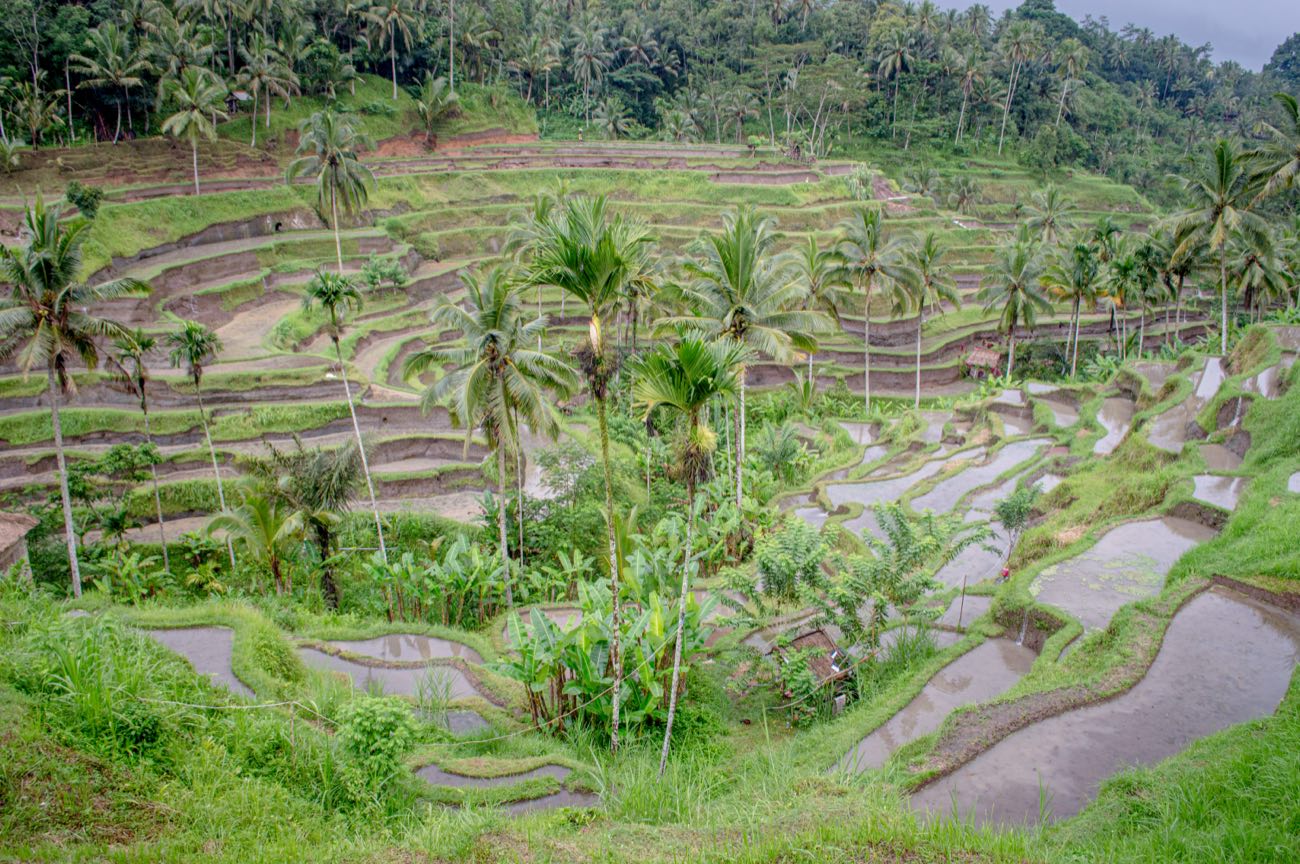
The landscape people come for is worked farmland. Its terraced rice fields are fed by subak, the cooperative irrigation system of canals, weirs and water temples.
Since 2012 this has been a World Heritage site, the Cultural Landscape of Bali Province. The listing presents subak as a manifestation of Tri Hita Karana, the philosophy that binds spirit, people and nature. Terraced fields and networks of subak temples represent it, including the Pakerisan watershed, one of the oldest subak systems.
So the terraces you photograph near Ubud belong to a farming system recognised at that level. Tri Hita Karana explains the philosophy, and subak and Bali's rice terraces explains the fields.
On that farming base sits a dense concentration of visitor infrastructure:
- yoga studios
- vegetarian and raw kitchens
- art museums
- nightly dance performance
- temples within walking distance of each other
If your holiday is made of classes, meals and galleries, Ubud puts them all within a short ride.
The cost of that success is the centre. Ubud's roads were laid out for a village and now carry a town's traffic. A two-kilometre hop can take a long time in the late afternoon.
You come to Ubud for its culture, food and wellness, and for the atmosphere around them. You do not come for quiet, and you cannot come for the sea.
North Bali: a Calm Sea with Cloud Forest and Lakes Behind
The north is Buleleng regency, and it is two places at once, a coast and a highland.
Along the coast, Lovina is a string of villages on black volcanic sand. Traditional outriggers take visitors out to the dolphins around sunrise.
The Buleleng tourism office describes Lovina's water as calm with relatively small waves, safe for beginners and families with children. That calm is the north's defining feature, a sea you can swim in before breakfast.
The same office calls the water at Menjangan, inside West Bali National Park, crystal clear, with reefs in remarkable health.
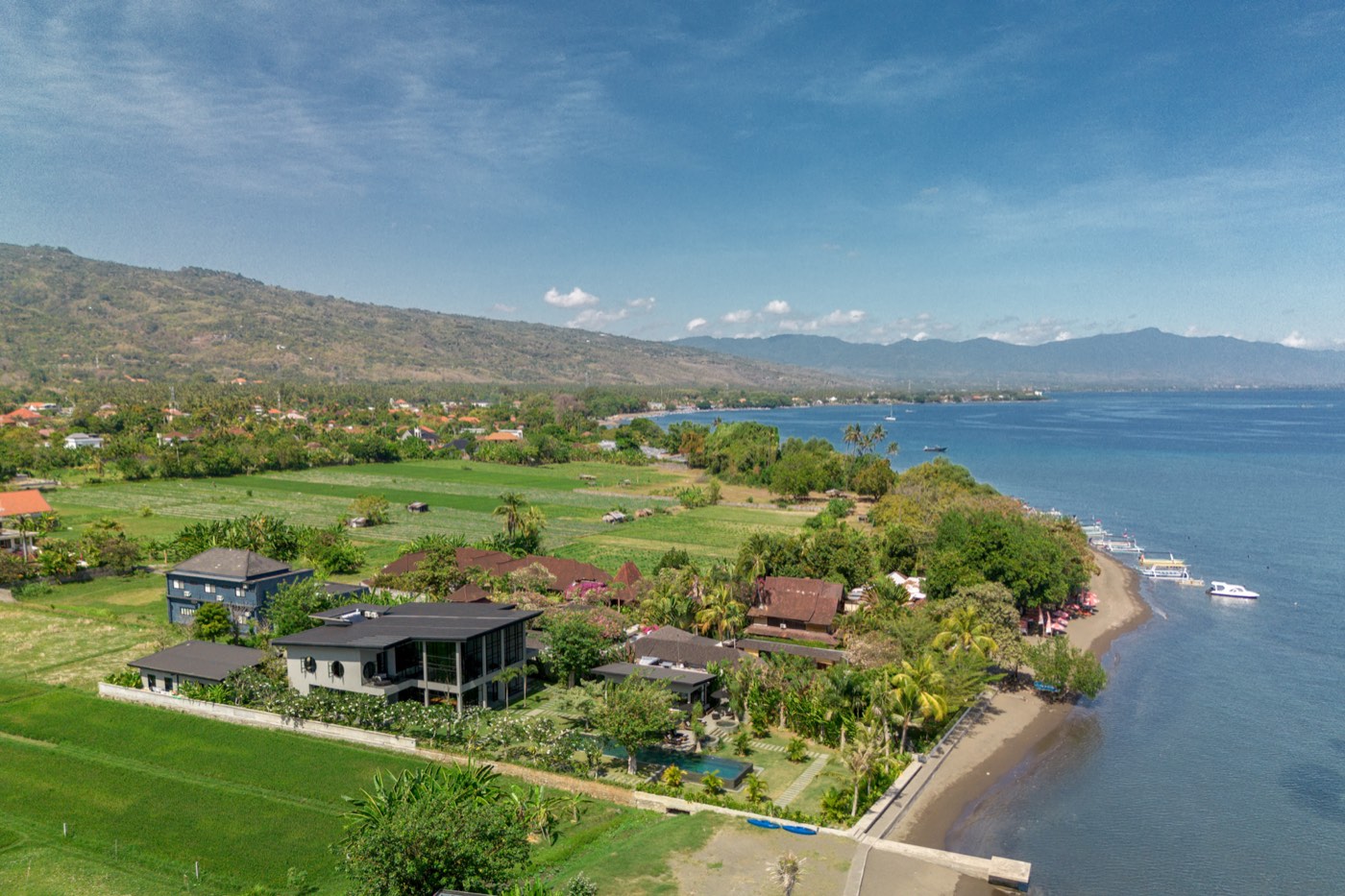 Photo: Palm Living archive.
Behind the coast the land climbs fast. Munduk sits in cloud forest above the crater lakes at Buyan and Tamblingan. Coffee and clove smallholdings line the ridge, and the waterfalls of the north Bali waterfall country lie below it.
Sekumpul and Aling-Aling are up here, and not near Ubud.
The north has less density, with fewer restaurants, a smaller wellness scene and no nightly dance calendar. Its culture is old, from the Buleleng kingdom to the carved sandstone temples of the coastal villages. That culture is spread across those villages, with no single walkable centre to gather it.
The trade is space and quiet in exchange for choice and convenience.
Five Differences That Change a Trip
The Sea: Only the North Has It
Ubud is inland, and reaching the coast means a drive through traffic. If swimming, snorkelling or a morning on the water is part of what you mean by a holiday, that settles it.
Distances: Close and Slow in Ubud, Far and Quiet in the North
In Ubud everything is close and slow, and the town rewards walking and short rides.
In the north everything is further apart and the roads are quieter. Expect the climb from Lovina up to Munduk, and long drives to waterfalls and temples. The north rewards a driver for the day, which is how many visitors do it.
Crowds: Concentrated in Ubud, Thin Across the North
Ubud's crowding is concentrated. The centre is busy, and the villages ten minutes out are calm. The north's quiet is general, and you can often have a temple to yourself.
Evenings: Ubud Stays Open, the North Winds Down
Ubud has an evening, with dinner options, performance and places open late. The north's evening is a meal and the sound of the sea. Some people find that the best part of the trip and some find it long.
Cost: Lower in the North
Accommodation, food and activities generally run lower in the north than in Ubud.
Who Should Choose Which
Choose Ubud if:
- you want culture, food and wellness above all
- your days are built from classes, galleries and restaurants
- you are travelling for a short break and want everything close
- you do not need the sea
Choose north Bali if:
- you want the coast, dolphins at dawn, waterfalls, snorkelling and cool highlands
- quiet is the point of the trip and not a bonus
- you are travelling with children who need a calm sea
- you are staying long enough that a slower rhythm pays off
Choose both if you have a week or more, which is the real recommendation. The two are two to three hours apart and the highlands sit between them, so the drive is a day in itself.
The classic route runs Ubud, then Munduk, then Lovina, and it works in either direction. See how many days in north Bali for the length question and getting to north Bali for the roads.
Practical Notes
- Order matters. Ending in the north is kinder: culture and activity first, then quiet, then home. Ending in Ubud means finishing in traffic.
- Book a driver for the transfer, not a taxi. The route over the pass is worth stopping on, at the lakes, a waterfall and a temple, and a day rate covers it.
- Do not day-trip the north from Ubud. People try, and spend six hours in a car to see one waterfall. Stay two nights minimum.
- The north is cooler at altitude. Munduk needs a layer in the evening, and the coast does not.
- Neither is a good base for the airport. Both need a real transfer, the north around three hours.
For the broader version of this question, read north Bali vs the south. If you are still deciding whether to come at all, read is north Bali worth visiting.
FAQ
Is north Bali or Ubud better? Neither, because they answer different questions. Ubud wins on culture, food, yoga and art within walking distance. North Bali wins on the sea, dolphins, waterfalls, snorkelling, cool highlands, quiet and cost. Pick by what your days are made of, or do both.
What does Ubud have that north Bali does not? A dense, walkable concentration of restaurants, yoga studios, art museums and nightly dance, a busy cultural calendar, and the famous terraced landscape on its doorstep. It also has more traffic and no coast.
What does north Bali have that Ubud does not? A calm, swimmable sea, dolphins offshore at first light, the waterfalls around Sekumpul, clear-water snorkelling at Menjangan, hot springs, crater lakes and cloud forest, and far fewer people.
Can you do both Ubud and north Bali in one trip? Yes, and it suits a trip of a week or longer. They are two to three hours apart with Munduk in the middle, so the transfer becomes a day of lakes, waterfalls and temples.
Is north Bali less crowded than Ubud? Much less, and differently. Central Ubud is busy, while the north coast and highlands are quiet as a rule.
Which is cheaper, Ubud or north Bali? North Bali, generally, across accommodation, food and activities.
How far is Ubud from Lovina? Two to three hours by car over the central mountains, depending on where you start and how often you stop. The drive through the highlands is the good part.
Sources
- Bali Provincial Government, Sistem Informasi Wilayah dan Tata Ruang Bali, Lansekap Budaya Provinsi Bali dalam Kerangka Warisan Dunia (the subak landscape as a World Heritage site since 2012, the Tri Hita Karana philosophy, and the sites including the Pakerisan watershed), Indonesian, read September 2026
- Buleleng Regency tourism office, Visit North Bali directory, including its listings for the dolphin tour, Lovina Beach and snorkelling (the sunrise boat trips on traditional outriggers, Lovina's calm water with small waves, and Menjangan's clear water and healthy reefs), read September 2026
Read next: north Bali vs the south for the wider comparison, the Munduk highlands for the place that bridges the two, and getting to north Bali for the drive over the pass. Palm Living's villas sit along the Lovina coast if the north wins: villas for rent.