On this page
- In Brief
- Tap Water in Bali at a Glance
- Why You Cannot Drink the Tap Water in Bali
- Do Locals Drink Tap Water? Many Buy Water, Many Boil It
- In Singaraja, One Spring-Fed Network Is Built to Be Drunk Unboiled
- How to Get Safe Drinking Water in Bali
- Brushing Teeth, Showers, Ice and Drinks
- Babies and Formula Need Extra Care
- If You Get Sick from the Water
- Practical Notes
- FAQ
- Sources
In Brief
No, you should not drink tap water in Bali. The UK government's travel advice says plainly that tap water is not safe to drink in Indonesia.
Use factory-sealed bottled water, refill water from a certified depot, or tap water brought to a rolling boil for one minute. Brush your teeth with the same safe water, and skip ice when you cannot tell what it was made from.
Most households in Bali buy their drinking water. In 2025, 54 percent named bottled or refill water as their main source, by the count of Statistics Indonesia.
Tap Water in Bali at a Glance
- Drink from the tap? No, says the UK government's travel advice for Indonesia
- Brushing teeth: use bottled or disinfected water, say the CDC and the UK's travel-health body
- Boiled tap water: a full rolling boil for one minute kills germs, says the CDC
- Ice: avoid it where the water quality is in doubt
- Refill water (galon): buy from a depot showing its hygiene certificate
- Bottled water: factory-sealed, with the seal unbroken
- Singaraja: one spring-fed network is built to be drunk unboiled, says the regency's water company
- If you get sick: fluids first, and see Bali belly
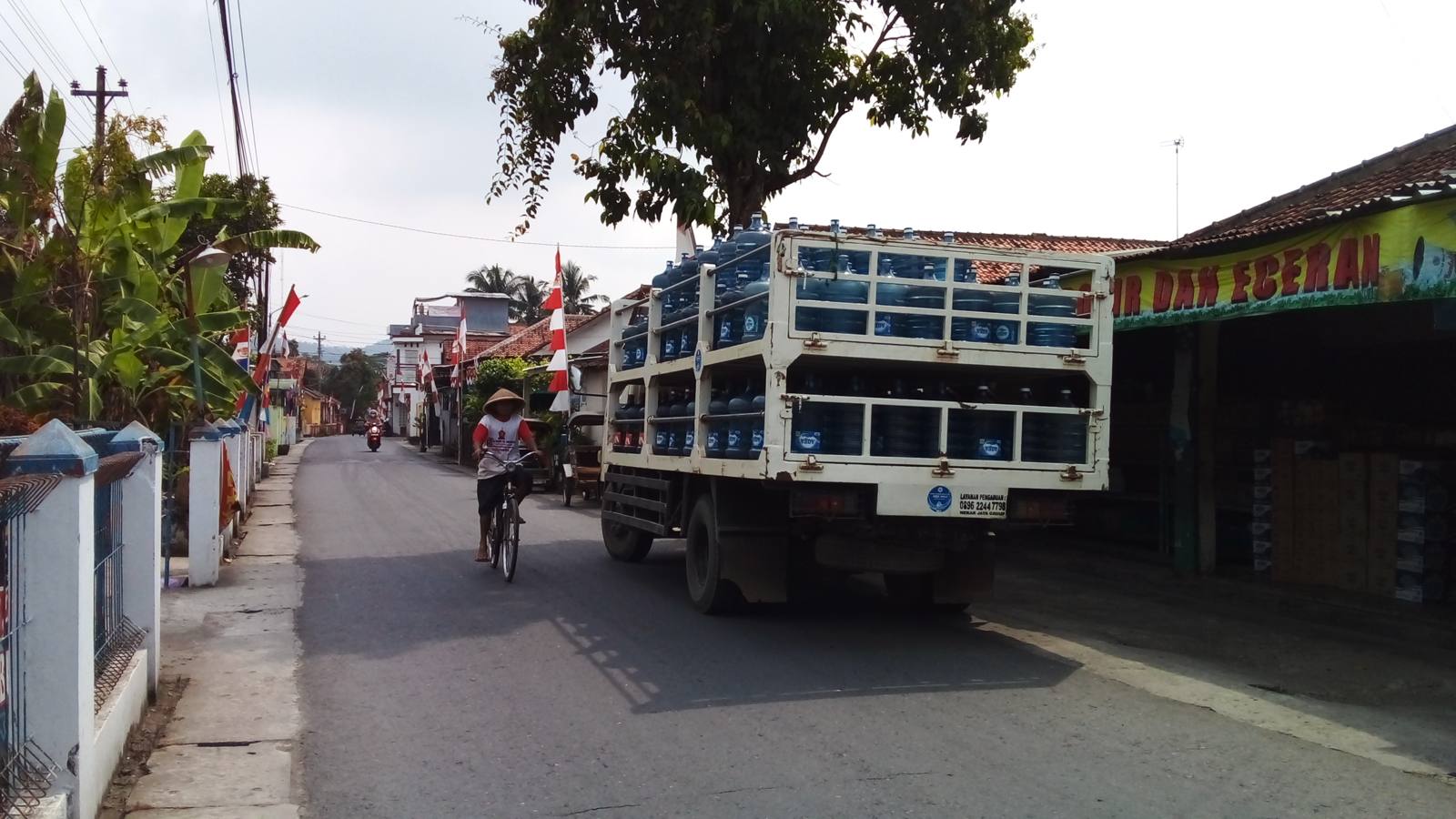 A delivery truck loaded with refill galons of drinking water, on a village street in Indonesia. Photo: SATELITBM / Wikimedia Commons (CC BY-SA 4.0)
Why You Cannot Drink the Tap Water in Bali
Water from a tap can carry germs you cannot see.
The World Health Organization lists diarrhoea, cholera, dysentery, typhoid and polio among the diseases contaminated drinking water can transmit. The CDC adds that contaminated water can look clean and still carry bacteria, viruses and parasites.
Indonesia's own figures explain the caution. In 2020 the health ministry's household water study found that 7 in 10 households drank water contaminated with E. coli. Only 11.9 percent had access to drinking water rated safe, 15 percent in towns and 8 percent in villages.
Two vaccines on the CDC's list for Indonesia guard against illnesses spread this way. The CDC recommends hepatitis A for unvaccinated travellers aged one and over, and typhoid for most travellers. Ask your doctor or travel clinic before you go.
Do Locals Drink Tap Water? Many Buy Water, Many Boil It
Bali households mostly buy their drinking water, and Buleleng leans on its springs.
Statistics Indonesia's 2025 table for Bali shows each household's main source of drinking water:
| Area | Bottled or refill | Tap (piped) | Protected spring or rainwater |
|---|---|---|---|
| Bali | 53.7% | 18.2% | 17.3% |
| Denpasar | 95.1% | 1.5% | not reported |
| Badung | 77.7% | 2.6% | 8.4% |
| Buleleng | 22.0% | 29.3% | 37.8% |
Many households treat their water first. The health ministry's 2020 study report found 59.4 percent of households treated water before drinking it. Almost all of them boiled it.
So some locals do drink tap water, many boil it first, and more buy their water. The same study found refill water the most common main source nationally, used by 31.1 percent of households.
In Singaraja, One Spring-Fed Network Is Built to Be Drunk Unboiled
Buleleng's water company says part of its network is safe to drink straight from the tap.
Perumda Air Minum Tirta Hita Buleleng told NusaBali in July 2025 that one of its networks delivers water safe to drink without boiling. The network started in 1999 and draws on the Mumbul spring in Banjar Jawa, Singaraja. It serves 16,000 customers around the city. The utility says the spring water has passed laboratory tests and the network meets health-ministry rules.
The company has 67,000 customers in 68 villages, so most of its water runs through other lines. It also keeps a public drinking tap at Taman Kota Singaraja, the town park, and has said it plans more. Balipuspanews reported the same park tap in 2022.
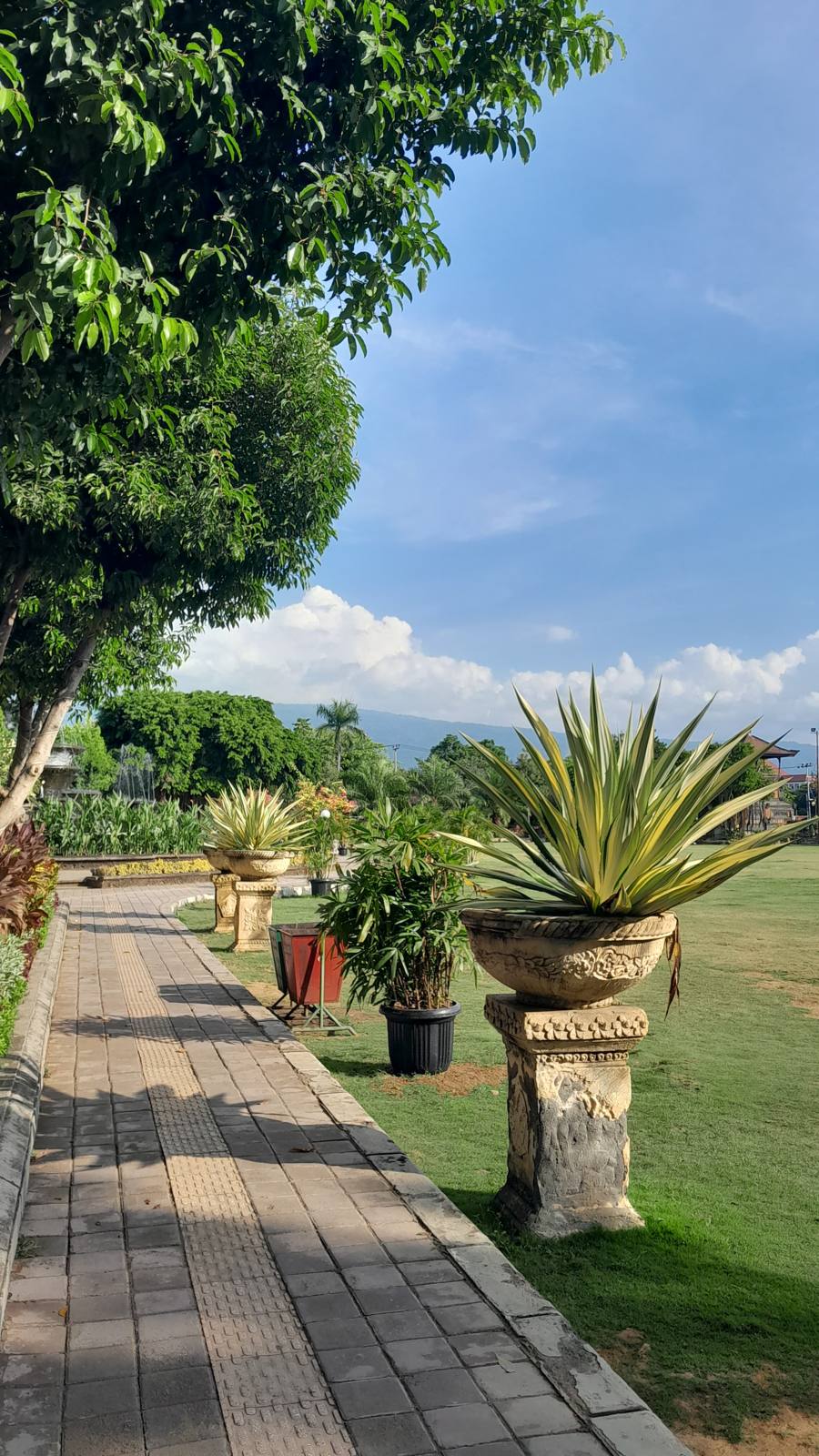 Taman Kota Singaraja, the town park where the water company keeps its public drinking tap. The tap itself is not in the frame. Photo: Tisa0603 / Wikimedia Commons (CC0)
A tap in your room does not tell you which network, well or tank feeds it. Unless your host can show you the supply and its test results, follow the official advice. For the rest of the city, see Singaraja old town.
How to Get Safe Drinking Water in Bali
There are four ways to safe drinking water, from the least effort to the most.
-
Factory-sealed bottled water. The CDC warns that vendors in some countries refill bottles, sometimes faking the seal with a drop of glue. Check the cap before you drink. Sparkling water is a safer bet, since the bubbles show it was sealed at the factory.
-
Bigger bottles and refill galons. Bali's governor has told producers to stop making single-use plastic bottled water under one litre, under Circular No. 9 of 2025. Buy a large bottle or a galon, and fill your own bottle from it.
-
A certified refill depot. Indonesia's rules for refill depots, Health Minister Regulation 43 of 2014, require each depot to hold a hygiene certificate from the regency health office. It must hang where customers can read it, and it lasts three years. The depot must also show where its water comes from and when its filters were last changed.
-
Boiled tap water. The CDC calls boiling the best way to kill disease-causing organisms. Bring the water to a full rolling boil for one minute, or three minutes above about 2,000 metres. Let it cool before you use it.
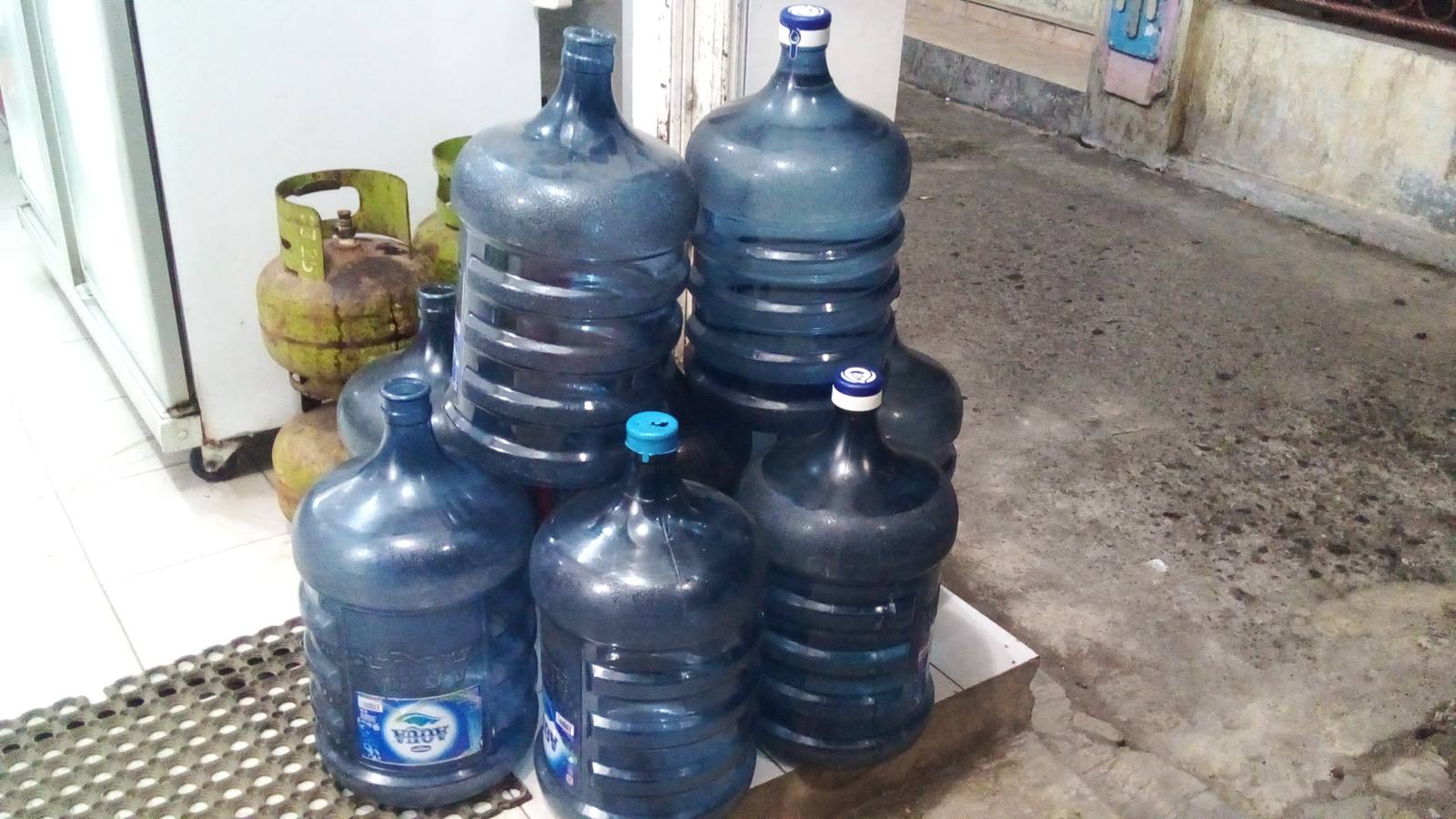 Refill galons of drinking water waiting by a doorway. Photo: SATELIT BM / Wikimedia Commons (CC BY-SA 4.0)
Refill Water Is Only as Good as the Depot
Refill water is cheap and common, and its quality varies.
In December 2024 Indonesia's deputy health minister said refill water filling Jakarta's supply gap had been found contaminated with E. coli. The ministry urged people to drink water from trusted sources licensed by the authorities. That is the reason to look for the certificate on the depot wall.
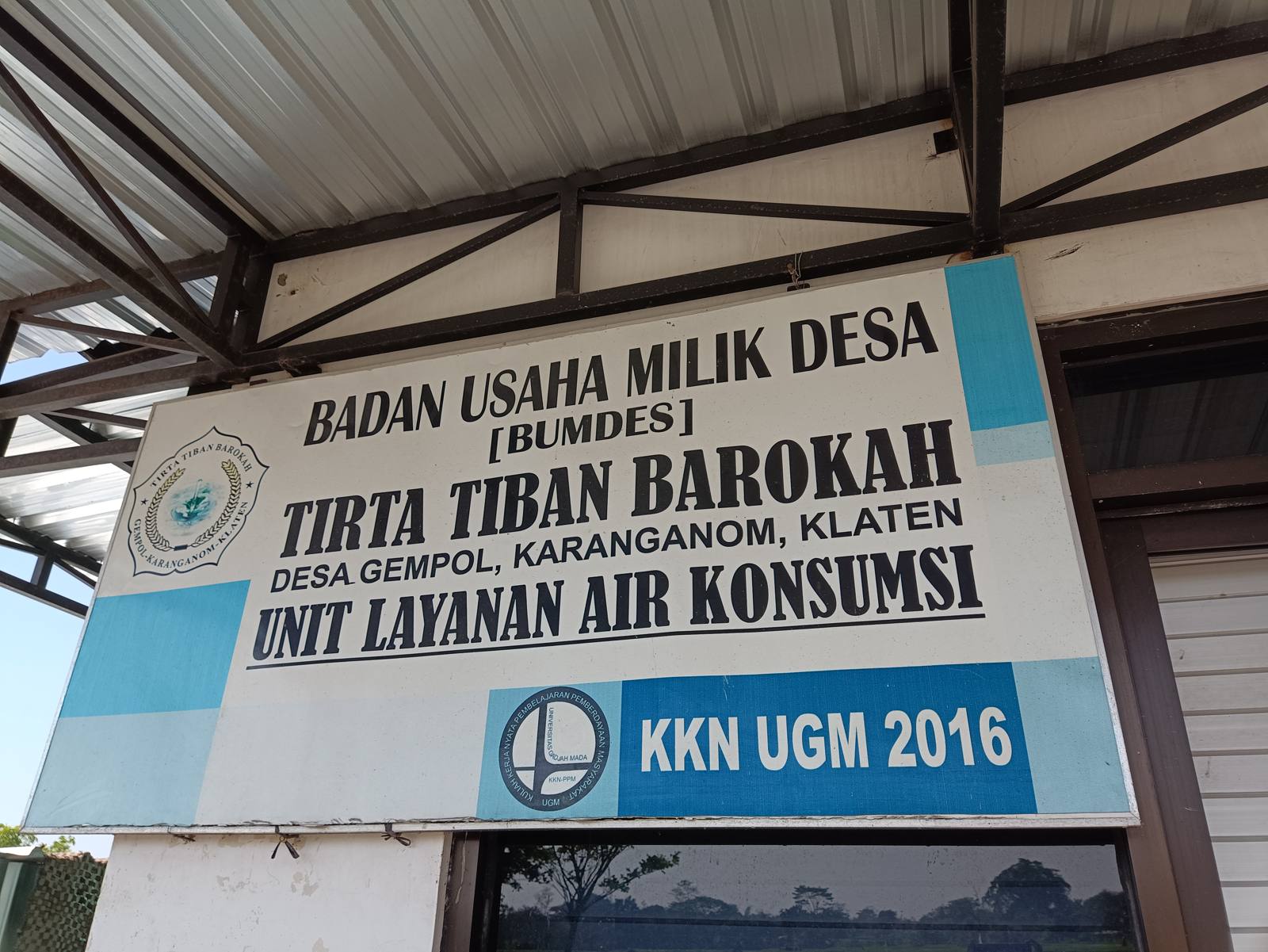 A village-owned drinking-water refill depot in Gempol, Klaten, Central Java. Photo: Urimiana Yola / Wikimedia Commons (CC BY-SA 4.0)
Bottled Water Now Carries the National Standard
Bottled drinking water sold in Indonesia must meet the national standard, SNI. The rule is Industry Minister Regulation 62 of 2024, which Kompas reported would take full effect in October 2026.
Filters and Tablets, If You Treat Your Own
The CDC's water-disinfection page sets out what each method does:
- Portable filters: most do not remove bacteria or viruses. A filter certified to NSF standard 53 or 58 removes parasites.
- Reverse-osmosis filters: remove bacteria and viruses.
- Chlorine or iodine tablets: kill most bacteria and viruses, but not always Cryptosporidium and Giardia. Chlorine dioxide tablets can work against Cryptosporidium.
- Iodine: not for anyone pregnant or with thyroid problems, and not for more than a few weeks.
Brushing Teeth, Showers, Ice and Drinks
The water you drink is only part of it. The CDC and the UK's National Travel Health Network and Centre cover the rest:
- Brushing teeth: use bottled or disinfected water, not water from the tap.
- Showers: avoid swallowing the water.
- Ice: avoid it where you cannot be sure of the water it was made from.
- Coffee and tea: fine when served steaming hot, since the water has been boiled.
- Fountain sodas and fresh juice made by others: the CDC advises against both. Fountain drinks are most likely mixed with tap water.
- Raw fruit and vegetables: peel them yourself, or wash them in bottled or disinfected water.
For how to eat well around these rules, see what to eat in Bali and Bali street food. The island's own drinks, from coconut water to kopi, are in the drinks of north Bali.
Babies and Formula Need Extra Care
The National Travel Health Network and Centre does not recommend bottled water for making up formula. It may carry too much salt and is usually not sterile.
If bottled water is all you have, choose one with under 200 milligrams of sodium and no more than 250 milligrams of sulphate a litre. Boil it to at least 70°C and let it cool before mixing the feed. Natural mineral water is usually not suitable.
If You Get Sick from the Water
Fluids come first if the water does upset your stomach.
The CDC advises drinking plenty of fluids, with oral rehydration solution from a pharmacy in serious cases. Loperamide eases the symptoms. Antibiotics are for severe cases, on a doctor's advice.
The Bali belly guide covers the warning signs and recovery. For clinics and hospitals in the north, see healthcare in north Bali.
Practical Notes
- First morning: buy a large bottle or a galon, and keep a refillable bottle with you.
- In a villa or long-term rental: ask your host where the house water comes from, and whether drinking water is supplied.
- At a refill depot: look for the hygiene certificate on the wall.
- At a warung: order drinks tanpa es (without ice) if you are unsure of the ice.
- Boiling at home: a full rolling boil for one minute, then cool it in a clean, covered container.
- Travelling with a baby: read the formula advice above before you pack.
FAQ
Is tap water safe to drink in Bali? No. The UK government's travel advice states that tap water is not safe to drink in Indonesia, and Bali is part of Indonesia. Drink sealed bottled water, refill water from a certified depot, or tap water you have boiled.
Can you brush your teeth with tap water in Bali? The CDC and the UK's travel-health body both advise brushing with bottled or disinfected water in places where tap water may be contaminated. Keep a bottle by the basin.
Do locals drink tap water in Bali? Some do, and many boil it first. In Statistics Indonesia's survey, 54 percent of Bali households named bottled or refill water as their main drinking source and 18 percent named the tap. In Buleleng, springs and rainwater came first, at 38 percent. Nationally, 59 percent of households treat their water before drinking, almost all by boiling.
Can you drink boiled tap water in Bali? Yes, if it reaches a full rolling boil for one minute, the CDC says. Let it cool in a clean, covered container.
Is the ice safe in Bali? Official travel-health advice is to avoid ice wherever you cannot be sure of the water it was made from. If in doubt, ask for your drink tanpa es, without ice.
Why can't you drink the water in Bali? Much of the water people drink in Indonesia is contaminated. Indonesia's health ministry found in 2020 that 7 in 10 households drank water contaminated with E. coli. The WHO names diarrhoea, cholera, dysentery, typhoid and polio among the diseases such water can spread.
Is there anywhere in Bali you can drink from the tap? Buleleng's water company says one spring-fed network around Singaraja, serving 16,000 customers, is safe to drink unboiled, and it keeps a public drinking tap in the town park. Elsewhere, follow the official advice.
Sources
- UK Foreign, Commonwealth & Development Office, Indonesia travel advice: health, for tap water, read October 2026 (in English)
- US Centers for Disease Control and Prevention, Food and water safety, Avoid contaminated water during travel, Travelers' diarrhea and Indonesia traveler view, for tap water, brushing, ice, boiling, filters, tablets, treatment and vaccines, read October 2026 (in English)
- National Travel Health Network and Centre (UK), Food and water hygiene, for brushing, ice, hot drinks and infant formula, read October 2026 (in English)
- World Health Organization, Drinking-water fact sheet, for diseases spread by contaminated water, read October 2026 (in English)
- Indonesian Ministry of Health, 7 in 10 households drink contaminated water, April 2021, and the SKAM-RT 2020 study report, for contamination, safe access, boiling and refill use, read October 2026 (in Indonesian)
- Indonesian Ministry of Health, Household drinking-water surveillance 2023, December 2024, for contaminated refill water, read October 2026 (in Indonesian)
- Statistics Indonesia, Bali, Households by main source of drinking water, 2025, from the March 2025 Susenas, read October 2026 (in Indonesian and English)
- NusaBali, Tirtha Hita Buleleng keeps its ready-to-drink network, July 2025, and Balipuspanews, Ready-to-drink taps in two parks, February 2022, read October 2026 (in Indonesian)
- Bali Provincial Government, Producers agree to stop plastic bottled water under one litre, June 2025, read October 2026 (in Indonesian)
- Minister of Health Regulation No. 43 of 2014, Hygiene and sanitation of drinking-water depots, read October 2026 (in Indonesian)
- Minister of Industry Regulation No. 62 of 2024, Mandatory SNI for bottled drinking water, and Kompas, Bottled water must carry SNI from October 2026, June 2026, read October 2026 (in Indonesian)
Read next: Bali belly, healthcare in north Bali and the drinks of north Bali.