On this page
In Brief
Sports in north Bali are mostly outdoors, on quiet roads, reefs and mountain trails. Divers and freedivers go to Menjangan and Pemuteran, and cyclists ride the coast road or climb to Munduk.
Hikers walk to waterfalls and through the highlands, and canyoning runs in the river gorges near Gitgit. Lovina's calm water suits snorkeling, kayaking and paddleboarding. Base in Lovina for the coast or Munduk for the highlands, and go early in the day, ideally in the dry season from April to October.
Active North Bali at a Glance
- Cycling: quiet coast roads, plus mountain climbs around Munduk
- Diving and freediving: Menjangan and Pemuteran, with a reef wall and a calm learning bay
- Trekking and hiking: waterfall trails, the Munduk highlands, West Bali National Park
- Canyoning: guided descents in the gorges around Gitgit and Sambangan
- Running: the calm coast at dawn, the cooler highlands for gradient
- Water sports: snorkeling, kayaking and SUP on flat Lovina water
- Why here: quiet roads, with reefs, waterfalls and forest close by
- Best time: the dry season, April to October, and early mornings
Why the North Suits Active Travel: Quiet Roads, Calm Sea, Cool Hills
The north has quiet roads, cooler highlands a short climb away and a flat, calm sea. Reefs, waterfalls and forest are close to where you stay.
Pemuteran has large areas of shallow reef, sheltered from strong currents and waves. Above Munduk, the lakes are ringed by protected forest.
For cyclists, divers, hikers and runners, that mix is rare. You can ride an empty coast road at dawn, dive by mid-morning and hike to a waterfall in the afternoon.
Seven Ways to Be Active in North Bali
Cycling: Flat Coast Roads and Hard Climbs to Munduk
The coast road between the villages is flat, scenic and quiet, good for relaxed riding.
For climbers, the roads up to Munduk and the highland lakes are a real test. They switchback through rice terraces and coffee country into cool mountain air. Mountain-bike trails run through the plantations and forest.
Bring or rent a decent bike, ride early before the heat and carry water. Ask your villa about bike rental and guided rides, and check the bike over before you take it.
Diving and Freediving: Menjangan's Wall and Pemuteran's Calm Bay
Menjangan Island and Pemuteran are the north's dive sites. Menjangan has a dramatic wall, clear water and healthy coral. Pemuteran's calm bay suits beginners and is ideal for learning to freedive.
Courses, fun dives and freediving sessions all run from Pemuteran. The full detail is in the diving and snorkeling guides.
Trekking and Hiking: From Gentle Walks to the Sekumpul Canyon
The north's trails range from gentle to strenuous:
- the waterfall trails in the hills behind the coast
- the Sekumpul canyon trek
- the Munduk highland walks past lakes and plantations
- the birding trails in West Bali National Park
Good footwear, an early start and water are the constants.
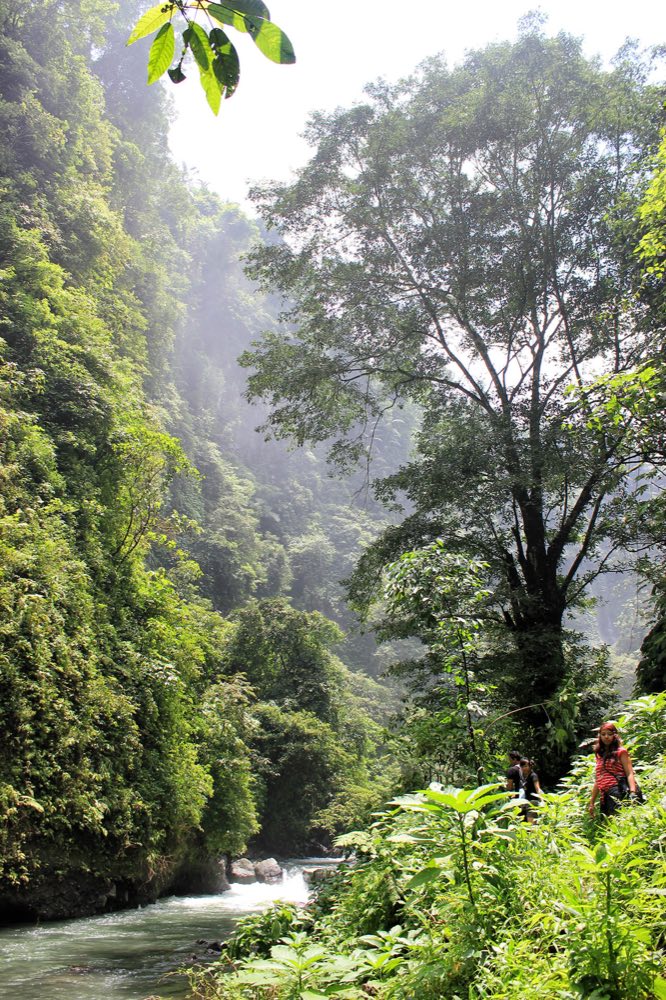 The trail into the Sekumpul gorge. Photo: Ciousmagz / Wikimedia Commons (CC BY-SA 3.0)
Canyoning: Abseils, Slides and Jumps in the Gorges near Gitgit
Canyoning means following a river down its gorge on foot, on a rope and in the water. You abseil beside or through waterfalls, slide down rock the current has polished smooth, jump into pools and swim the stretches in between.
In north Bali it runs in the steep volcanic gorges of Sukasada, around Gitgit and Sambangan, where the rivers leave the Bedugul highlands. Both operators below base their trips there. The tourist waterfall at Gitgit is a viewing stop, and the canyon trips run in the gorges around it.
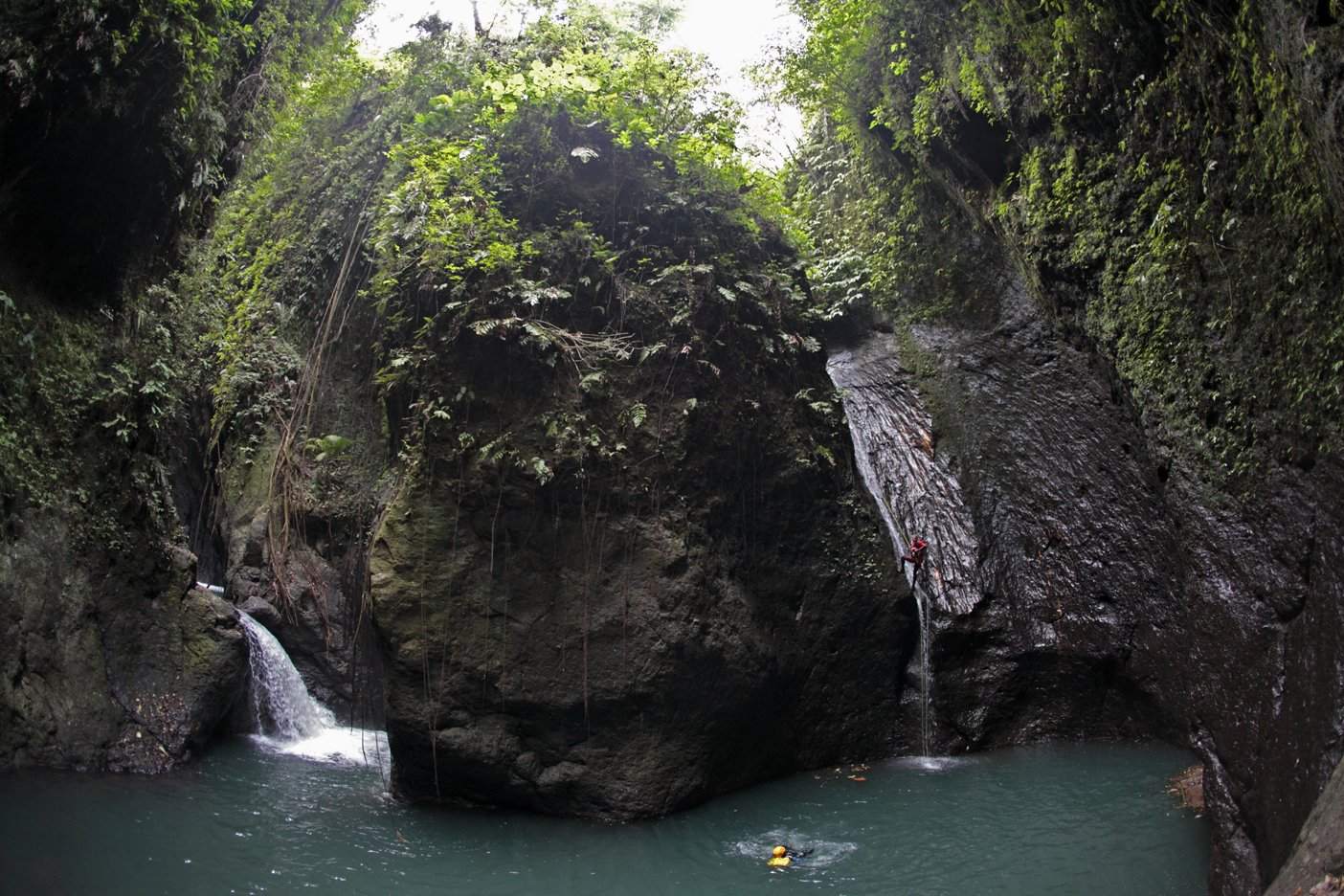 Canyoning in the Aling Gorge, one of the volcanic gorges of Sukasada district in Buleleng. Photo: Dleex07 / Wikimedia Commons (CC BY-SA 3.0)
Two established operators publish their canyons in detail, which is the first thing to look for.
Adventure & Spirit runs guided canyoning in the Kerenkali gorge near Gitgit. Their site lists the canyons, the day's shape, age and swimming requirements and what is included. Read it there before you book, since the details change by season.
Canyoning Bali grades its trips from beginner to intermediate. Egar Canyon near Gitgit is the gentle one, open to children from eight with no swimming ability required. Aling Canyon in Sambangan is intermediate, needs strong swimmers aged 17 and over, and runs only in the dry season, June to October.
Both operators publish their grades, age limits and current rates on their own sites. Trips typically confirm on a minimum number of people, so book direct and ask which canyons are running when you want to go.
What to expect of your body. Beginner canyons ask for reasonable fitness and a head for heights. The harder part is the cold, because hours in shaded mountain water chill you even in a wetsuit. Leave jewellery at the villa, and tell the guides before you start if you are nervous about a drop. On the published beginner trips the jumps are optional, and the abseils do the work instead.
Season and safety. The dry months give the most predictable water. After heavy rain, river levels in these gorges rise fast, and a good operator will switch you to a gentler canyon or cancel.
Choose a company that names its canyons, its certification and the equipment it provides. If a street stall offers canyoning with none of that, walk on.
For the rope-free version, local guides at Aling-Aling run the natural slides and cliff jumps. The north Bali waterfalls guide maps the gorges these rivers carve.
Running: Flat Coast at Dawn, Gradient in the Hills
The calm north coast is a fine place to run at dawn, flat, scenic and cool before the sun is up. For tougher sessions, the highland roads around Munduk give you altitude and gradient.
As anywhere in Bali, run early, hydrate hard, and mind the traffic and dogs on village roads.
Water Sports: Kayaks and Paddleboards on Lovina's Flat Water
Lovina's calm, small-wave water suits snorkeling, kayaking and stand-up paddleboarding, and it is good for families and beginners. The dawn dolphin boats are the signature trip on the water.
The north coast has no surf, so this is the place for flat-water sports rather than waves.
Football: the Local Passion
Football is the local passion here, as across Indonesia. A village match or a kick-about on the beach at dusk is part of north-coast life, and watching or joining in is a friendly window into daily life.
How to Build an Active Trip: Lovina for the Coast, Munduk for the Hills
Base in Lovina for the coast: cycling, running, water sports and diving day trips west. Base in Munduk for the highlands: climbing, trekking and cool air.
A week lets you combine both. The general planning is in the north Bali travel guide and the things to do guide.
Best Time and Practicalities: Dry Season, Early Starts
The dry season, April to October, gives the firmest trails, the calmest seas and the most reliable riding. BMKG publishes its dry-season forecast each year.
Whatever the sport, go early. Mornings are cooler, the light is better, the sea is calmer and the roads are quietest.
Hydrate more than you think you need to, and use sun protection on the water and the bike. In the wet season, check conditions before you commit to a dive or a long trail.
FAQ
Is north Bali good for cycling? Yes. The coast road is flat, scenic and quiet, and the climbs up to Munduk and the highland lakes are a serious test through rice terraces and coffee country.
Where is the best diving in north Bali? Menjangan Island and Pemuteran, with a dramatic wall, clear water and a calm bay that also suits learning to dive or freedive. See the diving and snorkeling guides.
Can you surf in north Bali? Not really, because the north coast is calm, surf-free water. That makes it ideal for snorkeling, kayaking, SUP and swimming. Surfers head to Bali's south coast.
What sports can you do in north Bali? Cycling, diving and freediving, trekking to waterfalls and in the highlands, canyoning near Gitgit, running on the calm coast and flat-water sports off Lovina, all on quiet roads and trails.
Can you go canyoning in north Bali? Yes, in the river gorges around Gitgit and Sambangan. Operators such as Adventure & Spirit and Canyoning Bali run guided descents with abseils, slides and jumps, from beginner trips open to children up to intermediate canyons for strong swimmers, with transfers from anywhere on the island.
Is north Bali good for trekking? Yes. The waterfall trails, the Sekumpul canyon trek, the Munduk highland walks and the West Bali National Park birding trails range from gentle to strenuous.
When is the best time for active travel in north Bali? The dry season, April to October, and early mornings in any season, for cooler temperatures, calmer seas, firmer trails and quieter roads.
Sources
- Adventure & Spirit, website (canyoning in the north Bali gorges, the canyons run, and the grades, age limits and swimming requirements published per canyon), read September 2026
- Canyoning Bali, website (its own grading from beginner to intermediate, the Egar and Aling canyons, age and swimming requirements, seasonal running and minimum group size), read September 2026
- Buleleng Regency tourism office, watersports in Buleleng and snorkelling on the Visit North Bali directory (the coast's listed water activities, and the calm, small-wave water off Lovina that suits beginners and families), read September 2026
- Karang Lestari Pemuteran, about the project (Pemuteran's large areas of shallow reef, sheltered from the strong currents and waves of other Bali coasts, and the Biorock reef restoration run there with the village, dive shops and hotels), read September 2026
- Balai Konservasi Sumber Daya Alam (BKSDA) Bali, Danau Buyan and Danau Tamblingan conservation area (the nature tourism park and protected forest around the highland lakes above Munduk), Indonesian, read September 2026
- BMKG, Indonesian Agency for Meteorology, Climatology and Geophysics, seasonal prediction (the yearly dry-season forecast), Indonesian, read September 2026
Read next: things to do in north Bali for the full list, north Bali snorkelling for the reefs, and Menjangan Island for the wall dives.