On this page
- In Brief
- North Bali at a Glance
- On the Sea: Calm Water for Boats, Reefs and Swimming
- Waterfalls: Where the Highlands Drop to the Coast
- Temples and Culture: the North's Own Carving, Music and Memory
- Villages and Highlands: Crater Lakes, Coffee and Old Villages
- Wellness: Hot Springs and Holy Water
- Adventure: Ropes, Bikes and the National Park
- Adventure Operators with Their Details in Public
- How to Fit It Together: Three Days from Lovina, or a Week
- Best Time to Visit: the Dry Season, and Mornings
- Practical Notes
- FAQ
- Sources
In Brief
Most things to do in north Bali sit within an hour or two of Lovina. The headline days are a sunrise dolphin boat, the waterfalls inland with Sekumpul first, and snorkelling or diving at Menjangan and Pemuteran.
Add the Banjar hot springs, the Munduk highlands and their twin lakes, and the carved temples around Singaraja. For adventure, guided canyoning runs in the river gorges around Gitgit and Sambangan, and Aling-Aling has natural rock slides and cliff jumps.
The 25 experiences below are grouped by the kind of day they make, from the sea to adventure. Each entry links to its own full guide.
North Bali at a Glance
- Base: Lovina for the coast and most day trips, Munduk for the highlands, Pemuteran for the reefs
- Signature experience: wild dolphins off Lovina at sunrise
- Big nature: Sekumpul waterfall, the Menjangan reefs, Lakes Buyan and Tamblingan
- Adventure: canyoning in the gorges around Gitgit, cliff jumps at Aling-Aling
- Easy wins: Banjar hot springs, Gitgit waterfall, Brahma Vihara Arama
- How long: 3 days for the highlights, a week to go deep
- Best time: the dry season, April to October
On the Sea: Calm Water for Boats, Reefs and Swimming
The north coast faces the calm Bali Sea, so the water here is for swimming, snorkelling and boats rather than surf.
1. See the Dolphins at Sunrise
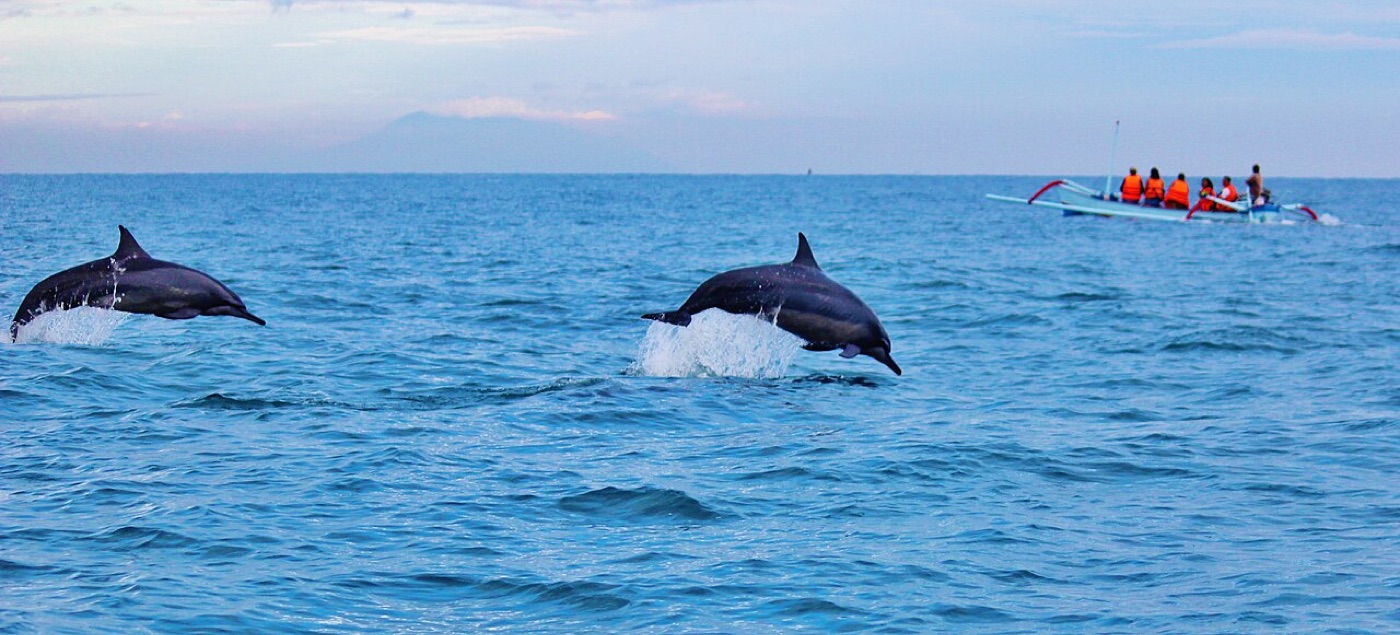
This is the trip north Bali is known for. Traditional jukung outriggers leave the Lovina shore before dawn to find the wild spinner and bottlenose dolphins offshore, and the trip is over by breakfast.
Choose a captain who cuts the engine near the pod instead of chasing it. Book the afternoon before, through where you stay or with a captain on the beach. Timing, ethics and how to pick a boat are in the complete Lovina dolphins guide.
Where: Lovina coast, dawn departure.
2. Snorkel or Dive Menjangan Island
Menjangan is an uninhabited island inside West Bali National Park, with some of the clearest water in Bali and one of its best-known reefs. Divers get a wall that drops into blue, and snorkellers get shallow coral gardens.
You can only go by boat and with a registered park guide. Dive centres and lodges in Pemuteran run the day trips, and from Lovina it makes a long day. The Menjangan Island guide covers the crossing, the sites and the fees.
Where: off the northwest coast, by boat from Pemuteran or Labuan Lalang.
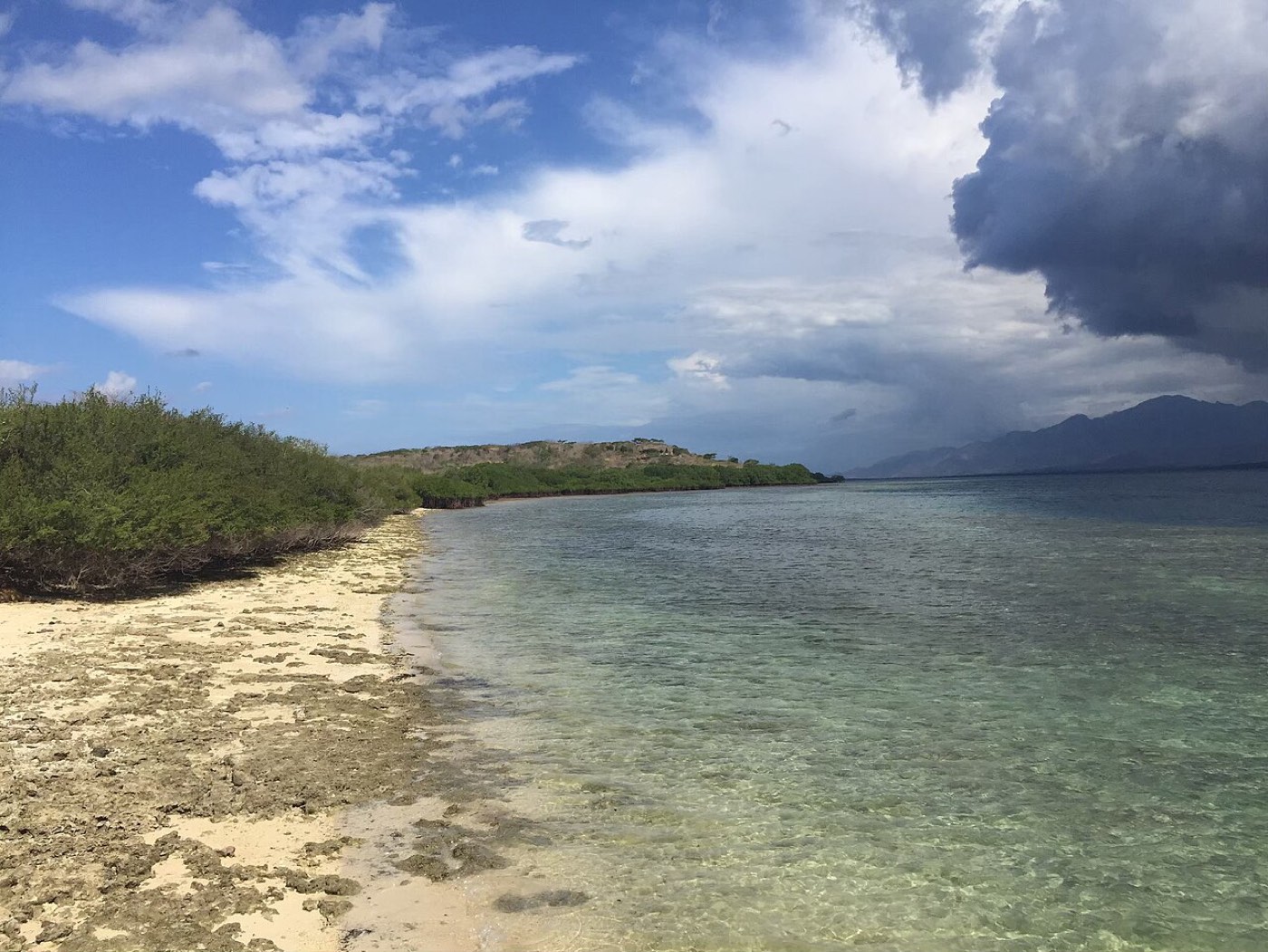 Menjangan Island's coral-sand shore. Photo: Winsonchu95 / Wikimedia Commons (CC BY-SA 4.0)
3. Swim Over the Biorock Reefs at Pemuteran
Pemuteran Bay holds Karang Lestari, a Biorock reef restoration built with the village, its dive shops and hotels. It describes itself as the largest Biorock coral nursery and restoration project in the world.
More than sixty steel structures, grown thick with coral with the help of a low electric current, spread over about two hectares just off the sand. You wade in from the beach and snorkel over them.
The bay is calm enough for beginners to learn to dive, and it is the natural base for Menjangan. See diving and snorkelling in Pemuteran, and the north Bali snorkelling guide for the rest of the coast.
Where: Pemuteran, far northwest.
4. Walk Out to Gili Putih, the Sumberkima Sandbar
Gili Putih is a small bank of white sand in the sea off Sumberkima, a short way west of Pemuteran. It grows and shrinks with the tide. Fishing boats run you across in a few minutes, and at low tide people wade.
It is small and simple, with only a couple of gazebos for shade, so go for an hour with water and a hat. The details are in the Gili Putih section of the best beaches in north Bali.
Where: Sumberkima, Gerokgak, near Pemuteran.
5. Swim and Paddle Off Lovina's Black Sand
Lovina's water is some of the calmest sea in Bali. That makes the black-sand beaches at Kalibukbuk and its neighbours easy swimming, and good for children.
Kayaks and stand-up paddleboards suit the flat water. The Lovina beach guide covers where to swim and when, and the sports guide the water sports.
Where: Kalibukbuk and the villages either side.
Waterfalls: Where the Highlands Drop to the Coast
The central highlands drop steeply to the coast here, which is why the north is so rich in falls. The north Bali waterfalls guide maps them all.
6. Trek Down to Sekumpul, and Fiji Falls Beside It
Sekumpul is a cluster of tall drops at the bottom of a jungle canyon, often called the most beautiful waterfall in Bali. A local guide is required and included in the gate fee, and the trek down and the climb back out take up most of the visit.
In the same valley, a short walk on, three parallel falls pour off one cliff at Fiji Waterfall, covered by the same ticket and guide. See the Sekumpul waterfall guide and Fiji Waterfall.
Where: Sekumpul village, about an hour inland from Lovina.
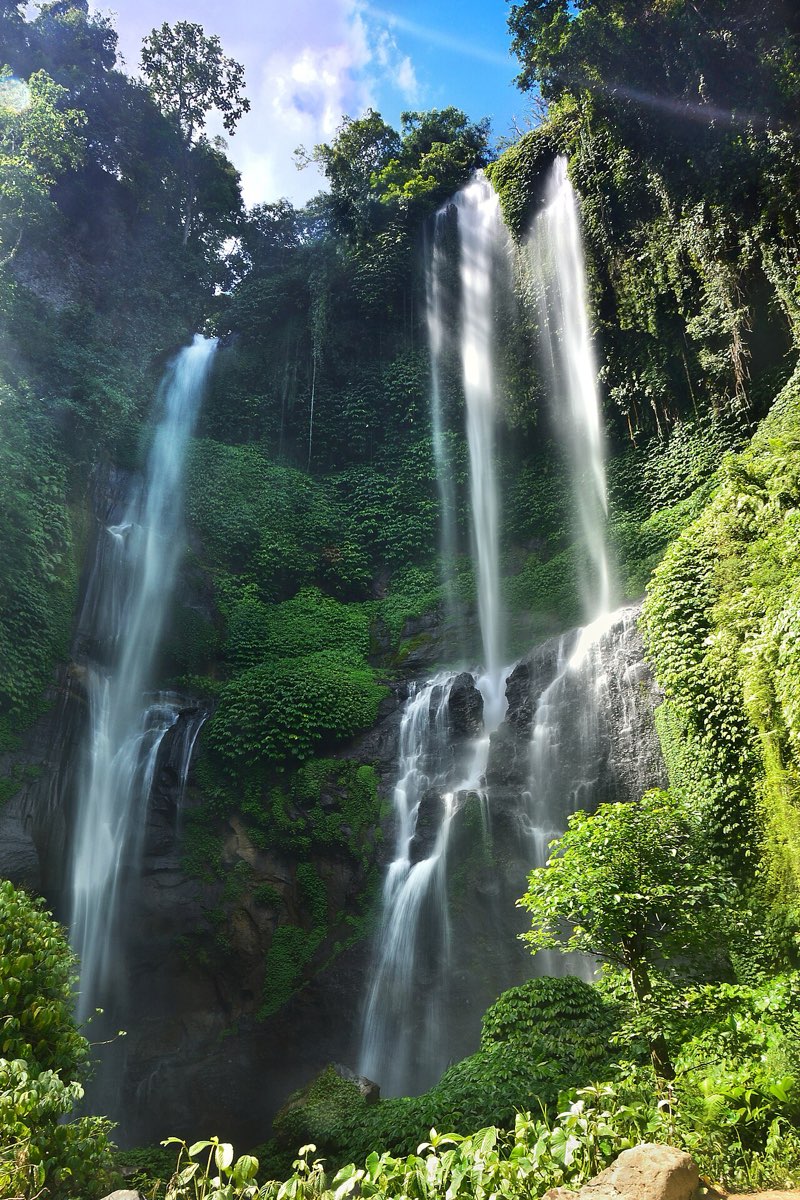 Sekumpul's main falls from the canyon floor. Photo: Putu Andika Panendra / Wikimedia Commons (CC BY-SA 4.0)
7. Jump and Slide at Aling-Aling
Aling-Aling is the waterfall you visit for what you do in it. Above the main drop, the river has worn natural slides and jump points into the rock, and local guides take you through them.
After heavy rain some jumps close on safety grounds. The Aling-Aling guide explains the guide system and which jumps suit whom.
Where: Sambangan, Sukasada, about 40 minutes from Lovina.
8. Stop at Gitgit on the Mountain Road
Gitgit is one of the most accessible waterfalls in the north, a short path from the main Bedugul road through plantation to a single clean drop. There is no canyon to descend, no guide to hire and no river to cross.
It is the easy stop on the drive between the coast and the highlands. See Gitgit waterfall.
Where: Gitgit, on the main road south of Singaraja.
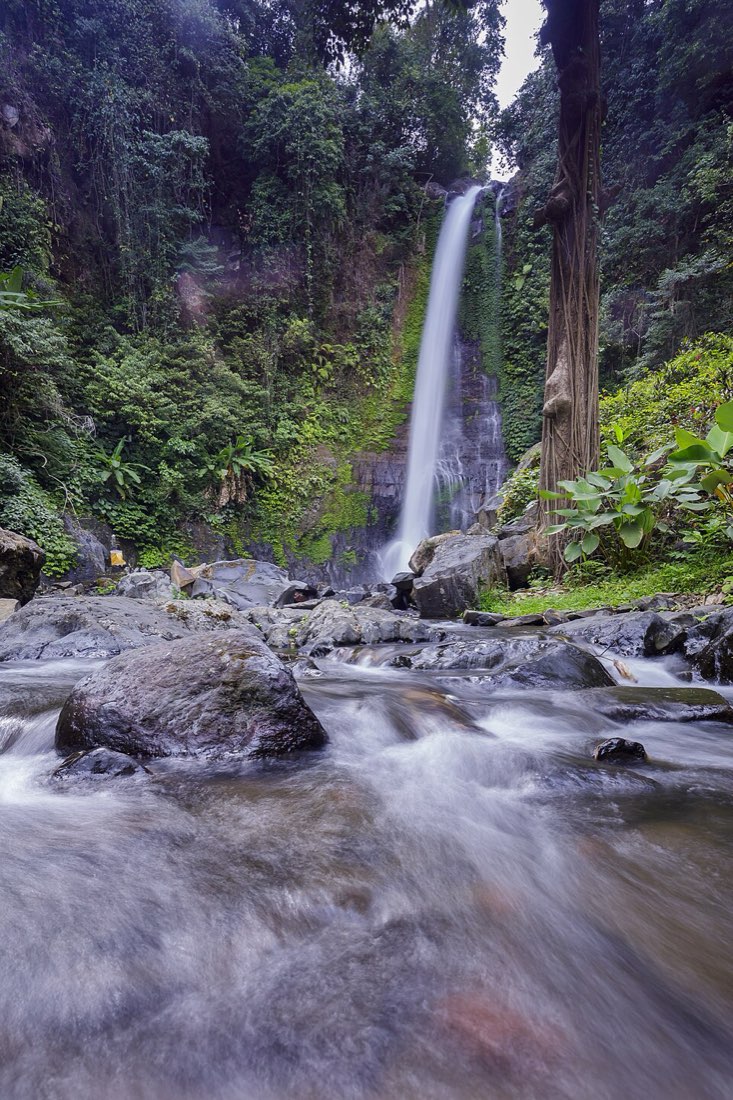 Gitgit's main drop. Photo: Thomas Fuhrmann / Wikimedia Commons (CC BY-SA 4.0)
9. Hike the Munduk Waterfall Trails
Around Munduk, walking paths link several falls through coffee and clove gardens:
- Munduk Waterfall, close to the village
- Melanting, further along
- Golden Valley, in the hills nearby
- Banyumala, also in the hills nearby
The cool air makes this some of the most comfortable waterfall walking in Bali. The routes are in Munduk waterfalls and hiking.
Where: Munduk highlands, about an hour from Lovina.
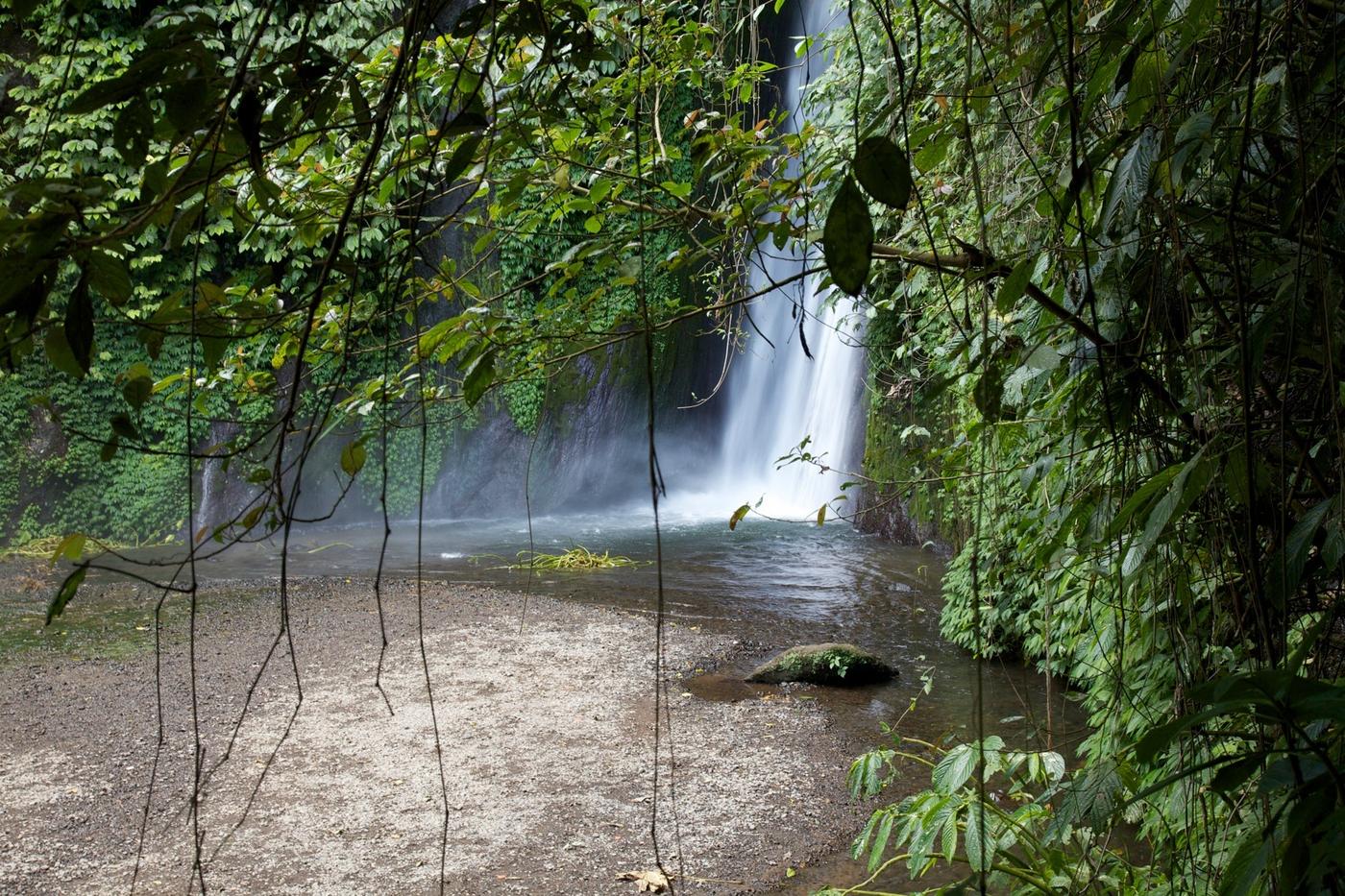 Munduk Waterfall's amphitheater pool. Photo: Jean-Marie Hullot / Wikimedia Commons (CC BY 3.0)
Temples and Culture: the North's Own Carving, Music and Memory
North Bali carves its temples in its own style and keeps its own music. It was also the island's capital for most of a century, and these are the places where you see it.
10. Visit Brahma Vihara Arama
Brahma Vihara Arama is, by its own account, Bali's largest Buddhist monastery. It is set in terraced gardens in the hills above Banjar, with a small replica of the Borobudur stupa.
It is a working monastery that welcomes quiet visitors, and it pairs with the Banjar hot springs a few minutes away. See Brahma Vihara Arama.
Where: hills above Banjar, about 20 to 30 minutes from Lovina.
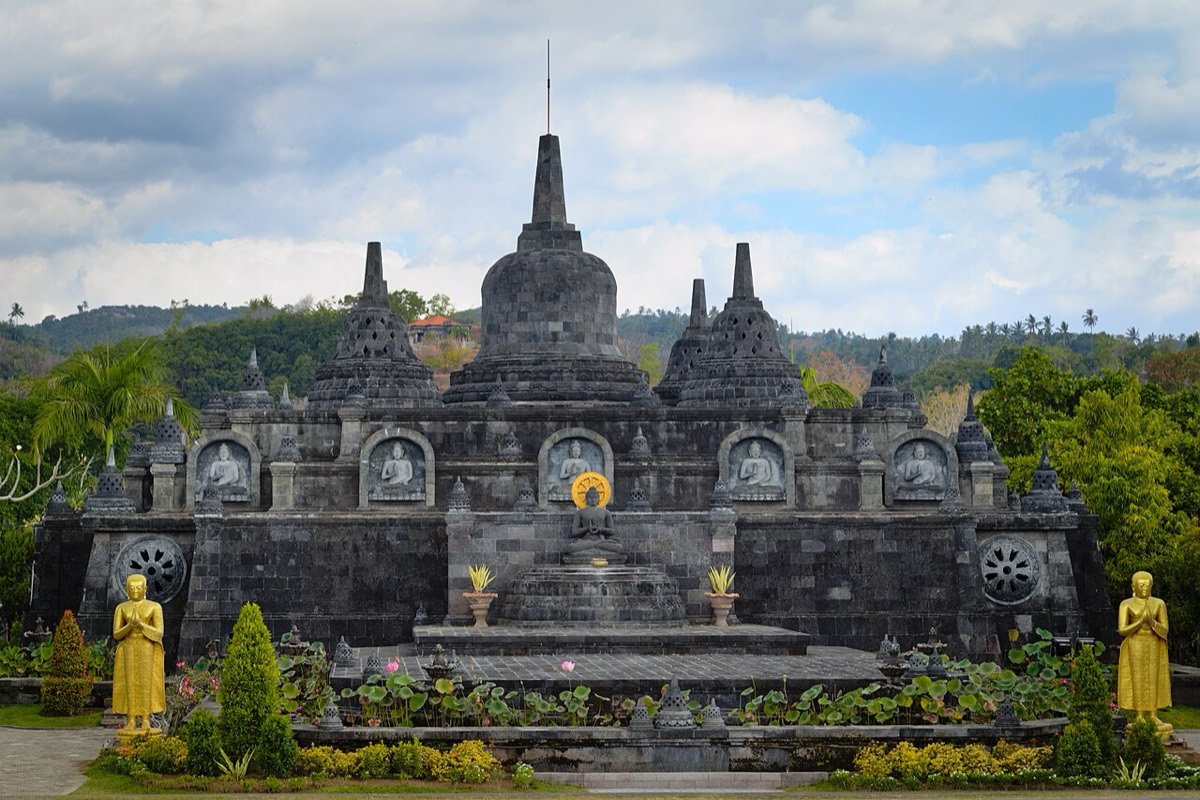 The Borobudur replica at Brahma Vihara Arama. Photo: Enrico Strocchi / Wikimedia Commons (CC BY-SA 2.0)
11. Stop at Pura Pulaki on the Road West
Pura Pulaki is a sea temple built against a sheer black cliff, guarded by troops of long-tailed macaques. It sits right on the coast road between Lovina and Pemuteran, so it costs no detour, and 20 to 30 minutes is enough.
Bring a sarong and keep a hand on your sunglasses. See Pura Pulaki.
Where: northwest coast road, just east of Pemuteran.
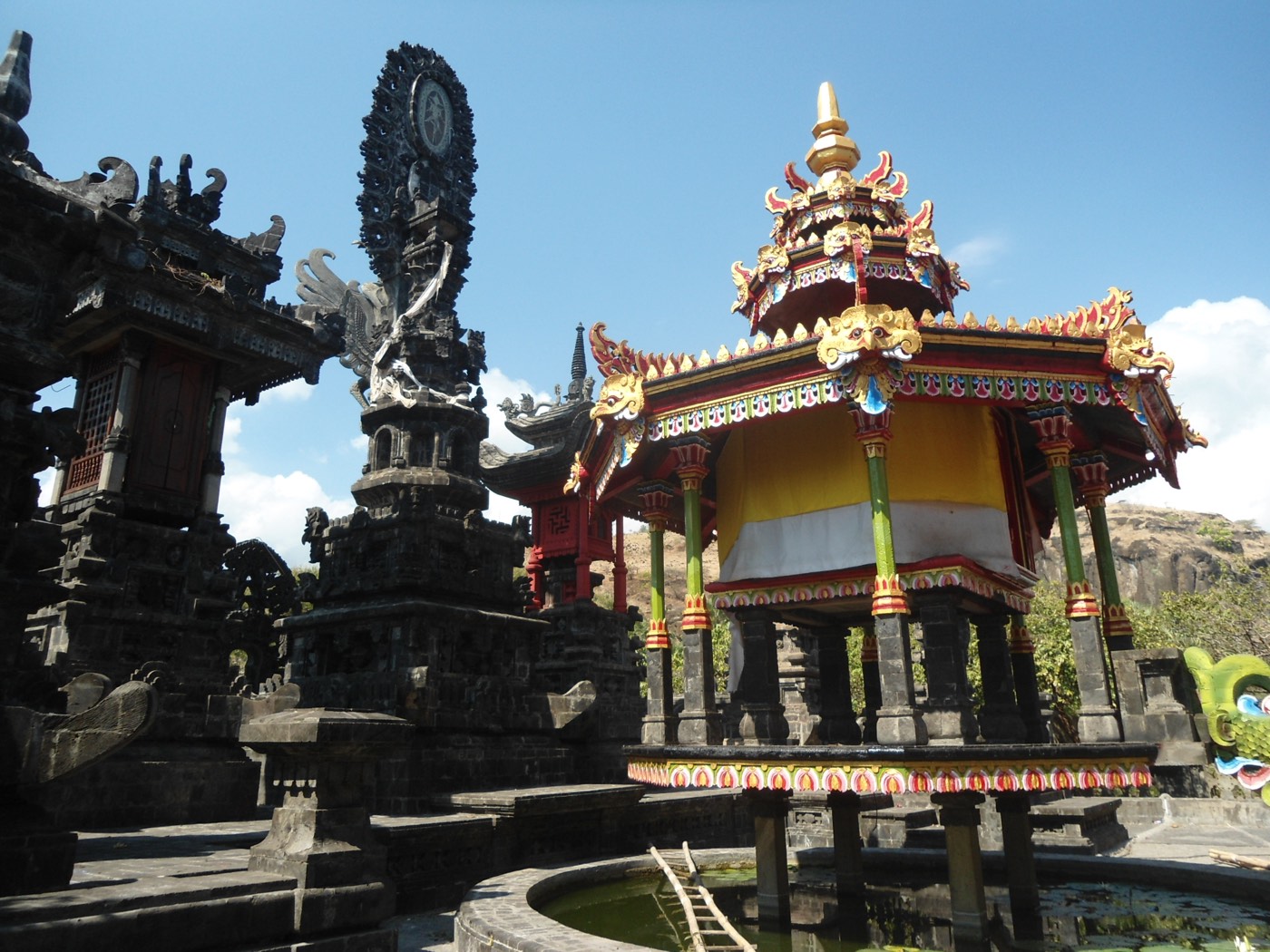 The Pura Pulaki courtyards against the cliff. Photo: DayakSibiriak / Wikimedia Commons (CC BY-SA 4.0)
12. See the Carved Temples of Sangsit and Kubutambahan
East of Singaraja, Pura Beji at Sangsit is a subak temple to Dewi Sri, the rice goddess. Its pink sandstone is carved over almost every surface.
Nearby, Pura Meduwe Karang holds the celebrated relief of a Dutchman riding a bicycle, carved during the rebuilding completed in the 1930s. The regency's account says a Dutch visitor on a bicycle asked to be depicted, and gave a donation to the temple.
Buleleng's culture office describes the carving here as the Buleleng type, large and bold because the hard local stone resists fine work. The regency names Pura Beji and Meduwe Karang together as carriers of the north's decoration. The two temples side by side show that style at full strength.
In the same district, the village of Bengkala has its own sign language, Kata Kolok, shared by deaf and hearing villagers. See the best temples in north Bali.
Where: Sangsit and Kubutambahan, east of Singaraja.
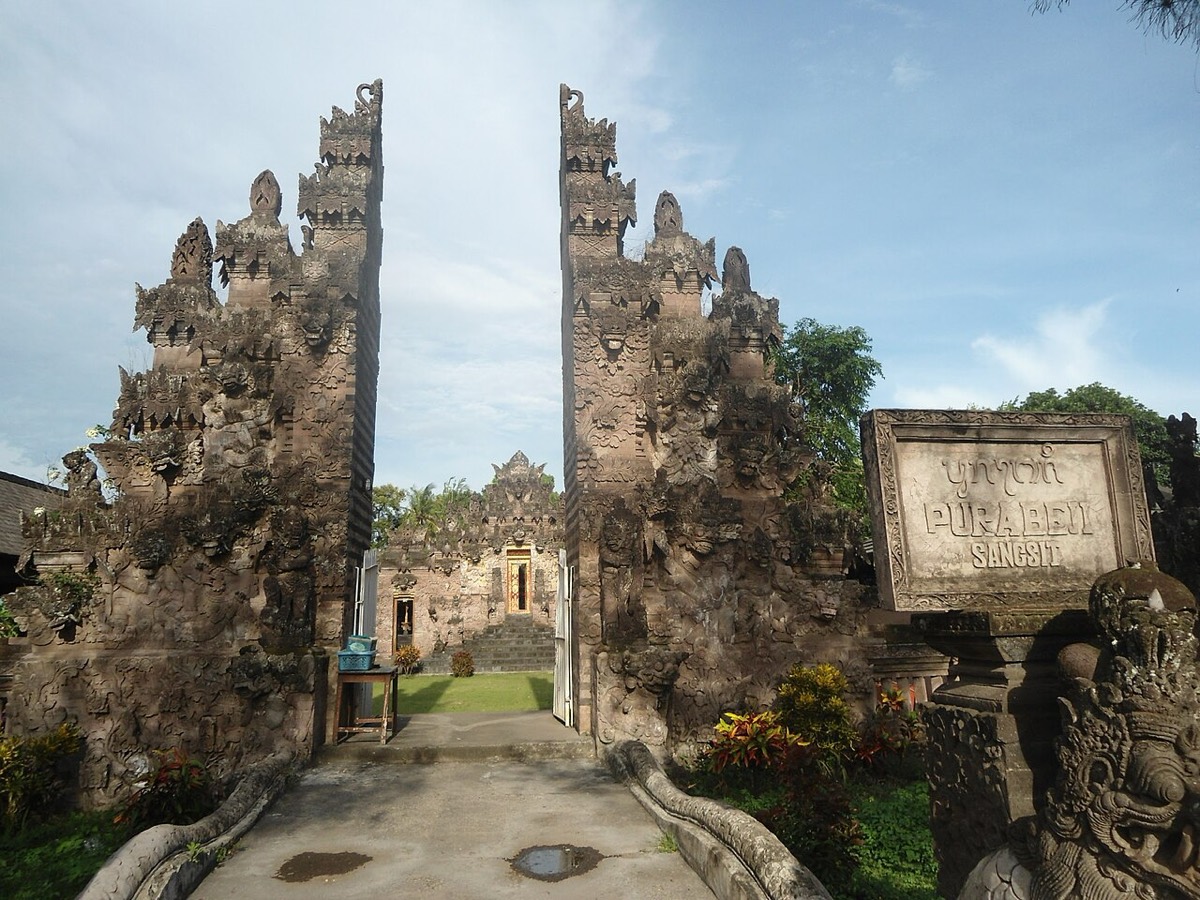 The carved gates of Pura Beji, Sangsit. Photo: DayakSibiriak / Wikimedia Commons (CC BY-SA 4.0)
13. Read Bali's Memory at Gedong Kirtya, Singaraja
Gedong Kirtya is a working library of lontar, manuscripts inscribed by hand on dried palm leaves, kept in the old colonial capital. Today it is looked after by Buleleng's culture and tourism office, which lists it among its museum services.
Around four thousand lontar are kept here in wooden boxes. It is small and quiet, and one of very few places still preserving the craft.
Walk on to the old harbour and the Chinese temple to see how Singaraja grew as a trading port. See Gedong Kirtya and Singaraja old town.
Where: Singaraja, about 20 minutes east of Lovina.
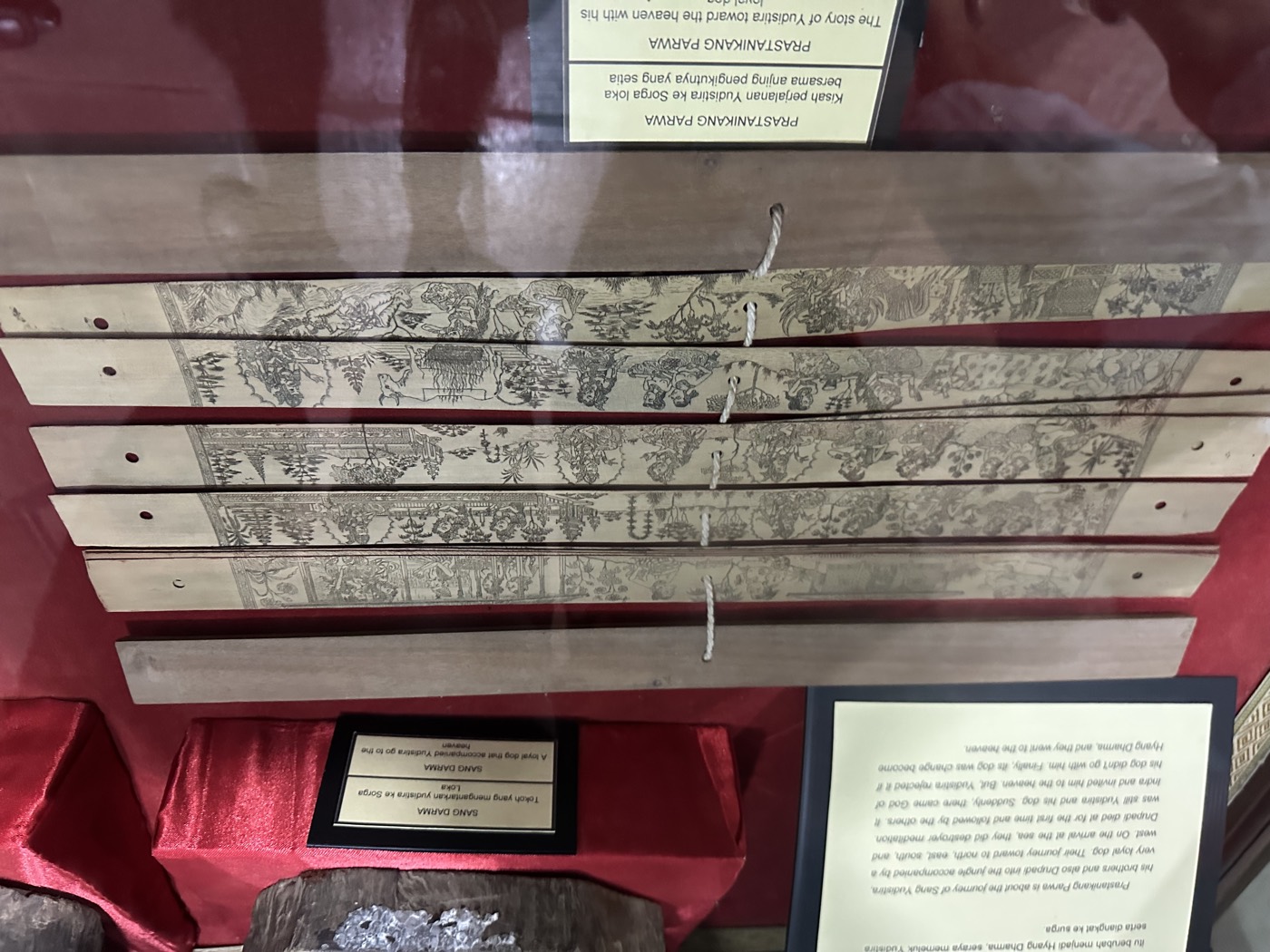 Illustrated lontar strips of the Prastanikang Parwa on display at Gedong Kirtya. Photo: Hanno Lans / Wikimedia Commons (CC BY 4.0)
14. Hear Gong Kebyar Where It Was Born
Gong kebyar, the fast, explosive gamelan style that became the sound of modern Balinese music and dance, emerged in Buleleng in the early twentieth century.
Hear it at a temple ceremony, a village rehearsal or the big summer festivals. The Lovina Festival fills the beach in late July, and Bulfest takes over central Singaraja in August. See north Bali dance and music, the Buleleng Festival and the events calendar for dates.
Where: across Buleleng, with festivals in Kalibukbuk and Singaraja.
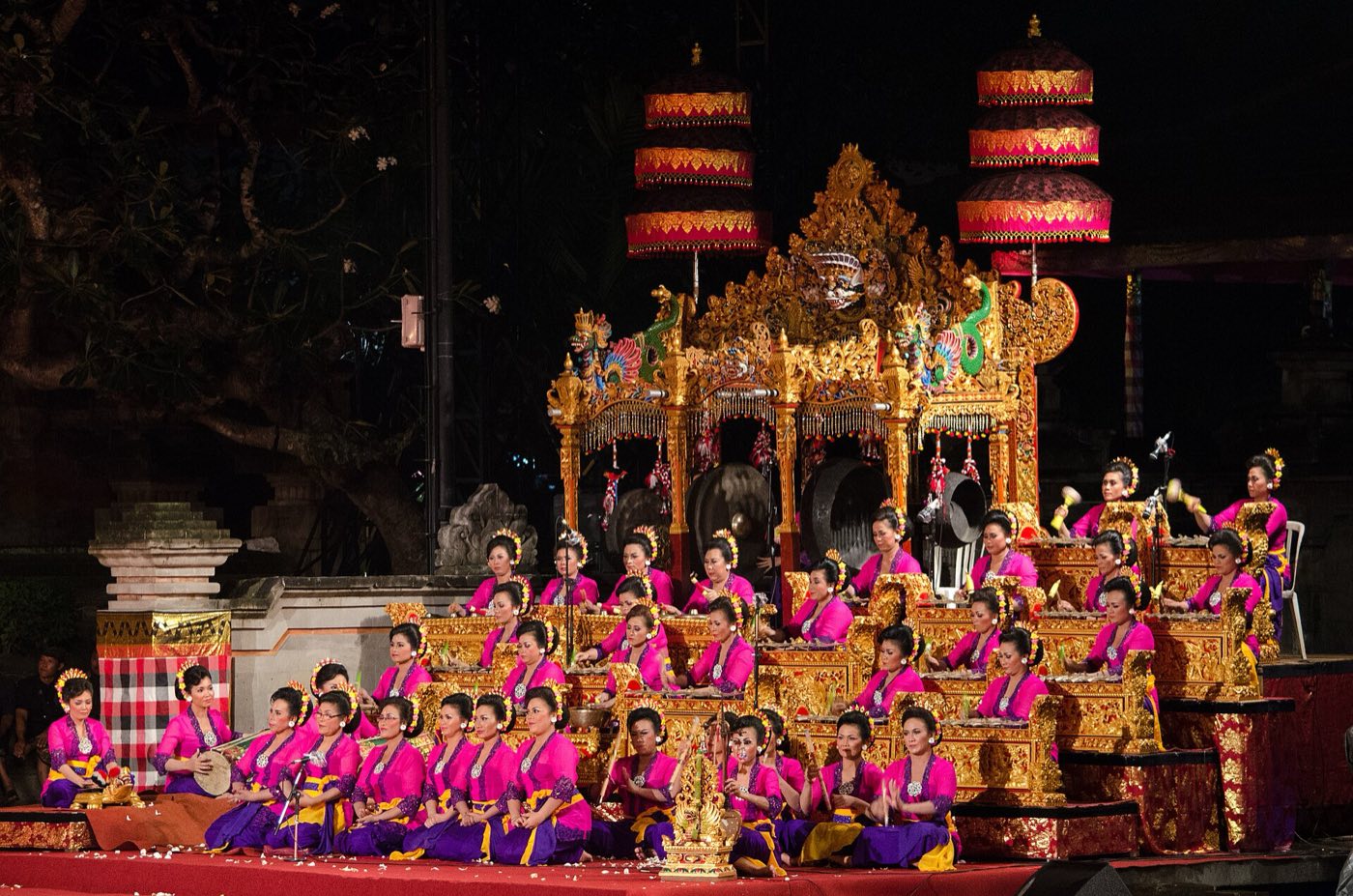 A gong kebyar ensemble in full flight. Photo: Benjamin Hollis / Wikimedia Commons (CC BY 2.0)
15. Watch the Sapi Gerumbungan Bull Races
Pairs of decorated bulls wearing wooden bells pull a rider on a wooden skid along a track. They are judged on style and bearing as much as speed.
It is a deeply local event. Recent Lovina Festivals have staged a sapi gerumbungan contest at Kaliasem, though the regency sets the schedule fresh each year. See Sapi Gerumbungan.
Where: Kaliasem, Lovina.
Villages and Highlands: Crater Lakes, Coffee and Old Villages
Inland, the north climbs into cool crater-lake country and the old villages of the Buleleng hills.
16. Look Over the Twin Lakes, Buyan and Tamblingan
Buyan and Tamblingan are two crater lakes below the Munduk ridge, often wrapped in morning cloud. The view from the Wanagiri ridge shows both at once, and on the quieter Tamblingan side dugout canoes still cross the water.
See the twin lakes guide, and Wanagiri Hidden Hills for the ridge's paid photo platforms. The Munduk guide covers staying up in the highlands.
Where: between Munduk and Bedugul.
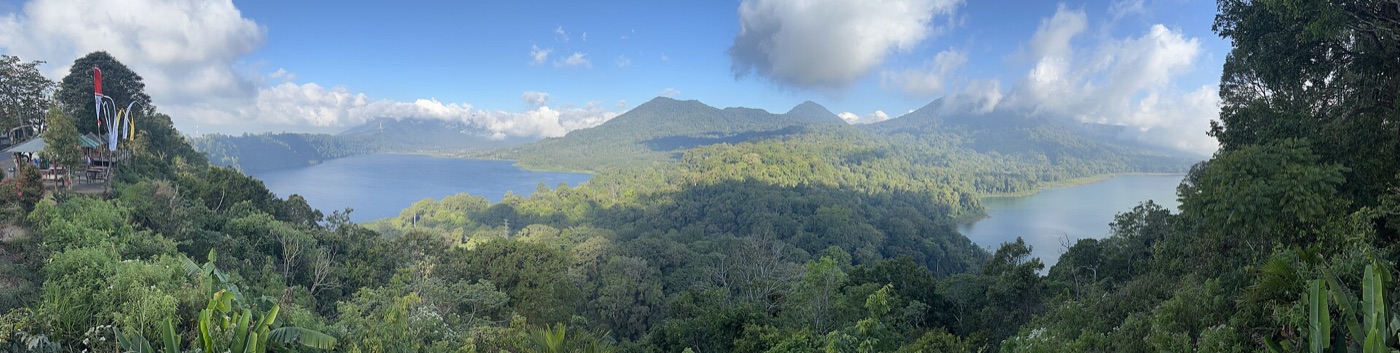 Buyan and Tamblingan from the Wanagiri ridge, one valley split by a green seam. Photo: Stefan Fussan / Wikimedia Commons (CC BY-SA 3.0)
17. Walk a Munduk Coffee Farm
The hills around Munduk are smallholder coffee and spice gardens. The families who farm them run short walks from cherry on the bush to wood-fire roasting, ending with a tasting on a bench over the valley.
Allow about an hour. The Munduk coffee plantations guide explains how to find an honest one.
Where: Munduk and the villages along the ridge.
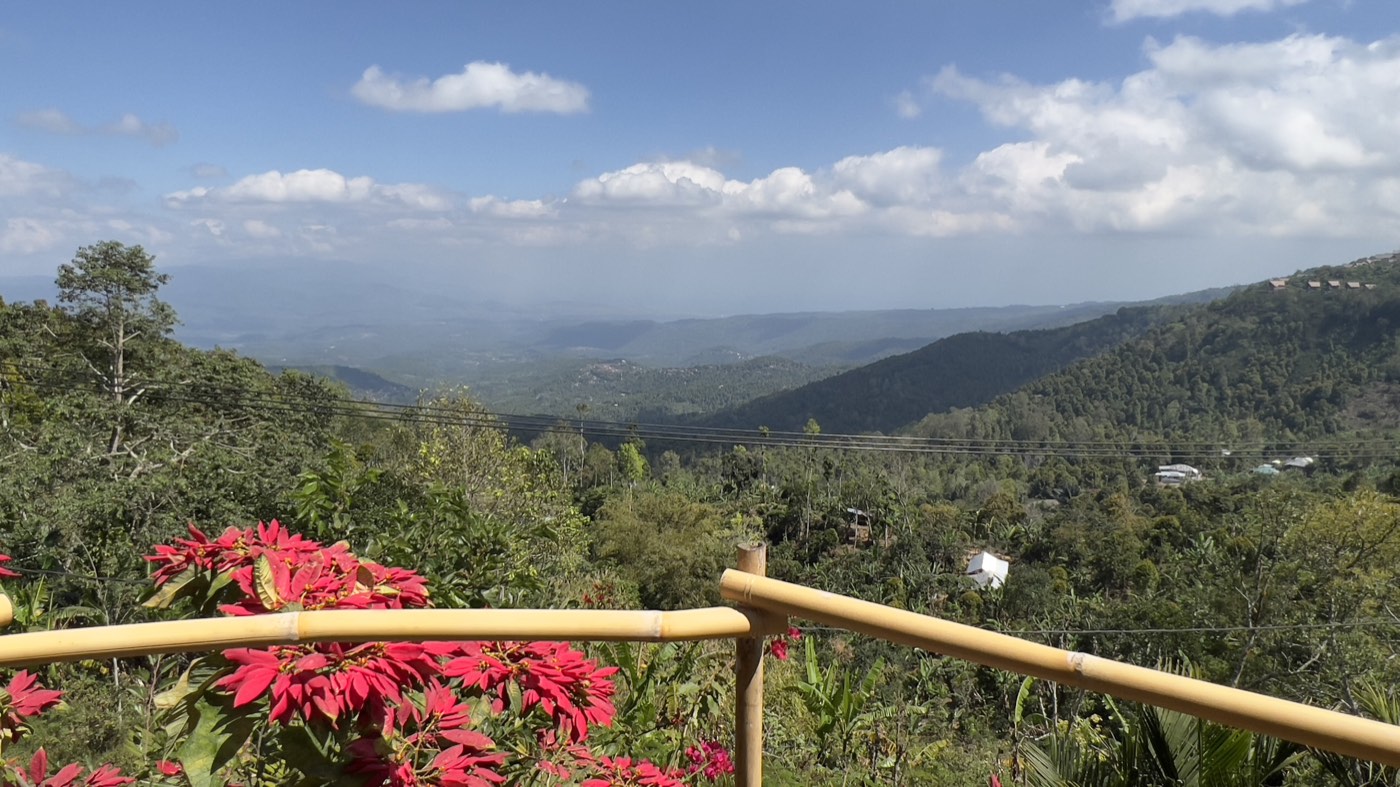 The valley view from a Munduk coffee farm. Photo: Stefan Fussan / Wikimedia Commons (CC BY-SA 3.0)
18. Meet the Bali Aga Villages
The Bali Aga, the island's original communities, live in the Buleleng hills, in villages such as Pedawa, Tigawasa, Sidatapa and Sembiran. They keep customs older than the Hindu-Javanese kingdoms, in architecture, ceremony and even how they treat their dead.
Visit with a local guide and a light footprint. See Bali Aga villages of north Bali.
Where: the hills above Banjar and the northeast coast.
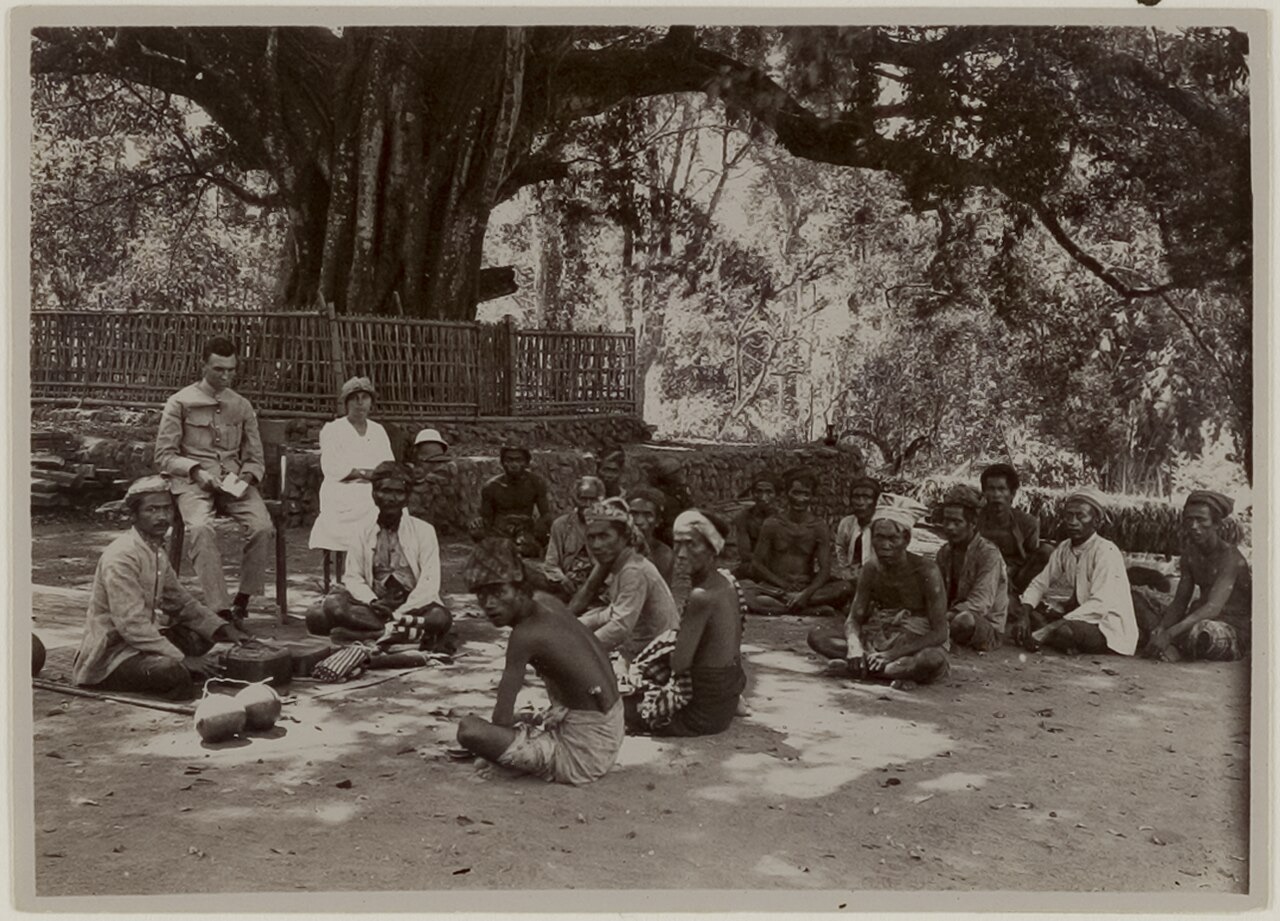 Sembiran's village square during a Dutch colonial visit, early 20th century. Photo: W. Smit / KITLV via Wikimedia Commons (CC BY 4.0)
19. Spend a Day on the Quiet Northeast Coast
East of Singaraja the tourists thin out. Tejakula is a working fishing village with black-sand beaches, outriggers on the shore and an old horse-bathing temple.
A little further on, above Les village, Yeh Mampeh drops as one tall ribbon at the end of a gentle jungle walk. See Tejakula and Yeh Mampeh waterfall.
Where: Tejakula and Les, about an hour east of Lovina.
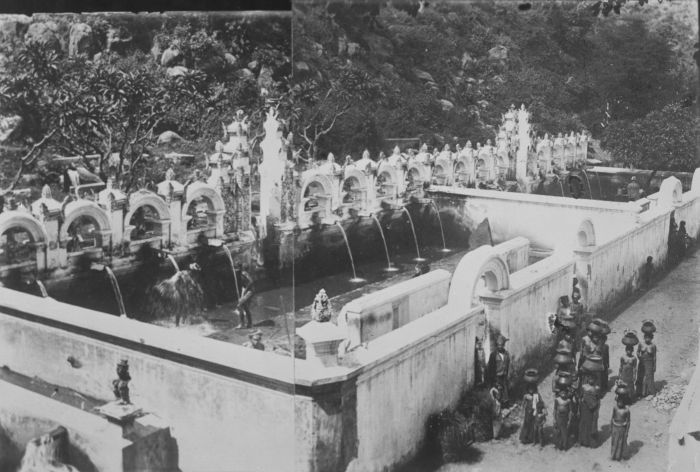 The Tejakula bathing place, photographed around 1900. Photo: Tropenmuseum / Wikimedia Commons (CC BY-SA 3.0)
20. See Working Rice Terraces at Busungbiu and Sudaji
The terraces of the north are farmed under subak, Bali's cooperative water system, and they see few crowds.
The Kekeran terraces in Busungbiu sit beside the road from Pupuan down to Seririt. Sudaji, a registered tourism village east of Singaraja, runs treks through its terraced fields toward the Sekumpul and Lemukih waterfalls. The subak guide explains the system and lists where to go.
Where: Busungbiu in the west, Munduk in the highlands, Sudaji in the east.
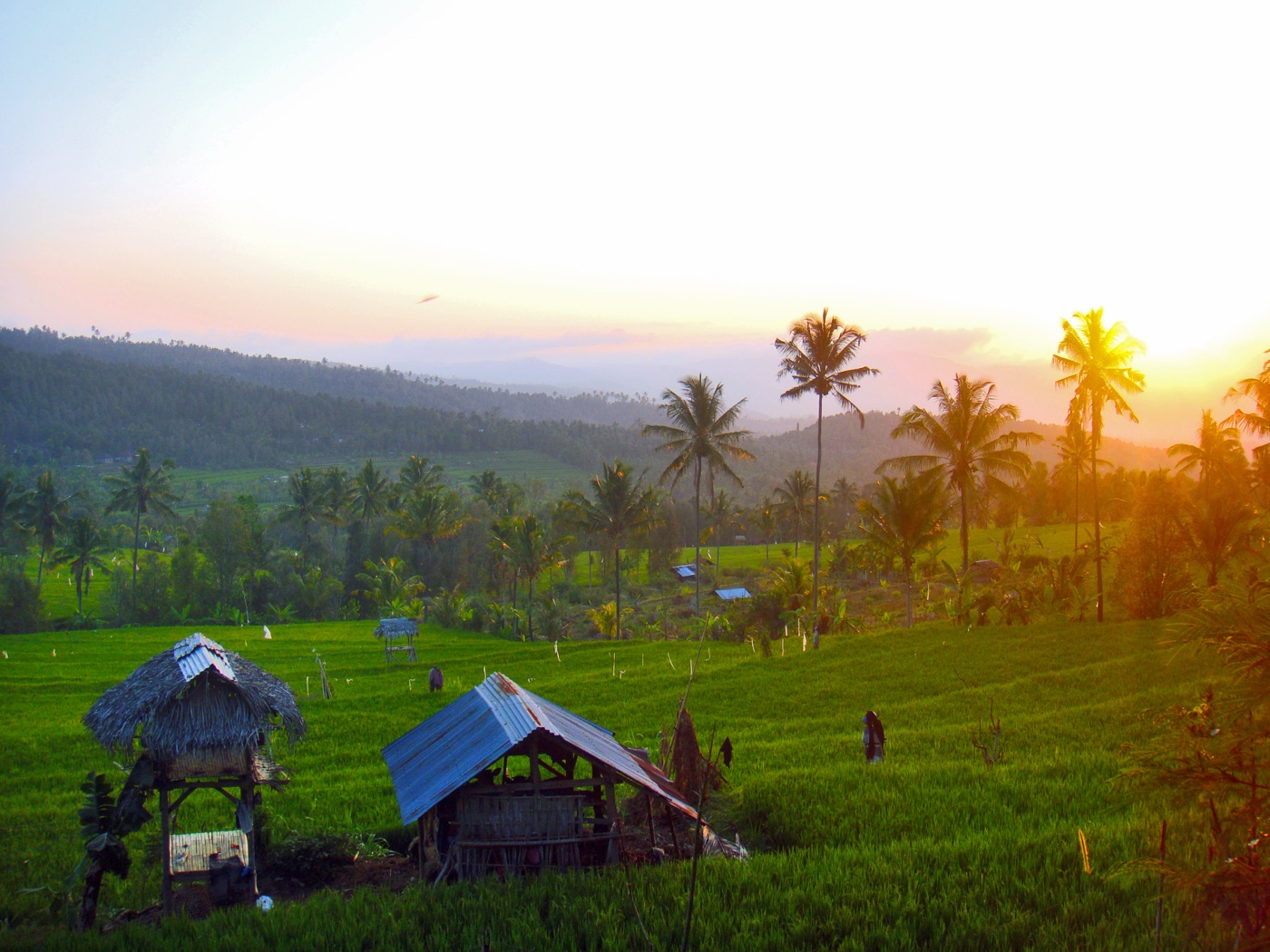 Evening over the rice fields near Banyuatis, west of Munduk. Photo: musnahterinjak / Wikimedia Commons (CC BY-SA 3.0)
Wellness: Hot Springs and Holy Water
21. Soak at Banjar Hot Springs
Natural sulphur springs feed tiered stone pools through carved naga spouts, in a shaded jungle garden west of Lovina.
Come early for the quiet hour before the tour groups, and fold it into a morning with the dolphins or the monastery. See Banjar Hot Springs.
Where: Banjar, about 20 to 30 minutes west of Lovina.
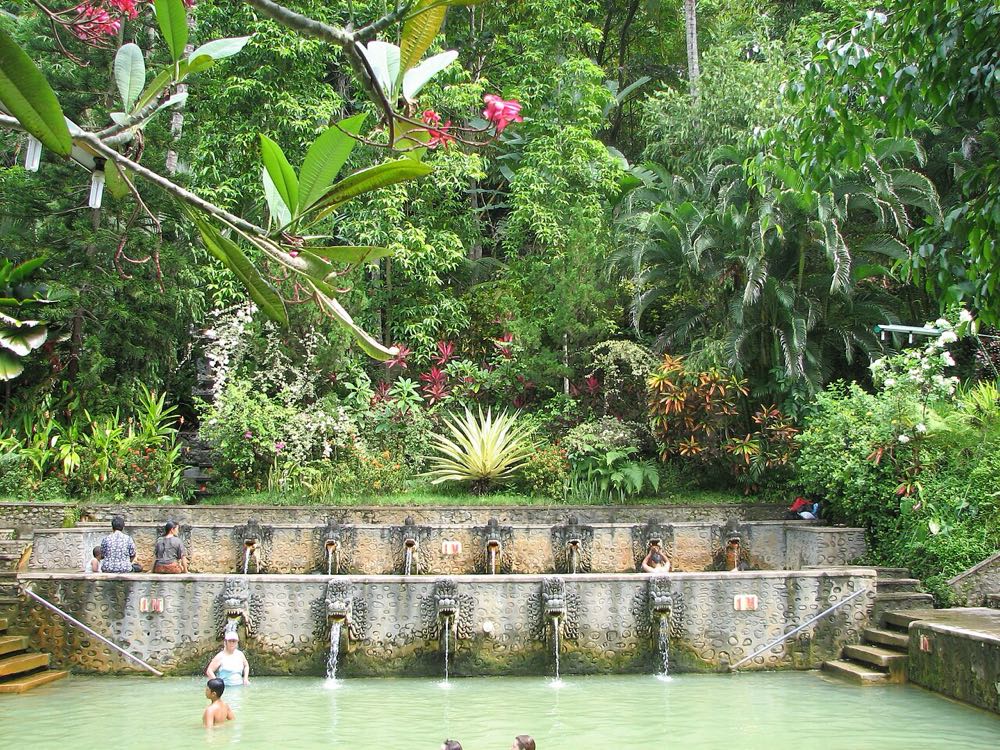 The naga-spout pools at Banjar. Photo: Eric Bajart / Wikimedia Commons (CC BY-SA 3.0)
22. Take Part in a Melukat Purification
Melukat is the Balinese Hindu cleansing ritual in which you receive a blessing and pass beneath holy spring water, praying at each spout.
It is open to respectful visitors. The north has quiet settings for it, including the site below the coastal temple of Ponjok Batu. See melukat, Balinese water purification.
Where: spring temples across the north, with Ponjok Batu on the northeast coast.
Adventure: Ropes, Bikes and the National Park
23. Go Canyoning in the Gorges Above Gitgit
The river gorges around Gitgit and Sambangan are where the canyoning operators take you. You abseil down waterfalls on a rope, slide down polished rock, jump into pools and swim between drops.
Beginner trips exist, and some canyons can be run all year. The canyoning section of the sports guide names two established operators and what each trip asks of you.
Where: Gitgit and Sambangan, Sukasada.
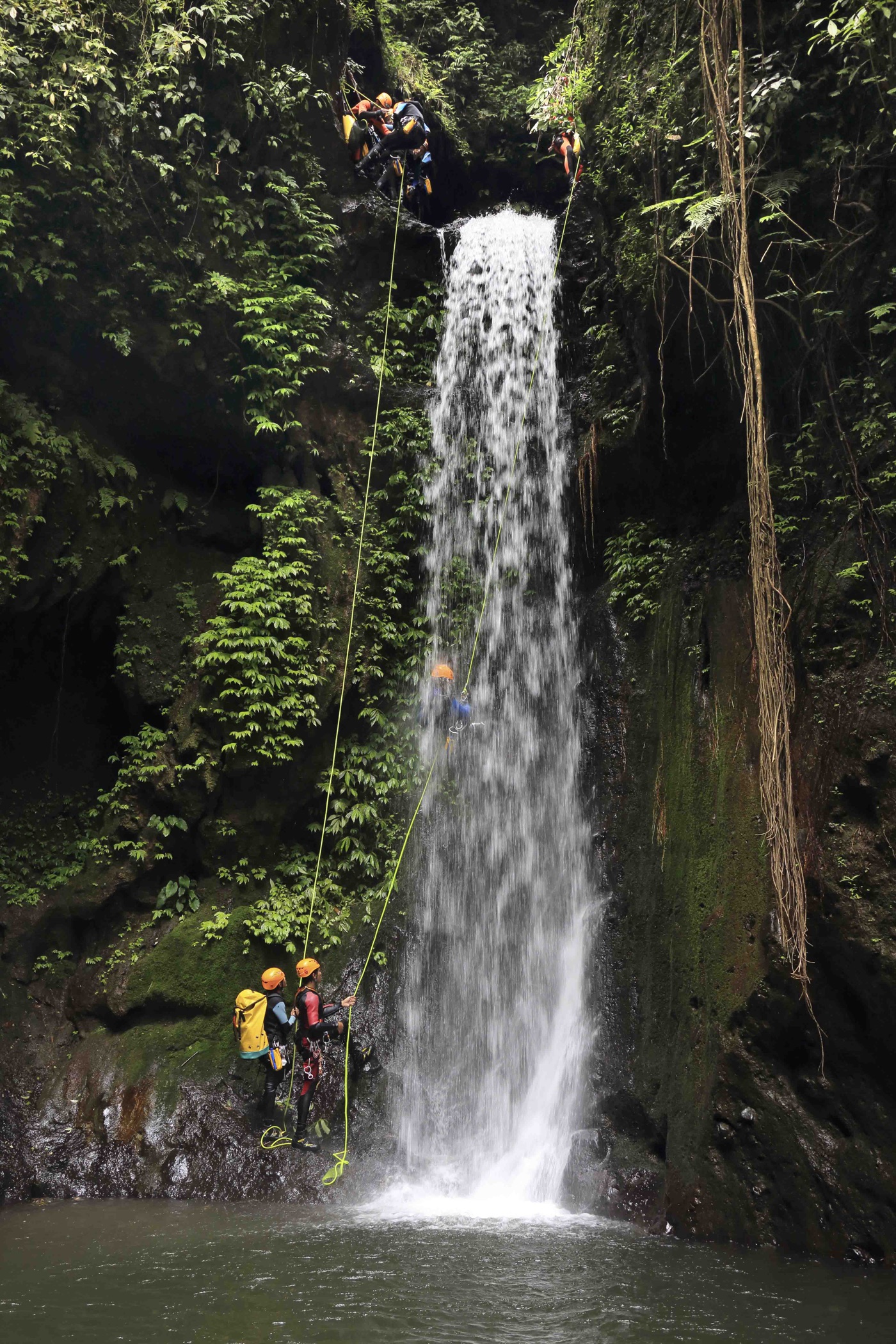 Canyoning down a waterfall near Gitgit. Photo: Dleex07 / Wikimedia Commons (CC BY-SA 3.0)
24. Ride the Coast Road and the Climb to Munduk
The north's coast road is flat and quiet. The climb from the coast up to Munduk and the lakes is a serious test through rice terraces and coffee country.
Ride early, before the heat. See sports and active travel in north Bali.
Where: the Lovina coast and the mountain road to Munduk.
25. Walk West Bali National Park
West Bali National Park covers savanna, monsoon forest and mangrove in the far northwest. It has some of the island's best birdwatching, and it is home to the rare Bali starling.
You walk with a registered park guide and a permit, usually arranged from Pemuteran. See West Bali National Park.
Where: far northwest, about 90 minutes west of Lovina.
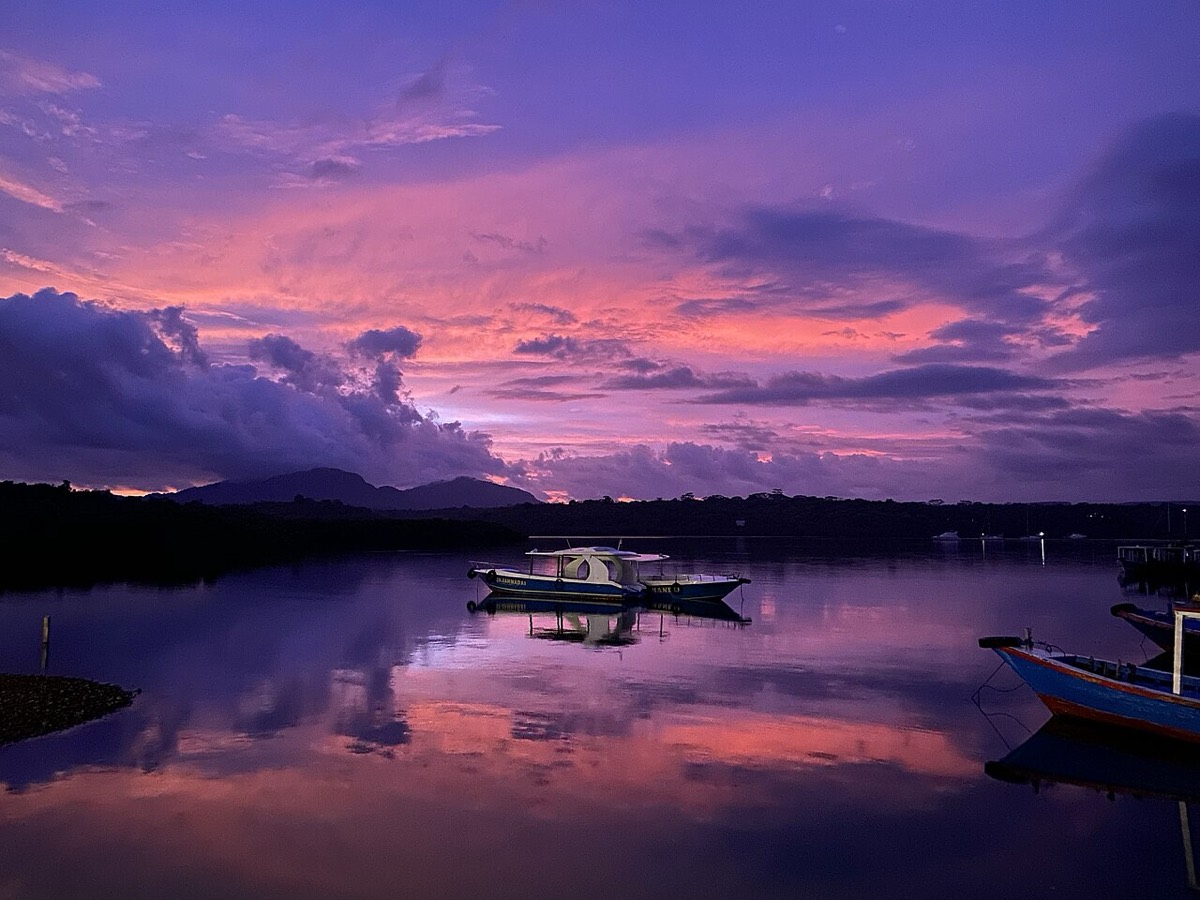 Dusk at the Menjangan boat mooring. Photo: Clarissaudreylia / Wikimedia Commons (CC BY-SA 4.0)
Adventure Operators with Their Details in Public
Much of the north's adventure is run by small local outfits, and a few names have been around long enough to check.
Krisna Adventures, Sambangan. A family recreation park on the road to Aling-Aling, run by Krisna North Bali, the group behind the Krisna souvenir shops. Its own site lists ATV tracks with a guide, a flying fox and high swings over the rice fields. Its opening times and ticket options are published there.
It suits families and groups who want an easy half-day of rides. People after wild nature will find more in the canyons and at Aling-Aling itself.
Krisna Watersports, Temukus. On the coast road west of Lovina, the same group runs Krisna Watersports. It lists jet skis, banana boats, parasailing and a pool, with its own rates set out on the page. Book direct rather than through a beach tout.
Canyoning. Adventure & Spirit and Canyoning Bali both run guided descents in the Gitgit and Sambangan gorges, with levels, minimum ages and swimming requirements published per canyon. The details are in the sports guide.
Waterfall jumps at Aling-Aling. The jump points are managed locally at the site, and you need the guided package to use them. The Aling-Aling guide explains the two ticket options.
How to Fit It Together: Three Days from Lovina, or a Week
Three days from a Lovina base covers the signature experiences:
- Day one: the dolphins, then the hot springs and the monastery
- Day two: a waterfall day
- Day three: Singaraja's temples, or a canyoning trip
A week opens up Munduk and the lakes as one overnight, and Pemuteran and Menjangan as another. The 3-day itinerary and the 7-day itinerary lay out the days, and the north Bali travel guide sets the wider picture.
Best Time to Visit: the Dry Season, and Mornings
The dry season, April to October, gives the calmest seas for dolphins and diving, firmer waterfall trails and clearer mountain views. June to September is the most reliable window, and some canyons only open in the dry months.
The north is one of the drier parts of Bali year-round, so the shoulder months hold up well. Mornings beat afternoons for nearly everything here. See the best time to visit north Bali.
Practical Notes
Rates change. Confirm locally before you go.
- Base yourself in Lovina for the shortest drives to most of this list. Add a night in Munduk and one in Pemuteran if you have a week.
- Start early for dolphins, waterfalls and Menjangan.
- Carry cash for entry fees, guides and boats, since many sites collect at the gate.
- A driver for the day is the simplest way to chain sites together. See private drivers in north Bali.
- Canyoning and Menjangan need booking ahead. Most other things can be arranged the day before.
- Allow 3 days minimum, and a week to do it justice.
FAQ
What are the best things to do in north Bali? Sunrise dolphins off Lovina, the waterfalls inland with Sekumpul first, and snorkelling and diving at Menjangan and Pemuteran. Add the Banjar hot springs, the Munduk highlands and twin lakes, the carved temples around Singaraja, and canyoning in the gorges above Gitgit. Most sit within an hour or two of Lovina.
How many days do you need in north Bali? Three days covers the highlights from a Lovina base. A week lets you add Munduk and Menjangan as overnights without rushing.
Is there adventure in north Bali? Yes. Guided canyoning runs in the gorges around Gitgit and Sambangan, Aling-Aling has natural rock slides and cliff jumps, and Krisna Adventures in Sambangan runs ATV tracks and a flying fox. The coast road and the climb to Munduk suit cyclists.
Is north Bali worth visiting? Yes, if you want a quiet side of the island. The north has some of Bali's best-known waterfalls and reefs, its own temple style and music, and few crowds.
What is north Bali known for? The dawn dolphins of Lovina, its waterfalls and snorkelling, hot springs, highland lakes, gong kebyar music and a calm pace.
Do you need a car or driver? A driver for the day is the easiest way to chain sites together, since the attractions are spread out and public transport is limited. A scooter works for confident riders staying close to Lovina. Canyoning operators include transfers.
When is the best time to visit north Bali? The dry season, April to October, with June to September the most reliable. Mornings are best for dolphins, waterfalls and Menjangan.
Sources
- Buleleng Regency tourism office, Visit North Bali directory, including its listings for the dolphin tour, Lovina Beach, Kalibukbuk village, snorkelling and watersports in Buleleng (the dawn dolphin trips and the jukung fleet, the calm black-sand coast, and the coast's listed water activities), read September 2026
- Karang Lestari Pemuteran, about the project (the Biorock restoration, its partners in the village, its scale in the bay, and its claim to be the largest such project in the world), read September 2026
- Buleleng regency government, Pusaka Budaya Bali Utara (Pura Beji as a subak temple to Dewi Sri in north Bali's decorative style, and the story of the bicycle relief at Meduwe Karang), Indonesian, read September 2026
- Buleleng culture and tourism office, Pura Meduwe Karang, Desa Kubutambahan (the temple east of Singaraja, the relief of a Dutchman on a bicycle from the rebuilding finished in 1935, and the carving described as the Buleleng type), Indonesian, read September 2026
- Buleleng culture and tourism office, Gedong Kirtya, the only lontar library in the world, and the office's home page (the lontar collection of around four thousand manuscripts, the library's founding, and its listing among the office's museum services), Indonesian, read September 2026
- Brahma Vihara Arama, official site (Bali's largest Buddhist monastery, in the hills of Banjar, with its miniature Borobudur stupa and visitors of all faiths welcome), read September 2026
- Krisna North Bali, Krisna Adventures and Krisna Watersports (the activities, opening times and ticket options each park publishes for itself), read September 2026
- Buleleng regency government, Lovina Festival announcements (the regency as organiser of the Lovina Festival, and the sapi gerumbungan community among its participants), Indonesian, read September 2026
- Lovina Festival, lovinafestival.com, the festival site made by Palm Living (the sapi gerumbungan contest at Kaliasem Field during the festival), read September 2026
Read next: the 3-day north Bali itinerary to turn this list into days, where to stay in north Bali for a base, and the north Bali travel guide for the wider picture. Palm Living's villas sit along the Lovina coast, within an hour of most of this list: villas for rent.