
On this page
- In Brief
- The Balinese Caste System at a Glance
- Four Wangsa, Inherited at Birth
- Bali's Wangsa Works Differently From Caste in India
- Caste Shows in Speech, Houses and Ceremony
- The Caste Debate of the 1920s Began in Singaraja
- Marriage Across Wangsa Was Restricted, Then Reformed
- The Hindu Council Teaches Calling by Work, Not Birth
- How to Meet Caste as a Guest in Bali
- FAQ
- Sources
In Brief
The Balinese caste system is a fourfold order of descent called wangsa: Brahmana, Satria, Wesia and Sudra. The first three are together the triwangsa. Sudra families, also called jaba, make up the large majority of Balinese.
A person's wangsa is inherited at birth. It shows in names, in the words used to address someone, in the name of a family's house and in some rights at ceremonies. Sudra Balinese take full part in temple life.
The Hindu council of Indonesia teaches a different standard. In 2002 it ruled that the Hindu catur warna, the four callings, divides duties by talent and work. It has nothing to do with caste or wangsa, the council states.
The Balinese Caste System at a Glance
- Local names: wangsa or catur wangsa, the four lineages. In Indonesian, kasta.
- The four groups: Brahmana, Satria (Ksatria), Wesia and Sudra
- The two halves: the triwangsa (the three higher groups) and the jaba, the commoners
- Share of Sudra families: 90 percent in Jean Couteau's account, 93 percent in Wikipedia's entry, which cites Miguel Covarrubias
- How it passes on: by birth, as an inherited status
- Where it shows: names, levels of speech, house names, seating and cremation towers
- Key reforms: a Bali council decision of 12 July 1951, a Hindu council ruling of 29 October 2002 and an adat council decision of 15 October 2010
- The north's part: the Surya Kanta movement, founded in Singaraja in 1925
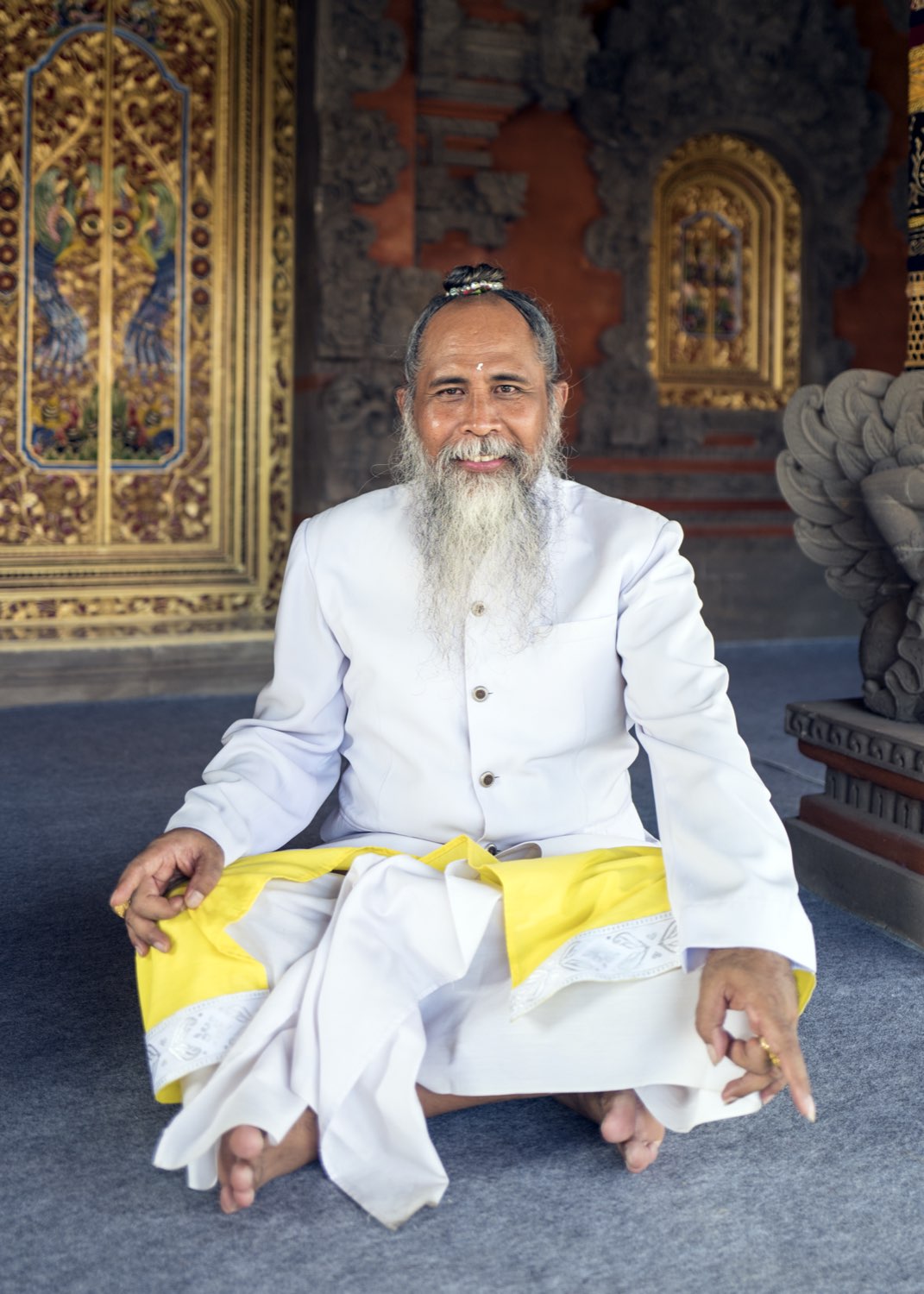 Ida Pedanda Gede Putra Kekeran, a Balinese high priest, in 2016. Pedanda is the title of high priests from Brahmana families. Photo: Christopher Michel / Wikimedia Commons (CC BY-SA 4.0)
Four Wangsa, Inherited at Birth
The four groups carry Sanskrit names shared with India.
The scholar Jean Couteau, a former lecturer at the Indonesian Institute of the Arts in Denpasar, sets out the classic roles in NOW! Bali. In theory the Brahmana see to religion and the Satria to rule. The Wesia see to trade, and the Sudra are the commoners. The status, he writes, is ascribed and inherited at birth.
The three higher groups are the triwangsa, also called menak. The commoners are the sudrawangsa, or jaba. Couteau counts the commoners at 90 percent of Balinese, divided into many clans with their own layered temples. The Wikipedia entry gives 93 percent, citing Miguel Covarrubias's Island of Bali.
The Wesia are the least clearly defined group. Couteau writes that he knows of no clan claiming to be Wesia, so in practice he sees three parts, not four. Other accounts do record Wesia titles, and the titles of each group are set out in how Balinese names work.
The Brahmana have their own branches. Couteau traces the Shivaite Brahmana clans of Bali to the children of Dang Hyang Nirartha, a high priest who came from Java. He traces the Buda clan to another, Dang Hyang Astapaka.
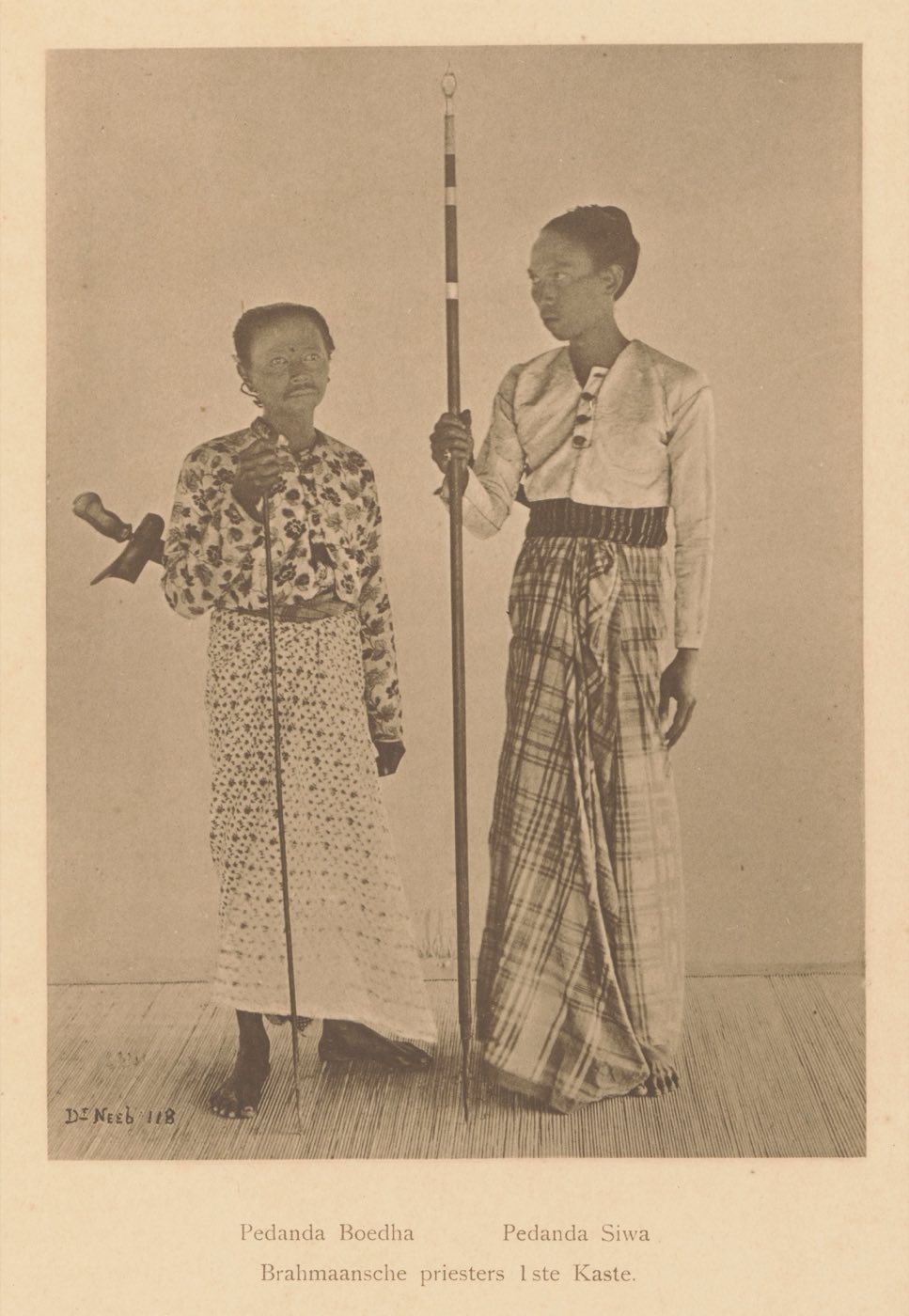 A pedanda Buda and a pedanda Siwa, captioned "Brahmin priests, 1st caste" in a Dutch photo book of the 1890s. Photo: Christiaan Johan Neeb, Rijksmuseum / Wikimedia Commons (CC0)

Bali's Wangsa Works Differently From Caste in India
In Bali, belonging to the Sudra carries no idea of ritual impurity.
The Wikipedia entry is plain on this point. Sudra status does not mean impurity, social exclusion or restricted access to religious life, and Sudra Balinese take full part in temple ritual. Drawing on the anthropologist Jane Belo, it adds a detail from the temple. In most regions it is Sudra who make the offerings, chant the prayers and set the course of festivals.
Couteau makes the same point from daily life. Balinese of different castes mix and share rituals, he writes.
The order also took its shape in Bali itself. Couteau dates its final form to the fifteenth century, when high priests settled on the island as Java turned to Islam. Wikipedia describes a blend of older Austronesian ways and Hindu-Javanese court culture from the Majapahit period. The communities who kept to older, pre-Majapahit ways are introduced in the guide to the Bali Aga villages of north Bali.
Caste Shows in Speech, Houses and Ceremony
In Couteau's account, caste shows above all in etiquette and language.
The level of Balinese a person uses reflects status as well as knowledge, he explains. The highest level is used for a high priest or a king. Even "to eat" changes with the speaker and listener: medaar, ngajengang or miyunin. When two people do not know each other's caste, Wikipedia notes, they start in middle Balinese. The speech levels for visitors are explained in Balinese words and phrases.
Couteau gives an example from a restaurant in Sanur. A Sudra hotel owner found his waiter was the son of the Brahmana household his own family had long turned to for holy water. He addressed the young man as "Tu", my lord, in high Balinese. Then he switched to Indonesian, which carries no levels, to meet him as an equal.
The house a family lives in has a name by caste too. Writing in detikBali, and drawing on the scholar I Putu Gede Suyoga, Rusmasiela Mewipiana Presilla lists the names. Triwangsa families live in a griya, puri or jero, counted as being "inside". A commoner's home is an umah, counted as "outside", jaba, which is where the jaba take their name. Couteau describes the griya as a Brahmana mansion and the puri as a royal palace. He glosses jaba as "outsiders".
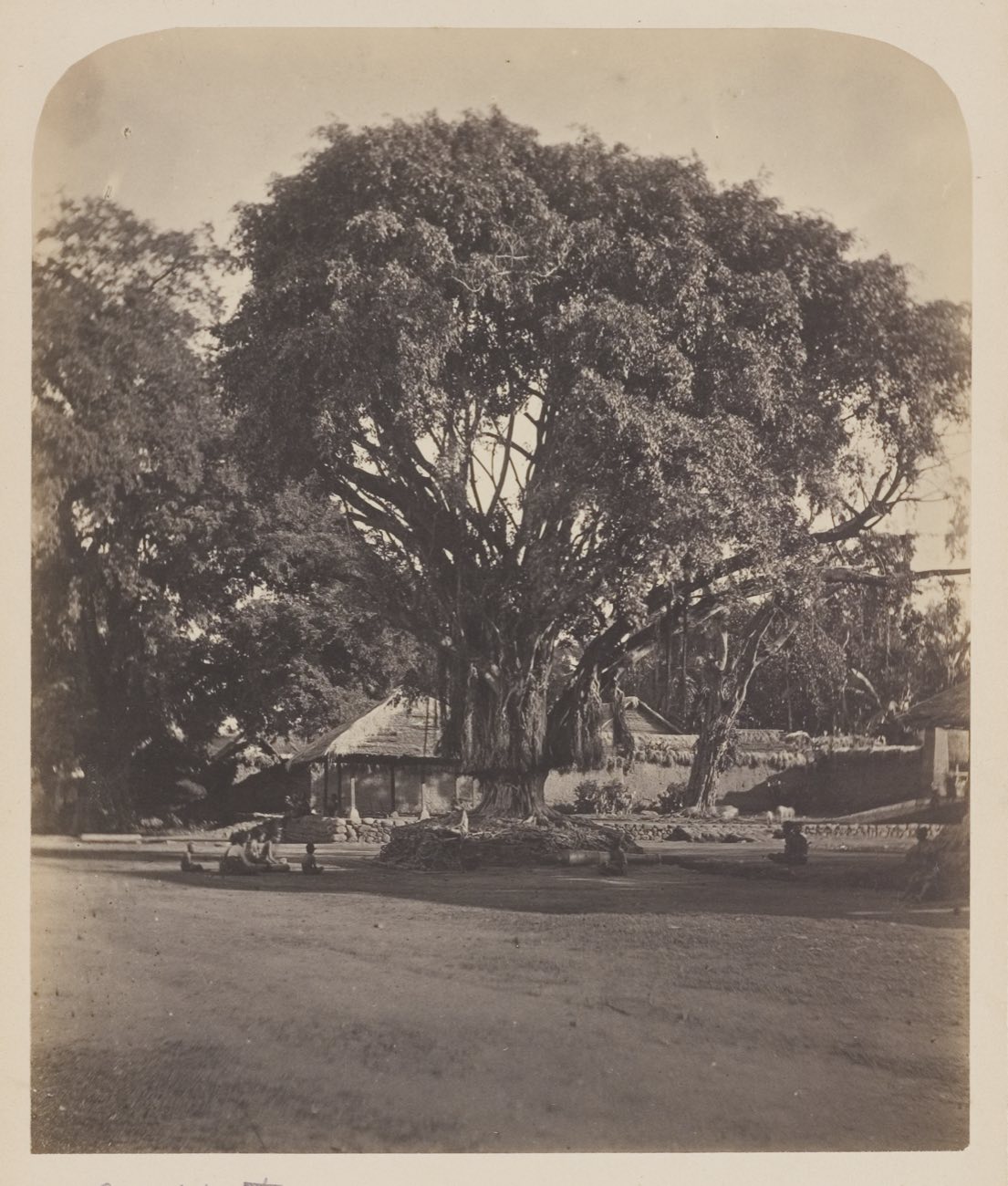 The square with the banyan tree outside the puri of the prince of Buleleng in Singaraja, 1865. Photo: Isidore van Kinsbergen, KITLV / Wikimedia Commons (public domain)
At ceremonies, Couteau notes, status still decides who sits where and with whom. It also governs the right to certain shrines and types of cremation tower. The towers are described in the guide to ngaben, the Balinese cremation.
The Caste Debate of the 1920s Began in Singaraja
The push to reform caste began in the north.
In the religious affairs ministry's journal, I Putu Sudarma of the state Hindu institute in Denpasar dates the first efforts to 1923 and 1924. They came in a dispute in Buleleng. The French scholar Michel Picard places its roots in Singaraja, where several organisations were founded from 1917. Their members began publishing journals in Malay, a complete novelty for Bali. Two of them carried the polemic between triwangsa and jaba. The title of his longer study dates them: Bali Adnjana from 1924 to 1930, Surya Kanta from 1925 to 1927.
Researchers from two Singaraja universities describe how Surya Kanta began. Educated young Sudra, many of them teachers, founded the association in Singaraja in 1925. Its newspaper argued for equal rights regardless of caste, and for officials to be chosen by education and merit.
Both sides, Picard writes, claimed to stand for progress. Bali Adnjana wanted to strengthen religion and custom together. Surya Kanta wanted to renew religion and drop whatever in custom stood in the way of progress. The town's story is told in the guide to Singaraja's old town.
Marriage Across Wangsa Was Restricted, Then Reformed
Caste once set firm limits on marriage.
Two marriages were once punishable offences under customary law. The 1951 decision of Bali's regional council defines them, as quoted by Ni Ketut Sari Adnyani of Universitas Pendidikan Ganesha in a law journal:
- Asu pundung was a Brahmana woman marrying a man of the Satria, Wesia or Sudra.
- Alangkahi karang hulu was a Satria woman marrying a Wesia or Sudra man.
The literal meanings are "carrying a dog" and "stepping over the head". Adnyani shows the ban was written into a regulation of the Dutch Resident of Bali and Lombok in 1910, amended in 1927. Under those rules, a triwangsa woman who married down had to go through patiwangi, a rite lowering her title to her husband's rank.
On 12 July 1951 Bali's regional council abolished both offences. Sudarma records that they were judged cruel and inhumane. In 2010 the council of Bali's customary villages confirmed that patiwangi is no longer held, Adnyani adds.
Sudarma also finds that some triwangsa families still mark the difference in the wedding rite. How a Balinese wedding unfolds is set out in the Balinese wedding ceremony guide.
The Hindu Council Teaches Calling by Work, Not Birth
Parisada Hindu Dharma Indonesia, the Hindu council, set out its position in a formal ruling, a bhisama, on 29 October 2002.
The full text states the core teaching first. The catur warna divides duties by guna, talent, and karma, work, and is unrelated to caste or wangsa. Over the history of Hinduism, the council writes, the teaching drifted into caste in India and into the wangsa system in Bali.
The ruling asks for wangsa to be kept for honouring ancestors and for fellowship within each lineage. Its practical points include:
- A high priest may lead anyone's ceremony, whatever the priest's own descent. After consecration, diksa, he stands outside wangsa ties.
- Worshippers should accept holy water from a temple's pemangku, the temple priest, whatever his wangsa.
- Priests should not refuse to lead a wedding between two wangsa.
- The nyerod marriage, a woman marrying down, and the patiwangi rite are to be done away with.
- Speech between wangsa should show mutual respect.
Couteau traces this reading to Balinese reformers. Under it, a person becomes a high priest by training and initiation, not by birth. New high priests now serve their own clans under titles such as Rsi, Empu and Begawan.
He records that the change split the council, since most members of the old Brahmana families did not accept it. He also notes that pedanda of old Brahmana lines sometimes officiate alongside the new priests.
In daily life, Couteau sees a class system slowly taking over from caste, as many commoner families have prospered through tourism and education. Caste still comes back to the fore in some ritual and political settings, Wikipedia's entry adds. The wider faith is introduced in Balinese Hinduism explained.
How to Meet Caste as a Guest in Bali
You do not need to know anyone's caste to be a good guest.
- Speak Indonesian or English. Couteau notes that Balinese talking to non-Balinese often switch to Indonesian, which has no speech levels.
- Use the name people give you. A title such as Ida Bagus or Anak Agung belongs to the name. The titles are explained in how Balinese names work.
- Let your host seat you at a ceremony. Seating can follow status, so wait to be shown. The temple etiquette guide covers dress and behaviour.
- Leave questions of caste to your hosts. If it comes up, let them say what matters in their family.
FAQ
Does Bali have a caste system? Yes. Balinese Hindus inherit a wangsa, one of four groups by descent: Brahmana, Satria, Wesia and Sudra. It shows in names, speech levels, house names and some ritual rights. Indonesia's Hindu council teaches that the Hindu catur warna is a matter of talent and work, not birth.
What are the four castes in Bali? Brahmana, traditionally priests, and Satria, traditionally rulers. Then Wesia, traditionally traders, and Sudra, the commoners. The first three are the triwangsa. Sudra families, the jaba, are the large majority. Jean Couteau gives 90 percent and Wikipedia's entry 93 percent.
Is the Balinese caste system the same as India's? It shares the four Sanskrit names, but it works differently. Sudra status carries no idea of ritual impurity, and Sudra Balinese take full part in temple life. The differences between castes show mainly in etiquette and language, according to the scholar Jean Couteau.
What caste is Ni Made? Ni marks a woman and Made a second-born child. Wikipedia's entry on Balinese names notes that Sudra families add I or Ni and use no special title. So Ni Made with no title before it follows the Sudra pattern. Some Satria names also begin with I, as in I Gusti Ngurah, so it is the title that tells. The full system is in how Balinese names work.
Does Indonesia have a caste system? Indonesia's Hindu council places the wangsa system in Bali. Its 2002 ruling describes caste in India and wangsa in Bali as departures from the catur warna teaching, and asks Hindus not to base daily etiquette on wangsa. Jean Couteau, summarising the journalist Putu Setia, notes that Indonesia's other Hindu traditions have no caste system of their own.
Can Balinese of different castes marry? Yes. Bali's regional council abolished the old offences for marriages across castes on 12 July 1951. In 2002 the Hindu council asked priests not to refuse such weddings. In 2010 the council of customary villages confirmed that the patiwangi rite is no longer held.
Is Bali a caste name in India? Bali is also an Indian family name. Wikipedia lists Bali as one of the seven clans of the Mohyal Brahmins of the Punjab region. That family name is unrelated to the island and its wangsa.
Sources
- Parisada Hindu Dharma Indonesia, Bhisama Sabha Pandita No. 3/2002 on the practice of catur warna, set in Mataram on 29 October 2002, with its summary page (catur warna by guna and karma, the drift into caste and wangsa, the eleven practical points), read October 2026 (in Indonesian)
- Jean Couteau, The caste system in today's Bali, NOW! Bali (the four groups, inheritance at birth, triwangsa and jaba, 90 percent, Nirartha and Astapaka, speech levels, seating and cremation towers, reform and the council split), read October 2026 (in English)
- Jean Couteau, Caste in modern Balinese Hinduism, NOW! Bali (the shift from caste toward class), read October 2026 (in English)
- Ni Ketut Sari Adnyani, Legal consequences of divorce for women in asu pundung marriages, Kertha Wicaksana 13(2), 2019 (the definitions in the 1951 decision, the 1910 and 1927 colonial regulations, patiwangi, the 2010 Pasamuhan Agung III), read October 2026 (in Indonesian)
- I Putu Sudarma, Gender bias in marriage between wangsa among Balinese Hindus, Harmoni 14(3), Ministry of Religious Affairs, 2015 (DPRD Bali decision No. 11 of 12 July 1951, its reasons, discrimination that persists in some rites), read October 2026 (in Indonesian)
- Michel Picard, Making sense of modernity in colonial Bali: the polemic between Bali Adnjana and Surya Kanta, Dinamika Kebudayaan, 1999, abstract, and his study in Archipel 58 for the journals' dates, read October 2026 (in English and French)
- Luh Putu Sri Ariyani, Tuty Maryati, Nengah Bawa Atmadja, Bali Adnyana versus Surya Kanta, Journal of Media, Culture and Communication 2(3), 2022 (Surya Kanta founded by educated Sudra in Singaraja in 1925), read October 2026 (in English)
- Rusmasiela Mewipiana Presilla, Perbedaan sebutan rumah orang Bali berdasarkan tingkatan kasta, detikBali, 3 July 2024 (griya, puri, jero and umah, after I Putu Gede Suyoga), read October 2026 (in Indonesian)
- Wikipedia, Balinese caste system (93 percent after Covarrubias, no ritual impurity, middle Balinese, Sudra roles in temple festivals after Jane Belo, origins), Balinese name (I and Ni for Sudra families) and Mohyal Brahmins, read October 2026 (in English)
Read next: how Balinese names work, Balinese Hinduism explained and the Bali Aga villages of north Bali.