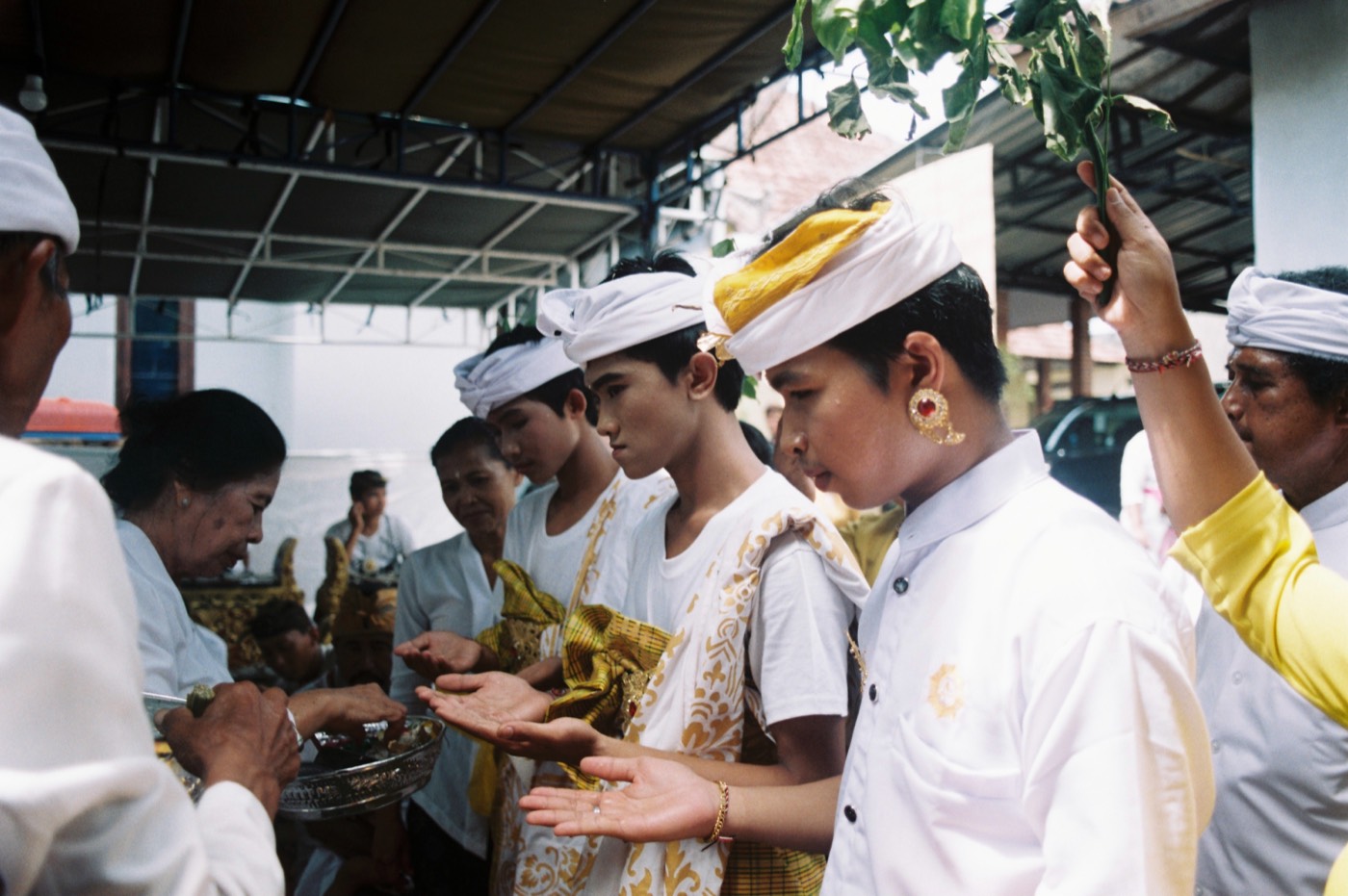

On this page
In Brief
Metatah, the Bali tooth filing ceremony, is the Balinese Hindu rite of passage from childhood to adulthood. It is also called mepandes or mesangih. A priest or a trained filer smooths the six upper front teeth, the four incisors and the two canines.
The six teeth stand for the sad ripu, the six inner enemies of character, from desire and greed to jealousy. Filing them marks the moment a young person takes charge of those impulses.
Parents owe the ceremony to their children before marriage. It is expensive, so it is often held for many young people at once, or folded into a wedding or a cremation. Visitors attend only by invitation.
Metatah at a Glance
- What it is: A coming-of-age rite in which six upper teeth are filed a little, symbolically
- Also called: Mepandes, mesangih or matatah. The root word tatah is Balinese for a chisel
- Who: Balinese Hindus after puberty and before marriage, with no upper age limit
- Who files: A priest or a trained filer, the sangging
- How much is filed: No more than about two millimetres
- The meaning: Taming the sad ripu, the six inner enemies of character
- Held as: A family ceremony, a mass ceremony for a whole neighbourhood, or part of a wedding or cremation
- For visitors: By invitation only
- Part of: the Manusa Yadnya, the life-cycle branch of Bali's five sacred duties
The Six Teeth Stand for Six Inner Enemies
In Balinese Hindu teaching, each person carries six inner enemies, the sad ripu.
Kompas quotes the head of the Hindu council (PHDI) in Banten, who names all six:
- kama, desire
- lobha, greed
- krodha, anger and vengeance
- mada, drunkenness
- moha, confusion and arrogance
- matsarya, envy
If they rule a person, he said, that person does more wrong than right.
The teeth filed are the four upper incisors and the two upper canines, one tooth for each enemy. The filing is slight, and the same report quotes the rule that no more than about two millimetres comes off.
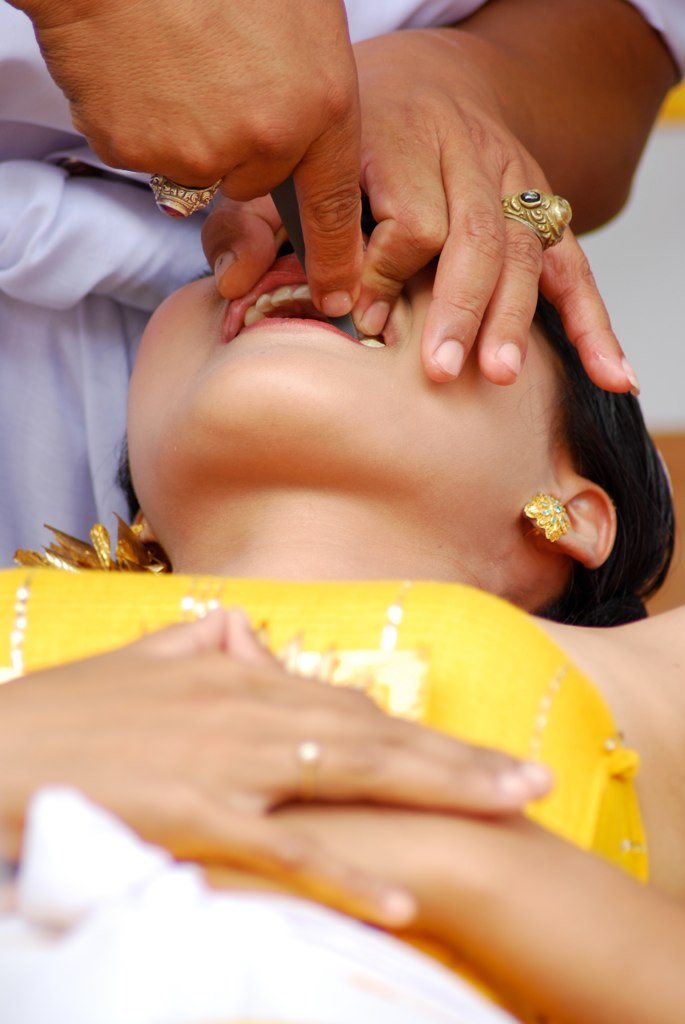 The filing itself, at a mepandes ceremony. Photo: Abdes Prestaka / Wikimedia Commons (CC BY 2.0)

The removal is symbolic. A Kompas explainer on metatah describes the aim as learning to control the pull of desire. In this way the demonic traits in a person are tamed and turned towards good.
Metatah Is Due After Puberty and Before Marriage
Metatah stands at the threshold of adulthood.
The ceremony is due once a girl has begun to menstruate and once a boy's voice has broken. Holding it before their child marries is the parents' duty.
In the PHDI account, parents owe a child three things: the rites of pregnancy and birth, the tooth filing and the wedding. The child's duty in return is the cremation of the parents.
There is no upper age limit for metatah, and adults who were never filed still go through it.
What Happens on the Day, in Eight Steps
Families and villages each do it a little differently. The order below follows the two Kompas reports in the sources.
-
An auspicious day is chosen. The family consults its priest and the Balinese calendar. See the Balinese calendar explained.
-
The day before, the participant stays in. This seclusion is called mekekeb or mepingit.
-
Purification and prayer. The ceremony usually begins in the morning, in some places before dawn. The participant is cleansed, prays at the family shrine and is dressed in yellow and white.
-
Onto the bale. The participant steps on offerings laid beneath the pavilion, then lies on a couch covered with cloth, with a pillow for the head. Family members stand around and cover them with a cloth.
-
The filing. The priest or sangging files the six teeth with a small file. A piece of sugarcane, or a stick of dadap wood, sits between the teeth to hold the mouth open. The sugarcane is sweet.
-
Six tastes. After the filing, the participant tastes six flavours, each one a lesson, listed below the steps.
-
Back to the ancestors. The participant rinses, and the rinse water is poured into the young coconut. It is buried behind the family shrine, to unite it with the ancestors.
-
The blessing. The ceremony closes with a final blessing, mejaya-jaya, and then the family celebrates.
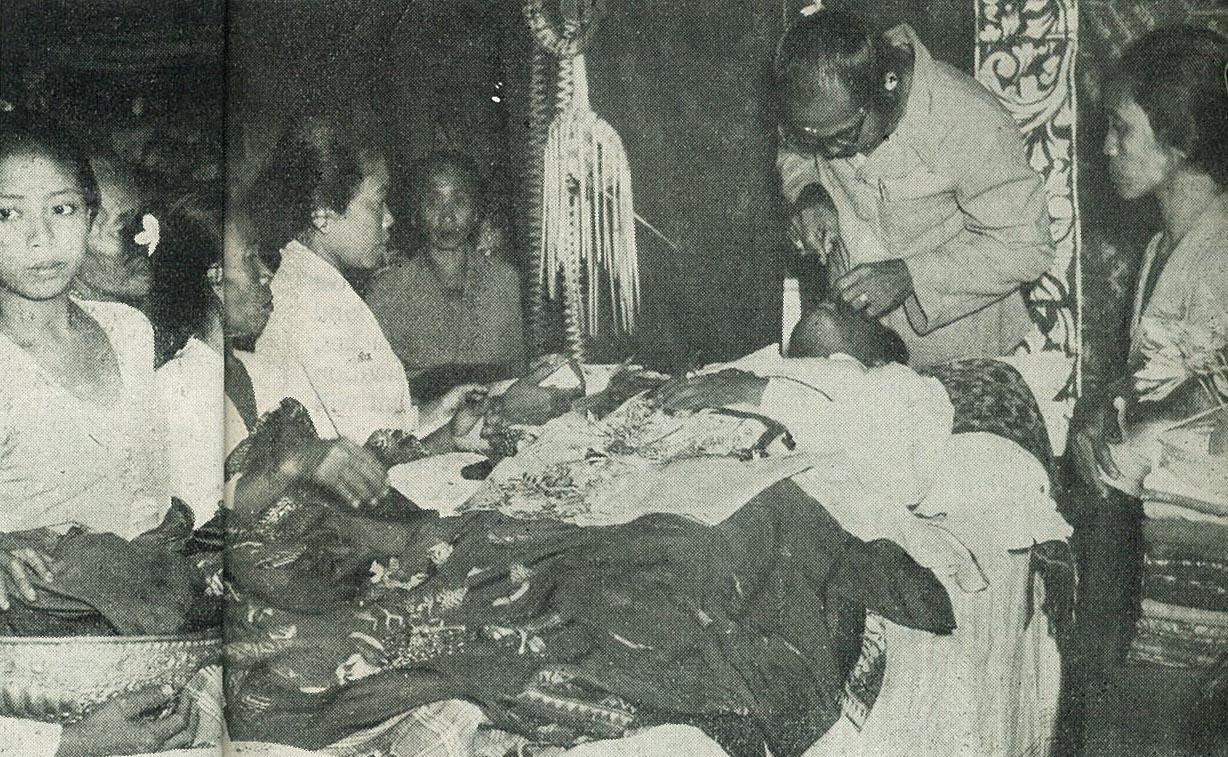 A tooth-filing ceremony photographed for the Indonesian government's 1957 book Bali: The Isle of the Gods. Photo: Ministry of Information of Indonesia / Wikimedia Commons (Public domain)

The six tastes and their lessons
- Bitter and sour: patience through hardship
- Spicy: staying calm when provoked
- Astringent: keeping to the rules
- Salty: wisdom
- Sweet: a happy life
The offerings and tools
The offerings and tools for the day include:
- a chisel
- a file
- a whetstone
- betel leaf
- honey
- turmeric
- a young yellow coconut
For the participant, it is less dramatic than it looks
Two young people interviewed by Kompas at a mass ceremony described the feeling as ngilu, the sharp twinge of a dentist cleaning your teeth, rather than pain.
Many Families Share One Ceremony, Often in North Bali
A metatah needs a priest, a pavilion and a great many offerings, and it costs a family a lot.
So villages, neighbourhoods and foundations often hold one ceremony for dozens of young people together. Some villages hold them free.
Buleleng, the northern regency, reports these mass ceremonies often. In Singaraja's Astina ward, the district office recorded 55 young people from three customary neighbourhoods filed together over two days. The ward paid from its own budget, and two high priests led the ceremony.
In Banjar Bali, another Singaraja quarter, a foundation and the neighbourhood filed 90 people together. Each brought a basic offering and holy water from their own family shrine. The report notes that holding it together eases the burden on families.
Metatah is also folded into other occasions. Kompas notes it is often held together with a cremation, a wedding or another large ceremony.
In Denpasar, the city government reported the mayor himself volunteering as the filer. That mepandes was held within a village's combined life-cycle and cremation ceremony.
For the wider picture of how the north marks a life, see understanding Balinese ceremonies, the Balinese wedding and ngaben, the cremation.
Visitors Attend Only by Invitation
Metatah is a family's sacred day. It rarely appears on a tourist itinerary, and it should not be treated as one.
An invitation is an honour and a sign of real friendship. Long-stay visitors who have become friends of a Balinese family around Lovina or Tejakula are sometimes welcomed in.
When you are invited:
- Dress modestly in temple clothes, a sarong and sash at least. The temple etiquette guide covers what to wear.
- Ask your host what, if anything, guests bring.
- Ask before photographing the filing itself.
- Stay out of the way of the priest and the family.
- Enjoy the meal with the family afterwards.
The offerings you see piled on the day are the same craft as the daily canang sari, scaled up.
FAQ
What is the tooth filing ceremony in Bali? Metatah, also called mepandes or mesangih, is the Balinese Hindu coming-of-age ceremony in which a priest files the six upper front teeth a little. The teeth stand for the six inner enemies of character: desire, greed, anger, drunkenness, confusion and jealousy. Smoothing them marks the passage into responsible adulthood.
Does Balinese tooth filing hurt? Very little. Only a small amount is filed from each tooth. Young people interviewed by Kompas at a mass ceremony described a sharp twinge, like having their teeth cleaned at the dentist, rather than pain.
At what age do Balinese have their teeth filed? After puberty, when a girl has begun to menstruate or a boy's voice has broken, and before marriage. There is no upper age limit, and adults who were never filed still go through it. Many families combine the ceremony for several children or cousins at once.
Why are only the upper teeth filed? The six teeth filed are the four upper incisors and the two upper canines. Each stands for one of the six inner enemies, the sad ripu. The number and the teeth are fixed by that meaning.
Can tourists attend a metatah ceremony? Only by invitation, and invitations do happen, especially for long-stay guests who have become friends of a family. If invited, dress in temple clothes, follow your hosts' lead, and ask before photographing the ritual itself.
What happens to the tooth filings? After the filing, the participant rinses. The rinse water is poured into a young yellow coconut and buried behind the family shrine, to return it to the ancestors.
Sources
- Kompas, Apa yang dimaksud dengan upacara potong gigi dalam agama Hindu? (the names mepandes, metatah and mesangih; the sad ripu as listed by the PHDI Banten chair; the four incisors and two canines; the couch and the family around it; age and obligation; the parents' three duties; participants on the sensation), in Indonesian, read September 2026
- Kompas, Mengenal metatah, upacara potong gigi di Bali (the root word tatah; mass and free ceremonies; combining with cremation, wedding and other ceremonies; the day of seclusion; morning timing; stepping over the offerings; the six tastes; the rinse water buried in a young coconut; sugarcane and dadap wood; the tools; yellow and white clothing), in Indonesian, read September 2026
- Kecamatan Buleleng, Upacara Manusia Yadnya metatah masal di Kelurahan Astina (55 participants from three neighbourhoods, funded by the ward, led by two high priests), in Indonesian, read September 2026
- Sinar Timur, Banjar Adat Banjar Bali gelar metatah massal untuk 90 peserta (a mass metatah in Singaraja, what participants bring, the deputy regent's comments), in Indonesian, read September 2026
- Pemerintah Kota Denpasar, Walikota Jaya Negara nyanggingin (the mayor acting as filer at a mepandes within a combined life-cycle and cremation ceremony), in Indonesian, read September 2026
- Images: Abdes Prestaka, Mepandes tooth-filing ceremony in Bali (CC BY 2.0); Ministry of Information of Indonesia, Tooth filing ceremony, Bali: The Isle of the Gods, p. 37 (public domain); Ening Megumi Laksmiati, Mepandes at Tabanan, Bali (CC BY-SA 4.0), Wikimedia Commons

Read next: understanding Balinese ceremonies, otonan, the Balinese birthday, and the five sacred duties that hold them all together.