
On this page
In Brief
Pagerwesi is a Balinese Hindu holy day that falls every 210 days on Buda Kliwon Sinta, the Wednesday of the week Sinta in the pawukon calendar, four days after Saraswati. Its name means iron fence. Saraswati celebrates the gift of knowledge, and Pagerwesi is the day to fence it in, strengthening mind and faith so that the knowledge is kept and used well. It honours Sang Hyang Pramesti Guru, Shiva as the teacher of the whole world. In most of Bali the day is kept with prayers at the house shrine and the temples. Buleleng, the north, keeps it as grandly as Galungan and calls it Pegorsi: households prepare offerings and food for two days, people working elsewhere come home, and in Singaraja families carry a meal to the cemetery for relatives who are buried but not yet cremated. The celebrations are biggest in Singaraja and the east of the regency, and simpler in the west.
Pagerwesi at a Glance
- What it is: A holy day for strengthening knowledge and faith, honouring Sang Hyang Pramesti Guru
- When: Buda Kliwon Sinta in the 210-day pawukon calendar, four days after Saraswati; the north Bali events calendar lists the coming dates
- The name: pager, fence, and wesi, iron
- The run-up: Saraswati, then Banyu Pinaruh, Soma Ribek and Sabuh Mas on the three days that follow
- In Buleleng: Kept like Galungan without the penjor, and known locally as Pegorsi
- The northern custom: Munjung, a family meal and offering at the graves of relatives not yet cremated
- Biggest in: Singaraja and eastern Buleleng as far as Tejakula
How the Date Is Set
Pagerwesi follows the pawukon, Bali's 210-day cycle of named seven-day weeks, or wuku, which runs alongside the lunar calendar and fixes most temple festivals. Our guide to the Balinese calendar explains how the cycles interlock. Two weeks matter here. Watugunung is the last wuku of the cycle and Sinta is the first, so the run of holy days that ends at Pagerwesi straddles the turn of the cycle.
The five days read as one sequence, set out by Buleleng's welfare office and by the Singaraja academic Nyoman Suka Ardiyasa in Koran Buleleng:
- Saraswati, on the Saturday that closes Watugunung, the last day of the cycle: the day knowledge comes down to the world.
- Banyu Pinaruh, the Sunday that opens Sinta: people purify themselves by bathing in the sea or at a spring, asking that their knowledge be used for good.
- Soma Ribek, the Monday: thanks for rice and harvest, with offerings at the granary and the rice jar. Traditionally no rice is pounded, milled, bought or sold that day (tatkala.co).
- Sabuh Mas, the Tuesday: worship of Mahadewa and a blessing for gold, jewellery and other valuables.
- Pagerwesi, the Wednesday, Buda Kliwon Sinta: the fence that keeps it all.
Like Galungan, which falls on Buda Kliwon of the week Dungulan, Pagerwesi is a Buda Kliwon day, a Wednesday that is also Kliwon in the five-day week. Because the cycle is 210 days long, it moves through the Western calendar and some years hold two. For exact dates, use our events calendar or Kalender Bali Digital.
What Pagerwesi Honours
The iron fence is inside the person. Bali's provincial government describes the day as a time to strengthen yourself with knowledge and wisdom and to ask for protection from Sang Hyang Pramesti Guru, a manifestation of Shiva (Love Bali). The palm-leaf text Sundarigama calls Pagerwesi the day of Pramesti Guru's meditation, attended by the nine gods of the Dewata Nawa Sanga, for the growth of everything that is born and grows in the world (tatkala.co).
It is a day for teachers in the widest sense. Buleleng's welfare office names the catur guru, the four teachers to honour: parents, schoolteachers, the government, and God.
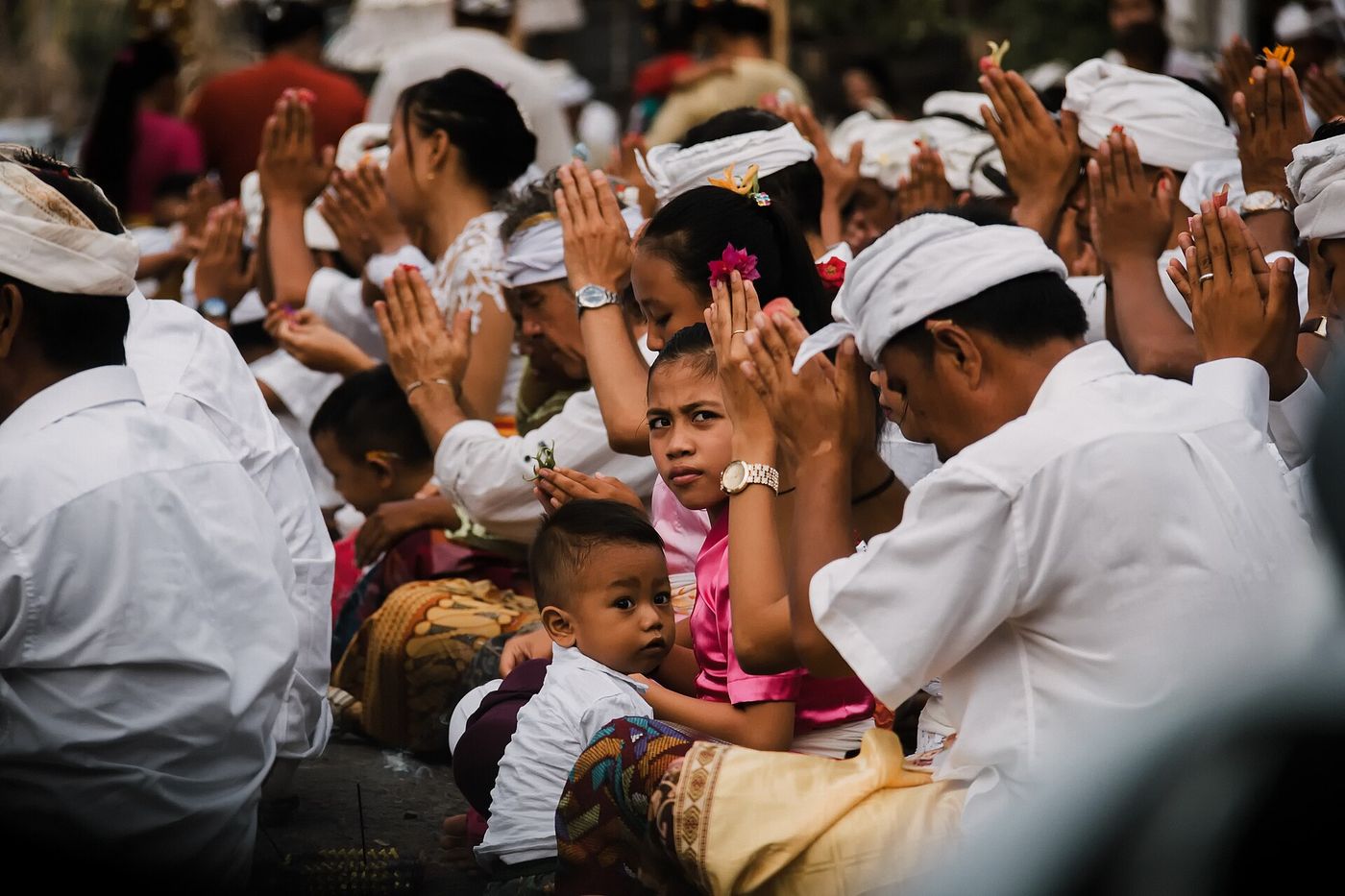 Families at prayer during a Hindu ceremony. Photo: Wiaskara / Wikimedia Commons (CC BY-SA 4.0)

The ritual heart of the day belongs to the priests. The Sundarigama asks them to perform ngarga and mapasang lingga, rites of worship to Pramesti Guru, and calls for meditation at midnight; the priests' main offering is the Sesayut Panca Lingga. Everyone else joins in as they can, with the Sesayut Pageh Urip, the offering for a firm life, alongside a purifying prayascita and the everyday canang. Prayers begin at the family shrine in the house compound and continue at the family and village temples (Buleleng welfare office). For what these offerings are made of, see Balinese offerings explained.
Why Buleleng Keeps Pagerwesi Like Galungan
In Buleleng, Pagerwesi is a holy day on the scale of Galungan and Kuningan, and people call it Rainan Pegorsi, or simply Pegorsi. In Singaraja the two days before, penyajaan and penampahan, are taken up with making offerings and cooking, above all lawar, the minced, spiced dish. The only thing missing from a Galungan is the penjor, the tall bamboo poles, which Pagerwesi does not raise (NusaBali). Buleleng people who live and work away make a point of coming home, to see their families and pray at the family temple.
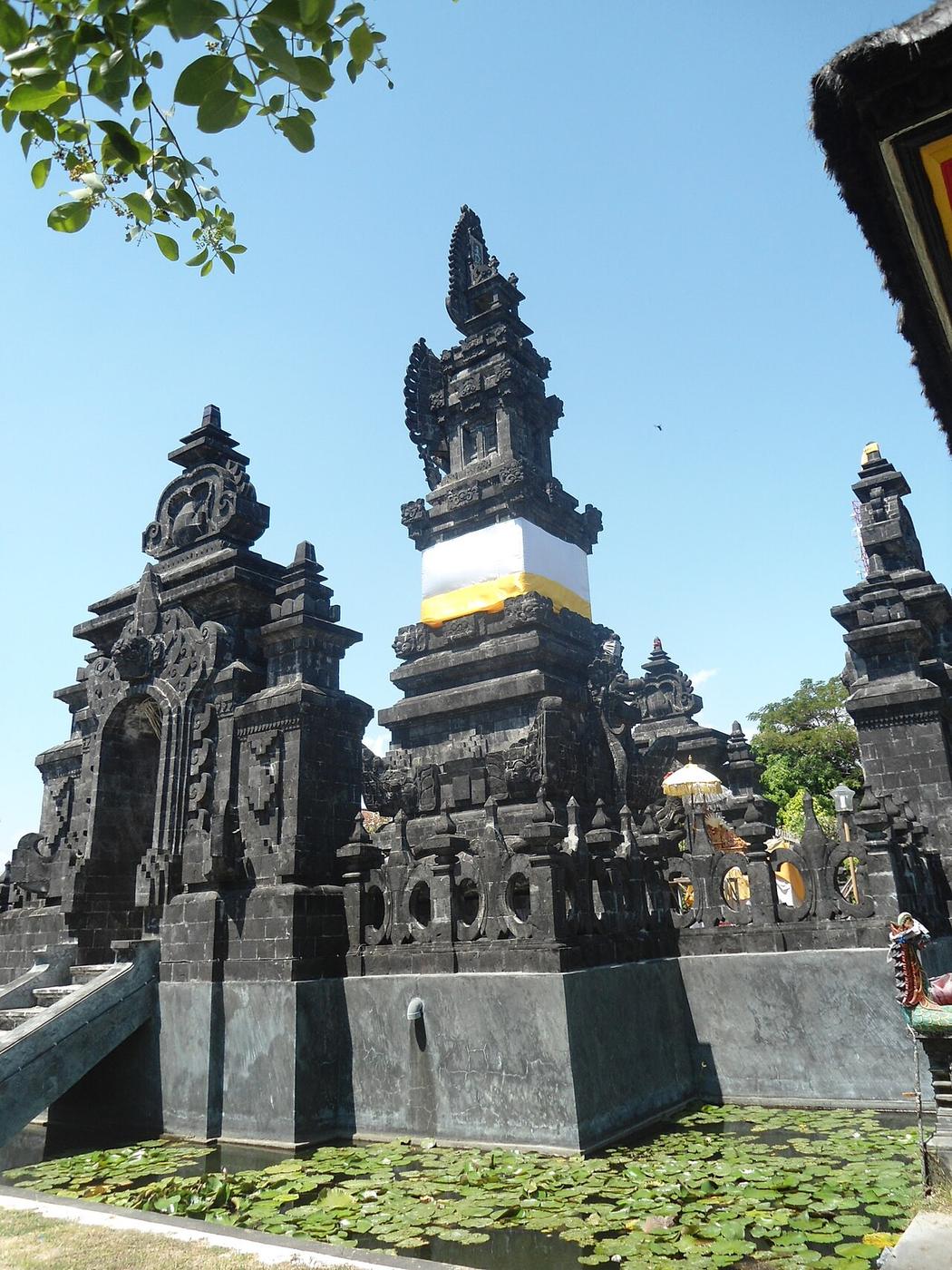 Pura Jagatnatha in Singaraja. Photo: DayakSibiriak / Wikimedia Commons (CC BY-SA 4.0)

Nobody records a single reason. Four explanations are offered:
- The elders' instruction. A petuah, advice handed down from Buleleng's forebears, tells their descendants to keep Pagerwesi wholeheartedly as a strengthening of body and soul, as Galungan marks the victory of dharma. Nyoman Suka Ardiyasa of the state Hindu college in Singaraja gave this account to Koran Buleleng, and the rector of Institut Mpu Kuturan gave the same account to Bali Post.
- Local custom. Hindu law recognises tradition, acara, as a source of dharma beside scripture, and custom that holds in one place, loka dresta, can shape how a holy day is kept there, a Singaraja lecturer told NusaBali.
- East and west. Buleleng was once divided into Dangin Enjung, the east, and Dauh Enjung, the west. The east took the Shaivite teaching of Siwa Pasupata and the west Mahayana Buddhism, and today the big celebrations run from Buleleng district east to Tejakula, while Gerokgak and Busungbiu in the west keep the day simply (Koran Buleleng).
- The old capital. A Hindu religious counsellor in Kubutambahan, quoted by the Buleleng regency, ties the grandeur to Buleleng's past as the seat of Dutch government over the Lesser Sunda Islands; the history of north Bali tells that story.
The same counsellor describes what the day looks like: ceremonies at Pura Jagatnatha in Singaraja and at the village temples, prayers to the ancestors at the family shrines, and families visiting the cemetery with punjung.
Munjung: A Meal at the Graves
Munjung is Buleleng's own Pagerwesi custom, and Bali's provincial government names it among the customs that set the north's Pagerwesi apart (Love Bali). In Bali the dead are cremated, but not always at once: a family may bury a relative first and hold the ngaben later. On Pagerwesi morning, families go to the setra, the village cemetery, with a punjung for those still buried: rice, meat dishes, drinks and Balinese cakes, sometimes a favourite food of the person who has died. They lay it on the grave, pray, and then eat together (Koran Buleleng).
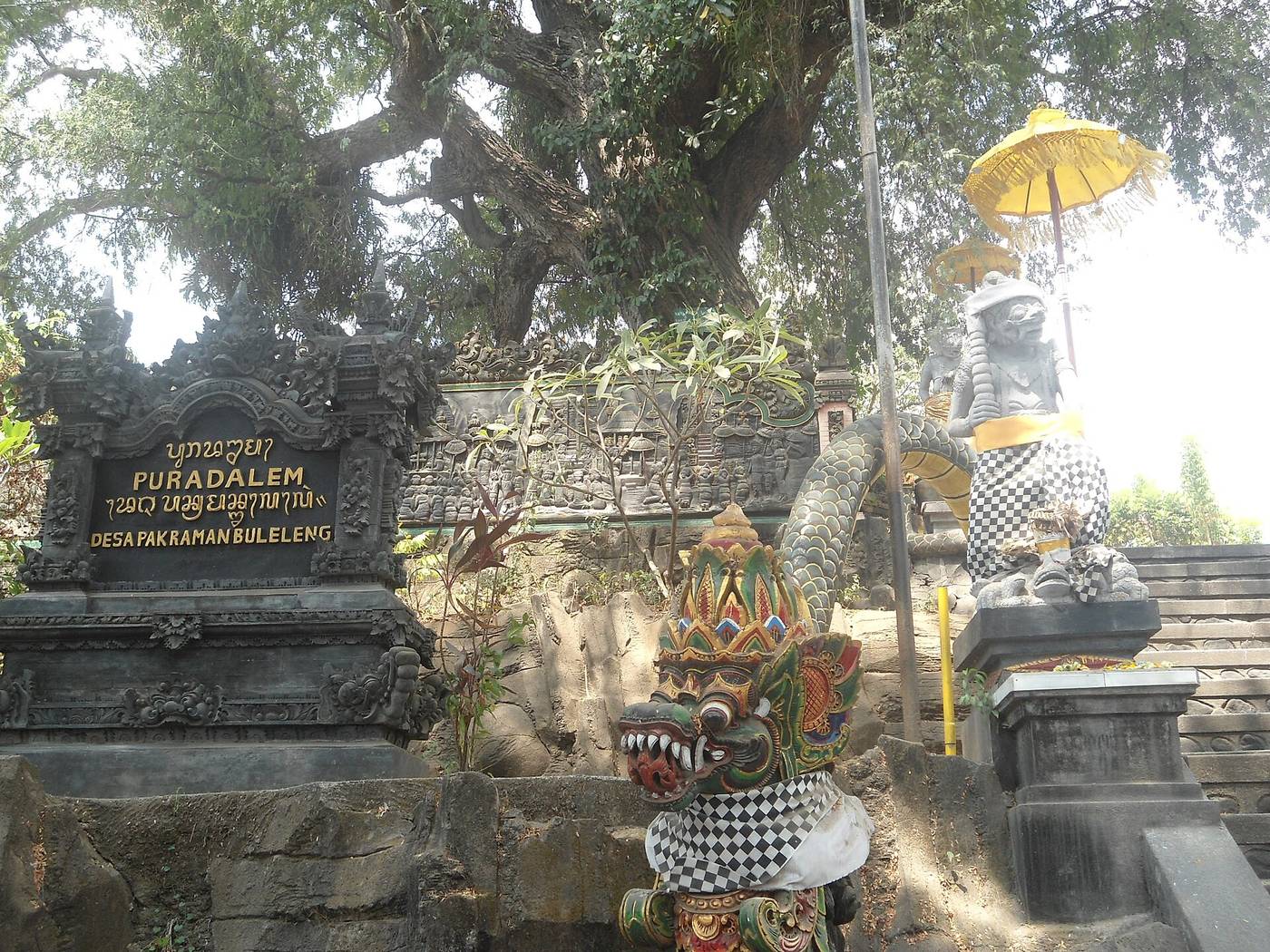 Pura Dalem Desa Pakraman Buleleng in Singaraja, beside the town's cemetery. Photo: DayakSibiriak / Wikimedia Commons (CC BY-SA 4.0)
A reporter for tatkala.co spent a Pagerwesi morning at Setra Buleleng on Jalan Gajah Mada, next to the Pura Dalem of the customary village. Families came after praying at home or at the Pura Dalem, carrying mats, plates and full meals, and to an outsider it looked like a picnic. One man told him his family had risen before dawn to pray at home and at the temple, come on to the graves, and would gather at home afterwards.
Families also bring punjung to the heroes' cemetery, Taman Makam Pahlawan Curastana in Singaraja, where independence fighters are buried, and they come on Galungan and Kuningan as well, some on 17 August too (Koran Buleleng). Fewer families munjung than before, the head of the customary village of Buleleng told the same paper, because most now go straight to cremation. It will last, he said, because Banjar Jawa, one of the village's neighbourhoods, still buries its dead before the ngaben.
What Visitors See
- The two days before. Households busy with offerings and cooking. It is the same work that comes before Galungan, without the penjor along the roads.
- Pagerwesi morning. Families in temple dress on their way to shrines and temples, with the celebrations biggest in Singaraja and the villages to its east. For how to dress and behave, read Bali temple etiquette and understanding Balinese ceremonies.
- The cemeteries. Munjung is a family's private time with its dead. Watch from a distance, if at all, and never photograph a family at a grave without asking.
- The rest of the week. On Banyu Pinaruh, the Sunday before, people bathe in the sea or at springs; melukat, water purification explains the idea behind it.
Singaraja is a short drive east of Lovina, where most of Palm Living's villas are, so a Pagerwesi morning in the old town is easy to reach from the coast. For the town itself, see Singaraja old town.
FAQ
What is Pagerwesi? A Balinese Hindu holy day for strengthening knowledge and faith, honouring Sang Hyang Pramesti Guru, Shiva as the teacher of the world. Its name means iron fence: the knowledge received at Saraswati is fenced in and kept.
When is Pagerwesi? On Buda Kliwon Sinta, a Wednesday in the 210-day pawukon calendar, four days after Saraswati. It returns every 210 days, so it moves through the Western calendar; the north Bali events calendar lists the coming dates.
What does Pagerwesi mean? Pager means fence and wesi means iron. The iron fence stands for a mind and faith made firm by knowledge, so that nothing harmful gets in.
Why is Pagerwesi celebrated so grandly in Buleleng? There is no single recorded reason. Local scholars point to advice from Buleleng's ancestors to keep the day wholeheartedly, to the force of local custom in Hindu law, and to the old division of the regency, with the grandest celebrations in Singaraja and the east.
What is the difference between Pagerwesi and Galungan? Galungan celebrates the victory of dharma over adharma and falls on Buda Kliwon Dungulan; Pagerwesi strengthens knowledge and faith and falls on Buda Kliwon Sinta. In most of Bali, Galungan is far bigger. In Buleleng they are kept on the same scale, but only Galungan raises penjor.
What is munjung? Buleleng's Pagerwesi custom of visiting the cemetery with a punjung, a meal and offering, for relatives who are buried but not yet cremated. The family prays at the grave and then eats together there.
Can visitors see Pagerwesi? Yes, respectfully. Temples are busy in the morning, especially in Singaraja; wear temple dress, stay at the back, and leave the families at the cemeteries in peace.
Sources
- Love Bali, Bali Provincial Government, A closer look at Pagerwesi holy day in Bali, for the meaning, the date and munjung, read September 2026 (in English)
- Buleleng Regency Welfare Office, Implementasi hari raya Pagarwesi dalam memuliakan Tuhan, for the Sundarigama, the sequence from Saraswati, the catur guru and the offerings, read September 2026 (in Indonesian)
- Buleleng Regency, Esensi hari suci Pagerwesi, for Pura Jagatnatha, the cemetery visits and the old capital, read September 2026 (in Indonesian)
- Koran Buleleng, Pagerwesi, perayaan peneguhan hati, 2021, for Nyoman Suka Ardiyasa's account, the east and west, and munjung, read September 2026 (in Indonesian)
- Koran Buleleng, Warga Singaraja setia jalankan tradisi munjung saat Pagerwesi, 2023, for the heroes' cemetery and Banjar Jawa, read September 2026 (in Indonesian)
- NusaBali, Memaknai arti hari raya Pagerwesi di Singaraja, for the preparations, the missing penjor and loka dresta, read September 2026 (in Indonesian)
- Bali Post, Pagerwesi di Buleleng meriah, setara Galungan dan Kuningan, read September 2026 (in Indonesian)
- tatkala.co, Hari Pagerwesi meriah di Buleleng, kenapa?, for Soma Ribek, Sabuh Mas and the Sundarigama text, and Menengok tradisi munjung ke setra, for a morning at Setra Buleleng, read September 2026 (in Indonesian)
- Bali Information (Palm Living), Pagerwesi day: a special celebration in Buleleng, read September 2026 (in English)
- Kalender Bali Digital, kalenderbali.org, for dates, read September 2026 (in Indonesian)
Read next: Galungan and Kuningan, the Balinese calendar explained and Ngaben, the Balinese cremation.