
On this page
In Brief
Mecaru means making a caru, an offering to the bhuta kala, the forces of the natural world and of time. The Hindu council PHDI explains the word as "beautiful" or "harmonious": the aim is to make the relationship between people and nature beautiful again. Caru is the middle rank of Bhuta Yadnya, the offerings to the lower world. Below it sits the daily segehan of rice; a caru adds chickens, from one five-coloured chicken up to several; with a buffalo it becomes a tawur. Every household, banjar and village makes one on the dark moon before Nyepi, and a mecaru opens the melaspas, the ceremony that blesses a newly finished building before anyone lives in it. Balinese regard a new house without its melaspas as not ready to be lived in, and villas are no exception: Palm Living has written up one at a villa west of Lovina.
Mecaru at a Glance
- What it is: An offering, the caru, made to the bhuta kala to restore harmony between people and nature
- The word: Caru means beautiful or harmonious, according to PHDI
- Its place: Bhuta Yadnya, one of the five kinds of offering in Panca Yadnya
- The ladder: Segehan (rice, no animal), then caru (chickens: Eka Sata, Panca Sata, Panca Sanak, Panca Kelud, Balik Sumpah), then tawur (a buffalo)
- When: The tawur kesanga on the dark moon before Nyepi; before a new building is blessed; within larger ceremonies such as weddings
- Where: In house courtyards, at gateways and at crossroads
- Who leads a house ceremony: Usually a pemangku, a temple priest; a high priest for temples and the largest rites
- Melaspas: The blessing of a new or renovated building, which begins with a mecaru
What a Caru Is For
The bhuta kala are easy to misread as demons. The Hindu council, Parisada Hindu Dharma Indonesia (PHDI), takes the words apart in its explainer on Bhuta Yadnya. Bhuta comes from bhu, to become or to exist, and points to the five elements, earth, water, fire, air and ether. Kala is energy, and time. Together they are the forces of the natural world: the earthquakes, floods, storms and lightning that people could not control, and so pictured as fanged giants. The same forces, handled well, give the harvest and the rain.
The caru is the human side of that relationship. PHDI's second explainer, Caru adalah memaknai ruang dan waktu, quotes the Samhita Swara for the meaning of the word, beautiful or harmonious, and the Sarasamuscaya for the reason: before anyone can pursue a good life, the world around them must be well, bhuta hita. Mecaru is often described as nyomia, turning the fierce side of the bhuta kala gentle. PHDI is careful to add that the ritual way of befriending nature only works alongside the practical one: caring for the land, water and air themselves.
Nobody is worshipping demons. The low offerings keep the dark forces in their place, as Rwa Bhineda explains, and the harmony they aim at is the third strand of Tri Hita Karana.
Segehan, Caru and Tawur: The Levels
Bhuta Yadnya comes in sizes, and PHDI names them by what is offered.
Segehan. The smallest, made daily: rice with a little onion and ginger, no animal. There are many kinds, among them segehan nasi kepel and segehan wong-wongan. It is the ground offering you see at gateways every morning, described in Balinese offerings explained.
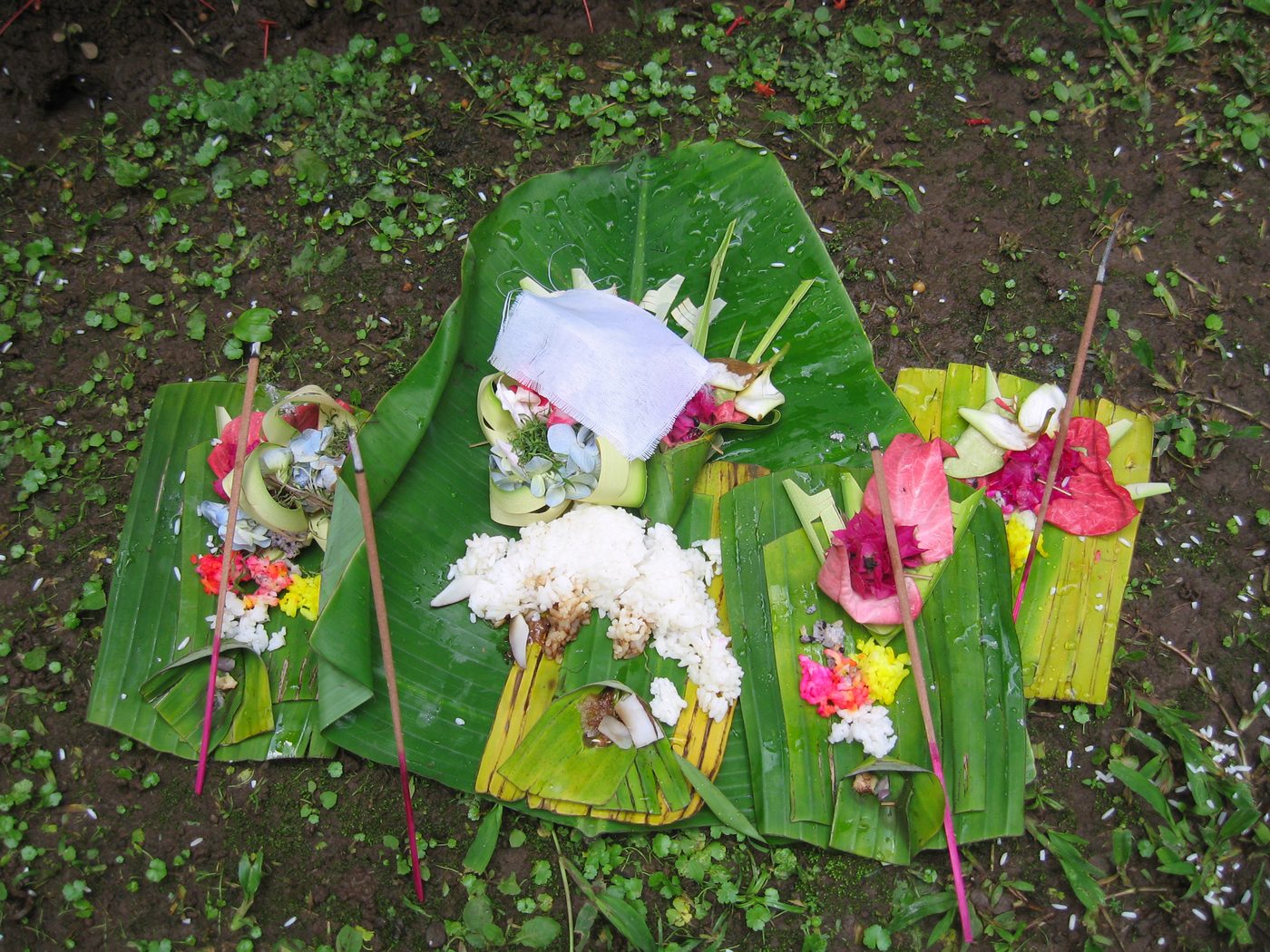 A segehan, the everyday ground offering that sits below the caru. Photo: Puri Lumbung Cottages / Wikimedia Commons (CC BY-SA 4.0)

Caru. Once a chicken is offered, the segehan becomes a caru, and the kind of animal gives the caru its name and rank. PHDI lists Eka Sata, made with a single brumbun chicken of five colours, Panca Sata, with five chickens, and above them Panca Sanak, Panca Kelud and Balik Sumpah. Buleleng's culture and tourism office describes a typical household caru: five-coloured rice, chicken and palm wine, made by each family according to its means.
Tawur. Citing the lontar Dang Dang Bang Bungalan, PHDI says an offering that uses a buffalo is no longer called a caru: it is a tawur. The Tawur Agung, with one buffalo, is the one made each year before Nyepi. Above it PHDI names the great periodic tawur for the harmony of the three worlds, among them Panca Wali Krama and Eka Dasa Rudra.
The level also follows the size of the community. A paper by I Dewa Gede Ngurah Diatmika of STKIP Agama Hindu Singaraja, citing the Hindu scholar I Ketut Wiana, sets out the ladder for the night before Nyepi:
- a household makes segehan
- a banjar makes a Caru Eka Sata
- a customary village makes a Caru Panca Sata
- a district makes a Caru Panca Sanak
- a regency makes a Caru Panca Kelud
- the province makes the Tawur Agung, with a buffalo
On the animals, PHDI cites the Manawa Dharmasastra: the plants and animals given in yadnya are believed to rise to a better birth, and the person who gives them gains merit too.
When a Mecaru Is Held
Before Nyepi. The biggest mecaru of the year is the tawur kesanga, on tilem kesanga, the dark moon of the ninth Balinese month and the day before Nyepi. Buleleng's culture office describes it being made at crossroads and around every house. Diatmika follows it in Banjarasem, a village in Seririt district west of Lovina: the purification at the beach in the afternoon, the tawur at dusk, and then the youth take their ogoh-ogoh out into the streets. The two belong to one evening: the caru feeds and settles the bhuta kala, and the parade that follows makes them visible and burns them.
Before a new building is used. A mecaru opens the melaspas of any new or renovated building, from a family shrine to a house, an office or a villa, described below.
Inside other ceremonies. Many larger rites include a caru. At a Balinese wedding, the fetching of the bride alone carries a caru of a brindled chicken among its offerings, as our wedding guide explains.
Melaspas: Blessing a New Building
Melaspas, or pamelaspasan, is the ceremony that purifies a newly finished or renovated building and makes it fit to use. The religious affairs ministry's Denpasar office explains the word: mlas means to separate and pas means to fit, so melaspas joins together things that were apart. Wood, earth and stone are separate things; the ceremony makes them one building fit to live in. detikBali adds the belief that matters most to anyone building here: until its melaspas, a new building is not considered ready to be lived in.
A new house is ceremonially marked from the start. Bali's provincial spatial-planning service describes ngeruwak, ngendag and nasarin, the rites that open the ground and lay the foundation, as the first stage of building. The melaspas closes the circle when the work is done.
The order of a melaspas. Accounts from the Dangin Puri Kaja village office in Denpasar and from detikBali agree on the shape:
- The mecaru. The bhuta kala are invited, given their share, the labaan, and asked to return to where they belong, taking with them whatever had come to dwell in the building. Dewa Gana is called on to keep disturbing spirits away.
- The orti. The orti, a symbol of communication, is fixed at the top of the building as a request to God.
- The ulap-ulap. Ulap-ulap, marked with sacred script, are fixed to the building, each suited to its kind.
- The pangurip-urip. The building is "brought to life" with strokes of arang bunga, flower charcoal, on each part, standing for Brahma, Wisnu and Iswara.
- The offerings. The banten ayaban and the pras pamelaspas are presented. For a shrine, pedagingan, sacred objects, are also set into the base.
A melaspas is usually led by a pemangku; a temple's is led by a high priest. The day is chosen by the Balinese calendar's reckoning of good and bad days, ala ayuning dewasa. detikBali, reporting a melaspas held by Irfan and Jennifer Bachdim for their new house in Kerobokan, notes three sizes, kanista, madya and utama, from the simplest to the grandest, chosen according to what the household can manage.
If You Are Building or Buying a Villa
A melaspas is part of finishing a house in Bali. Palm Living's property team wrote up the mecaru and melaspas at Villa Bukit Santai, a villa among the rice fields of Umeanyar, west of Lovina: first the mecaru to cleanse the ground, then the melaspas to bless the building, as a prayer for peace and harmony for everyone who would live there.
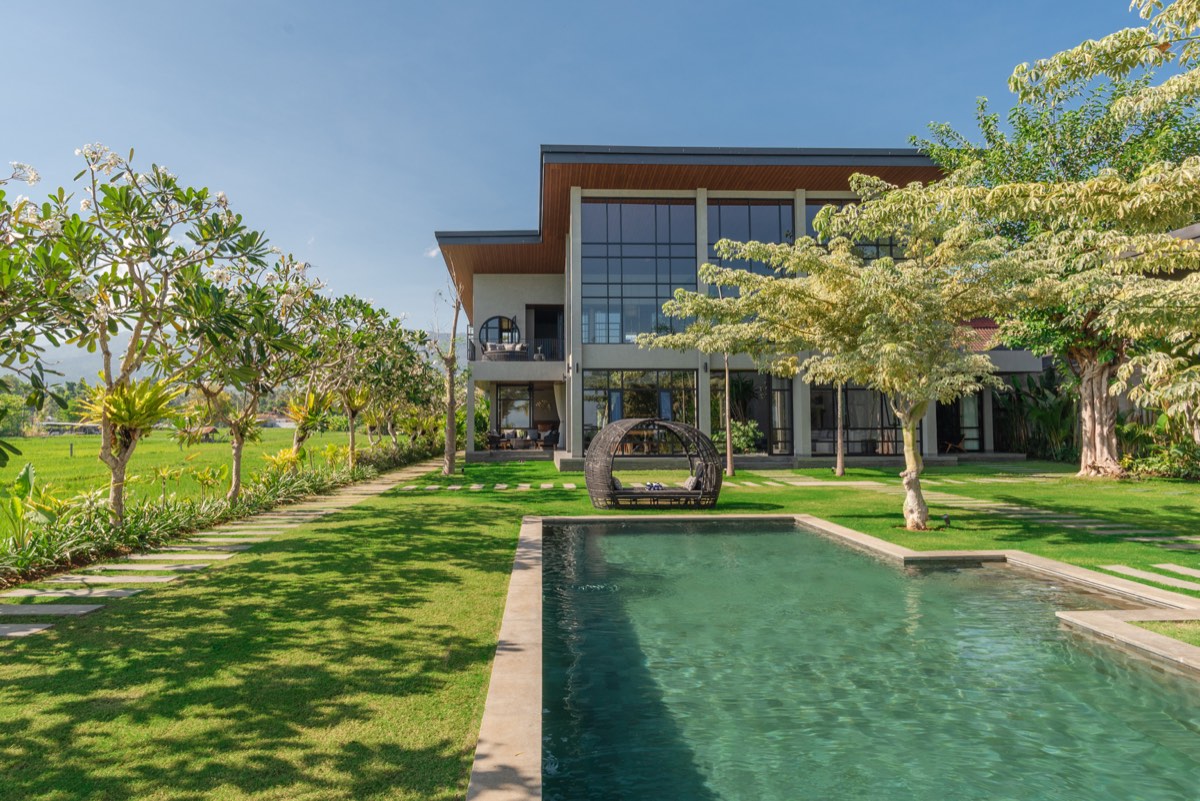 A finished villa near Lovina, the kind of new building a melaspas makes ready to live in. Photo: Palm Living archive.
A few practical points for owners:
- Ask early. Your builder, villa manager or Balinese staff will know the local pemangku. Ask them to arrange it once handover is in sight.
- Let the calendar set the date. The day comes from the dewasa reckoning, so fix the ceremony before you fix the move-in or the first guests.
- Scale follows means. The three sizes exist so that every household can do it properly. Your pemangku will explain the offerings for the level you choose.
- Take part. Owners are welcome to attend and pray. Wear a sarong and sash, as for a temple; Bali temple etiquette covers the dress.
- Remember the start. If you are building from bare land, the ceremonies that open the ground come before the first foundations. Building a villa in north Bali walks through the whole process, and traditional Balinese architecture explains how a compound is laid out.
For land and villas for sale on the north coast, Palm Living's property site lists north Bali land and villas for sale. To stay in one that has had its melaspas, see the villas for rent, mostly around Lovina.
FAQ
What is mecaru? A Balinese Hindu ceremony in which a caru, an offering to the bhuta kala, the forces of the natural world, is made to restore harmony between people and nature. It belongs to Bhuta Yadnya, the offerings to the lower world.
What does caru mean? PHDI explains caru as beautiful or harmonious. Bhuta Yadnya is called caru because its aim is to make the relationship between people and their environment harmonious again.
What are the levels of caru? Below the caru is the segehan, rice without an animal. A caru uses chickens: Eka Sata with one five-coloured chicken, Panca Sata with five, then Panca Sanak, Panca Kelud and Balik Sumpah. With a buffalo the offering becomes a tawur, such as the Tawur Agung before Nyepi.
When is mecaru held? Every year on the dark moon before Nyepi, as the tawur kesanga, made by every household, banjar and village. It also opens the blessing of a new building, and it is part of larger ceremonies such as weddings.
What is a melaspas ceremony? The blessing of a newly finished or renovated building, from a shrine to a house or villa. It begins with a mecaru, then fixes the orti and ulap-ulap, marks the building with the pangurip-urip and presents the offerings. Balinese regard a new building as not ready to live in until it is done.
Do villa owners hold a melaspas? Yes. Palm Living has written up a mecaru and melaspas at Villa Bukit Santai in Umeanyar, west of Lovina, held before the owner settled in. Ask your builder or villa manager to arrange a pemangku and an auspicious day.
Sources
- Parisada Hindu Dharma Indonesia, Bhuta Yadnya (the meaning of bhuta and kala, the forces of nature, caru as sweet and harmonious, the great island-wide tawur) and Caru adalah memaknai ruang dan waktu (Samhita Swara, Sarasamuscaya and bhuta hita, segehan, the caru levels, the buffalo tawur and the lontar Dang Dang Bang Bungalan, nyomia, the Manawa Dharmasastra), Indonesian, read September 2026
- Dinas Kebudayaan dan Pariwisata Kabupaten Buleleng, Mecaru (mecaru before Nyepi at crossroads and around the house, contents, according to means), Indonesian, read September 2026
- I Dewa Gede Ngurah Diatmika, STKIP Agama Hindu Singaraja, Ogoh-ogoh dan Hari Raya Nyepi, Jurnal Widya Sastra Pendidikan Agama Hindu (the tawur kesanga in Banjarasem, the levels by community after Wiana), Indonesian, read September 2026
- Kantor Kementerian Agama Kota Denpasar, Upacara melaspas dan rangkaian upacara memakuh, mendem pedagingan, dan mecaru (the meaning of mlas and pas, a melaspas at a new office), Indonesian, read September 2026
- Desa Dangin Puri Kaja, Kota Denpasar, Makna upacara pemelaspasan (the mecaru first, labaan and Dewa Gana, the orti), Indonesian, read September 2026
- detikBali, Mengenal makna-prosesi upacara melaspas di Bali (not ready to live in until blessed, ala ayuning dewasa, the pemangku, the order of the ceremony) and Apa itu tradisi melaspas yang dijalankan Irfan dan Jennifer Bachdim di Bali? (the three sizes, the ulap-ulap in sacred script, pedagingan, the pangurip-urip), Indonesian, read September 2026
- Sistem Informasi Wilayah dan Tata Ruang, Provinsi Bali, Ngeruwak, ngendag, dan nasarin (the rites at the start of a build), Indonesian, read September 2026
- BPI / Palm Living, Mecaru and melaspas ceremony at Villa Bukit Santai, English, read September 2026
Read next: ogoh-ogoh for the parade that follows the Nyepi caru, Panca Yadnya for the five kinds of offering, and building a villa in north Bali for the build itself.