On this page
- In Brief
- Bali's Seasons at a Glance
- Which Month Suits Which Trip
- Dry Season, April to October: The Surest Weather and the Fullest Beaches
- Wet Season, October to April: Afternoon Rain, Low Prices and a Green Island
- Month by Month: Weather, Crowds and Prices from January to December
- Peak, Shoulder and Low Season: Crowds and Prices in Three Gears
- Best Time by Activity: Surf, Reefs, Waterfalls, Festivals and Dolphins
- Nyepi: The Day the Whole Island Stops
- Why the North Stays Drier: The Coast Sits in Bali's Driest Climate Class
- Practical Notes
- FAQ
- Sources
In Brief
The best time to visit Bali for most travellers is the dry season, April to October. May, June and September are the sweet spot, with settled weather, lighter crowds than the peak and rates below the July and August high. July and August are the busiest months.
The wet season runs from October to April, with a changeover month at each end. Its rain often comes as a heavy afternoon downpour and seldom lasts all day, and it brings the lowest prices and the emptiest beaches.
North Bali falls in the driest climate class on the island, so the shoulder months work better there than the island-wide averages suggest.
Bali's Seasons at a Glance
- Dry season: April to October
- Wet season: October to April, with October and April as the changeover months
- Peak season: July and August, plus the Christmas and New Year holidays
- Shoulder season: April to June and September to October
- Best overall: May, June and September, for sun, space and fair prices in one window
- Cheapest and quietest: January to early March, in the wet season but outside the New Year peak
- Driest region: the north and east coasts, including Lovina and Pemuteran, in the driest of Bali's climate classes
- The exception: Nyepi, the Day of Silence, usually in March. The date moves each year with the Balinese lunar calendar, and the whole island shuts down for 24 hours
Which Month Suits Which Trip
When you should go depends on what you came for.
| If you want... | Go in |
|---|---|
| The surest weather on a single trip | The dry season, above all June to September |
| Sun without the peak crowds and prices | May, June or September |
| The island at its greenest under clear skies | April or May |
| The lowest prices and the emptiest beaches | January to early March |
| Diving and snorkelling | The dry months |
| Waterfalls at full volume | The wet season |
| Safe waterfall trails and clear pools | Dry-season mornings |
| The ogoh-ogoh parades | The eve of Nyepi, usually in March |
Dry Season, April to October: The Surest Weather and the Fullest Beaches
The dry season is the postcard Bali.
Skies are clear on most days, seas are calmer on the protected coasts and trails are firm underfoot. The provincial government's climate note describes it as dry, hot and low in rain, driven by the east wind off Australia. If you only have one trip and want the surest weather, this is the window.
The months inside it differ:
- April and May: these months still carry the freshness of the rains just ended. Rice terraces and waterfalls are at their greenest, and the skies have already cleared.
- June to September: the most settled months. In Buleleng, the regency's own profile shows rainfall at its lowest from June to September, with September the driest month of all.
- October: the hinge month, mostly dry but with clouds building towards the wet season.
This is the season for anything that depends on water clarity or trail conditions. Three examples are diving at Menjangan, snorkelling on the reefs around Pemuteran and the canyon trek to Sekumpul. Each is at its best with dry-season stability behind it.
The catch is that everyone else knows this too. Dry season is high season, and the busiest, priciest stretch sits right in the middle of it.
For how the north's calendar differs from the island as a whole, see the best time to visit north Bali.
Wet Season, October to April: Afternoon Rain, Low Prices and a Green Island
The wet season scares off more visitors than it should.
Rain in Bali often comes as a heavy tropical downpour in the afternoon, sometimes spectacular and soon over, with sun before and after. Mornings are frequently clear. The provincial climate note warns that the changeover months have grown harder to predict in recent years, so build some slack into an October or April trip.
What you trade in weather you gain elsewhere. Early December, January, February and March bring the lowest room rates of the year, the emptiest beaches and the greenest landscape. Waterfalls run at full volume, and the crowds at the famous sites thin out.
The real considerations are practical:
- Heat: humidity is higher and the heat feels heavier.
- Roads and trails: dirt roads and waterfall trails get slippery, and the north's canyon falls can rise fast after a heavy night.
- The sea: visibility drops when rivers run muddy, so the underwater season is weaker.
- Mosquitoes: they are more active.
The wet season is a good time to come, and the cheapest one, if your trip is built around beaches, spas, food and culture. The occasional hour of rain-watching from a villa terrace comes with it. If your trip is built around diving, multi-day trekking or guaranteed all-day sun, lean dry.
Month by Month: Weather, Crowds and Prices from January to December
Each month below gets the same three notes: the weather, the crowds and prices, and what it suits.
January. This is deep wet season, with afternoon rain and a lush island. Once the New Year visitors leave, prices and crowds are the lowest of the year. It is good for a quiet, cheap, slow trip.
February. February is much like January, and in Buleleng it is the wettest month in the regency's own figures. The island is still green and still cheap, and it is a poor month for diving but a fine one for villas and culture.
March. The rains begin to ease, and Nyepi usually falls this month. Prices stay low and crowds light until the dry season arrives.
April. April is the turn of the season, when rains taper off and skies clear. The island is at its greenest while the weather settles, and it is one of the best-value months of the year.
May. May is reliably dry, warm and not yet crowded. It is among the best months overall, with sun without the July crush and prices still in the shoulder band.
June. June is dry and settled, and it starts the high season. Conditions are excellent across the board, with crowds and prices climbing as the month goes on.
July. July is peak season, when the driest weather meets the heaviest demand. BPS figures reported by ANTARA showed foreign arrivals climbing month by month into July. Book accommodation, drivers and popular restaurants well ahead.
August. August is also peak, with superb dry weather and crowds to match, so reserve what you need early.
September. September is often the smartest month of the year. It is still dry and settled, and in Buleleng it is the driest month of all. The peak crowds have thinned and prices have eased, and diving and snorkelling are still excellent.
October. October is the shoulder on the way out of the dry season. It is mostly dry early on, with afternoon clouds and the first rains building later. Value is good, crowds are lower and conditions still mostly hold.
November. The wet season settles in, and rain increases through the month. Prices drop and crowds fall away.
December. December is two months in one, and its early weeks are quiet, green and cheap. Around Christmas the holiday peak arrives, and prices and crowds spike until the New Year visitors leave in January.
Peak, Shoulder and Low Season: Crowds and Prices in Three Gears
Bali's calendar has three gears:
- Peak: July and August, plus the Christmas and New Year holidays
- Shoulder: April to June and September to October
- Low: the rest of the wet season, January through March and most of November
Peak: The Most Reliable Sun, at the Highest Price
In peak, the popular south and central areas fill up:
- villa rates rise
- the best restaurants need reservations
- traffic on the main routes thickens
- the headline attractions are busy from mid-morning
Booking months ahead stops being optional. The weather is the payoff, because this is the most reliable sun of the year.
Shoulder: Most of the Weather, Without the Crush
Shoulder season is where the value lives. You get most of the dry-season weather, most of all in May, June and September, without the peak pricing or the peak crush. For travellers with flexible dates, the shoulder months are the strongest all-round choice. For budgets, see the Bali trip cost guide.
Low: The Lowest Prices, Paid For in Afternoon Rain
Low season flips the equation, with the lowest prices of the year, the emptiest sites and the greenest landscape, paid for in afternoon rain and weaker sea visibility. For a budget trip or a slow one, it rewards you.
The North: Softer Swings in Any Season
The north draws fewer visitors than Canggu, Seminyak and Ubud in any season, so its crowd swings are softer. A shoulder-season day at Sekumpul or on the Pemuteran reef feels far emptier than an equivalent day at a south-coast headliner.
Best Time by Activity: Surf, Reefs, Waterfalls, Festivals and Dolphins
Each activity has its own calendar.
Surfing: Most of the Year, on the South Coast
Surf is a south-coast affair. Indonesia's tourism site describes the waves at Uluwatu as arriving from the Indian Ocean at full force, consistent for most of the year.
Which breaks work best shifts with the season's winds, so ask a local surf school before you pick a base. The north coast faces the calm Bali Sea and is not a surf region.
Diving and Snorkelling: The Dry Months
Plan underwater days for the dry months, when seas are calmer and rivers carry less runoff into the water. In the north, Menjangan Island inside West Bali National Park and the reefs around Pemuteran are the ones to plan around. See Pemuteran diving and snorkelling.
Waterfalls: Wet Season for Volume, Dry Season for Safe Trails
Waterfalls are a genuine split. For the most dramatic volume, the wet season has the falls thundering. For safe access and clear pools, the dry season wins, with firmer trails and predictable river crossings.
North Bali's big falls, Sekumpul and Aling-Aling among them, involve canyon descents that get slippery and can become unsafe after heavy rain. Dry-season mornings are the reliable choice. The full picture is in the north Bali travel guide.
Festivals and Culture: All Year, on Bali's Own Calendars
Balinese ceremonies run all year on the island's own calendars, so culture is in season in any month. The biggest fixed marker is Nyepi, usually in March.
Galungan and Kuningan follow the 210-day Pawukon calendar. Buleleng's district office explains that Galungan falls every 210 days, on the Wednesday of the week called Dungulan, with Kuningan ten days later. The pair can come round twice in one calendar year.
Roads are lined with tall penjor poles for the occasion. Northbound's ceremony and festival calendar lists the coming dates.
Dolphins in North Bali: Calm Dry-Season Mornings
The Lovina dolphin boats go out at dawn, when the regency tourism office notes the dolphins are most active. Calm dry-season mornings make for the smoothest trips. See the Lovina dolphins guide.
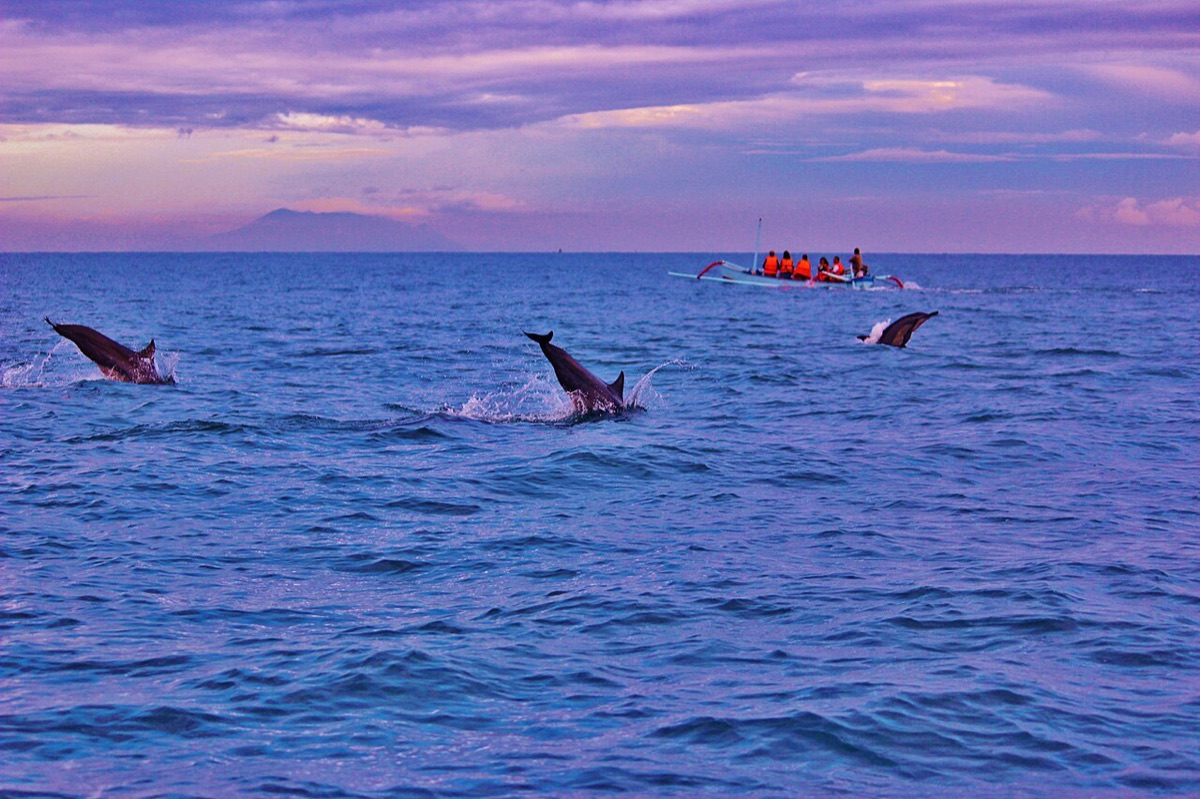 A pod of dolphins at sunrise off Lovina, with a boat behind. Photo: Michelle Maria / Wikimedia Commons (CC BY 3.0)
Nyepi: The Day the Whole Island Stops
Nyepi, the Balinese Day of Silence, marks the start of the Saka new year.
It usually falls in March, and the date moves each year with the Balinese lunar calendar, so check it for your dates before you book flights. It is unlike anything else on the calendar, and it affects every visitor, whether they intend to take part or not.
For 24 hours the island stops. Kompas reported that:
- the airport halts all domestic and international flights for the full day, from six in the morning to six the next morning
- the ferries linking Bali to Java and Lombok stop too
- both follow a joint appeal agreed by the regional government, the security services and the customary villages
The roads empty and people stay home, keeping the Catur Brata Penyepian, the four restraints of the day. Hotels and villas keep guests on the property, and you observe the quiet from where you are staying. Nyepi, the day of silence explains the day in full.
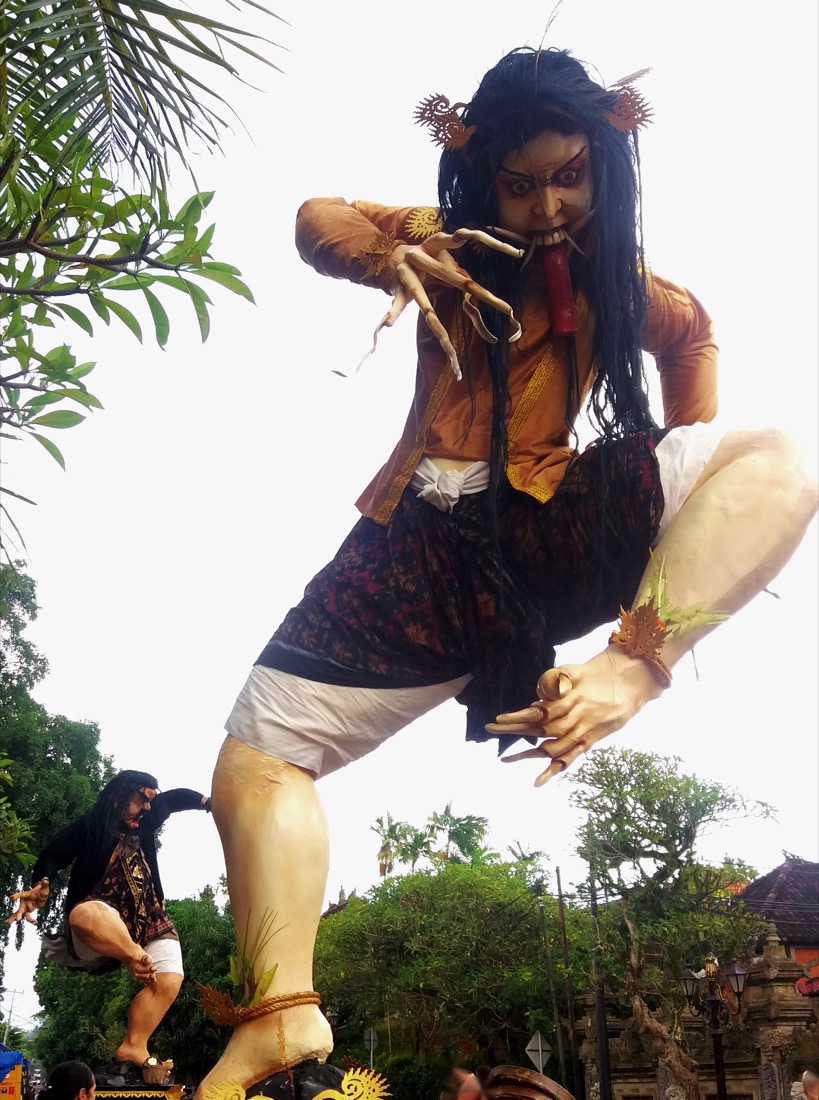
The night before brings the Ngrupuk parades. Villages carry huge, grotesque ogoh-ogoh effigies through the streets to drive out evil spirits before the silence. It is one of the most extraordinary nights of the Balinese year, and worth timing a trip to catch.
If your dates touch Nyepi, plan for it. Arrive a day or two before, and accept that the silent day is a rest day at your accommodation. Treat the parade night as a highlight of the trip. Travelling or sightseeing on Nyepi itself is not an option.
Why the North Stays Drier: The Coast Sits in Bali's Driest Climate Class
Bali's weather is not the same across the island.
The provincial government's rainfall map sorts Bali into climate types C to F on the Schmidt-Ferguson scale. The wettest of them, type C, covers the centre of the island, where the mountains stand. The driest, type F, with more dry months than wet ones, runs along the north and east coasts.
In practice, Lovina, Pemuteran and the lower north coast tend to see more clear days than the south. The difference matters most in the shoulder months. When the south is catching its first October showers or its last March downpours, the north is often still dry and sunny.
In Buleleng's own figures, rain falls in most months but stays low from June to September.
For trip planning this is the north's quiet advantage. A shoulder-season visit that might feel like a coin toss in Canggu is a safer bet up north, and you get the smaller crowds on top of it.
The deeper case for timing a north Bali trip, region by region, is in the best time to visit north Bali. Palm Living's villas for rent are on the Lovina coast, if the north is where you base.
Practical Notes
- Peak months: for July, August and the Christmas and New Year holidays, book accommodation, drivers and popular restaurants well ahead.
- Changeover months: build some slack into a trip in October or April, as these months have become harder to predict.
- Nyepi: check the date for your year before you book flights. No flights or ferries run on the day.
- Waterfalls: go on dry-season mornings, and take care on canyon trails after heavy rain.
- Surf: ask a local surf school which breaks work in your month before you pick a base.
FAQ
What is the best month to visit Bali? May, June and September are the strongest all-round months. You get dry-season weather without the July and August peak crowds and prices. June is the most settled of the three, while May and September lean quieter.
When is the wet season in Bali? The Bali provincial government puts the rainy season at October to April, with October and April as changeover months. Rain often comes as heavy afternoon downpours and seldom as all-day grey, and mornings are often clear.
Is it worth visiting Bali in the rainy season? Yes, if your trip is built around beaches, villas, food and culture. Diving and trekking are better in the dry months. You get the lowest prices, the emptiest sites and the greenest landscape, in exchange for afternoon rain and weaker sea visibility.
When is peak season in Bali? July and August, plus the Christmas and New Year holidays. These are the busiest and most expensive periods, so book accommodation and drivers well ahead.
What is the cheapest time to visit Bali? January to early March, in the heart of the wet season but outside the New Year peak. Room rates and crowds are both at their lowest then.
Which side of Bali is driest? The north and east coasts. The provincial rainfall map puts them in the driest climate class on the island. The north coast around Lovina and Pemuteran tends to see more clear days than the south, most of all in the shoulder months.
What is Nyepi and how does it affect my trip? Nyepi is the Balinese Day of Silence, usually in March, with the date moving each year. The whole island shuts down for 24 hours. The airport stops all flights, the ferries stop and no one goes out, so you spend the day at your accommodation. The ogoh-ogoh parade the night before is a highlight worth timing a trip around.
Sources
- Bali Provincial Government, Tarubali, Iklim tropis laut di Bali (dry season April to October, rainy season October to April, changeover months, the east wind, less predictable seasons in recent years) and Peta curah hujan (Schmidt-Ferguson climate types C to F; type F on the north and east coasts, type C in the centre), in Indonesian, read September 2026
- Pemerintah Kabupaten Buleleng, Geografis dan iklim (two seasons; low rainfall June to September; highest in February and lowest in September in the regency's figures), in Indonesian, read September 2026
- Kecamatan Buleleng, Hari Raya Galungan dan Kuningan (Galungan every 210 days on Buda Kliwon Dungulan, Kuningan ten days later, twice in some calendar years, penjor), in Indonesian, read September 2026
- Kompas, Bandara dan penyeberangan di Bali berhenti 24 jam saat Nyepi (the 24-hour halt of flights at Ngurah Rai and of the Java and Lombok ferries, the joint appeal, Catur Brata Penyepian), in Indonesian, read September 2026
- ANTARA, Angka kunjungan wisatawan ke Bali tercatat tertinggi di bulan Juli (BPS Bali figures showing foreign arrivals climbing month by month to a high in July), in Indonesian, read September 2026
- Indonesia's official tourism site, Surfing Uluwatu (Indian Ocean waves, consistent for most of the year), read September 2026
- Buleleng Regency tourism office, Visit North Bali, Dolphin tour (tours at sunrise, when dolphins are most active), read September 2026
Planning the north: how many days in north Bali, the 3-day itinerary and the 7-day itinerary.