
On this page
In Brief
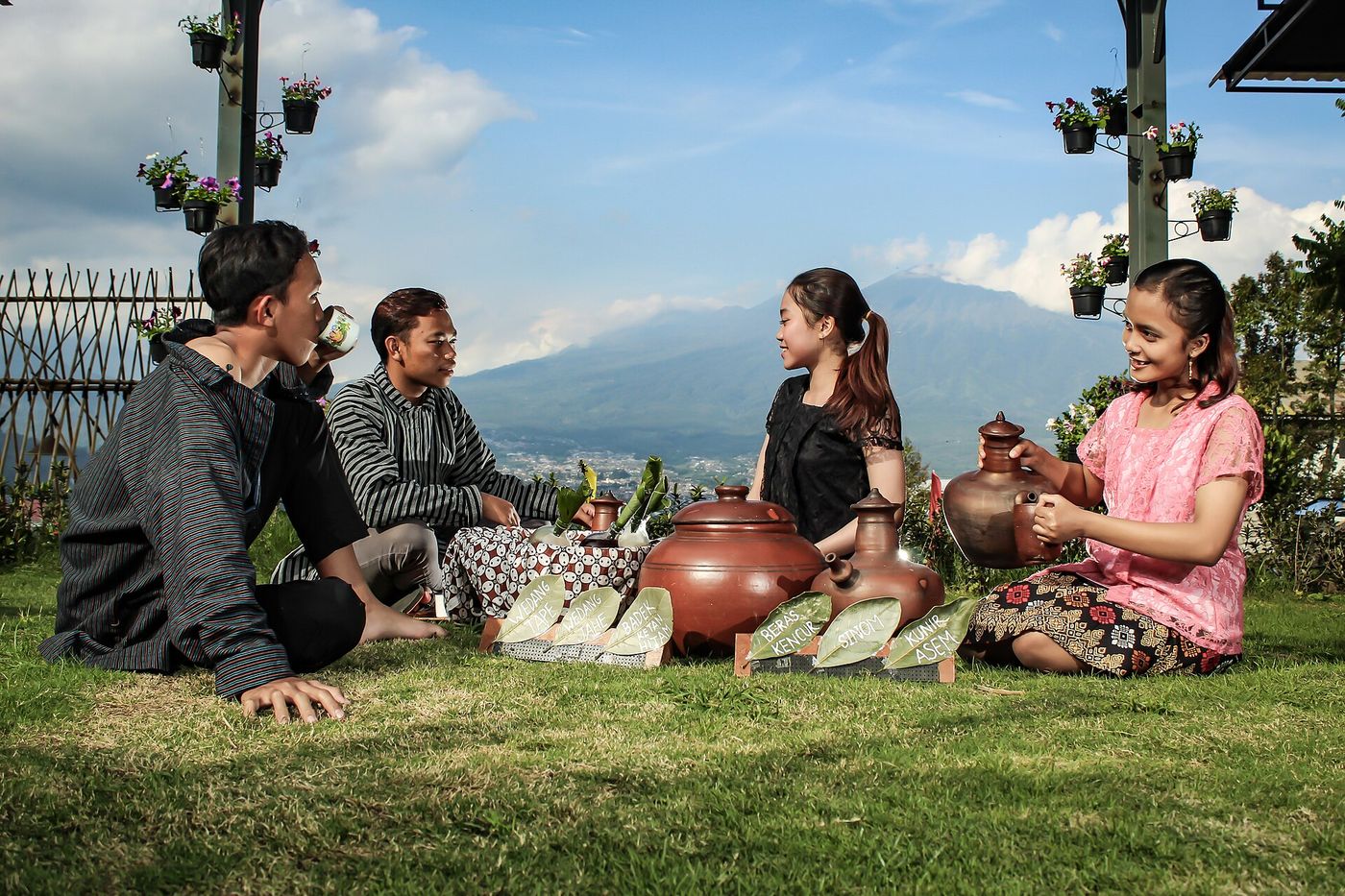
Jamu is Indonesia's traditional herbal medicine, mostly fresh drinks of roots, leaves and spices such as turmeric, kencur, ginger and tamarind. UNESCO inscribed "Jamu wellness culture" as intangible heritage in 2023, describing a practice that dates to the eighth century and passes mostly between women, within families. The best-known kinds are kunyit asam (turmeric and tamarind) and beras kencur (rice and aromatic ginger). In Bali the drinks are called loloh, and the medicine behind them is usada, written on palm-leaf manuscripts. Indonesia's food and drug authority, BPOM, says jamu's benefits rest on generations of use rather than clinical trials, and warns against illegal products spiked with drugs. In north Bali you can buy loloh from roadside sellers or learn to make it in Munduk.
Jamu at a Glance
- What it is: Indonesian herbal medicine, mostly fresh drinks, also powders, pills and ointments
- Main ingredients: Turmeric, kencur (aromatic ginger), ginger, temulawak, tamarind, betel leaf, palm sugar
- Heritage status: Inscribed by UNESCO in 2023 as "Jamu wellness culture"
- Who makes it: Mostly women, with recipes handed down in families; also factories, under BPOM registration
- Balinese names: Loloh for the herbal drinks; usada for traditional medicine and its palm-leaf texts
- Regulated by: BPOM, Indonesia's food and drug authority, which labels packaged products by level of evidence
- In north Bali: Tuak loloh from roadside sellers in Buleleng; loloh and jamu classes in Munduk
What Jamu Is
In UNESCO's words, jamu is "a form of herbal medicine and treatment" practised in Indonesia since the eighth century, built on the idea that hot illnesses are cured with cooling medicines and cold illnesses with warming ones, and that health is a balance between the two. The colours and shapes of plants are linked to the organs they are meant to help. Its aim is to keep people well and build immunity.
Most jamu makers are adult women. They often grow the herbs themselves and adjust a recipe to the customer's age, way of life and complaint. The knowledge passes informally, within families and between neighbours, and is now also taught at universities. UNESCO notes that the practice rests on confidentiality and trust, and that it strengthens ties between people.
The word itself holds a clue to Bali. Kompas, citing a history of jamu by Ernie H. Purwaningsih of the University of Indonesia's medical faculty, explains jamu as a joining of djampi, a prayer or medicine, and oesodo or husada, health. Husada is the same word as Bali's usada.
A Short History
Kompas's account of the heritage nomination traces herbal healing back to the temple reliefs of Borobudur and Prambanan in Central Java and Penataran in East Java. The Madhawapura inscription, from the Majapahit period, names a profession called acaraki, the herbal mixer, who meditated and fasted before preparing medicine. Stone mortars and pestles of the kind still used for jamu were found at the Liyangan archaeological site on the slopes of Mount Sindoro in Central Java. A full written account of jamu appears in the Javanese classic Serat Centhini, written between 1810 and 1823.
European doctors studied jamu from the seventeenth century, the first jamu factories opened in the early twentieth, and jamu is now sold as powders, pills and bottled drinks as well as fresh.
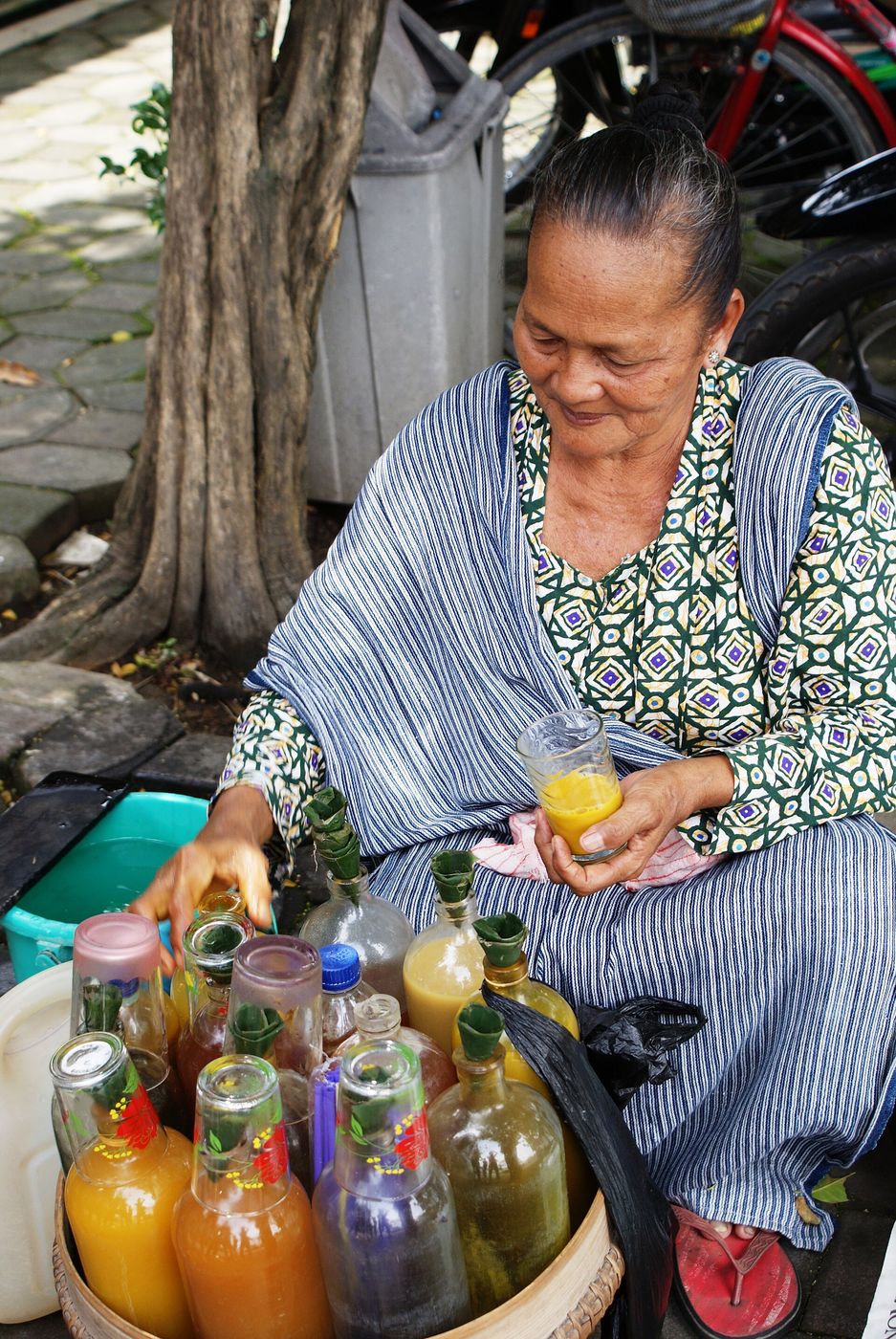 A jamu gendong seller with her basket of bottles in Yogyakarta. Photo: aa / Wikimedia Commons (CC BY-SA 3.0)

The Common Kinds of Jamu
The image most Indonesians have of jamu is the jamu gendong seller: a woman carrying a basket of bottles on her back in a cloth sling, going from house to house. BPOM calls her an authentic symbol of Indonesian culture. The Surakarta city government lists eight drinks that a jamu gendong basket traditionally holds, and Kompas set out their ingredients:
- Kunyit asam: Turmeric, tamarind, palm sugar and salt. Sweet and sour, and the drink most associated with women's health, taken around menstruation.
- Beras kencur: Rice and kencur (aromatic ginger), with ginger, tamarind water, turmeric and sugar. Slightly spicy, drunk against tiredness and to bring back an appetite.
- Cabe puyang: Cabe jamu (Javanese long pepper) and puyang root, with turmeric and salt. For aches and a stiff back after hard work.
- Pahitan: The bitter one, from sambiloto leaves, brotowali vine and alang-alang grass root.
- Kunci suruh: Betel leaf with temu kunci (fingerroot).
- Kudu laos: A warming mix of red ginger, kencur, cardamom, coriander and palm sugar.
- Uyup-uyup: A blend of a dozen roots and leaves, including kencur, turmeric, ginger, temulawak and galangal, drunk by nursing mothers.
- Sinom: Tamarind leaves with temulawak, turmeric, cardamom, cinnamon, nutmeg and sugar. Sweet and mild.
Each taste also carries a meaning, which Kompas sets out stage by stage. The sweet and sour of kunyit asam stands for childhood, the bitterness of pahitan for the hard parts of life that still have to be swallowed, and the sweetness of sinom for the return to God at the end.
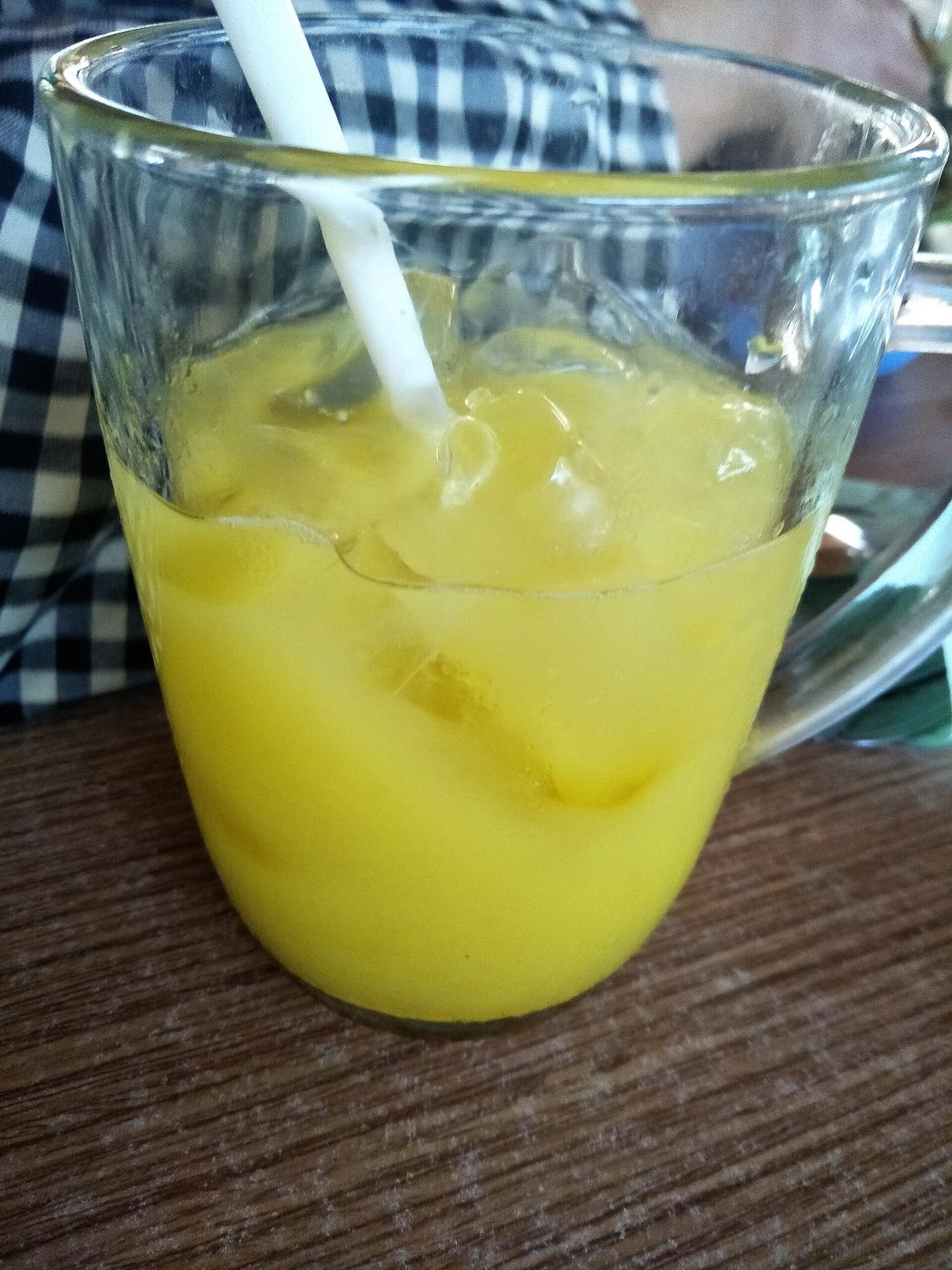 Kunyit asam, turmeric and tamarind, served over ice. Photo: Fitri Penyalai / Wikimedia Commons (CC BY-SA 4.0)

Jamu in Bali: Loloh and Usada
Loloh, the Balinese herbal drinks
In Bali, the drink is loloh. A 2015 study in the Journal of Ethnopharmacology, led by Wawan Sujarwo of the Bali Botanic Garden, describes loloh as herbal drinks made and drunk only in Bali, to prevent and treat ailments. The team recorded 51 plant species from 32 families used in loloh, taken for heartburn, fever, diarrhoea, high blood pressure, mouth ulcers and other minor complaints. Most are boiled, some juiced. The plants people named most often were pule (Alstonia scholaris), sembung (Blumea balsamifera), cinnamon (Cinnamomum burmanni) and betel (Piper betle).
The best-known loloh is loloh cemcem from the village of Penglipuran in Bangli, made from wild kedondong leaves. It, and the drinks of Buleleng, are in the drinks of north Bali.
Usada, the written medicine
Behind the drinks sits usada, Balinese traditional medicine, recorded on lontar, the dried palm-leaf manuscripts. One of them, the Taru Pramana, is devoted to medicinal plants. A study of the copy held at Leiden University Library, published in Jurnal Kajian Bali, counted 182 plant species in it, prepared as loloh to drink, as boreh, the herbal body paste, and in four other forms the text names: sembar, tutuh, tempel and ses.
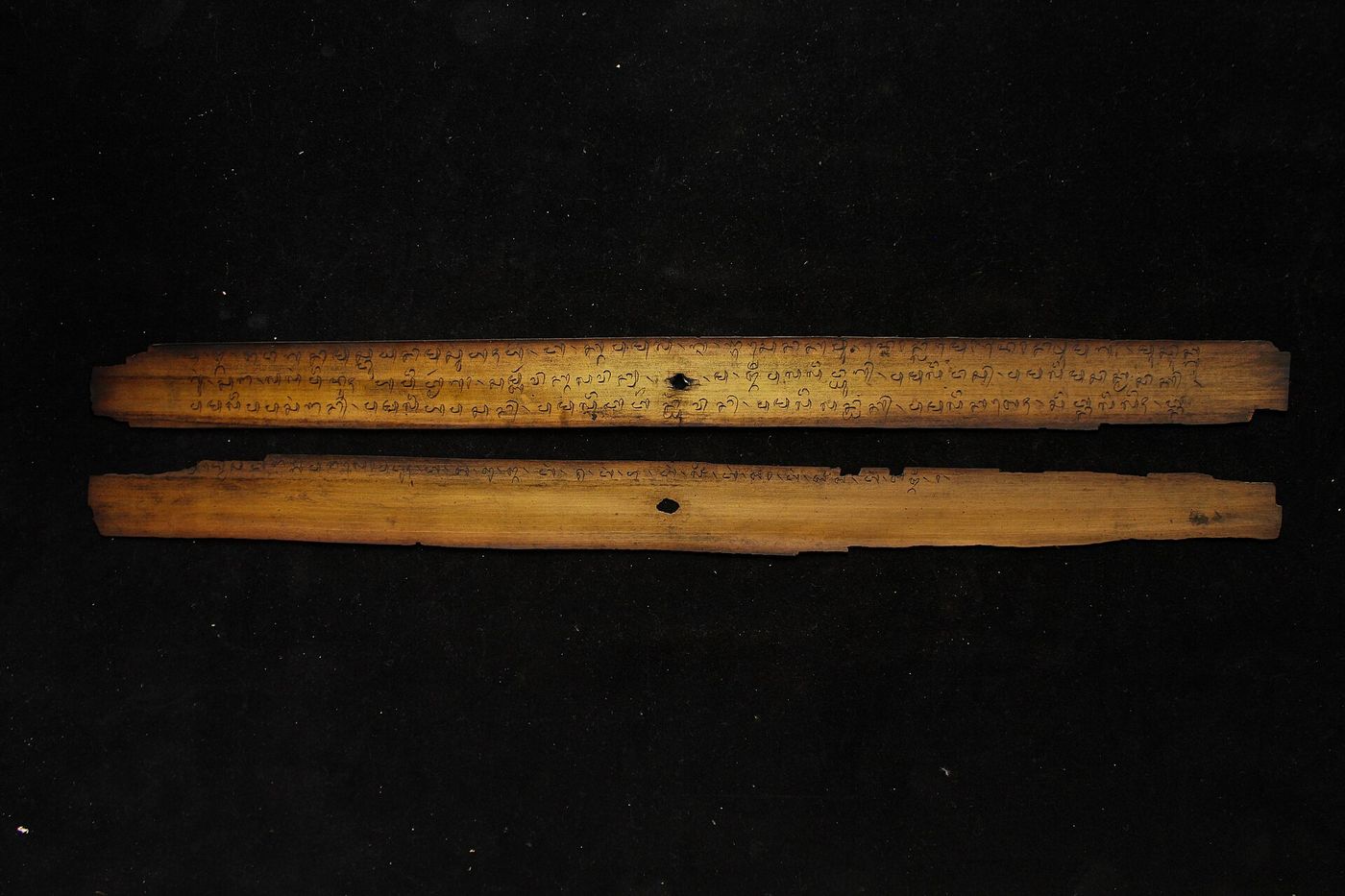 Leaves of a lontar usada, a Balinese medical manuscript, photographed in the village of Wanagiri. Photo: Eka343 / Wikimedia Commons (CC BY-SA 4.0)

The healers who work from these texts are the balian usada, one of several kinds of Balinese healer described in traditional healers in north Bali. Singaraja's Gedong Kirtya library keeps lontar on medicine among its collection. Boreh also survives on spa menus; see the best spas in north Bali.
Buleleng's government has spoken up for the tradition. At a 2022 meeting in Singaraja, the then Regent, Putu Agus Suradnyana, asked that usadha Bali keep being developed. He described it as slower than chemical medicine and better suited to prevention, and gave loloh as the example: loloh paya gamongan, sambiroto or cinnamon when the throat starts to feel wrong.
What the Health Authorities Say
Jamu is regulated in Indonesia. BPOM puts herbal medicines into three classes, each with its own green logo on the pack:
- Jamu (a tree in a green circle): benefits and safety based on empirical evidence, meaning use handed down through generations
- Obat Herbal Terstandar, standardised herbal medicine (the tree with three stars): standardised ingredients and preclinical testing on animals
- Fitofarmaka (a snowflake-like symbol): tested in clinical trials on people, the highest level
That is the honest status of jamu. A pack with the jamu logo has not been through clinical trials, and its benefits are what generations of users report.
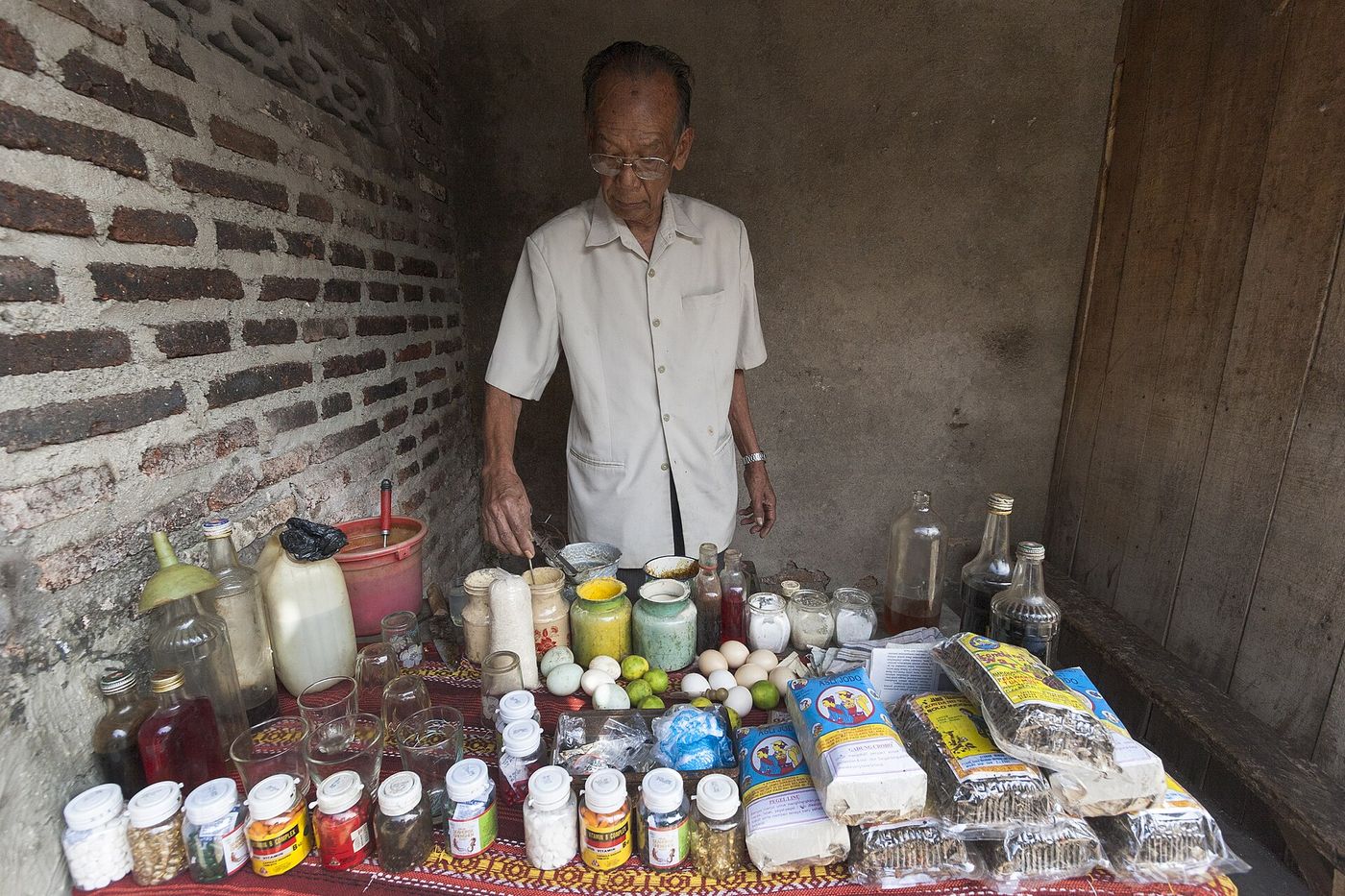 A jamu seller mixing an order at his stall in a market in Boyolali, Central Java. Photo: Herusutimbul / Wikimedia Commons (CC BY-SA 4.0)

The real danger, BPOM warns, is fake jamu: illegal herbal products secretly mixed with pharmaceutical drugs to make them work faster. Products for aches and pains (jamu pegal linu) have been found to contain painkillers and steroids such as phenylbutazone, metamizole, piroxicam, paracetamol and dexamethasone, none of them on the label, and some products contained sildenafil. Taken without a doctor, these can damage the stomach, kidneys, liver and heart. BPOM's advice is "Cek KLIK": check the packaging, the label, the registration number and the expiry date, and look the number up on Cek BPOM before you buy.
The World Health Organization takes the same line for traditional medicine everywhere. It supports countries that use traditional medicine, and says an evidence-based approach, establishing efficacy and safety through rigorous scientific testing, is crucial even for remedies used for a long time. If you are pregnant or take regular medication, ask a doctor before you add a herbal remedy; healthcare in north Bali lists where to find one.
Where to Find Jamu and Loloh in North Bali
Tuak loloh on the roadside. Buleleng's own herbal drink is tuak loloh: sweet, unfermented palm sap from the lontar palm, mixed with loloh pressed from belimbing and cinnamon leaves. When detikBali reported on it, the sellers worked from motorbikes at the roadside, one of them regularly on Jalan Sudirman in Banyuasri, Singaraja. Because the tuak has not fermented, it does not intoxicate. Palm Living's list of local north Bali drinks adds a version from Banyuseri, sweet tuak over ice with loloh sembung.
Puri Lumbung Cottages, Munduk
What they offer, in their words: A "Local Herbal Medicine Class" in which their local herbal medicine expert, with a translator, shows you how to make four loloh from fresh local ingredients, for muscle and menstrual pain, digestion, fever, chest congestion and energy.
Contact: purilumbung.com · Map
Puri Lumbung Cottages on Instagram
Munduk Tentrem Resort, Gobleg
What they offer, in their words: A "Jamu Making Experience" for guests, grating and blending turmeric, ginger, lime and other fresh ingredients by hand, then drinking the result with the mountain and sea view.
Contact: munduktentrem.com · Map
Munduk Tentrem Resort on Instagram
Packaged jamu. Sachets, pills and bottled drinks are sold widely. Look for the BPOM logo and number on the pack and check it on Cek BPOM.
How to Fit It In
Tuak loloh is a Singaraja errand: combine it with a walk through the old town and the lontar library at Gedong Kirtya. The Munduk classes belong to a night or two in the hills; the eco-lodges of Munduk compares the places to stay, and the Munduk guide covers the waterfalls and lakes around them.
Munduk is roughly an hour to an hour and a half above the coast, and Palm Living's villas are mostly around Lovina. To see the hills in a day from there, Palm Living runs a Munduk, Wanagiri and Bedugul day tour; the jamu session at Munduk Tentrem is for staying guests. For the island's food, see what to eat in Bali.
Practical Notes
- Tuak loloh is made with sweet, unfermented tuak. Fermented tuak is palm wine and does contain alcohol; the drinks of north Bali explains the difference.
- Taste before you commit. Kunyit asam and beras kencur are sweet enough for a first try; pahitan is bitter by design.
- Check every packaged product for a BPOM number, and treat "works instantly" claims with suspicion.
- Ask before photographing a seller or healer at work.
FAQ
What is jamu? Jamu is Indonesia's traditional herbal medicine, usually a drink of roots, leaves and spices such as turmeric, ginger, kencur and tamarind, passed down mostly by women and practised since the eighth century.
What is jamu made of? The two most common kinds are kunyit asam (turmeric, tamarind, palm sugar and salt) and beras kencur (rice and kencur with ginger and sugar). Others use temulawak, betel leaf, red ginger, long pepper and bitter leaves such as sambiloto.
Is jamu good for you? BPOM, Indonesia's food and drug authority, says jamu's benefits and safety rest on generations of use, not clinical trials, and the WHO says long-used remedies still need scientific testing. The proven risk is illegal products spiked with drugs, so buy packaged jamu only with a BPOM number you can check.
What does jamu taste like? It depends on the kind. Kunyit asam is sweet and sour, beras kencur sweet and slightly spicy, kudu laos warming, and pahitan deliberately bitter.
What is the difference between jamu and loloh? Loloh is the Balinese word for herbal drinks of the same kind. A study recorded 51 plant species used in loloh, including pule, sembung, cinnamon and betel, and the knowledge behind them is usada, Bali's written medicine.
Where can I try jamu in north Bali? Look for tuak loloh, sweet palm sap mixed with herbal loloh, from roadside sellers around Singaraja. In the hills, Puri Lumbung Cottages in Munduk teaches a loloh class and Munduk Tentrem Resort runs jamu-making for guests.
Is jamu UNESCO heritage? Yes. "Jamu wellness culture" was inscribed on UNESCO's Representative List of the Intangible Cultural Heritage of Humanity in 2023.
Sources
- UNESCO Intangible Cultural Heritage, Jamu wellness culture (inscription in 2023, the eighth-century origin, hot and cold balance, women makers, family transmission), read September 2026 (in English)
- BPOM, BPOM finds jamu containing dangerous drug chemicals (the three classes and logos, hidden drug chemicals, jamu gendong, Cek KLIK), read September 2026 (in Indonesian)
- BPOM Denpasar, Know the three logos of natural medicines (what each logo means), read September 2026 (in Indonesian)
- World Health Organization, Traditional medicine: questions and answers, read September 2026 (in English)
- Kompas, Eight kinds of jamu gendong, 26 January 2023, citing the Surakarta city communications office, read September 2026 (in Indonesian)
- Kompas, The history of jamu in Indonesia, 9 April 2022 (reliefs, the acaraki, Liyangan, Serat Centhini, the word's origin), read September 2026 (in Indonesian)
- Sujarwo W. et al., Ethnobotanical study of Loloh: traditional herbal drinks from Bali, Journal of Ethnopharmacology 169 (2015), abstract read September 2026 (in English)
- Jurnal Kajian Bali, Medicinal plant diversity in the lontar Taru Pramana, April 2019, abstract read September 2026 (in Indonesian, abstract in English)
- Buleleng Regency, Regent asks for Balinese traditional medicine to keep developing, May 2022, read September 2026 (in Indonesian)
- detikBali, Tuak loloh from Buleleng, September 2022, read September 2026 (in Indonesian)
- Palm Living, 6 local beverages in north Bali, read September 2026 (in English)
- Puri Lumbung Cottages, Activities, and Munduk Tentrem Resort, Jamu Making Experience, read September 2026 (in English)
More on the island's remedies and rituals: melukat, the water purification, Balinese massage and the drinks of north Bali.