
On this page
- In Brief
- Balinese Dance at a Glance
- Three Genres Sort the Dances by Where and Why They Are Danced
- Wali Dances Are Offerings, Danced for the Gods in the Inner Courtyard
- Bebali Dances Are Ceremonial Dramas That Tell a Story
- Balih-Balihan Dances Are Made for an Audience
- Four Elements Build a Balinese Dance: Agem, Tandang, Tangkis and Tangkep
- Children Learn in Village Groups, Studios and Schools
- Where to See Balinese Dance From North Bali
- Practical Notes
- FAQ
- Sources
In Brief
Balinese dance is the traditional dance of Bali, and the Balinese sort it into three genres by where and why it is danced. Wali dances are sacred offerings in the temple's inner courtyard. Bebali dances accompany ceremonies, mostly as dance dramas. Balih-balihan are the entertainment dances, made for an audience.
Balinese artists set down this classification at a seminar on sacred and secular art in 1971. UNESCO followed it in 2015, when it inscribed the three genres of traditional dance in Bali on its Representative List. Nine dances represent the three genres in the nomination, three for each.
The dances share four building blocks: a basic stance, movement, transitions and expression. The eyes, fingers and neck each have their own named movements. In north Bali you meet dance at temple ceremonies and on the regency's festival stages.
Balinese Dance at a Glance
- What it is: The traditional dance of Bali, performed by men and women in costume to gamelan music
- The three genres: Wali (sacred), bebali (ceremonial or semi-sacred) and balih-balihan (entertainment)
- Who named the genres: Balinese artists and cultural figures, at a seminar on sacred and secular art in 1971
- UNESCO: Inscribed in 2015 as "Three genres of traditional dance in Bali", with nine representative dances
- The four elements: Agem (stance), tandang (movement), tangkis (transitions) and tangkep (expression)
- The spirit of it: Taksu, the charisma or spiritual energy that brings a performance alive
- Where it is learned: Village groups (sekaa), dance studios (sanggar), schools and the arts university ISI Denpasar
- Sacred dances: Protected since 2019 from being staged outside Hindu ceremonies
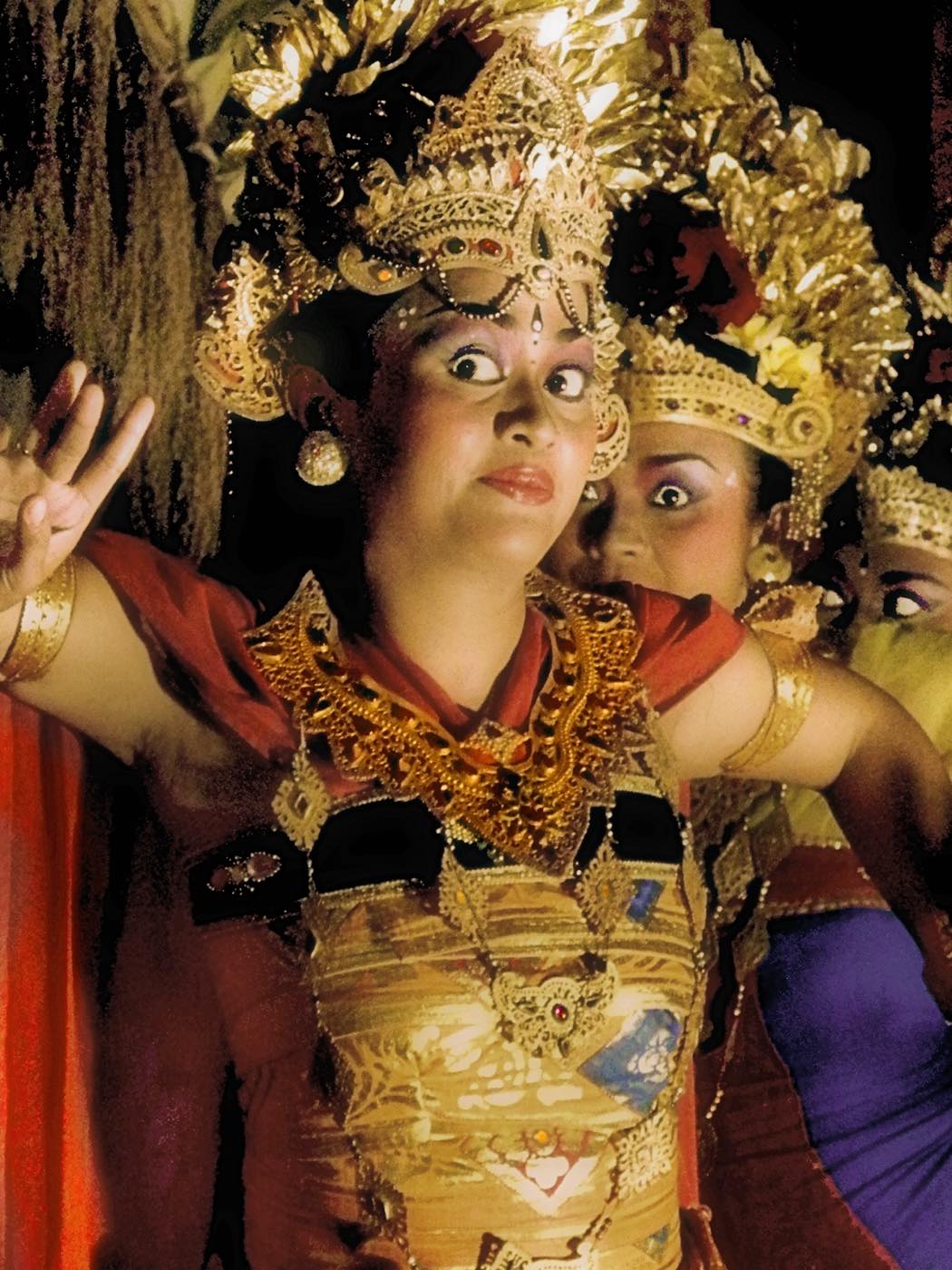 Dancers in Ubud, eyes open wide in the expression the dance is known for. Photo: AjarnRichard / Wikimedia Commons (CC BY-SA 4.0)
Three Genres Sort the Dances by Where and Why They Are Danced
The three genres follow the layout of a Balinese temple.
Buleleng's culture and tourism office traces them to a seminar on sacred and secular art in 1971, citing the dance scholar I Made Bandem. It places each genre in its own courtyard:
- Wali in the jeroan, the innermost and holiest courtyard
- Bebali in the jaba tengah, the middle courtyard, during a temple anniversary
- Balih-balihan in the jaba sisi, the outer courtyard, once the prayers are over
UNESCO's nomination file gives each genre an age. It dates the origins of the sacred dances to the 8th to 14th centuries. The ceremonial dances follow from the 14th to the 19th, and the entertainment dances from the 19th century to the present.
The file adds that the genres are applied by desa kala patra, the Balinese principle of place, time and occasion. So the dances vary between Bali's eight regencies and its capital, and within each of them.
Good sources do not always agree on where a dance sits. UNESCO lists Topeng Sidakarya among the ceremonial bebali dances. Buleleng's culture office and the head of Bali's Hindu council both count it among the sacred wali dances.
Masked performance has a long written record in the north. An inscription of 896 from Bebetin, in Buleleng's Sawan district, lists patapukan, mask troupes, among the village's people (Sawan district).
Wali Dances Are Offerings, Danced for the Gods in the Inner Courtyard
A wali dance is part of the ceremony itself.
Buleleng's culture office describes these dances as performed before the shrines, with ceremonial offerings as their props. Their meaning is to welcome the gods and goddesses as they descend to the temple.
UNESCO chose three wali dances to represent the genre:
- Rejang, from Klungkung, danced by young women in ceremonial dress. Its full story is in Rejang, Bali's sacred offering dance.
- Sanghyang Dedari, from Karangasem, a trance dance by two young girls to counter harmful unseen forces.
- Baris Upacara, from Bangli, a ceremonial dance in which a group of men conveys a heroic spirit.
The nomination also names Pendet Upacara, the temple form of Pendet, among the sacred dances. Sanghyang has a famous descendant. Buleleng's culture office notes that the chant of the kecak was taken from the sanghyang ritual (Buleleng culture office).
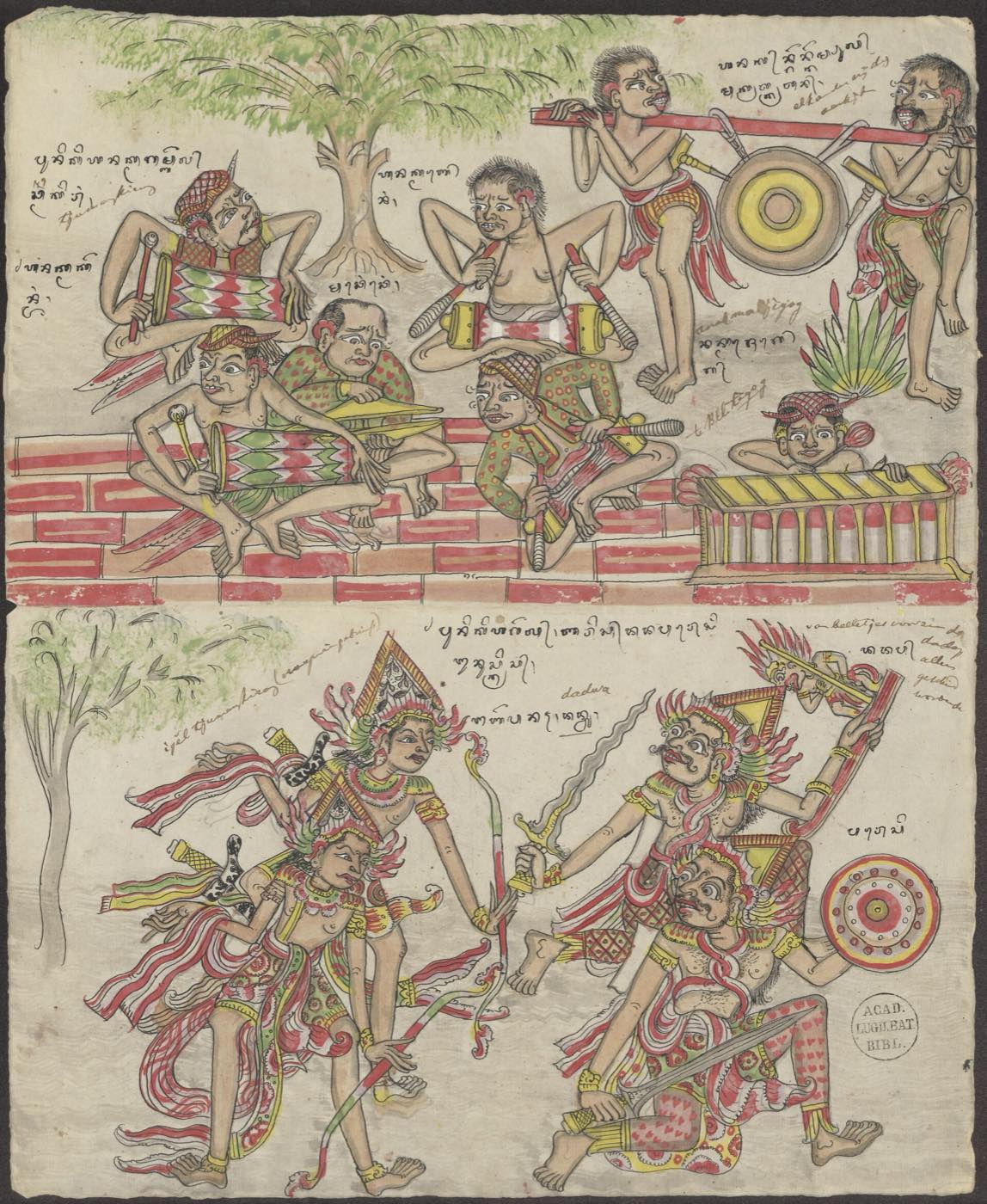 Three forms of baris, the dapdap, prési and panah, with the musicians who accompany them. Drawn by I Ketut Gedé of Singaraja for the scholar H.N. van der Tuuk. Photo: I Ketut Gedé, Leiden University Libraries / Wikimedia Commons (public domain)
Sacred dances stay in the temple
In 2019 five Balinese bodies signed a joint decision on sacred dance, among them the Hindu council PHDI, the culture council Listibya and ISI Denpasar. It forbids staging any sacred Balinese dance outside Hindu ceremonies. Governor Wayan Koster signed to acknowledge it (Antara).
In 2023 Antara reported some 129 dances on record as performed only at religious ceremonies. The examples in that report include Rejang Dewa, the sanghyang dances, Topeng Sidakarya, Wayang Wong and Gambuh.
Bebali Dances Are Ceremonial Dramas That Tell a Story
Bebali dances accompany a ceremony, and most of them tell a story.
Buleleng's culture office places them in the middle courtyard during a temple anniversary. They also accompany customary rites such as purification, the fulfilment of a vow and tooth filing. Some dramas speak in prose or verse, and others tell their story through movement and expression alone. In Balinese understanding, a bebali performance carries a spiritual power that protects the community and the land around it.
UNESCO's three bebali dances:
- Topeng Sidakarya, also called Topeng Pajegan, from Tabanan. Masked dancers perform it to neutralise evil spirits.
- Gambuh, from Gianyar, once a royal theatre and now an accompaniment to ceremonies, with 25 to 40 dancers. Its stories come from the Panji tales.
- Wayang Wong, from Buleleng, a masked Ramayana dance drama for 20 to 30 dancers. It is danced at the village temples of Tejakula during their anniversaries (Tejakula district). Its masks are described in north Bali's dance and music guide.
Indonesian Wikipedia calls Gambuh the source of all classical Balinese dance. Most of its characters speak Kawi, and three servant characters translate their words into Balinese.
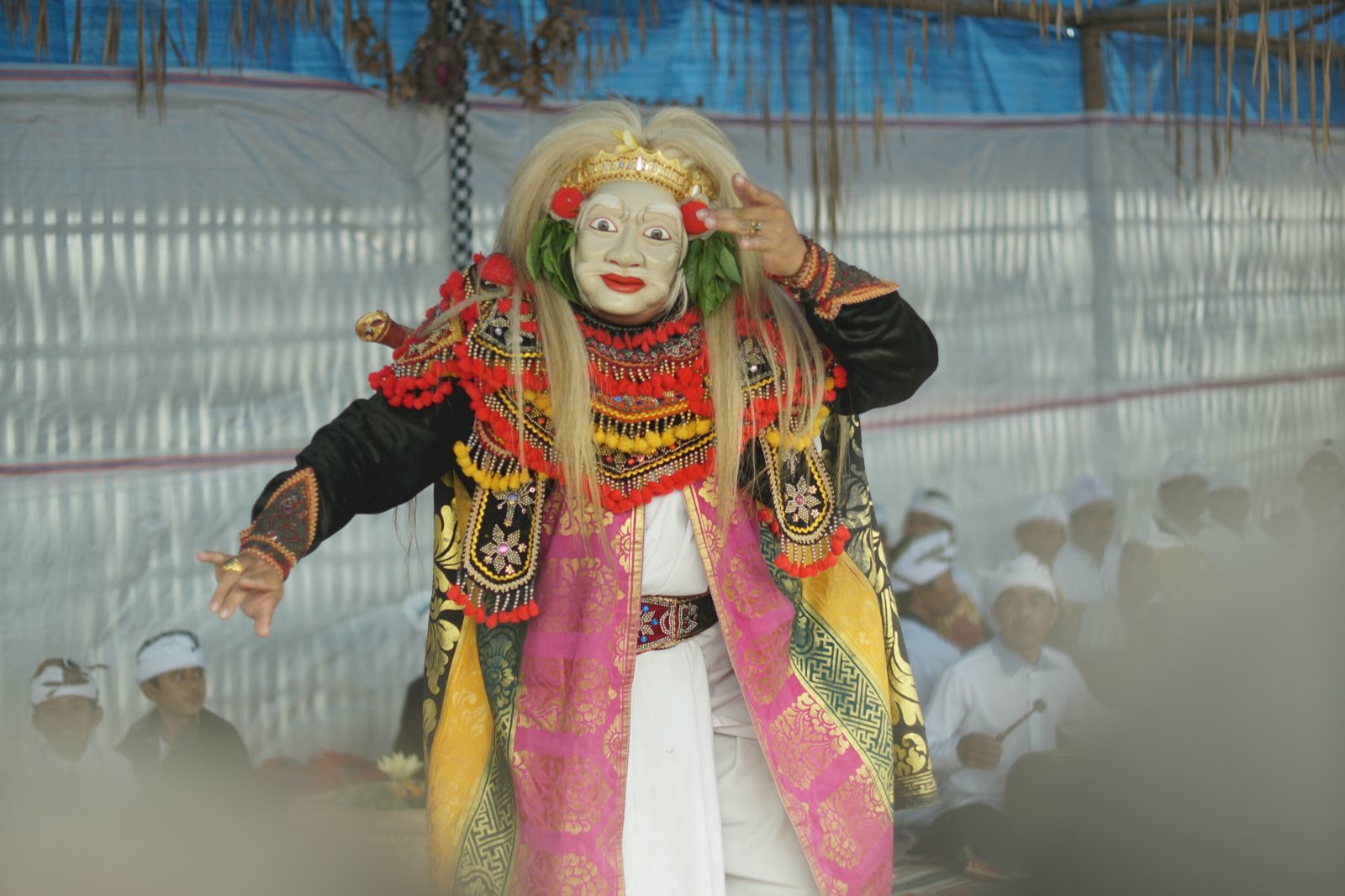 A Topeng Sidakarya dancer in the white mask, with musicians in temple dress behind. Photo: I Kadek Jaya Wiguna / Wikimedia Commons (CC BY-SA 4.0)

Balih-Balihan Dances Are Made for an Audience
The entertainment dances are the ones adapted for visitors' stages, UNESCO's nomination notes.
At a temple anniversary they begin after the prayers, to entertain the worshippers and the neighbourhood. Buleleng's culture office notes that performances often run into the small hours, and some last until sunrise.
UNESCO's three balih-balihan dances:
- Legong Kraton, danced by two or three girls, developed from Sanghyang Dedari and Gambuh. Read the legong guide.
- Joged Bumbung, from Jembrana, a social dance for couples at harvest time and on important days. Read the joged bumbung guide.
- Barong Ket "Kuntisraya", from Badung, the fight between the Barong, the figure of goodness, and Rangda. Read the Barong guide.
The nomination counts kecak, Janger and the kebyar dances in this genre too. Kebyar grew from gong kebyar, the gamelan style born in Buleleng, told in north Bali's dance and music guide.
New dances keep joining the genre
Newer creations count as balih-balihan too. Buleleng's culture office sorts the genre by cast, from solos such as Trunajaya and Margapati to colossal dance dramas with hundreds of dancers.
A few of the creations you may meet:
- Janger, created in the 1930s, a social dance of young men and women who dance and sing in call and response (Indonesian Wikipedia).
- Panji Semirang, created by I Nyoman Kaler in 1942, a solo for a woman dancing a princess disguised as a man (Indonesian Wikipedia).
- Cendrawasih, a duet of two birds of paradise. The first version was by I Gede Manik, first performed in Sawan, Buleleng, in 1956. Today's choreography by N.L.N. Swasthi Wijaya Bandem was first performed in 1988 (Indonesian Wikipedia).
The welcome dances staged at hotels belong here as well. The head of PHDI Bali told Antara that they are entertainment, for watching. Panyembrama, the welcome dance first performed in 1971, was made as a secular dance for that role.
Four Elements Build a Balinese Dance: Agem, Tandang, Tangkis and Tangkep
UNESCO's nomination describes Balinese dance as composed of four elements:
- Agem, the basic posture, with the knees turned out and the stomach drawn in
- Tandang, movement from place to place, at different speeds and in different directions
- Tangkis, transitions with changes of dynamic
- Tangkep, the expression of the face and eyes, showing happiness, sadness, anger, love or fear
Buleleng's culture office adds the detail in its guide to technique. Agem has a right and a left form, with the weight on the right or the left foot. Tangkep decides how mature a dance is, the office writes, because without feeling a dance does not look alive.
UNESCO describes the dances as accompanied by the music of the gamelan, and as inspired by nature.
The eyes: seledet
Buleleng's culture office singles out the eyes as what makes Balinese dance unique. In the seledet, both eyes glance to the right or the left together with a movement of the chin. During it the eyes must stay wide open, without a blink.
The fingers: jeriring and its family
Balinese dance names its finger movements one by one. Its list of basic movements includes:
- jeriring, a fine trembling of the fingers
- gerigah, a strong trembling
- ngeletik, a flick of the ring finger
- ngempurit, the thumb touching the middle finger
- nuding, pointing
- manganjali, the hands joined in worship
The neck has its own vocabulary too. Ngontag leher moves the head slowly from side to side, and ngenjet leher does it quickly.
Taksu brings a dance alive
UNESCO's inscription asks more of a dancer than technique. Performers need charisma, humility, discipline and taksu, a special spiritual energy that enlivens the performance.
The nomination adds that priests bless the dancers. Dancers and musicians are purified before a performance begins, even when it is given as entertainment.
Children Learn in Village Groups, Studios and Schools
In Balinese communities, UNESCO notes, dance passes to children from an early age, mostly informally and within groups.
The nomination lists where that happens:
- sekaa, the dance groups that train at the bale banjar, the neighbourhood hall
- sanggar, the dance studios
- schools, from kindergarten to vocational school
- universities such as ISI Denpasar
Training begins with basic positions and simple dances, normally Pendet for girls and Baris for boys. Pupils are tested by performing with live music.
Each regency holds a students' sports and arts week with traditional dance, the nomination adds. The best performers go on to the provincial week and to the Bali Arts Festival, a month-long festival held each year since the late 1970s.
Visitors learn too. The nomination notes that many people who come to Bali take a short course and learn one of the traditional dances during their stay. To try it, ask at a sanggar near where you are staying.
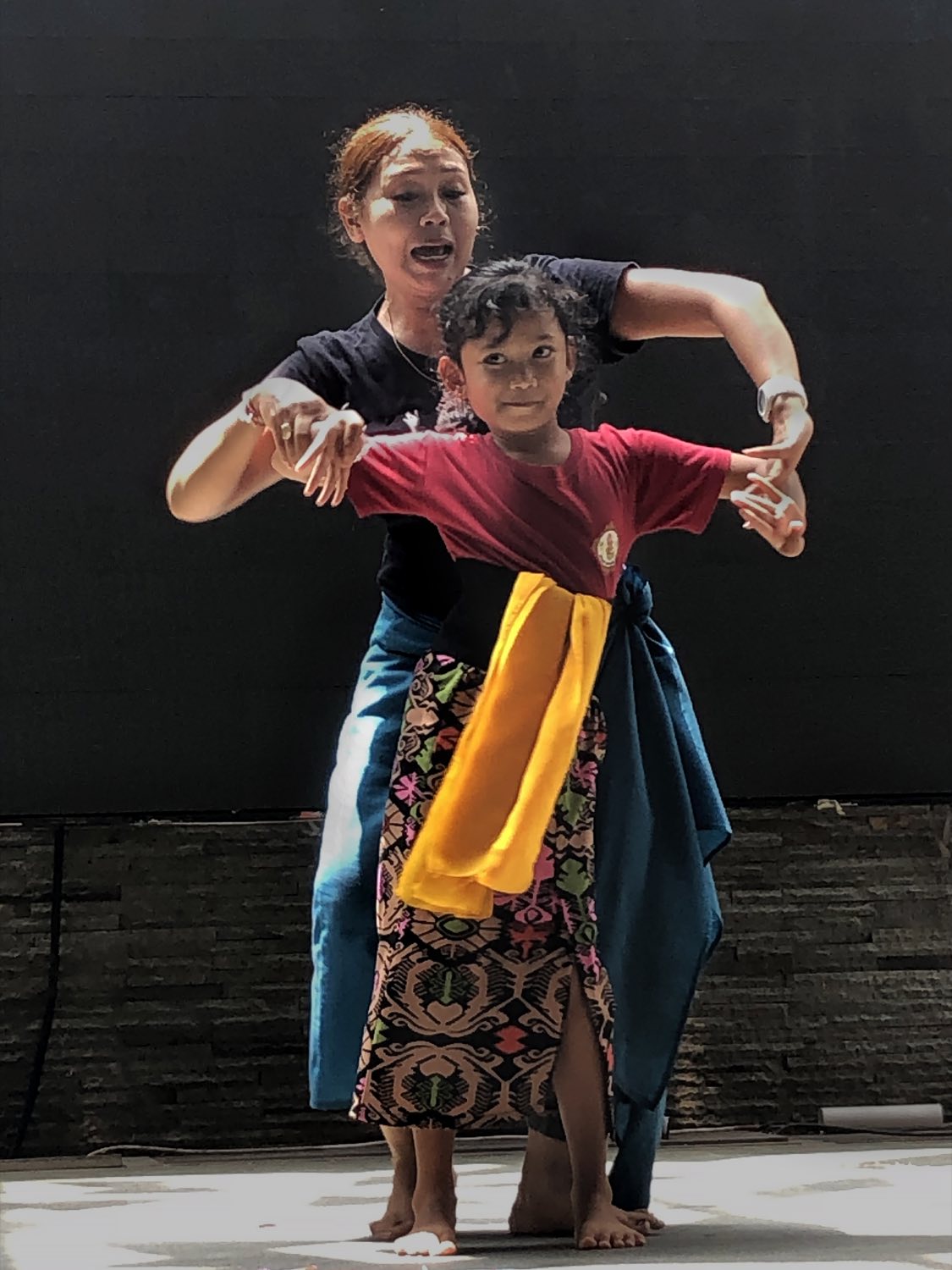 A teacher shapes a young pupil's arms in a Balinese dance class. Photo: Dedy Siswandi / Wikimedia Commons (CC BY-SA 4.0)

Where to See Balinese Dance From North Bali
North Bali's dance lives in the temple calendar and on festival stages.
- Temple ceremonies. Wali and bebali dances belong to temple anniversaries, so they follow each village's temple calendar. The rhythm of the ceremonies is explained in Balinese ceremonies.
- The Lovina Festival. Buleleng's culture office has recorded kecak on Binaria beach at the festival, with children from a community group in Kalibukbuk. See the Lovina Festival guide.
- The Buleleng Festival. Singaraja's own festival brings the regency's dance and gamelan to public stages. See the Buleleng Festival guide.
- The Bali Arts Festival. The island's month-long arts festival, held each year since the late 1970s, has brought dancers from all over Bali to its opening parade.
- The south's nightly stages. Ticketed kecak, legong and Barong shows are a south Bali outing, listed in the kecak guide.
The full list of northern venues, from village rehearsals to Buleleng's festivals, is in north Bali's dance and music guide.
Practical Notes
- At a ceremony you are a guest. A wali or bebali dance is worship. Wear temple dress and follow Bali temple etiquette.
- A show and a ceremony are different things. The 2019 joint decision keeps sacred dances for Hindu ceremonies, and a hotel welcome dance counts as entertainment.
- Watch the eyes and the fingers. The seledet and the trembling jeriring are where much of the expression lives.
- Ceremony dates follow the Balinese calendars. Ask locally which temple has its anniversary during your stay.
FAQ
What is Balinese dance? Balinese dance is the traditional dance of Bali, performed by men and women in costume to gamelan music. It is sorted into three genres: sacred wali dances, ceremonial bebali dances and balih-balihan entertainment dances. UNESCO inscribed the three genres as intangible cultural heritage of humanity in 2015.
What are the three types of Balinese dance? Wali dances are sacred and are danced in the temple's inner courtyard as part of a ceremony. Bebali dances accompany ceremonies in the middle courtyard, mostly as dance dramas such as Topeng and Gambuh. Balih-balihan dances are for entertainment, danced in the outer courtyard or on stage, such as Legong and Joged Bumbung.
What is the meaning of Balinese dance? UNESCO describes the dances as inspired by nature and as symbols of Balinese traditions, customs and religious values. For the Balinese, dance is part of the religious ceremonies held through the year by the Balinese calendar. A sacred wali dance welcomes the gods as they descend to the temple.
Why do Balinese dancers move their eyes and fingers? The eyes and fingers carry the dance's expression. In the seledet, both eyes glance sideways with the chin, wide open and without a blink. The fingers have their own named movements, such as jeriring, a fine trembling, and gerigah, a strong one.
What are the names of the most famous Balinese dances? UNESCO chose nine to represent the island: Rejang, Sanghyang Dedari, Baris Upacara, Topeng Sidakarya, Gambuh, Wayang Wong, Legong Kraton, Joged Bumbung and Barong Ket. Kecak, Pendet, Janger, Trunajaya and Oleg Tamulilingan are among the other well-known dances.
Can you learn Balinese dance in Bali? Yes. Balinese children learn in village groups, dance studios called sanggar, schools and at ISI Denpasar. UNESCO's nomination notes that many visitors take short courses during their stay. Ask at a sanggar near where you are staying.
Where can I see Balinese dance near Lovina? At temple ceremonies in the villages, and at Buleleng's festivals, such as the Lovina Festival on the beach and the Buleleng Festival in Singaraja. Nightly ticketed shows are mainly in the south. Wear temple dress at any ceremony.
Sources
- UNESCO Intangible Cultural Heritage, Three genres of traditional dance in Bali, inscribed 2015 (decision 10.COM 10.b.18): the genres, costume, movement, taksu and transmission, read October 2026 (in English)
- UNESCO, Nomination file no. 00617: the four elements, the nine representative dances and their regencies, the courtyards and ages of the genres, desa kala patra, priests and purification, training and the Bali Arts Festival, read October 2026 (in English)
- Buleleng Culture and Tourism Office, Sacred and secular functions of the performing arts in Buleleng: the 1971 seminar, the courtyards, the meaning of wali, bebali rites, balih-balihan forms, read October 2026 (in Indonesian)
- Buleleng Culture and Tourism Office, Teknik menarikan tari Bali: seledet, agem, tandang and tangkep, read October 2026 (in Indonesian)
- Buleleng Culture and Tourism Office, Gerakan dasar tari Bali: the named movements of the fingers and neck, read October 2026 (in Indonesian)
- Buleleng Culture and Tourism Office, Kecak at the Lovina Festival: kecak on Binaria beach and its roots in sanghyang, read October 2026 (in Indonesian)
- Sawan District, Buleleng Regency, Sejarah Desa Bebetin: the inscription of 896 and its patapukan, read October 2026 (in Indonesian)
- Antara Bali, Rektor ISI: pelindungan tari sakral perlu disosialisasikan, 17 September 2019: the joint decision protecting sacred dance and its signatories, read October 2026 (in Indonesian)
- Antara Bali, PHDI Bali agrees sacred dances are not staged in hotels, June 2023: the count of sacred dances, examples, hotel welcome dances as entertainment, read October 2026 (in Indonesian)
- Indonesian Wikipedia, Gambuh, Tari Janger, Tari Panji Semirang and Tari Cendrawasih, read October 2026 (in Indonesian)
- Wikipedia, I Ketut Gedé, and Leiden University Libraries, Or. 3390, via Wikimedia Commons, read October 2026 (in English)
Read next: Rejang, Bali's sacred offering dance, the legong, the Barong and Balinese gamelan.